This study explores the utility of the Early Development Instrument (EDI) as a population-based measure of school readiness in Crete, Greece, during times of economic austerity. It is unique in that no similar investigation examining school readiness for grade one has been conducted in this country. More specifically, it identifies kindergarten children who are vulnerable (fail to meet age-appropriate developmental expectations), at risk (not in the vulnerable range, but still score lower than expected for their age), and on track (all others) for success in grade one. It also investigates demographic factors associated with children’s higher odds of vulnerability. Participants include 954 children (mean: 5.7 years) from 63 kindergarten schools. Results demonstrate that 26.4% of the sample are developmentally vulnerable, 27.5% are at risk, and 46.1% are on track. Additionally, children with special needs vs. those without, males vs. females, younger vs. older cohorts, and those in rural vs. urban areas are associated with higher odds of developmental vulnerability. This study shows that the EDI can be an effective tool to help guide Greek policy development in early childhood education and care, inform key programming decisions, and introduce timely interventions that will help improve vulnerable children’s chances for school success.
Research examining the effects of subsidized childcare prior to school entry for child development is inconsistent. This population-based study examines the relationship between two poverty levels (extreme poor and working poor) and children?s developmental outcomes, as measured by the Early Development Instrument. It also determines the extent to which receipt of subsidized childcare prior to school entry provides a protective factor against the extreme poverty effects on children?s developmental outcomes and whether this buffering effect is more pronounced for children with special needs. Results demonstrate that children experiencing extreme poverty, regardless of special needs status, are more likely to show readiness deficits before school onset than children from working-poor families; however, prior enrollment in subsidized childcare can offset some readiness concerns in extremely poor families, particularly for the child?s language, literacy, and communication skills. Additionally, the benefits of subsidized childcare experience prior to school entry were found to be more pronounced for children with special needs than those without. This study presents one of the few Canadian perspectives on subsidized childcare using the unique Manitoba Center for Health Policy Data Repository that links data from different provincial databases, including health care, education, family services, and justice.
Using a transformative learning lens, based on the work of Mezirow (2000), this study provides insight into the factors that influence excellence and innovative teaching at the American Community School of Athens. Using a case-study methodology, ten one-hour interviews were conducted with teachers and administrative staff of the school to examine their perspectives on the importance of innovation, qualities of teachers as leaders, and factors that facilitate the transformation process as exemplified by their school. Questions included: how do you cultivate innovation and creativity through your teaching? How do you foster an educational climate that values critical reflection? How do you encourage a deeper-level thinking among students that is transformative in nature? The interviews were uniquely positioned to examine innovative change as it occurs and the processes and challenges that emerge when such change is instituted (Fullan, 2016). Three exemplary school programs are described that illustrate innovative practices at this school.
A study examining the relationship between housing conditions, respiratory health, and school absenteeism was conducted in the city of Winnipeg in Manitoba, Canada. As part of this study, a survey was completed by 3,424 parents of children in grades 3 and 4 to determine the a) relationship between self-reported visible mold in homes and tested airborne mold; b) relationships of self-reported visible mold, tested airborne mold, and asthma and/or persistent colds; c) school absenteeism rates due to asthma and/or persistent colds; and d) children's socioeconomic status (SES) and incidence of asthma and/or persistent colds. In addition, a complete inspection of a subset of 715 homes was conducted, including the collection of over 1,400 indoor and 500 outdoor air samples for mold analysis. Results indicate a significant association between self-reported visible mold and airborne mold. Additionally, a significant association was found between Cladosporium levels from air samples (the most common genus type found) and children's asthma in combination with persistent colds. Children with persistent colds in combination with asthma miss significantly more school than children who have only asthma or only persistent colds. Children from poorer families reported more persistent colds than children from high-income families. No association was found between income and asthma. Furthermore, SES was not a significant factor for number of school days missed.
Understanding how respiratory health risks are associated with poor housing is essential to designing effective strategies to improve children's quality of life. The objective of the study described in this article was to determine the relationship between respiratory health and housing conditions. A survey was completed by 3,424 parents of children in third and fourth grade in Winnipeg, Manitoba, Canada. An engineering audit and air samples were also taken in the homes of a subset of 715 homes. Results showed that a child's respiratory health is significantly associated with self-reported visible mold in the home and that a significant association existed between occupant-reported visible mold and tested airborne mold. Findings highlight the need for clearer standards of acceptable CFU/m3 limits for mold genera that are applicable to homes. In the absence of such guidelines, problems associated with indoor mold will continue to impact the health of residents, despite growing evidence of the adverse effects from mold exposure.
This exploratory study uses transformative learning theory as a lens to interpret and understand the challenges and successes experienced by education students who elect to teach or intern abroad. Transformative learning is a deeper-level learning that challenges learners to understand themselves and their world in new, more nuanced ways. We explore frames of teaching and learning from multiple lenses. Elements of the educational internship experience that emerged from students who participated in this study include initial apprehension, disbelief, and even fear; a disorienting dilemma or incongruent experience within the new school cultural context; a re-evaluation of their frames of reference, and a final emergence of more integrative, inclusive senses of self as “teacher” and “learner.” Transformative learning theory can serve both as a conceptual framework for understanding the experiences of students and as a means of suggesting ways in which educational outcomes can be better designed with a transformative intent in mind. We then present implications for teaching and learning and suggestions for future studies. Keywords: international experience; preservice teachers; internship; transformative learning; frames of reference
"In the Shadows of Dominant Cultures: The Elusive Definition of Giftedness." Gifted and Talented International, 27(1), pp. 125–126
This analysis of postupheaval educational change examines the extent to which massive changes in a school system's sociocultural environment lead to changes in the structure and practice of schooling. Framed broadly within systems theory and complexity theory, this examination of two cases of postupheaval educational change—post-1989 Czech Republic and post-Katrina New Orleans—reveals striking similarities. In each case, school systems witnessed immediate decentralization and increased outside influence. Also in each case, some groups were able to successfully leverage social upheaval into positive educational change. These groups appear to have been successful when they had a coherent vision of a new system already in place when upheaval struck or if they had particular aspects of the old system that they sought to rectify. A discussion of the theoretical implications for educational change in highly turbulent social contexts and recommendations for reformers in New Orleans conclude the article.
Children’s experiences with early numeracy and literacy activities are a likely source of individual differences in their preparation for academic learning in school. What factors predict differences in children’s experiences? We hypothesised that relations between parents’ practices and children’s numeracy skills would mediate the relations between numeracy skills and parents’ education, attitudes and expectations. Parents of Greek (N = 100) and Canadian (N = 104) five‐year‐old children completed a survey about parents’ home practices, academic expectations and attitudes; their children were tested on two numeracy measures (i.e., KeyMath‐Revised Numeration and next number generation). Greek parents reported numeracy and literacy activities less frequently than Canadian parents; however, the frequency of home numeracy activities that involved direct experiences with numbers or mathematical content (e.g., learning simple sums, mental math) was related to children’s numeracy skills in both countries. For Greek children, home literacy experiences (i.e., storybook exposure) also predicted numeracy outcomes. The mediation model was supported for Greek children, but for Canadian children, the parent factors had both direct and mediated relations with home practices.
This chapter examines the initiation of educational change in post-Soviet Russia, using the eight-factor change framework developed by Michael Fullan. Interviews were conducted with 24 key individuals, including members of the Ministry of Education, teacher educators, university researchers, and members of advocacy and school reform organizations. Important primary (government, policy, and school) documents related to the change process of educational transformation were also examined. The format for the interviews involved a common, open-ended unstructured questionnaire, upon which the researchers elaborated with additional probes as the interview unfolded. The interviews ranged from 1–2 hours in length; approximately 50–55 hours of material were recorded. Data analyses involved examination of the transcribed interviews, extensive notes, and documents acquired by the principal researcher. With a specific focus on decentralization reforms, the Russian experience was matched against the initiation stage of Fullan”s framework in order to understand Russia”s transformation as a “change” process. The data show that Fullan”s conceptual framework does clearly have utility for helping us understand events in Russia. However, we propose a revised framework, which is more consistent with the revolutionary rather than the evolutionary transformation and, therefore, better accounts for the dynamic character of dramatic and sudden change typical of Russia and other former Soviet countries.
A survey designed to determine the relationship between respiratory health and housing conditions was completed by 3,423 parents of 9-year old children in Winnipeg, Canada. Air samples were taken in 715 homes and an engineering audit of each residence was conducted including measurements of relative humidity, temperature, and moisture content of walls. Results indicate that: (a) Self-reported visible mould in the home is a significant independent predictor of persistent colds alone as well as of asthma in combination with persistent colds in children; (b) over 64% of homes have mould CFU levels of >= 100/m(3) -- the most common genus type being Cladosporium; (c) self-reported presence of visible mould in the home is significantly associated with measured CFU mould counts : >= 100/m(3); (d) presence of Cladosporium is significantly associated with childhood asthma in combination with persistent cold symptoms;.(e) measurements of relative humidity and/or air temperatures are not reliable indicators of high mould CFU counts.
This qualitative study uses transformative learning theory as a lens to interpret and understand the challenges and barriers that Canadian and Greek adult refugees experience. In essence, transformative learning is a deeper level learning that challenges learners to understand themselves and their world in a new way. Aspects of the refugee experience common to both Canadian and Greek individuals include being forced to flee zones of conflict and war; the experience of trauma, separation, and loss; the challenge of rebuilding one's life in an unfamiliar culture; and the process of learning to navigate new cultural, linguistic, and social mores. Situational and institutional barriers make the task of resettlement more complex.
Understanding how respiratory health risks are associated with housing is essential to designing effective strategies to improve children’s quality of life. A survey designed to determine the relationship between respiratory health and housing conditions was completed by 3,423 parents of grades 3 and 4 children in Winnipeg, Manitoba, Canada. Air samples were then taken in the homes of a subset of 715 parents – one in the child’s bedroom and another in the basement – with an exterior neighborhood air sample as a control measure. Finally, an engineering audit of each residence was conducted – including measurements of relative humidity, temperature, and moisture content of walls. Results indicate that: (a) Self-reported visible mould in the home is a significant independent predictor of persistent colds alone as well as of asthma in combination with persistent colds in children. (b) A high percentage of homes (64% of bedrooms, 65% of basements) in Winnipeg have mould CFU levels of ≥100/m3-the most common genus type being Cladosporium. (c) Self-reported presence of visible mould in the home is significantly associated with measured CFU mould counts ≥ 100/m3, based on air samples taken from both the child’s bedroom and basement. (d) Presence of Cladosporium in both the child’s bedroom and basement is significantly associated with childhood asthma in combination with persistent cold symptoms. (e) Measurements of relative humidity and/or air temperatures in the child’s home are not reliable indicators of high mould CFU counts; moisture content in the walls has a small but significant association with mould CFU counts. The significance of these results for the respiratory health of children is discussed as well as policy directions for healthy housing.
This Canadian study of the care of mildly ill children in licensed childcare facilities compares director and parent preferences for eight models of care, exclusionary practices for ill children by directors, and preferred backup care options of parents. It also investigates anticipated usage and willingness of parents to pay for emergency childcare. Participants include 328 directors and 742 parents from center and family childcare (FCC) homes, rural and urban locales, and five provinces. Parents and directors favor “joint family-employer” and “extended family” models and least prefer “infirmary” and “special licensed” childcare models. Directors favor more strongly than parents the options of parents or relatives caring for ill children and are less supportive than parents of facility-based models. Directors usually exclude children with diarrhea, fever and lethargy but accept children with a runny nose or cough. For backup care, parents prefer themselves or extended family. Most parents would use emergency childcare services but are unwilling to pay beyond the normal childcare rate. This investigation identifies key areas in the care of mildly ill children to be examined further through prospective studies.
Part 1. The Dynamic Forces of Change M. Fullan Part 2. Selected Case Studies 1. Harnessing the Forces of Change: Educational Transformation in Russia E. Polyzoi & E. Dneprov 2. Forces affecting the Implementation of Educational Change in the Czech Republic E. Polyzoi & M. Cerna 3. Educational Change and Social Transition in Hungary G. Halasz 4. Reforming the Romanian System of Education C. Birzea & C. Fartunsnic 5. Educational Transformation in East Germany N. Arnhold Part 3. Cross- Case Reflections: The Emergence of a Conceptual Framework M. Fullan
 J. C. Babb合作论文数Canadian Grain Commission5
 Dimos J. Polyzois合作论文数University of Manitoba Civil Engineering Department4John A. Wells合作论文数3John P. Anchan合作论文数3Karen Magro合作论文数2Kristina Cliteur合作论文数2
 Michael Fullan合作论文数University of Toronto2Donna Copsey Haydey合作论文数2Elif F. Acar合作论文数2
 Sheri-Lynn Skwarchuk合作论文数Faculty of Education, University of Winnipeg2Marie Černa合作论文数2Tatiana Nazarenko合作论文数2Mia Elfenbaum合作论文数1Jo-Ann V. Babb合作论文数1
 Maureen Babb合作论文数University of Manitoba1
 Jo-Anne LeFevre合作论文数Carleton Univ, Dept Psychol, Ottawa, ON K1S 5B6, Canada1
 Marni D Brownell合作论文数Dept Community Hlth Sci, Univ Manitoba1
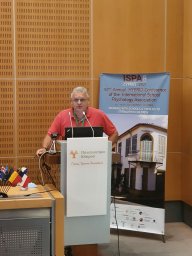 Matsopoulos Anastassios合作论文数1
 Brian Beabout合作论文数University of New Orleans1Lisa Fast合作论文数1Helga Stokes合作论文数1Alba a Ortiz合作论文数Univ Texas Austin1
 Carla Sowinski合作论文数1
 Alison Alene Carr-Chellman合作论文数Penn State University1




