Laser cooling of atomic motion enables advances in quantum information and precision metrology. However, the spatial spreading of subrecoil-laser-cooled atoms-crucial for understanding cooling mechanisms and atomic confinement-remains largely unexplored. Here, we analyze anomalous diffusion in subrecoil-laser-cooled atoms, where a velocity-dependent fluorescence rate R(v)∝|v|^{α} governs transport properties. By tuning α, we uncover transitions between normal, subdiffusive, and superdiffusive regimes. Notably, at α=3/2, diffusion is minimized, leading to optimal atomic confinement. We further identify a conceptual link between subrecoil laser cooling and the Pomeau-Manneville map from nonlinear dynamics, revealing that anomalous diffusion can generically exhibit a nontrivial minimum in spatial spreading-even across seemingly unrelated physical systems.
We investigate the splitting probability of a monitored continuous-time quantum walk with two targets and show that, in stark contrast to a classical random walk, it exhibits a nonanalytic, phase-transition-like behavior controlled by the sampling time at the targets. For large systems and sampling times smaller than a critical value τ_c = 2π/ΔE, where ΔE is the energy bandwidth, the splitting probability is universal and equal to 1/2, independent of the initial condition and the sampling time. Above the critical sampling, a nonuniversal regime emerges in which the splitting probability deviates from 1/2 and develops a fluctuating pattern of pronounced peaks and dips dependent on both the sampling time and the initial condition. These results follow from a nontrivial mapping of the splitting problem onto a pair of single-target detection problems enabled by the superposition principle.
We study the statistics of the maximum and minimum of a set of $N$ random variables whose dynamical and statistical properties fall within the scope of infinite ergodic theory. These non-stationary yet recurrent systems are described, in the long-time limit, by a non-normalizable infinite invariant density. Extreme events in such systems emerge in a joint limit where the observation time $t$ is long and the number of variables $N$ is large. We show that the resulting extreme value statistics are controlled by the return exponent $α$ and the infinite invariant measure, and therefore depart from the classical Fréchet, Gumbel, and Weibull universality classes. We illustrate the theory for weakly chaotic intermittent maps, overdamped diffusion in an asymptotically flat potential, and a stochastic model of sub-recoil laser cooling, and show how measurements of extremes can be used to infer the infinite-density structure.
We study the first detected recurrence time problem of continuous-time quantum walks on graphs. While previous works have employed projective measurements to determine the first return time, we implement a protocol based on weak measurements on a dilated system, enabling minimally invasive monitoring throughout the evolution. To achieve this, we implement a weak measurement protocol theoretically and complement it with both numerical simulations and investigations on an IBM quantum computer. Despite the implementation of a generalized measurement, the proposed protocol provides a description purely within the Hilbert space of the quantum system. Our results reveal that for rank-one monitored, pure initial states, the first hitting timescales inversely with the coupling parameter between the ancilla and the quantum system.
We study caging/trapping in Sokoban-type models, featuring a random walker moving through a disordered medium of obstacles and capable of pushing some obstacles blocking its path. In one-dimension, we allow the walker to push up to an arbitrary N_ P number of obstacles. For N_ P≫ 1, we use large-deviation theory to show that the survival probability to remain uncaged exhibits crossover from an exponential decay with time at intermediate times to a stretched-exponential decay at long times, with an exponent 1/3 independent of N_ P. The long-time exponent matches the Balagurov–Vaks–Donsker–Varadhan (BVDV) theory of the classical trapping problem, while the exponential decay is qualitatively distinct from the Rosenstock's intermediate-time theory for classical trapping. Similarly, in two dimensions, numerical simulations reveal that both the Sokoban model and its generalized version exhibit long-time stretched-exponential relaxation with exponent 1/2, again consistent with the BVDV theory. Finally, in two dimensions, we find that the mean trap size is nonmonotonic in ρ: it is small at both low and high densities, but reaches a peak at a characteristic density ρ_*. We estimate ρ_* ≈ 0.55 for the Sokoban model and ρ_* ≈ 0.675 for the generalized Sokoban model.
Recurrence time quantifies the duration required for a physical system to return to its initial state, playing a pivotal role in understanding the predictability of complex systems. In quantum systems with subspace measurements, recurrence times are governed by Anandan-Aharonov phases, yielding fractionally quantized recurrence times. However, the fractional quantization phenomenon in interacting quantum systems remains unexplored. Here, we address this gap by establishing universal lower and upper bounds for recurrence times in interacting many-body spin systems. Notably, we investigate scenarios where these bounds are approached, shedding light on the speed of quantum processes under monitoring. In specific cases, our findings reveal that the complex many-body system can be effectively mapped onto a dynamical system with a single quasi-particle, leading to integer-quantized recurrence times. Our work demonstrates a valuable link between recurrence times and the number of dark states in the system, thus providing a deeper understanding of the intricate interplay between Hilbert-space fragmentation, ergodicity breaking, measurements, and interaction effects. Finally, our findings have been implemented on an IBM quantum computer, revealing resonances and fractional quantization in agreement with theoretical predictions. This demonstrates the resilience of non-equilibrium topological fractional quantization to noise and highlights its potential use for benchmarking quantum devices and probing dark states.
We study the dynamics of a Sokoban random walker moving in a disordered medium with obstacle density ρ. In contrast to the classic model of de Gennes with static obstacles that exhibits a percolation transition, the Sokoban walker is capable of modifying its environment by pushing a few surrounding obstacles. Surprisingly, even a limited pushing ability leads to a loss of the percolation transition. Through a combination of a rigorous large-deviation calculation and extensive numerical simulations, we demonstrate that the Sokoban model belongs to the Balagurov-Vaks-Donsker-Varadhan trapping universality class. The survival probability that the walker has not yet been trapped inside a cage exhibits stretched-exponential relaxation at late times. Furthermore, using the average trap size as a proxy, we identify the emergence of a dynamical crossover at a density ρ_* ≈ 0.55 between two qualitatively different trapping mechanisms: a self-trapping mechanism at low density, where the walker becomes dynamically localized within a self-formed trap, and a pre-existing trapping mechanism at high density, where confinement arises from the initial arrangement of obstacles. This crossover is responsible for the loss of the classical percolation transition.
We study non-equilibrium steady states and recurrence times in noisy, stroboscopically monitored qubit systems using complete measurements. In the noiseless limit, recurrence times are integer-quantized, with dips to lower integers when sampling approaches revival conditions associated with ergodicity breaking. Using an IBM quantum platform, we find that quantization is robust when sampling far from revivals, but breaks down dramatically near revivals: even weak noise produces large deviations and can invert the expected dips into pronounced peaks. To explain this behavior, we formulate a statistical-physics model of monitored noisy circuits in which monitoring drives an effective infinite-temperature steady state while thermal-like relaxation competes to favor a low-temperature limit. We show that the sampling time tunes a crossover between these regimes, near revivals stabilizing low-temperature behavior, and far from revivals restoring infinite-temperature behavior – with noise strength and detuning acting as coupled small parameters near resonance.
Investigating the dynamics of chromatin loci and the factors that influence them provides valuable insights into the organization and functionality of the genome within the cell nucleus. We control the expression of Lamin-A, an important organizer of chromatin and nuclear structure. By simultaneously tracking hundreds of telomeres in Lamin-A knocked-out (KO) and wild-type (WT) nuclei, we find that telomere motion in Lamin-A depleted cells is both faster and more directed on micrometer scales, comparable to the size of chromosome territories. In contrast, telomere trajectories in WT cells exhibit pronounced anti-persistent behavior, consistent with caging by the surrounding chromatin environment. We further observe correlated motion between distinct telomeres in both WT and KO cells, with significantly stronger correlations in the KO case, indicating enhanced collective behavior. These correlations reflect cross-correlations among different loci rather than temporal correlations along individual trajectories. Together, these findings highlight the central role of Lamin-A in regulating both local confinement and collective telomere dynamics.
During Brownian motion, the displacement is normally distributed, a classical fact aligned with the central limit theorem. However, single particle tracking in complex media such as glasses, living cells, and colloidal suspensions often reveals pronounced exponential decay of the displacement distribution, known as Laplace tails. In a short letter, two of us presented the emergence of Laplace tails in the continuous time random walk (CTRW) framework. Here, a detailed complementary study is presented. By exploring the behavior of Q_t(n), the probability that exactly n renewals occur during time t, we develop a rate function-like framework for this quantity, valid for finite t. We show that Q_t(n) exhibits exponential tails, which in turn give rise to exponential tails of the positional probability density function P(x,t). Favorable comparison to finite-time numerical simulations and asymptotic large deviation rate functions establishes the validity of our results over a wide temporal range.
Temporal interference patterns can be detected with stroboscopic monitoring that treats the back action of measurements and the unitary dynamics. Previous work established that the mean detected recurrence time is integer-quantized and given by a topological invariant, a winding number w. When measurement periods are at resonance with the system's timescales, the winding number can abruptly change. We focus on a generic quantum system and the transition w→ w-2, signified by the creation of two dark states in Hilbert space, whose corresponding modes are responsible for the interference pattern. Close to the transition an extremely slow decay of the amplitude of first detection is found, superimposed by oscillations, in contrast to the monotonically exponential decay close to the case w→ w-1. We show how these oscillations are obtained from the symmetry of the system and find the conditions for optimal observations of the phenomenon.
Even in a simple stochastic process, the study of the full distribution of time-integrated observables can be a difficult task. This is the case of a much-studied process such as the Ornstein–Uhlenbeck process where, recently, anomalous dynamical scaling of large deviations of time-integrated functionals has been highlighted. Using the mapping of a continuous stochastic process to a continuous time random walk via the ‘excursions technique’, we introduce a comprehensive formalism that enables the calculation of the complete distribution of the time-integrated observable A = ∫ 0 T v n ( t ) d t , where n is a positive integer and v ( t ) is the random velocity of a particle following Ornstein–Uhlenbeck dynamics. We reveal an interesting connection between the anomalous rate function associated with the observable A and the statistics of the area under the first-passage functional during an excursion. The rate function of the latter, analyzed here for the first time, exhibits anomalous scaling behavior and a critical point in its dynamics, both of which are explored in detail. The case of the anomalous scaling of large deviations, originally associated with the presence of an instantonic solution in the weak noise regime of a path integral approach, is here produced by a so-called ‘big jump effect’, in which the contribution to rare events is dominated by the largest excursion. Our approach, which is quite general for continuous stochastic processes, allows us to associate a physical meaning with the anomalous scaling of large deviations through the big jump principle.
The statistics of the slowest first-passage time among a large population of N searchers is crucial for determining the completion time of many stochastic processes. Classical extreme-value (EV) theory predicts that for diffusing particles in a finite domain of size L , the slowest first-passage time follows a Gumbel distribution, but a Fréchet distribution in an infinite domain. Here, we study the physically relevant thermodynamic limit where both N and L diverge while the density ρ = N / L remains constant. We obtain an explicit solution for the EV in the thermodynamic limit, which recovers the Fréchet and Gumbel distributions in the low- and high-density limits, respectively, and reveals new, nontrivial behavior at intermediate densities. We then extend the framework to compact diffusion on fractal domains, such as the Sierpiński gasket, showing that the walk dimension d w and fractal dimension d f control the EV statistics via geometry-dependent scaling. The theory yields the full set of moments and finite-density corrections, providing a unified description of slowest arrival times in confined Euclidean and fractal media.
Laplace's first law of errors, which states that the frequency of an error can be represented as an exponential function of the error magnitude, was overlooked for many decades but was recently shown to describe the statistical behavior of diffusive tracers in isordered, glassy-like media. While much is known about this behavior, a key ingredient is still missing: the relationship between this observation and diffusion in a quenched random environment. We address this problem using the trap model, deriving lower and upper bounds on the particle packet for large displacements. Our results demonstrate that both bounds exhibit Laplace-like laws. We further establish a connection between the density of energy traps ρ(E), and the observed behavior, showing that the phenomenon is truly universal, albeit with constants that depend on temperature and the level of disorder.
We introduce a time-energy uncertainty relation within the context of restarts in monitored quantum dynamics. Previous studies have established that the mean recurrence time, which represents the time taken to return to the initial state, is quantized as an integer multiple of the sampling time, displaying pointwise discontinuous transitions at resonances. Our findings demonstrate that the natural utilization of the restart mechanism in laboratory experiments, driven by finite data collection time spans, leads to a broadening effect on the transitions of the mean recurrence time. Our proposed uncertainty relation captures the underlying essence of these phenomena, by connecting the broadening of the mean hitting time near resonances, to the intrinsic energies of the quantum system and to the fluctuations of recurrence time. Our uncertainty relation has also been validated through remote experiments conducted on an International Business Machines Corporation (IBM) quantum computer. This work not only contributes to our understanding of fundamental aspects related to quantum measurements and dynamics, but also offers practical insights for the design of efficient quantum algorithms with mid-circuit measurements.
We study the first-passage time (FPT) problem for widespread recurrent processes in confined though large systems and present a comprehensive framework for characterizing the FPT distribution over many timescales. We find that the FPT statistics can be described by two scaling functions: one corresponds to the solution for an infinite system, and the other describes a scaling that depends on system size. We find a universal scaling relationship for the FPT moments 〈t^{q}〉 with respect to the domain size and the source-target distance. This scaling exhibits a transition at q_{c}=θ, where θ is the persistence exponent. For low-order moments with qq_{c}, can be derived from an infinite density function. The presented uniform approximation, connecting the two scaling functions, provides a description of the first-passage time statistics across all timescales. We extend the results to include diffusion in a confining potential in the high-temperature limit, where the potential strength takes the place of the system's size as the relevant scale. This study has been applied to various mediums, including a particle in a box, two-dimensional wedge, fractal geometries, non-Markovian processes, and the nonequilibrium process of resetting.
The recurrence time is the time a process first returns to its initial state. Using quantum walks on a graph, the recurrence time is defined through the stroboscopic monitoring of the arrival of the particle to a node of the system. When the time interval between repeated measurements is tuned in such a way that the eigenvalues of the unitary become degenerate, the mean recurrence time exhibits resonances. These resonances imply faster mean recurrence times, which were recorded on quantum computers. The resonance broadening is captured by a restart uncertainty relation [Yin et al., Proc. Natl. Acad. Sci. U.S.A. 122, e2402912121 (2025)]. To ensure a comprehensive analysis, we extend our investigation to include the impact of system size on the widened resonances, showing how the connectivity and energy spectrum structure of a system influence the restart uncertainty relation. Breaking the symmetry of the system, for example time-reversal symmetry breaking with a magnetic flux applied to a ring, removes the degeneracy of the eigenvalues of the unitary, hence modifying the mean recurrence time and the widening of the transitions, and this effect is studied in detail. The width of the resonances studied here is related to the finite time resolution of relevant experiments on quantum computers and to the restart paradigm.
The study of first passage times for diffusing particles reaching target states is foundational in various practical applications, including diffusion-controlled reactions. In this work, we present a bi-scaling theory for the probability density function of first passage times in confined compact processes, applicable to both Euclidean and Fractal domains, diverse geometries, and scenarios with or without external force fields, accommodating Markovian and semi-Markovian random walks. In large systems, first passage time statistics exhibit a bi-scaling behavior, challenging the use of a single time scale. Our theory employs two distinct scaling functions: one for short times, capturing initial dynamics in unbounded systems, and the other for long times is sensitive to finite size effects. The combined framework provides a complete expression for first passage time statistics across all time scales.
We investigate a system of Brownian particles weakly bound by attractive parity-symmetric potentials that grow at large distances as V(x) ∼ |x|^α , with 0< α < 1 . The probability density function P(x, t) at long times reaches the Boltzmann–Gibbs equilibrium state, with all moments finite. However, the system’s relaxation is not exponential, as is usual for a confining system with a well-defined equilibrium, but instead follows a stretched exponential e^- const t^ν with exponent ν =α /(2+α ) , as we announced recently in a short letter. In turn, the stretched exponential relaxation is related to large-deviation theory, which is studied from three perspectives. First, we propose a straightforward and general scaling rate-function solution for P(x, t). This rate function displays anomalous time scaling and a dynamical phase transition. Second, through the eigenfunctions of the Fokker–Planck operator, we obtain, using the WKB method, more complete solutions that reproduce the rate function approach and provide important pre-exponential corrections. Finally, we show how the alternative path-integral formalism allows us to recover the same results, with the above rate function being the solution of the classical Hamilton–Jacobi equation describing the most probable path. Properties such as parity, the role of initial conditions, and the dynamical phase transition are thoroughly studied in all three approaches.
Diffusion and anomalous diffusion are widely observed and used to study movement across organisms, resulting in extensive use of the mean and mean-squared displacement (MSD). However, these measures - corresponding to specific displacement moments - do not capture the full complexity of movement behavior. Using high-resolution data from over 70 million localizations of young and adult free-ranging Barn Owls (Tyto alba), we reveal strong anomalous diffusion as nonlinear growth of displacement moments. The moment spectrum function λ_t(q) – defined by <|x(t)|^q> ∼ t^λ_t(q) – displays piecewise linearity in q, with a critical moment marking the crossover between scaling regimes. This highlights the need of a broad spectrum of displacement moments to characterize movement, which we link to age-specific ecological drivers. Furthermore, a characteristic timescale of five minutes marks an unexpected transition from a convex to a concave λ_t(q). Using two stochastic models - a bounded Lévy walk and a multi-mode behavioral model - we account for the observed phenomena, showing good agreement with data, relating age-specific behavioral states to environmentally confined movement, and demonstrating how Lévy walk-like patterns can arise from underlying behavioral structure. Finally, we discuss the ecological significance of our results, arguing that strong anomalous diffusion may be widespread in animal movement.
 David Kessler合作论文数Department of Physics, Faculty of Exact, Bar-Ilan University54
 Ralf Metzler合作论文数University of Potsdam21
 Stanislav Burov合作论文数Department of Physics;Bar Ilan University;Department of Physics, Bar Ilan University19
 Robert J. Silbey合作论文数Department of Chemistry, Massachusetts Institute of Technology14
 Andreas Dechant合作论文数Department of Physics, University of Augsburg12
 Takuma Akimoto (秋元琢磨)合作论文数Department of Physics, Faculty of Science and Technology, Tokyo University of Science12
 Nava Leibovich合作论文数Institute of Nanotechnology and Advanced Materials, Bar Ilan University10
 Erez Aghion合作论文数Dept Chem, Univ Massachusetts9
 Nickolay Korabel合作论文数Physics Department;Bar-Ilan University;Physics Department, Bar-Ilan University9
 Eric Lutz合作论文数Institut für Theoretische Physik I, Universität Stuttgart9
 Lucianno Defaveri合作论文数8
 Sergiy Denysov合作论文数Department of Computer Science, Faculty of Technology, Art and Design, Oslo Metropolitan University8
 YounJoon Jung合作论文数Computational Nano-Bio Chemistry Lab, Department of Chemistry, Seoul National University8
 Ruoyu Yin合作论文数Institute of Nanotechnology and Advanced Materials, Bar-Ilan University7Wanli Wang合作论文数7
 Klaus Ziegler合作论文数Institut für Physik, Universität Augsburg7Sabine Tornow合作论文数Institute for Bioinformatics;National Center for Health and Environment;Institute for Bioinformatics, National Center for Health and Environment7
 Joseph (Yossi) Klafter合作论文数School of Chemistry, Tel Aviv University7Mualem Itay合作论文数6G Margolin合作论文数6Lior Zarfaty合作论文数6Schulz Johannes H P合作论文数6Günter Radons合作论文数5
 Quancheng Liu合作论文数5
 Marc Holl合作论文数Bar-Ilan University5
 Yuval Garini合作论文数Faculty of Biomedical Engineering, Technion - Israel Institute of Technology5
 Weihua Deng (邓伟华)合作论文数School of Mathematics and Statistics, Lanzhou University5Yong He合作论文数5
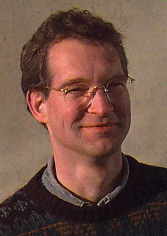 Holger Kantz合作论文数Max Planck Institute for the Physics of Complex Systems;Institute of Theoretical Physics, Department of Physics, Technical University Dresden5
 Jae-Hyung Jeon合作论文数Department of Physics;University of Munich;Department of Physics, University of Munich5
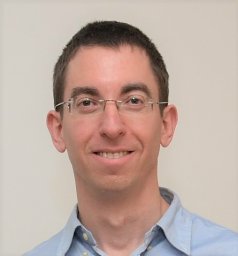 Shai Carmi合作论文数Minerva Center;Dept . of Physics;Bar-Ilan University;Minerva Center, Bar-Ilan University5Adi Rebenshtok合作论文数5HE Yong (何勇)合作论文数4
 Peter Hänggi合作论文数Institute of Physics, Faculty of Mathematics, Natural Sciences, and Materials Engineering, University of Augsburg4
 Daxing Xiong (熊大兴)合作论文数福州大学物理与信息工程学院4
 Victor Fleurov合作论文数4Golan Bel合作论文数4Bob Silbey合作论文数4
 Shlomi Medalion合作论文数Department of Physics;Bar-Ilan University;Department of Physics, Bar-Ilan University4
 Diego Krapf合作论文数Kavli Institute of Nanoscience;Delft University of Technology;Kavli Institute of Nanoscience, Delft University of Technology4Daniela Froemberg合作论文数4Alessandro Vezzani合作论文数Dipartimento di Fisica;Universita degli Studi di Parma;Dipartimento di Fisica, Universita degli Studi di Parma4
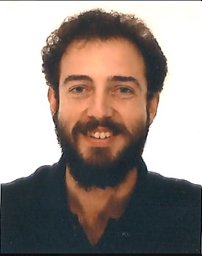 Itzhak Fouxon合作论文数School of Physics and Astronomy;Tel-Aviv University;School of Physics and Astronomy, Tel-Aviv University4
 Celia Anteneodo合作论文数Dept Phys, Pontificia Univ Catolica Rio de Janeiro4
 Raffaella Burioni合作论文数Dipartimento di Scienze Matematiche, Fisiche e Informatiche, Università di Parma4Y Garini合作论文数3Stas Burov合作论文数3Alexander Peletskyi合作论文数3
 Dror Meidan合作论文数Dept Math, Bar Ilan Univ3




