With clarity and eloquence, Trauma and Grief Assessment and Intervention comprehensively captures the nuance and complexity involved in counseling bereaved and traumatically bereaved persons in all stages of the life cycle. Integrating the various models of grief with the authors' strengths-based framework of grief and loss, chapters combine the latest research in evidence-based practice with expertise derived from years of psychotherapy with grieving individuals. The book walks readers through the main theories of grief counseling, from rapport building to assessment to intervention. Each chapter concludes with lengthy case scenarios that closely resemble actual counseling sessions to help readers apply their understanding of the chapter's content. In the support material on the book's website, instructors will find a sample syllabus, PowerPoint slides, and lists of resources that can be used as student assignments or to enhance classroom learning. Trauma and Grief Assessment and Intervention equips students with the knowledge and skills they need to work effectively with clients experiencing trauma and loss.
This study’s purpose was to assess social work practitioners’ educational needs for developing spiritual/religious competencies with end-of-life care and grief. Competency levels and factors associated with educational courses and content on developing spiritual/religious competencies were identified. Data were collected in 2017 through an online Qualtrics Survey Tool at a large public university in the Southwest. An online survey was sent to 3,845 social work practitioners via email and 437 practitioners who met eligibility criteria participated in the survey. Results suggest that social work education and trainings would benefit from better integration of spirituality/religion competencies, both in general and specifically in the area of end-of-life care and grief. Implications for social work education improvement are provided.
"Treating the Eating Disorder Self: A Comprehensive Model for the Social Work Therapist." Journal of Teaching in Social Work, 41(2), pp. 207–208
The purpose of the study was to explore the effects of violence on trauma among forced-immigrant women from the northern triangle of Central America (NTCA) resulting from direct and indirect violence in their country of origin and during the migratory journey through Mexico. In trauma theory the concept of compounding stressors is an important framework for understanding aspects of human development, especially among low-socioeconomic-status and oppressed populations. Authors hypothesized that violence would have an impact on trauma and conducted interviews with 108 women ages 18 to 65 from the NTCA who traveled by land across Mexico before entering the United States. A survey instrument captured demographic information and types of violence experienced in the home country and during the migratory journey. A standardized screening tool was used to measure trauma symptoms. A hierarchical regression model for trauma was entered in the following order: (a) demographics and (b) violence. Violence was found to be a significant predictor for trauma. Findings suggest that having experienced violence in the country of origin and through the migratory journey had a powerful role in predicting trauma symptoms among immigrant women from the NTCA.
Objective The diagnosis of an advanced cancer in young adulthood can bring one's life to an abrupt halt, calling attention to the present moment and creating anguish about an uncertain future. There is seldom time or physical stamina to focus on forward-thinking, social roles, relationships, or dreams. As a result, young adults (YAs) with advanced cancer frequently encounter existential distress, despair, and question the purpose of their life. We sought to investigate the meaning and function of hope throughout YAs' disease trajectory; to discern the psychosocial processes YAs employ to engage hope; and to develop a substantive theory of hope of YAs diagnosed with advanced cancer. Method Thirteen YAs (ages 23-38) diagnosed with a stage III or IV cancer were recruited throughout the eastern and southeastern United States. Participants completed one semi-structured interview in-person, by phone, or Skype, that incorporated an original timeline instrument assessing fluctuations in hope and an online socio-demographic survey. Glaser's grounded theory methodology informed constant comparative methods of data collection, analysis, and interpretation. Results Findings from this study informed the development of the novel contingent hope theoretical framework, which describes the pattern of psychosocial behaviors YAs with advanced cancer employ to reconcile identities and strive for a life of meaning. The ability to cultivate the necessary agency and pathways to reconcile identities became contingent on the YAs' participation in each of the psychosocial processes of the contingent hope theoretical framework: navigating uncertainty, feeling broken, disorienting grief, finding bearings, and identity reconciliation. Significance of Results Study findings portray the influential role of hope in motivating YAs with advanced cancer through disorienting grief toward an integrated sense of self that marries cherished aspects of multiple identities. The contingent hope theoretical framework details psychosocial behaviors to inform assessments and interventions fostering hope and identity reconciliation.
Over the last several years I have had the delightful opportunity to collaborate with other journal editors on presentations related to publishing at the Council on Social Work Education Annual Program Meeting and the Society for Social Work Research Annual Conference. In order to disseminate what we hope is sage advice that we give in these presentations to a wider audience, I have invited them to collaborate with me on this editorial on writing for publication in peer reviewed journals.
Over the past several years I have had the delightful opportunity to collaborate with other journal editors on presentations related to publishing at the Council on Social Work Education Annual Pro...
Abstract This article reviews existing knowledge on the assessment of children with fetal alcohol spectrum disorders (FASD) and available screening, prevention, and intervention services. The wide range of preventable conditions associated with FASD throughout the life cycle is described, along with associated high-risk maternal behaviors. In addition, cultural and social determinants are discussed, in an effort to inform social work practice. The differentiation of FASD and protective factors that have been identified as reducing negative outcomes for children and their families affected by prenatal alcohol exposure are also explained. Finally, multidisciplinary and culturally appropriate prevention services are emphasized as well as early diagnosis and strength-based intervention strategies.
This article describes the development of an integrated psychosocial patient and caregiver assessment and plan of care for hospice social work documentation. A team of hospice social workers developed the Social Work Assessment Notes as a quality improvement project in collaboration with the information technology department. Using the Social Work Assessment Tool as an organizing framework, this comprehensive hospice social work documentation system is designed to integrate assessment, planning, and outcomes measurement. The system was developed to guide the assessment of patients' and caregivers' needs related to end-of-life psychosocial issues, to facilitate collaborative care plan development, and to measure patient- and family-centered outcomes. Goals established with the patient and the caregiver are documented in the plan of care and become the foundation for patient-centered, strengths-based interventions. Likert scales are used to assign numerical severity levels for identified issues and progress made toward goals and to track the outcome of social work interventions across nine psychosocial constructs. The documentation system was developed for use in an electronic health record but can be used for paper charting. Future plans include automated aggregate outcomes measurement to identify the most effective interventions and best practices in end-of-life care.
I am afraid this manuscript may contribute not so much towards the field's advancement as much as toward its eventual demise.I am generally very happy to provide extensive suggestions and comments ...
Journal Article Language and Social Work: Are We Really Communicating Effectively? Get access Elizabeth C. Pomeroy, Elizabeth C. Pomeroy Elizabeth C. Pomeroy, PhD, LCSW, is professor and codirector of the Institute for Grief, Loss, and Family Survival, and Angela Nonaka, PhD, is assistant professor, School of Social Work, University of Texas at Austin. Address correspondence to Elizabeth Pomeroy, 1 University Station D3500, Austin, TX 78712;. e-mail: bpomeroy@mail.utexas.edu Search for other works by this author on: Oxford Academic PubMed Google Scholar Angela Nonaka Angela Nonaka Elizabeth C. Pomeroy, PhD, LCSW, is professor and codirector of the Institute for Grief, Loss, and Family Survival, and Angela Nonaka, PhD, is assistant professor, School of Social Work, University of Texas at Austin. Address correspondence to Elizabeth Pomeroy, 1 University Station D3500, Austin, TX 78712;. Search for other works by this author on: Oxford Academic PubMed Google Scholar Social Work, Volume 58, Issue 2, April 2013, Pages 101–104, https://doi.org/10.1093/sw/swt008 Published: 28 March 2013
 Renée Bradford Garcia合作论文数10
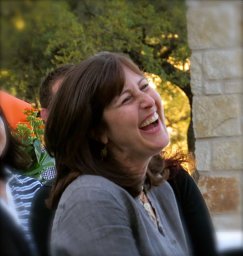 Lori Holleran Steiker合作论文数Sch Undergrad Studies, Univ Texas Austin9
 Susan P Robbins合作论文数4
 Danielle Parrish合作论文数School of Social Work, University of Texas at Austin4Diane Green合作论文数4
 Noel B Busch-Armendariz合作论文数School of Law, University of Texas at Austin;Steve Hicks School of Social Work, University of Texas at Austin3Barbara Jones合作论文数Social Work, University at Albany3Michele Rountree合作论文数3
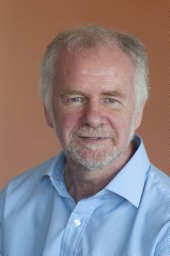 Hugh Mclaughlin合作论文数University of Salford;University of Manchester;University of Manchester;University of Manchester, University of Manchester3
 Sondra J. Fogel合作论文数3john s mcneil合作论文数2rebecca j ponder合作论文数2
 Barbara L. Jones合作论文数School of Social Work, University of Texas at Austin2
 L. Noel合作论文数Coll Social Work, Florida State Univ2Walker R J合作论文数2Malone Pamela A合作论文数2Bell Margaret L合作论文数2
 Joohee Lee合作论文数2Calvin L. Streeter合作论文数2Risa Kiam合作论文数2James Alan Neff合作论文数2
 Sanna J. Thompson合作论文数School of Social Work, University of Texas at Austin2
 Nancy Amodei合作论文数2Smaranda Valescu合作论文数2Angela M. Nonaka合作论文数1Allan Hugh Cole合作论文数1Margaret A. Taylor-Seehafer合作论文数1mph james alan neff合作论文数1Lynn Chen合作论文数1Susan E. Mason合作论文数1Polly Y. Browning合作论文数1kelly gober合作论文数1
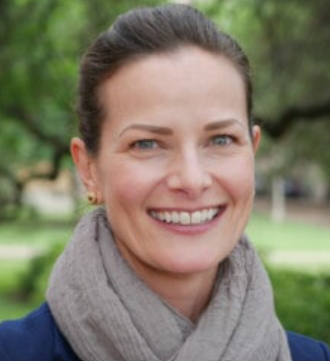 Lauren E. Gulbas合作论文数School of Social Work, University of Texas at Austin1
 Audrey Hang Hai合作论文数School of Social Work, Tulane University1Jennifer Currin-McCulloch合作论文数1
 Casey Walsh合作论文数1
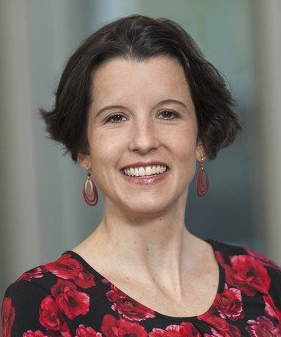 Kelly McConnell合作论文数Department of Psychiatry & Behavioral Sciences, Memorial Sloan Kettering Cancer Center1
 Karin Wachter合作论文数1Nonaka Angela合作论文数1
 Bruce A. Thyer合作论文数College of Social Work, Florida State University1
 Cynthia Franklin合作论文数university of texas at austin1
 Thomas M. Bohman合作论文数Addiction Research Institute, University of Texas at Austin1
 Flavio Francisco Marsiglia合作论文数School of Social Work, Arizona State University1
 Edward D. Barker合作论文数1
 Mcclain Sampson合作论文数School of Social Work, University of Texas at Austin1
 Carol M. Lewis合作论文数Department of Head and Neck Surgery, Division of Surgery, The University of Texas MD Anderson Cancer Center1
 Imogen Taylor合作论文数1Sharon A. Brown合作论文数1Kelly Stepura合作论文数1




