Policymakers and academics alike are turning to the concepts of misogyny and toxic masculinity to better understand contemporary extremism, including jihadist, far-right, and involuntary celibate (incel) groups. This chapter, based on semi-ethnographic research in the United Kingdom, explores the function of gender in the construction of extreme identities. Through analysis of interviews with both anti-Islam radical right activists and actors associated with Anjem Choudary’s banned Islamist group al-Muhajiroun (ALM), the chapter presents the mechanisms of extremism as intrinsically gendered. Adapting J. M. Berger’s definition of extremism, the chapter outlines the importance of gender to the in- and out-group differentiation that precedes activism, to what constitutes “success” in extreme activism, and to hostile acts against the out-group. As such, the chapter finds extremism is the outcome of radicalization toward particular masculinities; while narratives of misogyny and toxicity have something to say about extremism, they are not explanations for this phenomenon.
Abstract This chapter explores the tensions and complexities of women’s activism in the radical right. While the radical right emerges as distinct from the traditional far right, and strictly delineated roles for men and women, it has not entirely transformed traditional far-right gender politics. Women can find space as effective and motivational leaders, supported by men and women alike, as long as they do not go too far in challenging dominant patriarchal narratives. Prominent women leaders who center women’s agency will however always face censure, abuse, and pushback from the wider movement, including other women. This internally directed misogyny is consistent with ultra-nationalist ideology and is aimed at controlling women, through narratives of “care,” to protect patriarchy. Class-based misogyny is also often directed by activist men at radical right women, limiting their possibilities for activism. The chapter also considers the role of anti-feminism in women’s participation in the radical right, given all the women interviewed regarded liberal feminists as traitors. In particular, the chapter explores the roles and leadership styles of Jayda Fransen, then Deputy Leader of Britain First, and Anne Marie Waters, then Leader of For Britain, and how they inspire the grassroots.
Abstract The chapter discusses the anti-Islam radical right, exploring the masculine identities interviewees suggest are important in the period before they joined the extreme group. The chapter uses criminological theory emphasizing the importance of everyday interactions and “daily behaviors” in local spaces in the formation of masculine identity in both men and women on the radical right. Extreme actors construct agency and frame actions through a hypermasculine lens: social status is predicated on the potential for violence and confrontation, or proximity to this. Their gendered interactions in local spaces with symbolic meaning produce particular racialized and class-based masculinities, which they later mobilize towards group activism. Perceived differences in gendered and sexual norms also emerge as fundamentally important in identifying in-group and out-group (Muslim communities). What is clear here is that the first steps on the path to extremism are steps that also construct particular masculinities, situated in social and physical space. This chapter also introduces the radical right participants, and their backgrounds.
Abstract This chapter explores masculinities in mobilization to, as well as activism and protest within the radical right. It begins with a discussion of masculinities and participant understanding of radical-right ideology. Most interviewees reject the term “ideology” in relation to their activism, associating the term with accusations of racism, or with Islam. Nonetheless, the chapter evidences how masculine cultures in radical right activism constitute ideology. The chapter considers the role of different masculinities within the various discourses active in the radical right, and how these construct key differences between activism in the groups explored: the English Defence League (EDL), Britain First (BF) and For Britain (FB). There are three key expressions around which activism mobilises: the idealized muscular, self-proclaimed (white) working-class and authentic masculinity typified within the EDL and by Tommy Robinson, incorporating subcultures of football and football violence; the militarized Christian masculinity of Britain First and Jayda Fransen; and—the odd one out—the explicit assertion of women’s and gay rights, as typified by Anne Marie Waters, then of For Britain.
This chapter considers three types of online data available for researchers. First, it looks at machine learning and its use when considering the vast amount of data available to detect indicators of involvement in terrorism. Next, the chapter considers case studies and their use when addressing ‘how’ and ‘why’ questions. Given the difficulty of research with this population, case studies lend themselves to analysis of an individual terrorist’s behaviour. Finally, netnography (an ethnographic study of online communities) is reviewed with the argument that it has furthered our understanding of radicalisation. This area of research considers the intersection of online and offline relationships in mobilising people towards radicalisation. The chapter concludes with a review of the benefits and weaknesses of these different online research methods.
This chapter outlines the historic gender gap in literature on radicalisation, considers the inadequacies of past approaches lacking gender in tackling the radicalisation challenge, and provides a theoretical framework to progress the field going forward. In doing so, it bridges the gap between literature on radicalisation that demonstrates no awareness of gender and the growing body of feminist scholarship, which has focused predominantly on women. Since 9/11, theorists have tried to model radicalisation processes. Conveyor belts, pyramids, or staircases – none adequately engaged with gender. Even where mainstream authors highlighted the dominance of men in extreme groups, they did not incorporate a gendered analysis. Men's violence has been taken for granted, and misogynist ideology has been left unconsidered. Additionally, as more women engage in contemporary extreme groups, the need to analyse their involvement has become more pressing. This task has been left mainly to feminist scholars, who have detailed how and why women join extreme and violent groups across ideologies. These works of literature have not been integrated into broader gendered understandings of how radicalisation happens. This chapter argues that it is only by understanding gender as power, a social construction, and organising hierarchies, roles, ideologies, and relationships in extreme groups that we can progress in the field. Such an approach provides a means of better understanding both men's and women's radicalisation and therefore, of preventing it. It also avoids the 'add women and stir' approach that a division of the literature into 'radicalisation' and 'women's radicalisation' has entailed.
This paper uses a gendered analysis, alongside original data,1 to explore an increase in abductions of Muslim women and girls in southeastern Niger between March 2019 and the end of April 2020, and what this indicates about jihadist factional dynamics. These abductions occurred in operational areas historically associated with Islamic State West Africa Province (ISWAP), which is loyal to Islamic State. Yet, ISWAP condemns its rival faction, Abubakar Shekau-led Boko Haram (Jamaat Ahlus Sunnah Li-Dawa wal-Jihad), for that faction’s abduction and self-described enslavement of Muslim women. As such the abductions are an anomaly. The piece, therefore, considers three alternative possible reasons for the surge of abductions in southeastern Niger during this period. These are: the rise of a new Abubakar Shekau-loyal Boko Haram sub-faction operating in ISWAP’s historical areas of operations in southeastern Niger and around Lake Chad, led by the jihadist commander Bakura; leadership changes in ISWAP beginning in March 2019 that resulted in an ideological shift toward more ‘Shekau-like’ operations; and command-and-control issues, with ISWAP members engaging in abductions without leadership sanction. The paper argues that the new data, alongside a gender analysis of the ideological positions of the jihadist groups in the Lake Chad Basin Area, suggests the emergence of the new Bakura sub-faction contributed most to the increase in abductions of Muslim in southeastern Niger. The finding has implications for understanding the jihadist actors in the region, studying how gender functions in factionalisation, and developing a gendered policy to counter Boko Haram and a counter-terrorism strategy for member-states of the Lake Chad-based Multinational Joint Task Force
This chapter focuses on the policy and programme recommendations that can be drawn both from the findings of our research and from the broader theoretical literature on violent extremism and countering violent extremism. Its core recommendation is that policymakers, donors, programme implementers and other stakeholders employ the framework of gendered radicalisation to improve their preventive efforts. Above all it emphasises that language matters. The way we frame our narratives impacts on the effectiveness of CVE and on the willingness and ability of people, including women, to engage in the field.
The rise of populism and the radical right alongside ongoing global recruitment by jihadist groups has seen academics and popular discourse alike note parallels between the two. In particular, authors have emphasized gendered similarities between the movements. Based on 'close-up' ethnographic research, this article empirically shows how gender produces group members' activism in two extreme movements: a network linked to the U.K.'s banned Islamist group al-Muhajiroun; and activists for the English Defence League, Britain First and other anti-Islam(ist) groups. Through a gendered analysis, the article problematizes assertions that the two movements mirror one another. In particular, it emphasizes the ways in which gender produces fragmentation across the anti-Islam(ist) movement, contrasted with a more consistent gendered logic in those networked to al-Muhajiroun. Its key contribution is to use ethnographic research to evidence the ways in which group members' gendered activism ultimately undercuts group ideals.
This chapter examines what participants think violent extremism is, and how gender matters in what causes it. It focuses on radicalisation to the violent jihad and interactions between multiple layers of factors in recruitment. Communities highlight societal issues of discrimination, alienation and poverty, but also individual factors including belonging and identity. Each of these is gendered and different for men and for women, because the communities they live in have different expectations of each. There are complex engagements with gender and agency, empowerment and Islam. Generation gaps are evident in the responses of women to issues such as the burqa or niqab. There are no easy answers here, but one thing is clear, that gender is an essential part of understanding extremism.
This chapter explores the gender dynamics of populism, as well as the radical right, and white supremacy. It considers the ways in which gender is evident in focus group discussion of the causes of the ‘radical right’ and the importance of arguments around the sexual vulnerability of ‘white’ women to ‘Muslim men’ in mobilisation. It also illustrates the prevalence of fears about the risks of immigration to gender equality, even in communities who oppose the far right. At the heart of these fears are insecurities generated through everyday encounters with ‘others’, and the perceived failure of institutional responses to this. This chapter therefore contributes to the key argument, that the work to be done to counter violent extremism is in communities.
This chapter sets out the innovative methodology used in 2015–2016 in this research, the milieu approach. This research understands the milieu as the community most affected by the issues of radicalisation and violent extremism. The approach relies on the idea that knowledge of radicalisation is possessed not just by experts and states, but by communities with experience of its effects. It also engages with the milieu as potentially ‘vulnerable’ not just to radicalisation, whether Islamist or far right, but to the effects of government interventions to counter radicalisation. The milieu method innovated in this research was a response to one of the biggest challenges of conducting research on radicalisation to violent extremism: how to interview radical individuals in the absence of easy access.
In 2015, United Nations Security Council Resolution (UNSCR) 2242 set out the need for a gendered approach to Countering Violent Extremism (CVE) and counter terrorism. Scholars have critiqued the incorporation of gender into existing CVE programmes and on multiple grounds: CVE has instrumentalised the Women Peace and Security (WPS) agenda towards state-centric goals; it has essentialised the Muslim women (and men) it encounters; and it has framed women in need of Protection from risky men, creating tension with the space for female Participation, advocated within WPS. Violent extremism and radicalisation have so far, therefore, proved problematic frameworks for interpreting conflict-related violence and gender, given the critiques focus on the ways in which policy seeks to deny women’s agency. While acknowledging these critiques, this chapter argues for the ambiguities in Muslim women’s role in gendered CVE, which yet contains the possibility for women to exercise agency. As the soft side of counter-terrorism, gendered CVE entails partnering communities to build resilience. CVE programmes aimed at women’s participation rely on - and indeed reproduce – women’s affective relationships within a distinctly localized terrain. This chapter acknowledges this ambivalence, so far neglected in the literature, to explore how these relationships offer a new direction for the women peace and security agenda in CVE. Through a series of interviews with women in the field of CVE, the chapter explores how affective relationships underpinning the UK counter-radicalisation strategy Prevent can enable British Muslim women’s transformation of CVE; their leadership; and their participation. Women are able to both impact and progress gendered CVE, which is constituted in female agency within communities, as much as within policy, either at the UN or national level. The chapter problematises the straightforward reading of CVE as necessarily exploitative and reductive, instead revealing the ways in which women’s own community relations can produce agency and resistance, and a new path for the WPS agenda in CVE.
This chapter sets out the key arguments presented in this book, focusing on the core need to engage with gender as a form of power, not just women, if we are to fully understand violent extremism and how to counter it. It advocates approaches that prioritise and learn from the lived experiences of those people impacted both by extremism and attempts to prevent it. It also underlines the key assumptions that often underpin CVE interventions, but that cannot be evidenced. Additionally, it suggests that while Islamist and far right extremisms both pose a threat, they are not the same and require different responses. This chapter presents a summary of the findings and makes suggestions for the future of gender in policy to counter violent extremism.
This chapter introduces the reader to the security challenges of each of the countries that are the subject of in-depth research: Canada, France, Germany, the Netherlands and the UK. It explains why these countries matter in a global context and considers the ways in which countries frame their key security challenges, with a focus on gender and extremism in each. In particular, this chapter addresses the ways in which gender is present—or absent—in countries’ policies and interventions. It also sets out the current responses to the issue of Daesh returners.
This chapter focuses on the participants’ understanding of gender in state and civil society attempts to prevent and counter violent extremism. This chapter begins by examining community understanding of CVE generally, before focusing on specific issues such as objectives, delivery and consequences of CVE. This chapter focuses on the surprising number of shared stories from different cities across all five research countries, despite each employing a different approach. It revealed significant challenges to specific CVE focus on Muslim women, and the assumptions that underpin this, assumptions that emphasise: mothers, women’s empowerment; the blanket partnering of ‘Muslim communities’; and the omission of men in positive roles, such as fathers.
 Emily Winterbotham合作论文数14
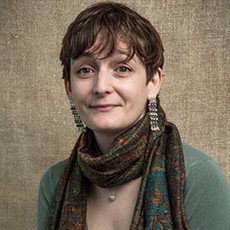 Katherine Brown合作论文数Department of Theology and Religion, School of Philosophy, Theology and Religion, College of Arts and Law, University of Birmingham10Jacob Zenn合作论文数2
 Joe Whittaker合作论文数School of Law, Swansea University1
 Ryan Scrivens合作论文数Michigan State University1
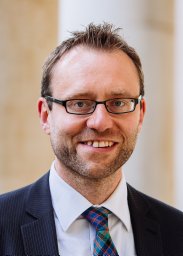 Stuart Macdonald合作论文数1




