Socially Assistive Robots (SAR) promote social interaction to provide cognitive, social and emotional support to people who interact with them. Therapies and interventions supported by SAR technologies for people with dementia (PwD) have found promising applications. Since a conversation is one of the most important strategies for social interaction with PwD we propose the use of a robot to enact a personalized conversation to calm, distract and relax people who suffer from dementia. However, a PwD-robot interaction has many differences with respect to an interaction between a robot and a person without dementia. Thus, to achieve our goal we propose a study to explore the adoption of a conversational SAR by PwD. In this work, we propose an exploratory study to answer open questions about PWD-robot interaction related to engagement, adoption factors, and communication strategies. We expect to answer these questions using common metrics used for human-robot interaction (HRI) and dementia research. With this study, we expect to determine which issues influence the adoption of a SAR by PwD. Moreover, this study will allow us to better understand how a PwD can interact with an autonomous conversational robot.
Increasing prevalence of dementia matched with higher demand on healthcare services poses a challenge to society. The use of innovative technologies such as robotics has been identified as one of the solutions to this predicament. The design of Socially Assistive Robots (SAR) is a multidisciplinary field that needs to incorporate the diverse requirements of people with dementia and their carers. This paper attempts to identify important considerations for the successful design of SARs and to categorize them. A taxonomy of SAR's features is proposed, best practice design approaches, technology acceptance and ethical issues are examined. Recommendations for future areas of research are outlined.
 Patrick Lehane合作论文数2Nikola Nestorov合作论文数2
 Kimberly Van Haitsma合作论文数Madlyn & Leonard Abramson Ctr Jewish Life, Polisher Res Inst1Dagoberto Cruz Sandoval合作论文数CICESE1
 Richard Eibrand合作论文数1
 Terrence Fong合作论文数NASA Ames Research Center1
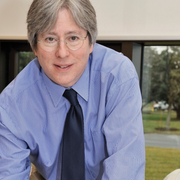 Alan C. Schultz合作论文数Naval Research Laboratory1
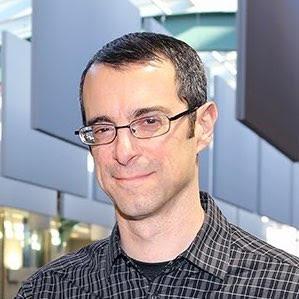 Aaron Steinfeld合作论文数Robotics Institute, School of Computer Science, Carnegie Mellon University1J Scholtz合作论文数1




