Given a triangulation of a closed orientable surface, we place single-mode resonators or single-orbital artificial atoms at its vertices, edges, and facets, and we devise near-neighbor hopping terms derived from the boundary and Poincaré duality maps of the simplicial complex of the triangulation. Regardless of the surface or its triangulation, these terms always lead to tight-binding Hamiltonians with large and clean topological spectral gaps, carrying non-trivial Chern numbers in the limit of infinite refinement of the triangulation. We confirm this via numerical simulations, and demonstrate how these models enable topological edge modes at the surfaces of real-world objects. Furthermore, we describe a metamaterial whose dynamics reproduces that of the proposed model, thus bringing the topological metamaterials closer to real-world applications.
Quantifying the configuration space and the Gibbs measure of thermally disordered condensed matter systems has been a long standing problem. The challenge is to avoid the Gibbs paradox, which forbids any ordering or labeling of the atoms. Our key observation is that the lattice of a thermally disordered condensed matter system, in either solid, liquid or gas phase, can be fully reconstructed from the Voronoi cells of the atoms alone, even if these Voronoi cells are disassembled and randomly scrambled. In the example of the crystalline phase of silicon, the statistics of the Voronoi cells reveals the existence of four, and only four, large facets that are present with probability one for all temperatures up to the solid-liquid melting line. These four largest facets, which separate nearest-neighboring atoms, can be also be used to reconstruct the lattice of the crystal. Hence, their collection supplies the optimal representation of the configuration of the crystal. We conjecture that the existence of Voronoi facets that, despite their large thermal fluctuations, survive with probability one up to the melting temperature, is the fundamental signature of the crystalline solid phase and therefore key to quantifying the Gibbs measure over the entire solid phase.
We first prove that the subalgebra 𝒞 generated by the vertex and face operators of an abelian Kitaev model is a C^∗-diagonal of the UHF algebra 𝒜 of quasilocal observables. This gives us access to the Weyl groupoid 𝒢_𝒞 associated with the C^∗-inclusion 𝒞↪𝒜, which supplies a valuable presentation of 𝒜 as a groupoid C^∗-algebra where the dynamics of the model are generated by a groupoid 1-cocycle c_H. Making appeal to the notion of (c_H,β)-KMS measures for this groupoid, we identify the full set of KMS states of the model and prove its uniqueness for β∈ [0,∞). Furthermore, we show that its limit at β→∞ exists and coincides with the unique frustration-free ground state of the model.
We study the abelian sub- C^* -algebra of the 2^∞ -UHF algebra generated by the star and face operators of Kitaev’s toric code. We show that it is a C^* -diagonal equivalent to the canonical diagonal of M_2^∞ .
We point out that, when an optimization problem has more than one solution, the quantum adiabatic algorithms (QAA) encounter topological obstructions leading to adiabatic spectral flows where spectral branches unavoidably traverse the spectral gap above the ground states of the quantum Hamiltonians. This raises serious doubts about the validity of the algorithms in such situations. However, using the Max-Cut problem as an example, we explain and demonstrate here that QAAs correctly detect all existing solutions in one single run. This newly discovered capacity of QAAs to simultaneously detect multiple solutions to an optimization problem can have an important impact on future developments of quantum variational algorithms
Let L-v C Z(D) be a suitable cone semigroup and U-v its reduced semigroup C*-algebra. In this paper, we compute the L-v-invariant measures in the transversal hull of the semigroup L-v that exhibit regularity in the boundaries of L-v. These measures enable the construction of a trace per-unit hypersurface for observables in U-v supported near the boundaries of L-v, leading to the construction of appropriate Chern cocycles in the "boundary" ideals of U-v. Our approach applies to both finitely and non-finitely generated cone semigroups. Applications for the bulk-defect correspondence of lattice models of topological insulators are also provided.
The exploration of metamaterials with artificial sub-wavelength structures has empowered researchers to engineer the propagation of classical waves, enabling advancements in areas such as imaging, sensing, communication, and energy harvesting. Concurrently, the investigation into topology and symmetry has not only unveiled valuable insights into fundamental physics, but also expanded our ability to manipulate waves effectively. Combined with the remarkable flexibility and diversity of artificial metamaterials, these considerations have sparked a focused research interest. Notably, a class of structures capable of supporting topological propagation modes akin to the Schrödinger equation has been identified. Leveraging metamaterials to emulate Schrödinger dynamics has emerged as a promising avenue for robust wave manipulation and the exploration of quantum phenomena beyond the confines of electronic systems. Despite rapid progress in this burgeoning field, comprehensive summaries are scarce. Thus, this review aims to systematically consolidate recent advancements in classical wave physics based on a Schrödinger equation approach. This discourse initiates with an overview of quantum and classical wave descriptions, subsequently delving into the elucidation of numerous models realized across diverse experimental platforms, including photonic/phononic waveguides, acoustic cavities, and optomechanics. Finally, we address the challenges and prospects associated with emulating Schrödinger dynamics, underscoring the potential for groundbreaking developments in this captivating domain.
Here we show the first experimental implementation of the fully general Kitaev chain with complex-valued order parameter Δ and site-varying synthetic chemical potential μ, using a passive multilayer acoustic resonator design and fabrication. Our laboratory model faithfully reproduces the key symmetries and the topological phase diagram of the model, and displays robust Majorana-like edge modes spatially localized at smoothly engineered domain walls and energetically localized in the middle of the bulk spectral gap. We demonstrate precise control over mode positioning through smooth spatial variations of μ, and validate the stability of the modes and of the spectral gap under continuous and complex variations of Δ – both critical requirements for topological braiding operations. These results establish and validate the fundamental building blocks for experimental implementation of complete braiding protocols, opening concrete pathways toward accessible non-abelian physics and topologically protected information processing.
A typical crystal is a finite piece of a material which may be invariant under some point symmetry group. If it is a so-called intrinsic higher-order topological insulator or superconductor, then it displays boundary modes at hinges or corners protected by the crystalline symmetry and the bulk topology. We explain the mechanism behind such phenomena using operator K-theory. Specifically, we derive a groupoid C*-algebra that 1) encodes the dynamics of the electrons in the infinite size limit of a crystal; 2) remembers the boundary conditions at the crystal's boundaries, and 3) admits a natural action by the point symmetries of the atomic lattice. The filtrations of the groupoid's unit space by closed subsets that are invariant under the groupoid and point group actions supply equivariant cofiltrations of the groupoid C*-algebra. We show that specific derivations of the induced spectral sequences in twisted equivariant K-theories enumerate all non-trivial higher-order bulk-boundary correspondences.
The goal of our work is to map the landscape of the frustration-free quantum spin models over the Cayley graph of a finitely generated group. This is achieved by establishing equivariant connections with the spaces of hereditary C*-algebras of the underlying quasi-local algebra of observables, and of open projections of its double dual.
In space-adiabatic approaches one can approximate Hamiltonians that are modulated slowly in space by phase-space functions that depend on position and momentum. In this paper, we establish a rigorous relation between this approach and the operator-theoretic approach for topological insulators with defects, which employs C^*-algebras and operator K-theory. Using such tools, we show that by quantizing phase-space functions one can construct lattice Hamiltonians which are gapped at certain spatial limits and carry protected states at defects such as boundaries, hinges, and corners. Moreover, we show that the topological invariants that protect the latter can be computed in terms of the symbol functions. This enables us to compute boundary maps in K-theory that are relevant for bulk-defect correspondences.
The nontrivial topology of spin systems such as skyrmions in real space can promote complex electronic states. Here, we provide a general viewpoint at the emergence of topological electronic states in spin systems based on the methods of noncommutative K-theory. By realizing that the structure of the observable algebra of spin textures is determined by the algebraic properties of the noncommutative hypertorus, we arrive at a unified understanding of topological electronic states which we predict to arise in various noncollinear setups. The power of our approach lies in an ability to categorize emergent topological states algebraically without referring to smooth real- or reciprocal-space quantities. This opens a way towards an educated design of topological phases in aperiodic, disordered, or non-smooth textures of spins and charges containing topological defects.
Frieze groups are discrete subgroups of the full group of isometries of a flat strip. We investigate here the dynamics of specific architected materials generated by acting with a frieze group on a collection of self-coupling seed resonators. We demonstrate that, under unrestricted reconfigurations of the internal structures of the seed resonators, the dynamical matrices of the materials generate the full self-adjoint sector of the stabilized group C*-algebra of the frieze group. As a consequence, in applications where the positions, orientations and internal structures of the seed resonators are adiabatically modified, the spectral bands of the dynamical matrices carry a complete set of topological invariants that are fully accounted by the K-theory of the mentioned algebra. By resolving the generators of the K-theory, we produce the model dynamical matrices that carry the elementary topological charges, which we implement with systems of plate resonators to showcase several applications in spectral engineering. The paper is written in an expository style.
We consider synthetic materials consisting of self-coupled identical resonators carrying classical internal degrees of freedom. The architecture of such material is specified by the positions and orientations of the resonators. Our goal is to calculate the smallest C*-algebra that covers the dynamical matrices associated to a fixed architecture and adjustable internal structures. We give the answer in terms of a groupoid C*-algebra that can be canonically associated to a uniformly discrete subset of the group of isometries of the Euclidean space. Our result implies that the isomorphism classes of these C*-algebras split these architected materials into classes containing materials that are identical from the dynamical point of view.
Topological materials and metamaterials opened new paradigms to create and manipulate phases of matter with unconventional properties. Topological D-class phases (TDPs) are archetypes of the ten-fold classification of topological phases with particle-hole symmetry. In two dimensions, TDPs support propagating topological edge modes that simulate the elusive Majorana elementary particles. Furthermore, a piercing of π-flux Dirac-solenoids in TDPs stabilizes localized Majorana excitations that can be braided for the purpose of topological quantum computation. Such two-dimensional (2D) TDPs have been a focus in the research frontier, but their experimental realizations are still under debate. Here, with a novel design scheme, we realize 2D TDPs in an acoustic crystal by synthesizing both the particle-hole and fermion-like time reversal symmetries for a wide range of frequencies. The design scheme leverages an enriched unit cell structure with real-valued couplings that emulate the targeted Hamiltonian of TDPs with complex hoppings: A technique that could unlock the realization of all topological classes with passive metamaterials. In our experiments, we realize a pair of TDPs with opposite Chern numbers in two independent sectors that are connected by an intrinsic fermion-like time-reversal symmetry built in the system. We measure the acoustic Majorana-like helical edge modes and visualize their robust topological transport, thus revealing the unprecedented D and DIII class topologies with direct evidence. Our study opens up a new pathway for the experimental realization of two fundamental classes of topological phases and may offer new insights in fundamental physics, materials science, and phononic information processing.
Understanding the interaction of real- and reciprocal space topology in skyrmion crystals is an open problem. We approach it from the viewpoint of $C^\ast$-algebras and calculate all admissible Chern numbers of a strongly coupled tight-binding skyrmion system on a triangular lattice as a function of Fermi energy and texture parameters. Our analysis reveals the topological complexity of electronic states coupled to spin textures, and the failure of the adiabatic picture to account for it in terms of emergent electromagnetism. On the contrary, we explain the discontinuous jumps in the real-space winding number in terms of collective evolution in real-, reciprocal, and mixed space Chern numbers. Our work sets the stage for further research on topological dynamics in complex dynamic spin textures coupled to external fields.
The program of matrix product states on tensor powers 𝒜^⊗ℤ of C^* -algebras is carried under the assumption that 𝒜 is an arbitrary nuclear C*-algebra. For any shift invariant state ω , we demonstrate the existence of an order kernel ideal 𝒦_ω , whose quotient action reduces and factorizes the initial data (𝒜^⊗ℤ, ω ) to the tuple (𝒜,ℬ_ω = 𝒜^⊗ℕ^×/𝒦_ω , 𝔼_ω : Å⊗ℬ_ω→ℬ_ω , ω̅: ℬ_ω→ℂ) , where ℬ_ω is an operator system and 𝔼_ω and ω̅ are unital and completely positive maps. Reciprocally, given a (input) tuple (𝒜,𝒮,𝔼,ϕ ) that shares similar attributes, we supply an algorithm that produces a shift-invariant state on 𝒜^⊗ℤ . We give sufficient conditions in which the so constructed states are ergodic and they reduce back to their input data. As examples, we formulate the input data that produces AKLT-type states, this time in the context of infinite dimensional site algebras 𝒜 , such as the C^* -algebras of discrete amenable groups.
We study the dynamics of synthetic molecules whose architectures are generated by space transformations from a point group acting on seed resonators. We show that the dynamical matrix of any such molecule can be reproduced as the left regular representation of a self-adjoint element from the stabilized group's algebra. Furthermore, we use elements of representation theory and K-theory to rationalize the dynamical features supported by such synthetic molecules up to topological equivalences. These tools enable us to identify a set of fundamental models which generate by superposition all possible dynamical matrices up to homotopy equivalences. Interpolations between these fundamental models give rise to topological spectral flows.
Consider a graph whose vertices are populated by identical objects, together with an algorithm for the time-evolution of the number of objects placed at each of the vertices. The discrete dynamics of these objects can be observed and studied using simple and inexpensive laboratory settings. There are many similarities but also many differences between such population dynamics and the quantum dynamics of a quantum particle hopping on the same graph. In this work, we show that a specific decoration of the original graph enables an exact mapping between models of population and quantum dynamics. As such, population dynamics over graphs is yet another classical platform that can simulate quantum effects. Several examples are used to demonstrate this claim.
Owing to their interesting spectral properties, the synthetic crystals over lattices other than regular Euclidean lattices, such as hyperbolic and fractal ones, have attracted renewed attention, especially from materials and metamaterials research communities. They can be studied under the umbrella of quantum dynamics over Cayley graphs of finitely generated groups. In this work, we investigate numerical aspects related to the quantum dynamics over such Cayley graphs. Using an algebraic formulation of the “periodic boundary condition” due to Lück (Geom Funct Anal 4:455–481, 1994), we devise a practical and converging numerical method that resolves the true bulk spectrum of the Hamiltonians. Exact results on the matrix elements of the resolvent, derived from the combinatorics of the Cayley graphs, give us the means to validate our algorithms and also to obtain new combinatorial statements. Our results open the systematic research of quantum dynamics over Cayley graphs of a very large family of finitely generated groups, which includes the free and Fuchsian groups.
 Peter J. A. Nordlander合作论文数Department of Physics and Astronomy, Rice University22
 Camelia Prodan合作论文数20
 Hermann Schulz-Baldes合作论文数Mathematisches Institut;Universitat Erlangen-Nurnberg;Mathematisches Institut, Universitat Erlangen-Nurnberg10
 Juntao Song合作论文数National Lab for Condensed Matter Physics and Institute of Physics, Beijing;Chinese Academy of Sciences;Beijing National Lab for Condensed Matter Physics and Institute of Physics, Chinese Academy of Sciences9
 Roberto Car合作论文数Frick Laboratory, Department of Chemistry, Princeton University8
 Yafis Barlas合作论文数Department of Physics, University of Texas at Austin7
 Bryan Leung合作论文数Magnetic, New York, NY USA;Dept Phys & Math Sci, Yeshiva Univ;Dept Phys & Math Sci, Yeshiva Univ6
 David J. Apigo合作论文数Dept Phys, New Jersey Inst Technol6
 Wenting Cheng合作论文数Dept Phys, New Jersey Inst Technol6
 Taylor L Hughes合作论文数Department of Physics, The Grainger College of Engineering, University of Illinois at Urbana-Champaign6
 Fabian R. Lux合作论文数Institute of Physics, Johannes Gutenberg University Mainz5
 Guoliang Huang (黄国良)合作论文数College of Engineering, Peking University4
 Yifei Liu合作论文数Dept Phys, Yeshiva Univ4
 Carlos R. Ordonez合作论文数Department of Physics, University of Houston4
 B. Andrei Bernevig合作论文数Department of Physics, Princeton University;Département de Physique, Ecole Normale Supérieure;Donostia International Physics Center4Tom Stoiber合作论文数3
 Qian wu合作论文数Univ Missouri, Dept Mech & Aerosp Engn, Columbia, MO 65211 USA3
 Kai Qian合作论文数Dept Phys, New Jersey Inst Technol3
 Lea F. Santos合作论文数Yeshiva University3
 Kulkarni Vikram合作论文数3
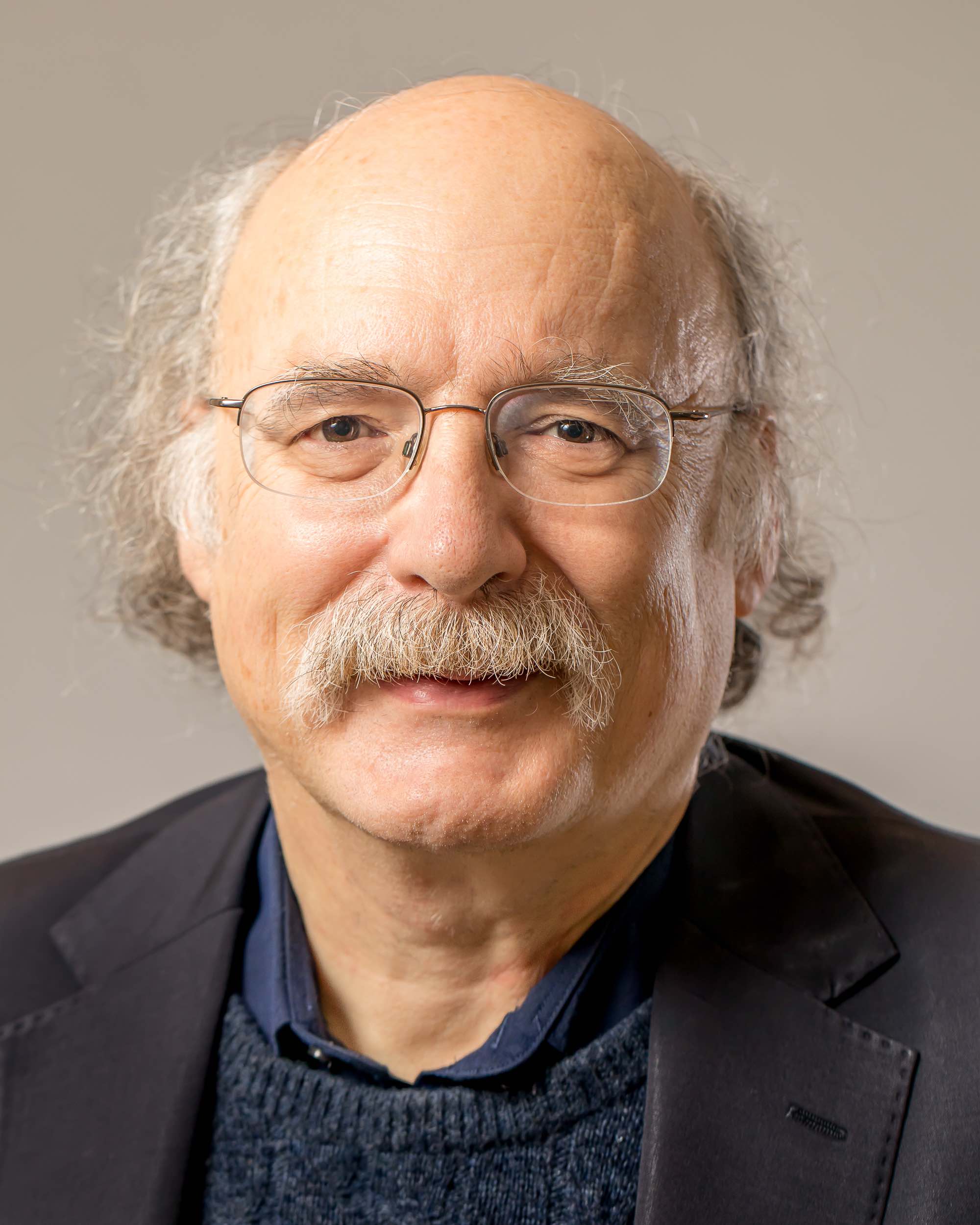 Duncan Haldane合作论文数Department of Physics, Princeton University3
 Massimo Ruzzene合作论文数School of Aerospace Engineering, Georgia Institute of Technology;School of Mechanical Engineering, Georgia Institute of Technology3
 Thomas D. Kühne合作论文数Center for Advanced Systems Understanding;Technische Universität Dresden3
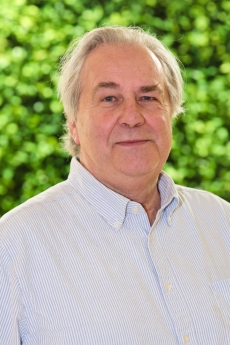 J. Houston Miller合作论文数Department of Chemistry, Columbian College of Arts & Sciences, The George Washington University3Huy Nguyen合作论文数2Pascal Prass合作论文数2yu xue合作论文数2
 Ssu-Ying Chen合作论文数2Liu Yingkai合作论文数School of Physics, Nankai University2Kyle F. Dobiszewski合作论文数Albert Dormans Honors Coll, New Jersey Inst Technol2Yu Huang合作论文数2
 Matheus I. N. Rosa合作论文数Dept Mech Engn, Univ Colorado2Zhang Hongkuan合作论文数2
 Xiaoming Zhou (周萧明)合作论文数School of Aerospace Engineering, Beijing Institute of Technology2
 Naomi J. Halas合作论文数Smalley-Curl Institute;Department of Physics and Astronomy, Rice University;Department of Biomedical Engineering, Rice University;Laboratory for Nanophotonics, Rice University;Department of Chemistry, Rice University2
 Jean Bellissard合作论文数Université de Provence Marseille France2
 M. Putinar合作论文数Mathematics Department, University of California2
 Stephan Ramon Garcia合作论文数Dept Math, Pomona Coll2
 Ian Mondragon-Shem合作论文数Instituto de F ´ õsica;Universidad de Antioquia;Instituto de F ´ õsica, Universidad de Antioquia2
 Yuriy Mokrousov合作论文数Institute of Physics, Johannes-Gutenberg Universität Mainz;Peter Grünberg Institut, Forschungszentrum Jülich GmbH2
 Alexander Govorov合作论文数Clippinger Research Labs, Department of Physics and Astronomy, College of Arts and Sciences, Ohio University2Jorge Zuloaga合作论文数2
 Bram Mesland合作论文数2
 John H Miller合作论文数Department of Physics and Texas Center for Superconductivity, University of Houston2Arooj Aslam合作论文数1J. R. Claycomb合作论文数1Keun Hyuk Ahn合作论文数1Julio Andrés Iglesias Martínez合作论文数1Yishai Eisenberg合作论文数1




