Recent JWST/NIRcam imaging taken for the ultra-deep UNCOVER program reveal a very red, triply imaged, compact dropout object at z phot (cid:39) 7 . 66 which is prominently lensed by the galaxy cluster Abell 2744 ( z d = 0 . 308). All three images are very compact, i.e
VANDELS is a uniquely deep spectroscopic survey of high-redshift galaxies with the VIMOS spectrograph on ESO's Very Large Telescope (VLT). The survey has obtained ultradeep optical (0.48 < lambda < 1.0 mu m) spectroscopy of similar or equal to 2100 galaxies within the redshilt interval 1.0 <= z <= 7.0, over a total area of similar or equal to 0.2 deg(2) centred on the CANDLES Ultra Deep Survey and Chandra Deep Field South fields. Based on accurate photometric redshift. pre-selection, 85 per cent of the galaxies targeted by VANDELS were selected to be at z >= 3. Exploiting the red sensitivity of the refurbished VIMOS spectrograph, the fundamental aim of the survey is to provide the high-signal-to-noise ratio spectra necessary to measure key physical properties such as stellar population ages, masses, metallicities, and outflow velocities from detailed absorption-line studies. Using integration times calculated to produce an approximately constant signal-to-noise ratio (20 < t(int) < 80 h), the VANDELS survey targeted: (a) bright star-forming galaxies at 2.4 <= z <= 5.5, (b) massive quiescent galaxies at 1.0 <= z <= 2.5, (c) fainter star-forming galaxies at 3.0 <= z <= 7.0, and (d) X-ray/Spitzer-selected active galactic nuclei and Herschel-detected galaxies. By targeting two extragalactic survey fields with superb multiwavelength imaging data, VANDELS will produce a unique legacy data set for exploring the physics underpinning high-redshift. galaxy evolution. In this paper, we provide an overview of the VANDFTS survey designed to support the science exploitation of the first ESO public data release, focusing on the scientific motivation, survey design, and target selection.
We present the results of a study investigating the sizes and morphologies of redshift 4 < z < 8 galaxies in the CANDELS (Cosmic Assembly Near-infrared Deep Extragalactic Legacy Survey) GOODS-S (Great Observatories Origins Deep Survey southern field), HUDF (Hubble Ultra-Deep Field) and HUDF parallel fields. Based on non-parametric measurements and incorporating a careful treatment of measurement biases, we quantify the typical size of galaxies at each redshift as the peak of the lognormal size distribution, rather than the arithmetic mean size. Parametrizing the evolution of galaxy half-light radius as r(50) alpha (1 + z)(n), we find n = -0.20 +/- 0.26 at bright UV-luminosities (0.3L(*(z=3)) < L < L-*) and n = -0.47 +/- 0.62 at faint luminosities (0.12L(*) < L < 0.3L(*)). Furthermore, simulations based on artificially redshifting our z similar to 4 galaxy sample show that we cannot reject the null hypothesis of no size evolution. We show that this result is caused by a combination of the size-dependent completeness of high-redshift galaxy samples and the underestimation of the sizes of the largest galaxies at a given epoch. To explore the evolution of galaxy morphology we first compare asymmetry measurements to those from a large sample of simulated single Sersic profiles, in order to robustly categorize galaxies as either 'smooth' or 'disturbed'. Comparing the disturbed fraction amongst bright (M-1500 <= -20) galaxies at each redshift to that obtained by artificially redshifting our z similar to 4 galaxy sample, while carefully matching the size and UV-luminosity distributions, we find no clear evidence for evolution in galaxy morphology over the redshift interval 4 < z < 8. Therefore, based on our results, a bright (M-1500 <= -20) galaxy at z similar to 6 is no more likely to be measured as 'disturbed' than a comparable galaxy at z similar to 4, given the current observational constraints.
We present the results of a study investigating the rest-frame ultra-violet (UV) spectral slopes of redshift z 5 Lyman-break galaxies (LBGs). By combining deep Hubble Space Telescope imaging of the CANDELS and HUDF fields with ground-based imaging from the UKIDSS Ultra Deep Survey (UDS), we have produced a large sample of z 5 LBGs spanning an unprecedented factor of >100 in UV luminosity. Based on this sample we find a clear colour-magnitude relation (CMR) at z 5, such that the rest-frame UV slopes (beta) of brighter galaxies are notably redder than their fainter counterparts. We determine that the z 5 CMR is well described by a linear relationship of the form: d beta = (-0.12 +/- 0.02) d Muv, with no clear evidence for a change in CMR slope at faint magnitudes (i.e. Muv > -18.9). Using the results of detailed simulations we are able, for the first time, to infer the intrinsic (i.e. free from noise) variation of galaxy colours around the CMR at z 5. We find significant (12 sigma) evidence for intrinsic colour variation in the sample as a whole. Our results also demonstrate that the width of the intrinsic UV slope distribution of z 5 galaxies increases from Delta(beta)=0.1 at Muv=-18 to Delta(beta)=0.4 at Muv=-21. We suggest that the increasing width of the intrinsic galaxy colour distribution and the CMR itself are both plausibly explained by a luminosity independent lower limit of beta=-2.1, combined with an increase in the fraction of red galaxies in brighter UV-luminosity bins.
We present a new determination of the ultraviolet (UV) galaxy luminosity function (LF) at redshift z similar or equal to 7 and 8, and a first estimate at z similar or equal to 9. An accurate determination of the form and evolution of the galaxy LF during this era is of key importance for improving our knowledge of the earliest phases of galaxy evolution and the process of cosmic reionization. Our analysis exploits to the full the new, deepest Wide Field Camera 3/infrared imaging from our Hubble Space Telescope (HST) Ultra-Deep Field 2012 (UDF12) campaign, with dynamic range provided by including a new and consistent analysis of all appropriate, shallower/wider area HST survey data. Our new measurement of the evolving LF at z similar or equal to 7 to 8 is based on a final catalogue of similar or equal to 600 galaxies, and involves a step-wise maximum-likelihood determination based on the photometric redshift probability distribution for each object; this approach makes full use of the 11-band imaging now available in the Hubble Ultra-Deep Field (HUDF), including the new UDF12 F140W data, and the latest Spitzer IRAC imaging. The final result is a determination of the z similar or equal to 7 LF extending down to UV absolute magnitudes M-1500 = -16.75 (AB mag) and the z similar or equal to 8 LF down to M-1500 = -17.00. Fitting a Schechter function, we find M-1500(*) = -19.90(-0.28)(+0.23), log phi* = -2.96(-0.23)(+0.18) and a faint-end slope alpha = -1.90(-0.15)(+0.14) at z similar or equal to 7, and M-1500* = -20.12(-0.48)(+0.37), log phi* = -3.35(-0.47)(+0.28) and alpha = -2.02(+0.23)(+0.22) at z similar or equal to 8. These results strengthen previous suggestions that the evolution at z > 7 appears more akin to 'density evolution' than the apparent 'luminosity evolution' seen at z similar or equal to 5 - 7. We also provide the first meaningful information on the LF at z similar or equal to 9, explore alternative extrapolations to higher redshifts, and consider the implications for the early evolution of UV luminosity density. Finally, we provide catalogues (including derived z(phot), M-1500 and photometry) for the most robust z similar to 6.5-11.9 galaxies used in this analysis. We briefly discuss our results in the context of earlier work and the results derived from an independent analysis of the UDF12 data based on colour-colour selection.
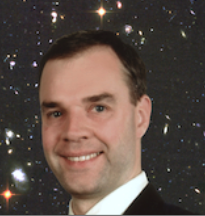 Anton M. Koekemoer合作论文数Space Telescope Science Institute6
 James Dunlop合作论文数Institute for Astronomy, School of Physics and Astronomy, University of Edinburgh6
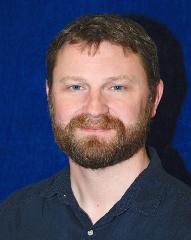 Ross McLure合作论文数School of Physics and Astronomy, The University of Edinburgh6
 Alexander Rogers合作论文数4
 Rebecca Bowler合作论文数Beecroft Institute for Particle Astrophysics and Cosmology, Department of Physics, University of Oxford4
 Henry C. Ferguson合作论文数Space Telescope Science Institute4
 E. Marmol-Queralto合作论文数4
 Steven L. Finkelstein合作论文数Department of Astronomy, College of Natural Sciences, The University of Texas at Austin3
 Brant E. Robertson合作论文数Department of Astronomy and Astrophysics, University of California, Santa Cruz3
 Christina C. Williams合作论文数Department of Astronomy;University of Massachusetts;Department of Astronomy, University of Massachusetts3
 Vivienne Wild合作论文数School of Physics and Astronomy, University of St Andrews3Stephane Charlot合作论文数3
 Sandra Faber合作论文数Department of Astronomy and Astrophysics, Science Division, University of California, Santa Cruz3T. A. Targett合作论文数3
 Dale D. Kocevski合作论文数Department of Physics and Astronomy, Colby College3
 Michele Cirasuolo合作论文数European Southern Observatory3Daniel P. Stark合作论文数3
 Nimish P. Hathi合作论文数Space Telescope Science Institute3R. Thomas合作论文数2D. Maccagni合作论文数2L. Guaita合作论文数2M. Franco合作论文数2
 Omar Almaini合作论文数School of Physics and Astronomy, The University of Nottingham;Faculty of Science, The University of Nottingham2Annalisa Citro合作论文数2Y. Khusanova合作论文数2W. Karman合作论文数2M. Talia合作论文数2F. Marchi合作论文数2C. Schreiber合作论文数2Derek McLeod合作论文数School of Physics and Astronomy, The University of Edinburgh2Fergus Cullen合作论文数School of Physics and Astronomy, The University of Edinburgh2Adam Carnall合作论文数School of Physics and Astronomy, The University of Edinburgh2William G. Hartley合作论文数ETH;Université de Genève;University College London2
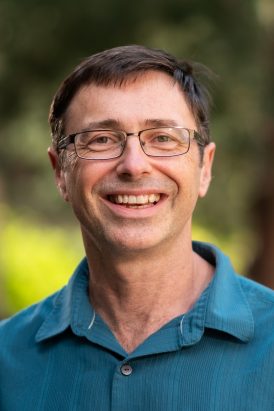 Eric Bell合作论文数Department of Astronomy, College of Literature, Science, and The Arts, University of Michigan2
 Casey Papovich合作论文数Department of Physics and Astronomy, College of Arts and Sciences, Texas A&M University2
 Mauro Giavalisco合作论文数Department of Astronomy, College of Natural Sciences, University of Massachusetts Amherst2
 Kenta Matsuoka (松岡健太)合作论文数2
 Angela Bongiorno合作论文数Osservatorio Astronomico di Roma;Tor Vergata University2Angela Iovino合作论文数2
 Adriano Fontana合作论文数Osservatorio Astronomico di Roma, Istituto Nazionale di Astrofisica;Optical-NearIR Division, National Institute for Astrophysics2
 Mara Salvato合作论文数Department of the High Energy Astrophysics, Max Planck Institute for Extraterrestrial Physics2
 Daniel Schaerer合作论文数Institut De Recherche En Astronomie Et Planetologie, Centre National De la Recherche Scientifique;Department of Astronomy, Université de Genève2
 Olivier Le Fevre合作论文数Laboratoire d'Astrophysique de Marseille, Aix-Marseille Université2
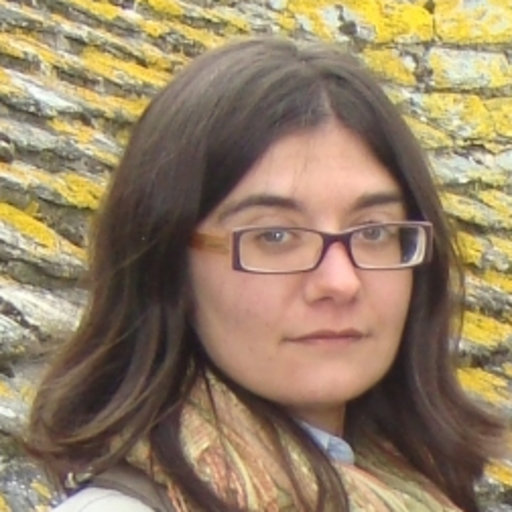 Olga Cucciati合作论文数Istituto Nazionale di Astrofisica2Paolo Franzetti合作论文数2
 Antonis Georgakakis合作论文数Institute for Astronomy, Astrophysics, Space Applications and Remote Sensing, National Observatory of Athens2
 Tommaso Treu合作论文数Department of Physics and Astronomy, University of California, Los Angeles2Norman a Grogin合作论文数2
 Matt Jarvis合作论文数Department of Physics, University of Oxford;Mathematical, Physical and Life Sciences Division, University of Oxford2




