Continuous variable dichotomization is a popular technique used in the estimation of the effect of risk factors on health outcomes in multivariate regression settings. Researchers follow this practice in order to simplify data analysis, which it unquestionably does. However thresholds used to dichotomize those variables are usually ad-hoc, based on expert opinions, or mean, median or quantile splits and can add bias to the effect of the risk factors on specific outcomes and underestimate such effect. In this paper, we suggest the use of a semi-parametric method and visualization for improvement of the threshold selection in variable dichotomization while accounting for mixture distributions in the outcome of interest and adjusting for covariates. For clinicians, these empirically based thresholds of risk factors, if they exist, could be informative in terms of the highest or lowest point of a risk factor beyond which no additional impact on the outcome should be expected.
The Institute of Medicine's report, Crossing the Quality Chasm: A New Health System for the 21st Century (IOM 2001), has challenged health care practitioners, administrators, and policymakers to implement major reforms to reinvent the nation's health care delivery system. Chronic care quality improvement (QI) collaboratives offer one set of comprehensive strategies for restructuring chronic care delivery systems. The collaboratives combine rapid-cycle change methods with multiple change strategies suggested by the Chronic Care Model (CCM) to facilitate improvements in processes and outcomes of care for people with chronic illness (ICIC 2003a, ICIC 2003b; IHI 2003). The CCM recommends organizational change in six areas: delivery system redesign, patient self-management support, decision support, information support, community linkages, and health system support. While change strategies have been implemented with success in each of the six areas (Wagner, Austin, and Von Korff 1996; Von Korff et al. 1997), little is known about how implementation in all six areas affects processes and outcomes of care (Bodenheimer, Wagner, and Grumbach 2002a,Bodenheimer, Wagner, and Grumbach 2002b). The RAND/Berkeley Improving Chronic Illness Care Evaluation (ICICE) team was charged with assessing the implementation and impact of the chronic care collaboratives. Key objectives were to evaluate (1) the success of the chronic care collaboratives in inducing the changes needed to implement the CCM and (2) the effects on costs, processes, and outcomes of care in organizations which were successful in varying degrees in implementing CCM (Cretin, Shortell, and Keeler 2004). This paper focuses on the first objective by addressing the following question: Did the participating organizations succeed in making CCM changes to their care delivery systems?
This report describes the RAND COMPARE microsimulation model, which can be used to assess the effects of changes in health care policy on insurance coverage and costs.
US hospital prices are rising again after years of limited growth. We analyze trends in hospital prices during a period of significant price growth (1999–2003) to assess whether hospitals that are part of multi-hospital systems were able to increase their prices faster than non-system hospitals. We find hospitals that were members of multi-hospital systems were able to increase their prices substantially more than comparable non-systems hospitals (34% for large systems and 17% for small systems). Further, we find that the systems effect is not confined to hospitals that have other system member hospitals in their local markets. One possible explanation is that hospitals belonging to non-local multi-hospital systems have improved their bargaining position vis-à-vis health plans.
We estimated the impact of hypothetical new diagnostic tests for tuberculosis (TB) in patients with persistent cough in developing countries. We found that a variety of new tests could help better identify TB cases and target treatment, thereby reducing the burden of disease.
The study assesses unobserved selection bias in an inpatient diagnostic cost group (DCG) model similar to Medicare's Principal Inpatient Diagnostic Cost Group (PIP-DCG) risk adjustment model using a unique data set that contains hospital discharge records for both FFS and HMO Medicare beneficiaries in California from 1994 to 1996. We use a simultaneous equations model that jointly estimates HMO enrollment and subsequent hospital use to test the existence of unobserved selection and estimate the true HMO effect. It is found that the inpatient DCG model does not adequately adjust for biased selection into Medicare HMOs. New HMO enrollees are healthier than FFS beneficiaries even after adjustment for the included PIP-DCG risk factors. A model developed over an FFS sample ignoring unobserved selection overestimates hospital use of new HMO enrollees by 28 percent compared to their use if they had remained in FFS. Models that better captures selection bias are needed to reduce overestimation of Medicare HMO enrollees' resource use.
OBJECTIVES To evaluate the costs of implementing a church-based, telephone-counseling program for increasing mammography use, and to identify the components of costs and the likely cost-effectiveness in hypothetical communities with varying characteristics. DATA SOURCES/STUDY SETTING An ethnically and socioeconomically diverse sample of 1,443 women recruited from 45 churches participating in the Los Angeles Mammography Promotion (LAMP) program were followed from 1995 to 1997. STUDY DESIGN Churches were stratified into blocks and randomized into three intervention arms-telephone counseling, mail counseling, and control. We surveyed participants before and after the intervention to collect data on mammography use and demographic characteristics. DATA COLLECTION/EXTRACTION METHODS We used call records, activity reports, and interviews to collect data on the time and materials needed to organize and carry out the intervention. We constructed a standard model of costs and cost-effectiveness based on these data and the Year One results of the LAMP program. PRINCIPAL FINDINGS The cost in materials and overhead to the church site was $10.89 per participant and $188 per additional screening. However, when the estimated cost for church volunteers' time was included, the cost of the intervention increased substantially. CONCLUSIONS A church-based program to promote the use of mammography would be feasible for many churches with the use of volunteer labor and resources.
Background. Comprehensive geriatric assessment (CGA) can be effective in inpatient units, but such inpatient settings are prohibitively expensive. If similar benefits could be obtained in outpatient settings, CGA might be a more attractive option. Objectives. To assess the cost-effectiveness (CE) of an outpatient geriatric assessment with an intervention to increase adherence. Subjects. Three hundred fifty-one community-dwelling, elderly subjects with at least one of four geriatric conditions. Measures. In addition to the measures of functioning, we collected data on the costs of the intervention itself and on the use of medical services in the 64 weeks after the intervention. Results. The intervention, which prevented functional decline, cost $273 per participant. The intervention group averaged three more visits than the control group in the first 32 weeks after the intervention, but only 1.2 extra visits in the next 32 weeks. We estimate that the costs of these additional medical services would be $473 for the 5 years after the intervention, leading to a total cost per Quality Adjusted Life Year (QALY) of $10,600. Conclusions. The CE of this program compares favorably with many common medical interventions. Whether investments should be made in health care resources on treatments that lead to modest improvements in the functioning of community-dwelling elderly people remains a societal decision.
 Paul G. Shekelle合作论文数School of Medicine, University of California, Los Angeles;RAND Corporation7
 Sally Morton合作论文数School of Mathematical and Statistical Sciences, College of Liberal Arts and Sciences, Arizona State University;College of Health Solutions, Arizona State University7
 Willard G. Manning合作论文数Harris School of Public Policy, The University of Chicago6
 Maren Scheuner合作论文数3
 Roger S. Blumenthal合作论文数School of Medicine, The Johns Hopkins University;Ciccarone Center for the Prevention of Cardiovascular Disease, The Johns Hopkins University3
 Claude Messan Setodji合作论文数3
 Federico Girosi合作论文数Translational Health Research Institute, Western Sydney University3george a goldberg合作论文数2
 Steven Reed合作论文数Center for Innate Immunity and Immune Disease, University of Washington;Infectious Disease Research Institute, Department of Global Health, School of Public Health, University of Washington2
 Jim Pankow合作论文数Division of Epidemiology and Community Health, School of Public Health, University of Minnesota2
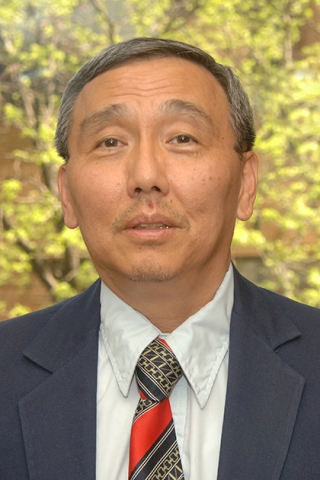 Naihua Duan合作论文数Department of Psychiatry, Columbia University Medical Center2Kathleen N. Lohr合作论文数Cecil G. Sheps Center for Health Services Research, University of North Carolina at Chapel Hill;Department of Health Policy and Administration, School of Public Health, University of North Carolina at Chapel Hill2
 Christopher Dye (戴诗磊)合作论文数Department of Biology, University of Oxford2Glenn Melnick合作论文数2Jane Cunningham合作论文数2Julia E. Aledort合作论文数2
 Mark D. Perkins (Mark Perkins)合作论文数Foundation for Innovative New Diagnostics2Maria E. Rafael合作论文数2Peter M. Small合作论文数Division of Infectious Diseases and Geographic Medicine, Stanford University Medical Center2J C Frank合作论文数1patricia camp合作论文数1
 Judith Schaefer合作论文数1S A Fox合作论文数1Mary Vaiana合作论文数1Hongjun Kan合作论文数1haiying chen合作论文数1
 Raffaele Vardavas合作论文数1Christy Hanson合作论文数1Ta Louis合作论文数1Haiying Chen合作论文数1Jack Zwanziger合作论文数1
 Arleen Leibowitz合作论文数Luskin School of Public Affairs, University of California, Los Angeles1
 Jill A. Marsteller合作论文数Health Policy and Management, Bloomberg School of Public Health, Johns Hopkins University1
 Christopher Lau合作论文数Department of Cardiothoracic Surgery, Weill Cornell Medicine, Cornell University1
 David Reuben合作论文数Division of Geriatrics, Department of Medicine, David Geffen School of Medicine, University of California1
 James F Pankow合作论文数Department of Civil and Environmental Engineering, Maseeh College of Engineering and Computer Science, Portland State University1Derose Kathryn Pitkin合作论文数RAND Corp1
 Jeffrey Mudge Sullivan合作论文数Sibley Sch. of Mech. & Aerosp. Eng., Cornell Univ.;c1Mulcahy Andrew合作论文数1Robalino D A合作论文数1
 Paul Glasziou合作论文数Faculty of Health Sciences & Medicine, Bond University;Institute for Evidence-Based Healthcare, Bond University1
 Amado Cordova合作论文数1
 Dana Goldman合作论文数Leonard D. Schaeffer Center for Health Policy and Economics, University of Southern California1
 Arthur Kellermann合作论文数Virginia Health Workforce Development Authority1
 Amy Bonomi合作论文数1John E. Rolph合作论文数1
 John E. Ware Jr.合作论文数John Ware Research Group, Inc.;Department of Urology, T.H. Chan School of Medicine, UMass Chan Medical School, University of Massachusetts;Harvard T.H. Chan School of Public Health, Harvard University;Department of Quantitative Health Sciences, University of Massachusetts Medical School1Susan H. Hirsch合作论文数1




