Municipal solid waste (MSW) generation is projected to rise from 2.1 billion tons in 2020 to 3.782 billion tons annually by 2050 under a business-as-usual (BAU) scenario, intensifying environmental, economic, and social pressures. Using a scenario-based comparative indicator framework built from structured synthesis of global datasets and peer-reviewed literature, this study evaluates current waste management practices and compares three scenarios to 2050: BAU, controlled waste management, and circular economy. We show that 38
Thermochemical energy storage (TCES) systems are gaining widespread consideration to increase the dispatchability of renewable energies. Reduction/oxidation of metal oxides has the advantage that air can be used during both reaction steps, simplifying the process scheme. Copper oxide is an interesting candidate, thanks to its high reaction heat and low toxicity, but it suffers from strong sintering at high temperatures because of the low melting point of Cu2O. This work investigates the use of copper/cerium mixed oxides to reduce sintering phenomena, in order to allow their use in TCES applications. Samples with different CeO2 contents were synthesized through coprecipitation and tested with a thermogravimetric analyzer in either pressure swing or temperature swing mode of operation. Material cyclability, energy storage densities, and kinetic parameters were assessed. Results showed that sintering is negligible in pressure swing but not in temperature swing, where reduction temperatures must exceed 1030 degrees C. Samples with higher CeO2 contents showed increased sintering resistance. In temperature swing, Cu100 melted and Cu80 showed particle agglomeration, while Cu50 only presented minor sintering effects. Volumetric energy storage densities ranged within 1000-3160 MJ m-3 depending on the sample, process conditions, and porosity considered. The kinetic analysis revealed that oxidation can be modeled as a first-order chemical reaction, whereas reduction follows a second-order Avrami-Erofeev model. Altogether, mixed Cu/Ce oxides showed interesting performance in TCES applications.
Climate change, biodiversity loss, and pollution collectively called the triple planetary crisis are creating serious pressure on the earth system. Addressing these connected environmental challenges requires scientific tools that can measure environmental impacts and support better decisions. Life-cycle assessment (LCA) is widely used to evaluate emissions, resource use, and environmental impacts across the full life cycle of products, processes, and systems. Here, we use a systematic literature review (SLR) approach to examine how LCA can support actions related to climate change, biodiversity loss, and pollution. We also explore how LCA can be connected with the planetary boundaries (PBs) framework to evaluate whether human activities remain within safe environmental limits. Our review identifies several important methodological gaps in current LCA practice. These include limited spatial and temporal detail, weak coverage of biodiversity and pollution impacts, insufficient consideration of earth-system feedbacks, and limited integration with planetary thresholds. We found that climate-related LCA methods are more advanced, while biodiversity and pollution assessments are still fragmented and less developed. The review also shows that combining LCA with PBs and related sustainability frameworks can improve the assessment of environmental risks, reduce burden shifting, and support science-based sustainability targets. Overall, this study shows that LCA has strong potential to move beyond product-level comparisons and become a broader decision-support tool for guiding sustainability transitions within the earth safe operating space.
Methanation of carbon dioxide (CO2), frequently referred to as Sabatier reaction, is a promising strategy for the conversion of H2 produced from renewable energy into a more easily exploitable and storable fuel. It allows the development of a circular carbon economy, reducing CO2 emissions to the atmosphere. Methanation of CO2 is, however, a challenging reaction as its stoichiometry and high exothermicity prevent the complete conversion of H2. Typically, a series of packed bed reactors with several intercooling and water removal steps is required to produce a methane stream with low hydrogen content, ready for natural gas grid injection. This work investigates the use of a polytropic fixed-bed reactor for CO2 methanation over a Ni-based catalyst, focusing on distributed gas feeding strategies (axial staging) to improve CO2 conversion and methane productivity. A detailed mathematical model based on mass and energy balance equations is developed, accounting for Sabatier reaction kinetics and neglecting side reactions. The model accounts for key mass and heat transfer resistances and is validated against literature experimental data. COMSOL Multiphysics (R) simulations are used to investigate the influence of lateral feed point location and temperature on the simulation results. Additionally, the optimal distribution of reactant flows is examined. Strategic management of lateral feeds enhances methane yields while significantly reducing gas preheating energy consumption. An improvement of 5-32% in the outlet methane molar fraction has been evaluated. By providing practical design guidelines for industrial-scale reactors that efficiently produce synthetic methane from CO2, this work contributes to the development of sustainable energy systems.
The present study investigates a sorption-enhanced methanation process and successive solid regeneration stages using a dual-function catalyst containing nickel as a catalyst and zeolite 13X for water removal. An adiabatic packed bed, modelled by a dynamical and heterogeneous model, has been considered, and a five-stage sequence describes the sorption-enhanced methanation and successive solid regeneration. First, methanation occurs with in-situ water removal; then, the catalyst drying using a pressure and temperature swing approach implemented by blowdown, purge, cooling, and pressurisation stages. In adiabatic operation, heat management is crucial; on the other hand, the heat produced can be efficiently used to dry the zeolite. Process intensification is pursued by addressing the effect of gas inlet temperature, pressure, and GHSV on system performance. Achieving an average purity of 99 % of the methane for pressures greater than 2 bar is possible for long-time operation, with productivity averaging 0.8 mol/(kgads min) at the highest gas hourly space velocity investigated.
Biogas CO2 content can be valorized directly through the methanation process without the need for a cleaning step. By integrating biogas production with a methanation system, a net increase in biomethane yield and productivity can be achieved while reducing greenhouse gas emissions. This study aims to compare the environmental and economic performances of a biogas direct methanation system to those of one of the most widely-used conventional methods, namely water scrubbing, by means of Life Cycle Assessment and Life Cycle Costing methodologies, with specific reference to the Campania region context. Two detailed models were developed using Aspen Plus to produce high-purity methane suitable for direct injection into the natural gas grid. From simulations, inventory data of plant operations are collected and used for environmental and economic assessments. While direct methanation presents higher environmental impacts under current energy scenarios, utilizing renewable energy sources can substantially mitigate these impacts. Similarly, direct methanation becomes a cost-effective alternative to water scrubbing if a surplus of wind energy provides hydrogen.
This work aims to develop a novel co-generative technology to produce methanol through bio-syngas from waste biomass. To this aim, residual biomasses in southern Italy will be characterized by proximate and ultimate analyses and used as fed in syngas production for methanol synthesis. A non-stoichiometric method based on Gibbs free energy minimization was used to simulate biomass steam gasification and subsequent syngas adjustment through WGS reaction. The processed syngas are fed to a methanol reactor consisting of a membrane for water separation, an electrolyzer splitting the water produced by methanol synthesis, and a heat exchanger for heat recovery integrated into one equipment. By this reactor, methanol production yield is studied for several gasified biomasses.
Stabilizing global mean temperature requires all countries to align with pathways that achieve carbon neutrality by the middle of the century. For late-industrializing economies, this objective is particularly demanding, since their energy demand and emissions continue to rise. This study provides a systematic assessment of Pakistan, a country ranked among the most climate-vulnerable globally and lacking a defined pathway to mid-century carbon neutrality. The analysis first establishes clear conceptual distinctions among carbon neutrality, net-zero greenhouse gases, and climate neutrality, terms that are often used interchangeably in international policy debates. Using a backcasting framework, we establish 2050 carbon neutrality as the target year and identify the intermediate stages required for convergence. The analysis integrates national energy and emissions data (2013-2023), international statistical reviews, and comparative trajectories from the European Union, the United States, and regional peer economies. The results outline a three-stage, four-step strategy that incorporates accelerated electrification, industrial decarbonization, renewable energy expansion, circular economy practices, and natural sequestration. Our findings demonstrate that a late peaking (similar to 2030) can still converge to carbon neutrality by mid-century, provided that policy alignment and investment mobilization occur within the next decade. This framework informs transition strategies across similarly placed economies.
Traditional biogas upgrading systems focus on producing biomethane by means of carbon dioxide removal. Nevertheless, recent advancements have highlighted the potential for valorizing biogas CO2 content by methanation without the need for its prior separation. This study compares the performance of a direct methanation system purposely designed to produce high-purity methane suitable for direct injection into a natural gas grid system to those of widely used conventional upgrading technologies, including water scrubbing, chemical absorption with monoethanolamine, membrane separation, and pressure swing adsorption. To this end, detailed mathematical models of the proposed system and conventional biogas upgrading units were developed using the commercial software AspenONE. The system's performance is compared in terms of methane loss and purity, avoided carbon dioxide emissions, energy efficiency, and levelized cost of biomethane. Biogas direct methanation compares to conventional technologies regarding methane purity (96.96%) and energy efficiency (88%), surpassing them in terms of methane recovery (100%). From an economic perspective, direct methanation exhibited a slightly higher levelized cost of biomethane (0.58 /Nm3) than conventional upgrading techniques, which average around 0.51 /Nm3. As long as excess electric energy from renewable sources is used, biogas upgrading by direct methanation can be considered a technical and economical alternative to conventional upgrading routes.
Bioenergy with carbon capture and storage (BECCS) or utilization (BECCU) allows net zero or negative carbon emissions and can be a breakthrough technology for climate change mitigation. This work consists of an energetic, exergetic, and economic analysis of an integrated process based on chemical looping combustion of solar-torrefied agro-industrial residues, followed by methanation of the concentrated CO2 stream with green H2. Four agro-industrial residues and four Italian site locations are considered. Depending on the considered biomass, the integrated plant processes about 18–93 kg h−1 of raw biomass and produces 55–70 t y−1 of synthetic methane. Global exergetic efficiencies ranged within 45–60% and 67–77% when neglecting and considering, respectively, the valorization of torgas. Sugar beet pulp and grape marc required a non-negligible input exergy flow for the torrefaction, due to the high moisture content of the raw biomasses. However, for these biomasses, the water released during drying/torrefaction and CO2 methanation could be recycled to the electrolyzer to eliminate external water consumption, thus allowing for a more sustainable use of water resources. For olive stones and hemp hurd, this water recycling brings, instead, a reduction of approximately 65% in water needs. A round-trip electric efficiency of 28% was estimated assuming an electric conversion efficiency of 40%. According to the economic analysis, the total plant costs ranged within 3–5 M€ depending on the biomass and site location considered. The levelized cost of methane (LCOM) ranged within 4.3–8.9 € kgCH4−1 but, if implementing strategies to avoid the use of a large temporary H2 storage vessel, can be decreased to 2.6–5.3 € kgCH4−1. Lower values are obtained when considering hemp hurd and grape marc as raw biomasses, and when locating the PV field in the south of Italy. Even in the best scenario, values of LCOM are out of the market if compared to current natural gas prices, but they might become competitive with the introduction of a carbon tax or through government incentives for the purchase of the PV field and/or electrolyzer.
An innovative process layout for sludge waste management based on chemical looping combustion and flue gas methanation is analyzed in this work. The technical performance of the system was assessed by considering that the flue gas is first purified and then mixed with a pure hydrogen stream sourced from an array of electrolysis cells to produce methane. The life cycle assessment (LCA) and life cycle cost (LCC) methodologies were applied to quantify the environmental and economic performances of the proposed process, and a hotspot analysis was carried out to recognize its most critical steps. The proposed system was then compared with a reference system that includes both the conventional waste management pathways for the Italian context and methane production. Finally, to account for the variability in the future economic climate, the effects of changes in landfill storage costs on sewage end-of-life costs for both the proposed and reference systems were evaluated. With respect to 1 kg/h of sewage sludge with 10%wt of humidity, the analysis shows that the proposed system (i) reduces landfill wastes by about 68%, (ii) has an end-of-life cost of 1.75 EUR × kg−1, and (iii) is environmentally preferable to conventional sewage sludge treatment technologies with respect to several impact categories.
Synthetic natural gas production from CO2 and green hydrogen provides a promising route to renewable energy storage. Reactants maximum conversion degree, limited by CO2 methanation strong exothermicity, can be enhanced by in situ water removal. In this work, reaction/adsorption step of a sorption-enhanced methanation process was modelled using a two-dimensional, heterogeneous, and dynamical model of an externally cooled fixed bed reactor. A bifunctional pellet (Ni on 13X zeolite) was considered. Internal/external catalyst mass and heat transfer resistances were assessed. Effect of variations in gas space velocity (GHSV) and operating pressure on produced methane purity and effective operational time length have been evaluated through a sensitivity analysis. Results show that a pure and dry methane flow was produced until a reactant's breakthrough occurs. At any given operating pressure, there is a non-linear negative correlation between GHSV and breakthrough times. Conversely, for any given GHSV, an increase in operating pressure increases breakthrough time.
In adsorptive water treatment applications, the exploration of waste-derived activated carbon (AC) has gained substantial attention in scientific research. The use of waste materials as precursors for AC has gained attention due to its economic viability and potential to reduce the consumption of non-renewable resources. However, there is a lack of comprehensive literature regarding the costs and environmental impacts associated with the waste-based AC production and application. As sustainability practices gain importance, there has been an increase in research dedicated to estimating costs and conducting life cycle assessment (LCA) of AC production from waste sources. However, there is a need for thorough literature reviews that cover various methodologies and conclusions. The primary objective of this study is to provide a comprehensive overview and analysis of the economic and environmental factors related to the use of waste-derived AC in water treatment. LCA studies indicate that utilizing waste materials for AC production can lead to significant resource and energy savings compared to conventional methods relying on fossil resources. The cost of AC is influenced by factors such as precursor material cost, energy requirements during production (optimizable on an industrial scale), and properties of the resulting material. Additionally, the review emphasizes the significance of waste-based AC regeneration for sustainable viability. Evaluating the environmental and economic costs is crucial to support sustainability claims and avoid unsupported assertions. Overall, this study contributes to understanding the potential of waste-derived AC in water treatment and highlights the need for further research in this area.
Conversion technologies with low environmental impact and high energetic efficiency are needed to ensure clean, efficient, and cost-effective exploitation of renewable carbonaceous fuels like biogas. In the present study, the Chemical Looping Reforming of biogas is proposed and numerically investigated to pursue this goal. Preliminarily, a thermodynamic model was implemented by means of the Aspen Plus® commercial software to identify the conditions where carbon formation and deposition do not occur. A simple hydrodynamic model of a Dual Fluidized Bed reactor coupled with a 1D, static, and isothermal kinetic model was adopted. The effects of variations in biogas composition (namely, CH4:CO2 ratio and water content) and in other relevant process parameters (e.g., the oxygen-to-fuel ratio and FR operating temperature) on the process performances in terms of the reactants conversion degree, syngas yield, and syngas composition were assessed and critically discussed. Very high conversion degree for both CH4 (93%) and CO2 (87%), as well as syngas yield ranging up to 3.74, were evaluated.
Direct air capture (DAC) is widely investigated to capture carbon dioxide (CO2) emissions from decentralised sources. As an alternative to geological storage, CO2 from DAC can be reacted with hydrogen (H2) from water electrolysis driven by renewable energy to produce synthetic methane (CH4), increasing the penetration of renewable energies and leading to a circular carbon economy. This study presents a techno-economic assessment of an integrated system for DAC based on calcium looping and subsequent methanation of CO2. Photovoltaics (PV) is considered as renewable energy source. For the DAC plant, heat exchangers represent the most expensive component, followed by blowers/compressors, reactors and gas heaters. The levelized cost of CO2 removal for DAC ranges within 693–1587 € tCO2−1 according to the parameters considered. For a methanation plant built in Abu Dhabi (United Arab Emirates), the electrolyzer represents the most expensive component, followed by PV field, H2 storage tank, and reactors. Altogether, the levelized cost of methane (LCOM) ranges within 4.9–8.2 € kgCH4−1 for integration with the DAC plant investigated. It reduces to 3.1–3.9 € kgCH4−1 for integration with point source carbon capture. A comparison between Abu Dhabi and Benevento (Italy) reveals that cities with an uneven distribution of solar energy throughout the year may require a large investment cost for the H2 storage tank, that makes the LCOM increase. In conclusion, LCOM values provided in this study exceeds the current price of methane, suggesting that further improvements or economic incentives are required to increase the competitiveness of this power-to-gas technology.
This study employs a life cycle assessment (LCA) approach to investigate the environmental burden of photovoltaic power generation systems that use multi-crystalline silicon (multi-Si) modules in Pakistan. This study evaluates the energy payback time (EPBT) of this class of systems, and considers various environmental impacts, including climate change, acidification, and eutrophication. The assessment accounts for upstream, midstream, and downstream processes, including cell as well as module production. The critical stages in the production cycle were identified, including the metallic silicon transformation into solar silicon and the assembly of the panels, which involve energy-intensive materials such as aluminum frames and glass roofing. Despite using the most efficient conversion technology, the former stage consumes a significant amount of electricity. This study reveals that multi-Si PV systems in Pakistan have an EPBT that is considerably less than their lifespan, ranging from 2.5 to 3.5 years. These findings suggest that the development of PV systems in Pakistan is a very interesting option for energy production. Additionally, this study compares solar PV and wind power generation systems in various regions of Pakistan. The study outcomes can facilitate evidence-based decision-making processes in the renewable energy sector and contribute significantly to Pakistan’s endeavor to transition toward a sustainable energy system.
Carbon dioxide (CO2) capture and conversion into fuels by means of renewable hydrogen (H2) is a key strategy to simultaneously reduce atmospheric CO2 emissions and increase the exploitation of renewable energies. In this work, a process for integrated CO2 capture and methanation is investigated. Magnesium looping cycle, relying on iterated magnesium oxide (MgO) carbonation and magnesium carbonate (MgCO3) calcination, is considered for the capture of CO2. The core feature of the process is its autothermal operation: The heat released by the methanation is exploited for the sorbent regeneration, thanks to the strong synergy existing between the two chemical reactions. A scheme of the overall integrated process is designed, and the performance of the system is evaluated through a purposely developed thermodynamic model relying on mass and energy balance equations. Data of MgO sorbents doped with alkali nitrates molten salts are considered. Model computations suggest that, in the base case considered, about 93% of the CO2 is captured from the flue gas and converted into a synthetic methane (CH4) stream with a purity of 91%db. The overall CH4 yield is 91%, and the process works autothermally: CO2 is captured and converted into CH4 without the need for external heat inputs. The sensitivity analysis reveals that the process resists well the variation of several operating parameters, preserving its autothermal operation in almost any case. The proposed process claims low energetic penalties and can represent a valid solution for thermochemical energy storage of renewable energy and for the development of a circular carbon economy.
The present work studies fixed bed methanation reactor for the upgrading of biogas, which is expected to provide chemical energy storage for non-programmable sources. The dynamics of such systems can exhibit complex behaviors, that could make the numerical solution computationally expensive. In this work the influence of both the inlet temperature and the recycle ratio on the reactor dynamics are studied employing an empirically based reduced-order model allowing a significant reduction of computational time. Moreover, an assessment of the accuracy of the proposed reduced-order model enables its use within real-time control applications, or in speeding up the resolution of time-consuming optimization.
 Francesco Pepe合作论文数Dipartimento di Ingegneria, Università del Sannio36
 Piero Bareschino合作论文数Dipartimento di Ingegneria Chimica, Universita degli Studi di Napoli Federico II36
 Silvestro Crescitelli合作论文数26
 Lucia Russo合作论文数Istituto sulle ricerche sulla combustione, CNR23
 Pietro Altimari合作论文数Università19Claudio Tregambi合作论文数16
 Giuseppe Diglio合作论文数10Eliton Fontana合作论文数10
 Selene Maria de A. Guelli Ulson de Souza合作论文数Centro Tecnológico, Universidade Federal de Santa Catarina;Departamento de Engenharia Química e Engenharia de Alimentos, Universidade Federal de Santa Catarina9
 Pier Luca Maffettone合作论文数Dipartimento di Scienza dei Materiali ed Ingegneria Chimica, Politecnico di Torino8
 Gaetano Continillo合作论文数Department of Engineering, Universitá del Sannio8Antonio Augusto Ulson de Souza合作论文数7
 Mario di Bernardo合作论文数Department of Automatic Control, Universita di Napoli Federico II;University of Bristol6
 Dawid Hanak合作论文数Energy & Power, Cranfield Univ5
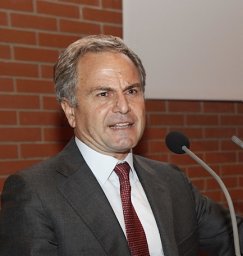 Piero Salatino合作论文数Dipartimento di Ingegneria Chimica, Università degli Studi di Napoli Federico II5
 Roberto Solimene合作论文数Consiglio Nazionale delle Ricerche, Università degli Studi di Napoli Federico II5Giuseppe Cristian Piso合作论文数4
 Antonio Brasiello合作论文数4
 Montagnaro Fabio合作论文数Dipartimento Di Scienze Chimiche, Università degli Studi di Napoli Federico II4Hamad Hussain Shah合作论文数3Annunziata Forgione合作论文数3L. Acampora合作论文数3
 Massimo Urciuolo合作论文数Istituto di Ricerche sulla Combustione, C.N.R.3
 Vasilije Manovic合作论文数Department of Offshore, Process and Energy Engineering, School of Engineering, Cranfield University3
 Francesco Saverio Marra合作论文数Istituto di Ricerche sulla Combustione - C.N.R., Via Diocleziano 328, 80124 Naples, Italy3Antonio A. U. de Souza合作论文数2
 Antonio Coppola合作论文数2
 Enrico Alberto Cutillo合作论文数2Giuseppe Olivieri合作论文数Chemical Engineering Department, University of Studies of Napoli “Federico II”,2Giovanni Adiletta合作论文数Dipartimento di Ingegneria;Meccanica per l'Energetica2
 Antonia Marzocchella合作论文数Dipartimento di Ingegneria Chimica, dei Materiali e, Università degli Studi di Napoli Federico II2
 Maria Elena Russo合作论文数Dipartimento di Ingegneria Chimica, dei Materiali e della Produzione Industriale, Università degli Studi di Napoli Federico II2Antonio A. Ulson de Souza合作论文数1R. Chirone合作论文数1
 Anaiz Gul Fareed合作论文数1Adriano da Silva合作论文数1
 Salvatore Strano合作论文数1rafael donca合作论文数1
 Muhammad Amin合作论文数US-Pakistan Center for Advanced Studies in Energy, National University of Sciences and Technology (NUST),1
 Sergio Yesid Gómez González合作论文数Dept Engn Quim, Univ Fed Santa Catarina UFSC1
 Andrea Paulillo合作论文数eLoop S.r.l.1Grazia Leonzio合作论文数Corresponding author.1
 Paola Brachi合作论文数Ist Sci & Tecnol Energia & Mobilit Sostenibili, CNR1
 Fabienne Ferreira合作论文数Instituto de Microbiologia Paulo de Góes, Universidade Federal do Rio de Janeiro1
 Massimiliano Grosso合作论文数1
 Antonello A. Barresi合作论文数Department of Applied Science and Technology, Politecnico di Torino1
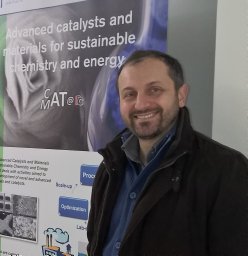 Gianluca Landi合作论文数Inst Res Combust CNR1
 Stefania Tronci合作论文数Dipartimento di Ingegneria Chimica e Materiali, Università di Cagliari1
 Riccardo Chirone合作论文数Istituto di Ricerche sulla Combustione, Consiglio Nazionale delle Ricerche;Eloop;Istituto di Scienze e Tecnologie per l'Energia e la Mobilità Sostenibili, Consiglio Nazionale delle Ricerche1




