Mosaic warfare is a warfighting theory suggesting that a force made up of a larger number and variety of agile, fluid and scalable weaponry, sensors and platforms is more effective and resilient than a force developed following system of systems approach. Each member of a mosaic force is as distinct as the tiles in a mosaic. They can decide and act based on local situational awareness. This can have an overpowering advantage as compared to going head-to-head against the enemy's similar weapons and platforms. Mosaic warfare increases the speed of decision-making and can enable commanders to mount more simultaneous actions which creates additional complexity to the decision-making of the opposing forces. The enabling technologies for the mosaic warfare concept are investigated, the experimentation environment for testing the concept is created, the preliminary discovery experiments are conducted and the results from these experiments are presented.
Computer assisted military experimentation methodology and process are explained. The military processes that can benefit from computer assisted military experimentation are introduced and the best practices for each process are elaborated on. Finally, emerging new concepts and their potential impact on the military experimentation requirements are briefly discussed and the tutorial is concluded. During the tutorial, live demonstrations are made for geostrategic foresight development, defense planning, operational plan analysis, computer assisted military experimentation design and conducting a computer assisted military experiment.
Current space operations simulation capabilities are limited and do not suffice to fulfill the requirements for military space mission areas. Therefore, a modeling and simulation as a service architecture for joint military space operations simulation is introduced. In this architecture, every military space operations mission area is addressed by at least one or more simulation services, which can be run independently or as composed with others. Our layered service-oriented modeling and simulation environment, namely the HAVELSAN Training and Experimentation Cloud, is the implementation of this architecture.
The trust relation between cloud customers (CCs) and cloud service providers has to be established before CCs move their information systems to the cloud. A CC has a special challenge in risk assessment compared to conventional information technology customers. The risks can be associated with not only negative outcomes but also positive outcomes. Risk perception for the same scenario may be different from person to person even from time to time because the probabilities and consequences may be different for different people at different times. Risk analysis is a systematic examination of a risk scenario to understand its probability/likelihood and consequences. European Network and Information Security Agency's risk scenarios are grouped in four categories: policy and organizational, technical, legal, and other scenarios not specific to cloud computing. A CC can assess the risk level related to a scenario qualitatively and understands what kind of vulnerabilities and assets are related to each scenario by examination.
Finding cluster head (CH) is an important issue in WSN. A new optimization algorithm Imperialist Competitive Algorithm (ICA) has been introduced recently, inspired by socio-political process of imperialistic competition. We use ICA for CH selection according to the communication energy (CE) cost. We demonstrate that ICA is an effective method for selection of CH in WSN. ICA either finds one or at most a few CHs within 500 decades. The tie is broken by use of a heuristic. CE stabilizes after 225 decades in the case of 300size, after 150 decades for 200-size, and after 140 decades for 100-size WSNs. For 100-size, 1 CH is selected after 260 decades, for 200-size and 300-size 7 and 21 CHs, respectively are selected after 500 decades. For reducing the number of final CHs, the algorithm should be run for more than 500 decades for larger-size WSNs. For smaller size (100) networks, time increases very slowly with decades. For higher size networks, it increases nonlinearly and takes almost exponential shape with a network of 300 sensors. This is a preliminary study and we plan further investigation in this direction.
Blocknetwork, which is the network of blockchains, is introduced. It is a distributed, scalable, secure and ad hoc scheme designed for transforming big data to the higher levels in the data-information-knowledge-wisdom hierarchy. A blocknetwork can be perceived also as a NoSQL knowledgebase. The application areas include business knowledgebase management, and open source, measurement and signature intelligence fusion with military and security purposes.
A joint trust and risk model is introduced for federated cloud services. The model is based on cloud service providers’ performance history. It addresses provider and consumer concerns by relying on trusted third parties to collect soft and hard trust data elements, allowing for continuous risk monitoring in the cloud. The negative and positive tendencies in performance are differentiated and the freshness of the historic data is considered in the model. It addresses aleatory uncertainty through probability distributions and static stochastic simulation. An analytical insight into the model is also provided through the numerical analysis by Monte-Carlo simulation.
Our Training and Experimentation Cloud Architecture, namely the hTEC, is applied to joint military space operations simulation. The hTEC follows the recommendations on the modelling and simulation as a service (MSaaS) by NATO Science and Technology Organization. The space mission areas and their characteristics are investigated and the requirements are analyzed. The hTEC services are designed such that these requirements are fulfilled. Each service addresses the minimum set of functions that may be needed by a military space operations mission area, and can be run independently, federated as a composed service or linked into a software application. The designed joint military space operations simulation architecture is implemented in a testbed called the extended BSigma.
Least Square Policy Iteration (LSPI) is a model-free Reinforcement Learning algorithm capable of dealing with continuous states and actions. Chebyshev polynomials are utilized as the approximator in LSPI while Kalman Filtering handles sampled, corrupted and delayed data. Since LSPI solves optimal problems, the algorithm needs to have an exploration phase in order to avoid local minima and to cope with non-stationary cost-to-go functions. The chapter investigates how often information between neighbors in cooperative Multi-Agent Systems (MAS) needs to be exchanged in order to meet a desired performance. It suggests that stabilizing upper bounds for intervals between two consecutive broadcasting instants of each individual agent, thereby giving rise to asynchronous communication. It analyses the optimal intermittent feedback problem for MASs. The chapter explains the optimal intermittent feedback …
The Cloud Adoption Risk Assessment Model is designed to help cloud customers in assessing the risks that they face by selecting a specific cloud service provider. It evaluates background information obtained from cloud customers and cloud service providers to analyze various risk scenarios. This facilitates decision making an selecting the cloud service provider with the most preferable risk profile based on aggregated risks to security, privacy, and service delivery. Based on this model we developed a prototype using machine learning to automatically analyze the risks of representative cloud service providers from the Cloud Security Alliance Security, Trust & Assurance Registry.
This article focuses on the definition, implementation and testing of a model to describe Hybrid Conflict Environments. Without the need of citing specific cases or countries, it is clear that hybr ...
Defense planning is a crucial part of the defense process. It identifies the capabilities required for the future defense environment, analyzes the capability shortfalls, prioritizes them, and provides the fundamental inputs for their development. Modeling and simulation may significantly contribute to the success of defense planning. However, neither the theory nor the tools are mature enough to fulfill the defense planning requirements. Various types of simulation tools, such as static, dynamic, deterministic, stochastic, closed, discrete, continuous, and symbiotic, in multiple levels of resolution and fidelity are needed to support the different stages and phases. The verification and validation of the models and the analysis of the input and output data are critical. Yet another challenge is that the uncertainties related to the contemporary defense scenarios are mostly not in aleatory but in the epistemic domain. In this paper, we briefly present a new computer-assisted defense planning process. Then, we introduce the service-oriented cloud approach for the modeling and simulation support to the process.
We propose a data protection impact assessment (DPIA) method based on successive questionnaires for an initial screening and for a full screening for a given project. These were tailored to satisfy the needs of Small and Medium Enterprises (SMEs) that intend to process personal data in the cloud. The approach is based on legal and socio-economic analysis of privacy issues for cloud deployments and takes into consideration the new requirements for DPIAs within the European Union (EU) as put forward by the proposed General Data Protection Regulation (GDPR). The resultant features have been implemented within a tool.
Cloud Adoption Risk Assessment Model is designed for cloud customers to assess the risks that they face by selecting a specific cloud service provider. It is an expert system to evaluate various background information obtained from cloud customers, cloud service providers and other public external sources, and to analyze various risk scenarios. This would facilitate cloud customers in making informed decision to select the cloud service provider with the most preferable risk profile.
1 Department of Electrical and Electronics Engineering, RF Electronics and Antennas Research Lab, Yeditepe University, 34755 Istanbul, Turkey 2Department of Computer Engineering, Wireless Communications and Information Systems Research Unit, Kocaeli University, Izmit, 41380 Kocaeli, Turkey 3 Electrical Engineering and Computer Science Department, University of Stavanger, 4036 Stavanger, Norway 4Drexel Wireless System Laboratory, Department of Electrical and Computer Engineering, Drexel University, Philadelphia, PA 19104, USA
In my thesis, a new sheme is introduced to effectively query sensor nodes in wireless ad-hoc sensor networks. Wireless sensor networks are based on collobarative effort of sheer number of tiny sensor nodes deployed either close to or inside the phenemenon to be observed. We perceive wireless sensor networks as a distributed database and based on this perception an effective data query sheme is employed where users interact with the network by using a standart SQL like statements. In this sheme, a new algorithm that can run on tiny sensor nodes to aggregate or dilute the sensed data packets is used. Two location based hash functions are also introduced to determine how the sensed data can be grouped or which sensors should be excluded from a query. Analytical models are provided for the performance evaluation. The numerical results show that the proposed scheme can reduce the number of transmitted packets 50% on the average comparing to the case where aggregation or dilution is not used.
 Chunming Rong (容淳铭)合作论文数Department of Electrical Engineering and Computer Science, Faculty of Science and Technology, University of Stavanger;BitYoga;Dataunitor24
 dusan marincic合作论文数9
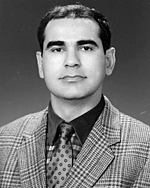 Vedat Coskun合作论文数9
 Ian F. Akyildiz合作论文数Department of Electrical and Computer Engineering, University of Iceland;Truva Inc.7Yogesh Sankarasubramaniam合作论文数IBM Research;HP Labs6
 Cem Ersoy合作论文数Netlab, Department of Computer Engineering, Bogazici University6Anderson Santana de Oliveira合作论文数5
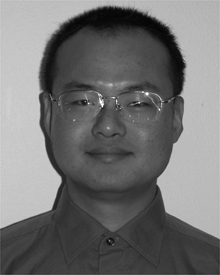 Liang Yan合作论文数5
 Weilian Su合作论文数Department of Electrical and Computer Engineering, Naval Postgraduate School5
 Gansen Zhao (赵淦森)合作论文数School of Computer Science, South China Normal University4Alexandr Garaga合作论文数4Tolga Coplu合作论文数4HongBing Cheng (程宏兵)合作论文数3Nguyen, S.T.合作论文数3
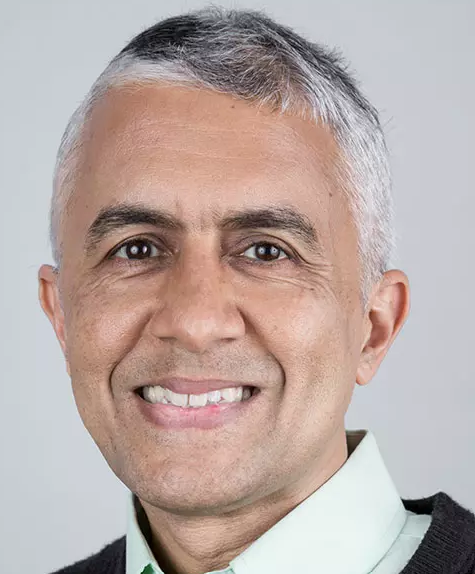 Ramesh Govindan合作论文数Thomas Lord Department of Computer Science, Viterbi School of Engineering, University of Southern California;Ming Hsieh Department of Electrical and Computer Engineering, Viterbi School of Engineering, University of Southern California3Rehab Alnemr合作论文数3Asma Vranaki合作论文数3
 Sebnem Baydere合作论文数Department of Computer Engineering;Yeditepe University;Department of Computer Engineering, Yeditepe University3
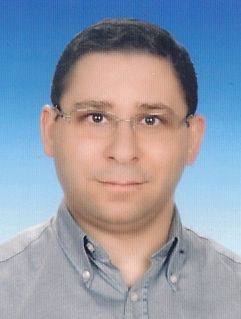 Albert Levi合作论文数Faculty of Engineering and Natural Sciences (Computer Science Program), Sabanci University,3
 hakan tezcan合作论文数2Ramzan AlNaimi合作论文数2Sara Salem AlNabet合作论文数2Lütfü Özçakır合作论文数2Lorenzo Dalla Corte合作论文数2IF Akyildiz合作论文数2Mhungu, R.合作论文数2
 Yves Roudier合作论文数EURECOM, Sophia Antipolis, France2
 Ronald E. Leenes合作论文数Tilburg University2
 Mani Srivastava合作论文数Networked & Embedded Systems Laboratory, University of California, Los Angeles;Electrical and Computer Engineering Department, Samueli School of Engineering, University of California, Los Angeles;Amazon2
 Maria Lijding合作论文数2
 Wim Huiskamp合作论文数TNO Defence, Safety and Security2
 Serdar Sancak合作论文数2
 Siani Pearson合作论文数Algorithms Action Group Ltd2
 Mujdat Soyturk合作论文数Department of Computer Engineering, Istanbul Technical University2
 A. Emre Harmanci合作论文数2
 Tolga Onel合作论文数Computer Networks Research Laboratory, Bogazici University, Bebek, Istanbul, Turkey
Cem Ersoy School of Computer and Information Engineering, University of Ulster Coleraine, Ulster, Northern Ireland, UK
Erdal Cayirci Wargaming and Simulation Center, Turkish War Colleges, Yeni Levent, Istanbul, Turkey
Gerard Parr School of Computer and Information Engineering, University of Ulster Coleraine, Ulster, Northern Ireland, UK2Nurcan Tezcan合作论文数2
Tolga Onel合作论文数Computer Networks Research Laboratory, Bogazici University, Bebek, Istanbul, Turkey
Cem Ersoy School of Computer and Information Engineering, University of Ulster Coleraine, Ulster, Northern Ireland, UK
Erdal Cayirci Wargaming and Simulation Center, Turkish War Colleges, Yeni Levent, Istanbul, Turkey
Gerard Parr School of Computer and Information Engineering, University of Ulster Coleraine, Ulster, Northern Ireland, UK2Nurcan Tezcan合作论文数2 Gerard P. Parr合作论文数School of Computing Sciences, University of East Anglia2Francesco Capparelli合作论文数1Thomas F. LaPorta合作论文数1l khimeche合作论文数1G Bekey合作论文数1Scott R. Ellis合作论文数1C Soriente合作论文数1L Elghaoui合作论文数1A Anta合作论文数1L Busoniu合作论文数1Martim Taborda Barata合作论文数1manfred roza合作论文数1




