Archaea share genomic similarities with Eukarya and cellular architectural similarities with Bacteria, though archaeal and bacterial surface layers (S-layers) differ. Using cellular cryo-electron tomography, we visualized the S-layer lattice surrounding Methanospirillum hungatei, a methanogenic archaeon. Though more compact than known structures, M. hungatei's S-layer is a flexible hexagonal lattice of dome-shaped tiles, uniformly spaced from both the overlying cell sheath and the underlying cell membrane. Subtomogram averaging resolved the S-layer hexamer tile at 6.4-angstrom resolution. By fitting an AlphaFold model into hexamer tiles in flat and curved conformations, we uncover intra- and intertile interactions that contribute to the S-layer's cylindrical and flexible architecture, along with a spacer extension for cell membrane attachment. M. hungatei cell's end plug structure, likely composed of S-layer isoforms, further highlights the uniqueness of this archaeal cell. These structural features offer advantages for methane release and reflect divergent evolutionary adaptations to environmental pressures during early microbial emergence.
SummarySyntrophy is essential for the efficient conversion of organic carbon to methane in natural and constructed environments, but little is known about the enzymes involved in syntrophic carbon and electron flow. Syntrophus aciditrophicus strain SB syntrophically degrades benzoate and cyclohexane‐1‐carboxylate and catalyses the novel synthesis of benzoate and cyclohexane‐1‐carboxylate from crotonate. We used proteomic, biochemical and metabolomic approaches to determine what enzymes are used for fatty, aromatic and alicyclic acid degradation versus for benzoate and cyclohexane‐1‐carboxylate synthesis. Enzymes involved in the metabolism of cyclohex‐1,5‐diene carboxyl‐CoA to acetyl‐CoA were in high abundance in S. aciditrophicus cells grown in pure culture on crotonate and in coculture with Methanospirillum hungatei on crotonate, benzoate or cyclohexane‐1‐carboxylate. Incorporation of 13C‐atoms from 1‐[13C]‐acetate into crotonate, benzoate and cyclohexane‐1‐carboxylate during growth on these different substrates showed that the pathways are reversible. A protein conduit for syntrophic reverse electron transfer from acyl‐CoA intermediates to formate was detected. Ligases and membrane‐bound pyrophosphatases make pyrophosphate needed for the synthesis of ATP by an acetyl‐CoA synthetase. Syntrophus aciditrophicus, thus, uses a core set of enzymes that operates close to thermodynamic equilibrium to conserve energy in a novel and highly efficient manner.
ABSTRACT Syntrophus aciditrophicus is a model syntrophic bacterium that degrades key intermediates in anaerobic decomposition, such as benzoate, cyclohexane-1-carboxylate, and certain fatty acids, to acetate when grown with hydrogen-/formate-consuming microorganisms. ATP formation coupled to acetate production is the main source for energy conservation by S. aciditrophicus. However, the absence of homologs for phosphate acetyltransferase and acetate kinase in the genome of S. aciditrophicus leaves it unclear as to how ATP is formed, as most fermentative bacteria rely on these two enzymes to synthesize ATP from acetyl coenzyme A (CoA) and phosphate. Here, we combine transcriptomic, proteomic, metabolite, and enzymatic approaches to show that S. aciditrophicus uses AMP-forming, acetyl-CoA synthetase (Acs1) for ATP synthesis from acetyl-CoA. acs1 mRNA and Acs1 were abundant in transcriptomes and proteomes, respectively, of S. aciditrophicus grown in pure culture and coculture. Cell extracts of S. aciditrophicus had low or undetectable acetate kinase and phosphate acetyltransferase activities but had high acetyl-CoA synthetase activity under all growth conditions tested. Both Acs1 purified from S. aciditrophicus and recombinantly produced Acs1 catalyzed ATP and acetate formation from acetyl-CoA, AMP, and pyrophosphate. High pyrophosphate levels and a high AMP-to-ATP ratio (5.9 ± 1.4) in S. aciditrophicus cells support the operation of Acs1 in the acetate-forming direction. Thus, S. aciditrophicus has a unique approach to conserve energy involving pyrophosphate, AMP, acetyl-CoA, and an AMP-forming, acetyl-CoA synthetase. IMPORTANCE Bacteria use two enzymes, phosphate acetyltransferase and acetate kinase, to make ATP from acetyl-CoA, while acetate-forming archaea use a single enzyme, an ADP-forming, acetyl-CoA synthetase, to synthesize ATP and acetate from acetyl-CoA. Syntrophus aciditrophicus apparently relies on a different approach to conserve energy during acetyl-CoA metabolism, as its genome does not have homologs to the genes for phosphate acetyltransferase and acetate kinase. Here, we show that S. aciditrophicus uses an alternative approach, an AMP-forming, acetyl-CoA synthetase, to make ATP from acetyl-CoA. AMP-forming, acetyl-CoA synthetases were previously thought to function only in the activation of acetate to acetyl-CoA.
Abstract The integrity of quantitative proteomic experiments depends on the reliability and the robustness of the protein extraction, solubilization, and digestion methods utilized. Combinations of detergents, chaotropes, and mechanical disruption can yield successful protein preparations; however, the methods subsequently required to eliminate these added contaminants, in addition to the salts, nucleic acids, and lipids already in the sample, can result in significant sample losses and incomplete contaminant removal. A recently introduced method for proteomic sample preparation, filter-aided sample preparation (FASP), cleverly circumvents many of the challenges associated with traditional protein purification methods but is associated with significant sample loss. Presented here is an enhanced FASP (eFASP) approach that incorporates alternative reagents to those of traditional FASP, improving sensitivity, recovery, and proteomic coverage for processed samples. The substitution of 0.2% deoxycholic acid for urea during eFASP digestion increases tryptic digestion efficiency for both cytosolic and membrane proteins yet obviates needed cleanup steps associated with use of the deoxycholate sodium salt. For classic FASP, prepassivating Microcon filter surfaces with 5% TWEEN-20 reduces peptide loss by 300%. An express eFASP method uses tris(2-carboxyethyl)phosphine and 4-vinylpyridine to alkylate proteins prior to deposition on the Microcon filter, increasing alkylation specificity and speeding processing.
Trace metals such as copper, iron, zinc, and manganese play important roles in several biochemical processes, including respiration and photosynthesis. Using a label-free, quantitative proteomics strategy (MS(E)), we examined the effect of deficiencies in these micronutrients on the soluble proteome of Chlamydomonas reinhardtii. We quantified >10(3) proteins with abundances within a dynamic range of 3 to 4 orders of magnitude and demonstrated statistically significant changes in ~200 proteins in each metal-deficient growth condition relative to nutrient-replete media. Through analysis of Pearson's coefficient, we also examined the correlation between protein abundance and transcript abundance (as determined via RNA-Seq analysis) and found moderate correlations under all nutritional states. Interestingly, in a subset of transcripts known to significantly change in abundance in metal-replete and metal-deficient conditions, the correlation to protein abundance is much stronger. Examples of new discoveries highlighted in this work include the accumulation of O(2) labile, anaerobiosis-related enzymes (Hyd1, Pfr1, and Hcp2) in copper-deficient cells; co-variation of Cgl78/Ycf54 and coprogen oxidase; the loss of various stromal and lumenal photosynthesis-related proteins, including plastocyanin, in iron-limited cells; a large accumulation (from undetectable amounts to over 1,000 zmol/cell) of two COG0523 domain-containing proteins in zinc-deficient cells; and the preservation of photosynthesis proteins in manganese-deficient cells despite known losses in photosynthetic function in this condition.
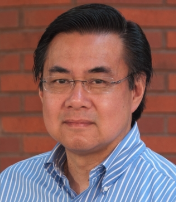 Joseph A. Loo合作论文数Department of Chemistry and Biochemistry, David Geffen School of Medicine, University of California, Los Angeles;Molecular Instrumentation Center, University of California, Los Angeles6
 Rachel Ogorzalek Loo合作论文数Molecular Biology Institute, University of California, Los Angeles5
 Robert P. Gunsalus合作论文数Department of Microbiology, Immunology, and Molecular Genetics, David Geffen School of Medicine, College of Life Sciences, University of California3
 Hong H Nguyen合作论文数2
 Kimberly L. James合作论文数2
 Jessica R Sieber合作论文数Biol, Univ Minnesota2Yanan Yang合作论文数2Elizabeth A. Karr合作论文数2
 Yongming Xie (谢永明)合作论文数College of Information Science and Engineering, Hunan Normal University2
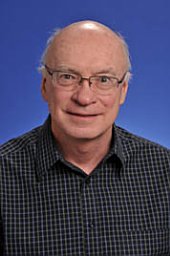 Michael J Mcinerney合作论文数Department of Botany;University of Oklahoma;Department of Botany, University of Oklahoma2Neil Q. Wofford合作论文数2Housna Mouttaki合作论文数2Lars Rohlin合作论文数1M Dudley Page合作论文数1
 Johannes W Kung合作论文数1Hiroaki Yamasaki合作论文数1Scott I Hsieh合作论文数1Shiqing Liao合作论文数1
 Jia-Yan Zhang合作论文数1
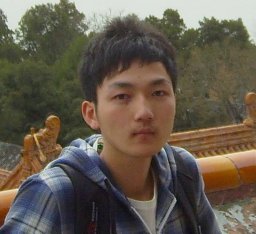 Hui Wang合作论文数University of California, Los Angeles1
 Sabeeha Merchant合作论文数Department of Molecular & Cell Biology, University of California, Berkeley;Department of Plant and Microbial Biology, University of California, Berkeley1
 Luke Szweda合作论文数UT Southwestern Medical Center1
 Crable Bryan R合作论文数Department of Botany and Microbiology, University of Oklahoma Norman1
 Cody S. Sheik合作论文数Departments of Earth and Environmental Sciences and1Malasarn Davin合作论文数1Castruita Madeli合作论文数1
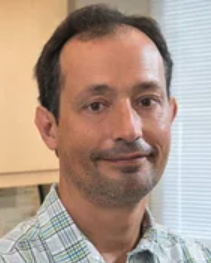 Matteo Pellegrini合作论文数David Geffen School of Medicine, University of California, Los Angeles;Institute for Genomics and Proteomics, University of California, Los Angeles;Life Sciences Division, Department of Molecular, Cell and Developmental Biology, College of Life Sciences, University of California, Los Angeles1
 Zhenghong Zhou (周正洪)合作论文数Department of Microbiology, Immunology and Molecular Genetics, University of California, Los Angeles1
 Gregory Hurst (Greg Hurst)合作论文数Institute of Infection, Veterinary and Ecological Sciences, Faculty of Health & Life Sciences, University of Liverpool1Eugen Urzica合作论文数Institut für Zytobiologie, Philipps Universität Marburg1
 David Casero合作论文数Department of Molecular, Cell, and Developmental Biology, University of California1
 Anne M Henstra合作论文数Laboratory of Microbiology, Wageningen University1




