Early assessment, with the help of machine learning methods, can aid clinicians in optimizing the diagnosis and treatment process, allowing patients to receive critical treatment time. Due to the advantages of effective information organization and interpretable reasoning, knowledge graph-based methods have become one of the most widely used machine learning algorithms for this task. However, due to a lack of effective organization and use of multi-granularity and temporal information, current knowledge graph-based approaches are hard to fully and comprehensively exploit the information contained in medical records, restricting their capacity to make superior quality diagnoses. To address these challenges, we examine and study disease diagnosis applications in-depth, and propose a novel disease diagnosis framework named FIT-Graph. With novel medical multi-grained evolutionary graphs, FIT-Graph efficiently organizes the extracted information from various granularities and time stages, maximizing the retention of valuable information for disease inference and ensuring the comprehensiveness and validity of the final disease inference. We compare FIT-Graph with two real-world clinical datasets from cardiology and respiratory departments with the baseline. The experimental results show that its effect is better than the baseline model, and the baseline performance of the task is improved by about 5% in multiple indices.
Stanford Center for Professional Development, Stanford University, Palo Alto, CA 94305, USA; Department of Medicine, Jiangsu University School of Medicine, Zhenjiang, Jiangsu 212013, China; Institute of Radio Frequency & Optical Electronics-Integrated Circuits, School of Information and Engineering, Southeast University, Nanjing, Jiangsu 210096, China; Wenjing Technologies, Shanghai 200020, China; Dawnlight Technologies, Palo Alto, CA 94304, USA; Department of Respiratory and Critical Care Medicine, The First Affiliated Hospital, Nanjing Medical University, Nanjing, Jiangsu 210029, China.
As a widely used vital sign within cardiology, Electrocardiography (ECG) provides the basis for assessing heart function and diagnosing cardiovascular diseases. Automated anomaly detection for ECG plays an important role in improving patient diagnosis efficiency and reducing healthcare costs. Practically, due to the limits of electronics support or the medical system setting, image is a more common format for large-scale ECG storage in most clinical institutions. To guarantee an automated ECG detection model's scalability and practicality in clinical applications, taking good advantage of ECG images is crucial. However, existing time digital-based discriminative models fail to learn from images effectively for two reasons. First of all, the signals recorded on images have much lower resolution and higher noise, which makes it impractical to extract precise ECG signals following existing techniques. Meanwhile, the differences between abnormal signals are usually subtle, and they may be overwhelmed by the noises in the images as well. Towards this end, we design a novel neural framework that can be directly applied to massive ECG images determining various types of cardiology abnormalities. It classifies fine-grained ECG images based on weakly supervised strategy, in which case only image-level labeling is required. By eliminating the need for part annotations, the proposed method can result in significant savings in annotation time and cost. The effectiveness of the method is demonstrated by experimental results on two real ECG datasets.
Recently, increasingly more methods are proposed to automatically detect the abnormalities in Electrocardiography (ECG). Despite their success on public golden standard datasets, two challenges hinder the adoption of existing methods on real-world clinical ECG data in practice. To start with, most methods are designed based on digital signal data while most ECG data in the hospital are stored as images. Additionally, they ignore the correlation among different abnormal cardiac patterns and hence cannot detect multiple abnormalities at the same time. To practically address these challenges, we propose a Fine-grained Multi-label ECG (FM-ECG) framework to effectively detect the abnormalities from the real clinical ECG data in the following two aspects. Firstly, we propose to directly detect the abnormalities on the ECG images via a weakly supervised fine-grained classification mechanism, which can discover the potential discriminative parts and adaptively fuse them via image-level annotations only. Secondly, we take the ECG label dependencies into consideration by inferencing with a recurrent neural network (RNN). Experimental results on two real-world large-scale ECG datasets prove the capability of FM-ECG comparing with other state-of-the-art methods in ECG abnormally detection. Moreover, visualization analyses on attention parts show that meaningful spatial attention can be effectively learned by FM-ECG.
Factorization Machines (FM) have been recognized as an effective learning paradigm for incorporating complex relations to improve item recommendation in recommender systems. However, one open issue of FM lies in its factorized representation (latent factors) for each feature in the observed feature space, a characteristic often resulting in a large parameter space. Therefore, training FM (in other words, learning a large number of parameters in FM) is a computationally expensive task. Our work targets to improve the scalability of FM by building it in a distributed environment. We propose a new system framework that integrates Parameter Server (PS) with the Map/Reduce (MR) framework. In addition to the data parallelism achieved via MR, our framework particularly benefits from PS for model parallelism, a critical characteristic for learning with a large number of parameters in FM. We further address two specific challenges in our system, namely, communication cost and parameter update collision. Through both offline and online experiments on recommendation tasks, we demonstrate that the proposed system framework succeeds in scaling up FM for very large datasets, while it also maintains competitive performance on recommendation quality compared to alternative baselines.
We tackle the blog recommendation problem in Tumblr for mobile users in this paper. Blog recommendation is challenging since most mobile users would suffer from the cold start when there are only a limited number of blogs followed by the user. Specifically to address this problem in the mobile domain, we take into account mobile apps, which typically provide rich information from the users. Based on the assumption that the user interests can be reflected from their app usage patterns, we propose to exploit the app usage data for improving blog recommendation. Building on the state-of-the-art recommendation framework, Factorization Machines (FM), we implement app-based FM that integrates app usage data with the user-blog follow relations. In this approach the blog recommendation is generated not only based on the blogs that the user followed before, but also the apps that the user has often used. We demonstrate in a series of experiments that app-based FM can outperform other alternative approaches to a significant extent. Our experimental results also show that exploiting app usage information is particularly effective for improving blog recommendation quality for cold start users.
While matrix factorisation models are ubiquitous in large scale recommendation and search, real time application of such models requires inner product computations over an intractably large set of item factors. In this manuscript we present a novel framework that uses the inverted index representation to exploit structural properties of sparse vectors to significantly reduce the run time computational cost of factorisation models. We develop techniques that use geometry aware permutation maps on a tessellated unit sphere to obtain high dimensional sparse embeddings for latent factors with sparsity patterns related to angular closeness of the original latent factors. We also design several efficient and deterministic realisations within this framework and demonstrate with experiments that our techniques lead to faster run time operation with minimal loss of accuracy.
Content recommendation systems are typically based on one of the following paradigms: user based customization, or recommendations based on either collaborative filtering or low rank matrix factorization methods, or with systems that impute user interest profiles based on content browsing behavior and retrieve items similar to the interest profiles. All of these systems have a distinct disadvantage, namely data sparsity and cold-start on items or users. Furthermore, very few content recommendation solutions explicitly model the wealth of information in implicit negative feedback from the users. In this paper, we propose a hybrid solution that makes use of a latent factor model to infer user interest vectors. The hybrid approach enables us to overcome both the data sparsity and cold-start problems. Our proposed method is learned purely on implicit user feedback, both positive and negative. Exploiting the information in the negative feedback allows the user profiles generated to be discriminative. We also provide a Map/Reduce framework based implementation that enables scaling our solution to real-world recommendation problems. We demonstrate the efficacy of our proposed approach with both offline experiments and A/B tests on live traffic on Yahoo properties.
Transfer learning, which leverages knowledge from source domains to enhance learning ability in a target domain, has been proven effective in various applications. One major limitation of transfer learning is that the source and target domains should be directly related. If there is little overlap between the two domains, performing knowledge transfer between these domains will not be effective. Inspired by human transitive inference and learning ability, whereby two seemingly unrelated concepts can be connected by a string of intermediate bridges using auxiliary concepts, in this paper we study a novel learning problem: Transitive Transfer Learning (abbreviated to TTL). TTL is aimed at breaking the large domain distances and transfer knowledge even when the source and target domains share few factors directly. For example, when the source and target domains are documents and images respectively, TTL could use some annotated images as the intermediate domain to bridge them. To solve the TTL problem, we propose a learning framework to mimic the human learning process. The framework is composed of an intermediate domain selection component and a knowledge transfer component. Extensive empirical evidence shows that the framework yields state-of-the-art classification accuracies on several classification data sets.
Many internet companies, such as Yahoo, Facebook, Google and Twitter, rely on content recommendation systems to deliver the most relevant content items to individual users through personalization. Delivering such personalized user experiences is believed to increase the long term engagement of users. While there has been a lot of progress in designing effective personalized recommender systems, by exploiting user interests and historical interaction data through implicit (item click) or explicit (item rating) feedback, directly optimizing for users' satisfaction with the system remains challenging. In this paper, we explore the idea of using item-level dwell time as a proxy to quantify how likely a content item is relevant to a particular user. We describe a novel method to compute accurate dwell time based on client-side and server-side logging and demonstrate how to normalize dwell time across different devices and contexts. In addition, we describe our experiments in incorporating dwell time into state-of-the-art learning to rank techniques and collaborative filtering models that obtain competitive performances in both offline and online settings.
Accurate prediction of user behaviors is important for many social media applications, including social marketing, personalization, and recommendation. A major challenge lies in that although many previous works model user behavior from only historical behavior logs, the available user behavior data or interactions between users and items in a given social network are usually very limited and sparse (e.g., ⩾ 99.9% empty), which makes models overfit the rare observations and fail to provide accurate predictions. We observe that many people are members of several social networks in the same time, such as Facebook, Twitter, and Tencent’s QQ. Importantly, users’ behaviors and interests in different networks influence one another. This provides an opportunity to leverage the knowledge of user behaviors in different networks by considering the overlapping users in different networks as bridges, in order to alleviate the data sparsity problem, and enhance the predictive performance of user behavior modeling. Combining different networks “simply and naively” does not work well. In this article, we formulate the problem to model multiple networks as “adaptive composite transfer” and propose a framework called ComSoc . ComSoc first selects the most suitable networks inside a composite social network via a hierarchical Bayesian model, parameterized for individual users. It then builds topic models for user behavior prediction using both the relationships in the selected networks and related behavior data. With different relational regularization, we introduce different implementations, corresponding to different ways to transfer knowledge from composite social relations. To handle big data, we have implemented the algorithm using Map/Reduce. We demonstrate that the proposed composite network-based user behavior models significantly improve the predictive accuracy over a number of existing approaches on several real-world applications, including a very large social networking dataset from Tencent Inc.
Transfer learning, which aims to help learning tasks in a target domain by leveraging knowledge from auxiliary domains, has been demonstrated to be effective in different applications such as text mining, sentiment analysis, and so on. In addition, in many real-world applications, auxiliary data are described from multiple perspectives and usually carried by multiple sources. For example, to help classify videos on Youtube, which include three perspectives: image, voice and subtitles, one may borrow data from Flickr, Last.FM and Google News. Although any single instance in these domains can only cover a part of the views available on Youtube, the piece of information carried by them may compensate one another. If we can exploit these auxiliary domains in a collective manner, and transfer the knowledge to the target domain, we can improve the target model building from multiple perspectives. In this article, we consider this transfer learning problem as Transfer Learning with Multiple Views and Multiple Sources . As different sources may have different probability distributions and different views may compensate or be inconsistent with each other, merging all data in a simplistic manner will not give an optimal result. Thus, we propose a novel algorithm to leverage knowledge from different views and sources collaboratively, by letting different views from different sources complement each other through a co-training style framework, at the same time, it revises the distribution differences in different domains. We conduct empirical studies on several real-world datasets to show that the proposed approach can improve the classification accuracy by up to 8% against different kinds of state-of-the-art baselines.
Friendship prediction is an important task in social network analysis (SNA). It can help users identify friends and improve their level of activity. Most previous approaches predict users' friendship based on their historical records, such as their existing friendship, social interactions, etc. However, in reality, most users have limited friends in a single network, and the data can be very sparse. The sparsity problem causes existing methods to overfit the rare observations and suffer from serious performance degradation. This is particularly true when a new social network just starts to form. We observe that many of today's social networks are composite in nature, where people are often engaged in multiple networks. In addition, users' friendships are always correlated, for example, they are both friends on Facebook and Google+. Thus, by considering those overlapping users as the bridge, the friendship knowledge in other networks can help predict their friendships in the current network. This can be achieved by exploiting the knowledge in different networks in a collective manner. However, as each individual network has its own properties that can be incompatible and inconsistent with other networks, the naive merging of all networks into a single one may not work well. The proposed solution is to extract the common behaviors between different networks via a hierarchical Bayesian model. It captures the common knowledge across networks, while avoiding negative impacts due to network differences. Empirical studies demonstrate that the proposed approach improves the mean average precision of friendship prediction over state-of-the-art baselines on nine real-world social networking datasets significantly.
One important challenge in social network analysis is how to model users’ distance as a single measure. We propose to model this distance by simultaneously exploring users’ profile attributes and local network structures. Due to the sparsity of data, where each user may interact with just a few people and only a few users provide their profile information, it is typically difficult to learn effective distance measures for any individual network. One important observation is that, people nowadays engage in multiple social networks, such as Facebook, Twitter, etc., where auxiliary knowledge from related networks can help alleviate the data sparsity problem. Nonetheless, due to the network differences, borrowing knowledge directly does not work well. Instead, we propose an adaptive metric learning framework. The basic idea is to exploit knowledge from related networks collectively through embedding and employ boosting-based techniques to eliminate irrelevant attributes. We evaluate the adaptive user distance measure on link prediction problem an important social modeling task. Empirical studies demonstrate that the proposed approach significantly improves the link-prediction precision over state-of-theart metric learning and link prediction approaches on two large-scale social networking datasets significantly.
Music emotion recognition, which aims to automatically recognize the affective content of a piece of music, has become one of the key components of music searching, exploring, and social networking applications. Although researchers have given more and more attention to music emotion recognition studies, the recognition performance has come to a bottleneck in recent years. One major reason is that experts' labels for music emotion are mostly song-level, while music emotion usually varies within a song. Traditional methods have considered each song as a single instance and have built models based on song-level features. However, they ignored the dynamics of music emotion and failed to capture accurate emotion-feature correlations. In this paper, we model music emotion recognition as a novel multi-label multi-layer multi-instance multi-view learning problem: music is formulated as a hierarchical multi-instance structure (e.g., song-segment-sentence) where multiple emotion labels correspond to at least one of the instances with multiple views of each layer. We propose a Hierarchical Music Emotion Recognition model (HMER) -- a novel hierarchical Bayesian model using sentence-level music and lyrics features. It captures music emotion dynamics with a song-segment-sentence hierarchical structure. HMER also considers emotion correlations between both music segments and sentences. Experimental results show that HMER outperforms several state-of-the-art methods in terms of $F_1$ score and mean average precision.
Heterogeneous transfer learning has been proposed as a new learning strategy to improve performance in a target domain by leveraging data from other heterogeneous source domains where feature spaces can be different across different domains. In order to connect two different spaces, one common technique is to bridge feature spaces by using some co-occurrence data. For example, annotated images can be used to build feature mapping from words to image features, and then applied on text-to-image knowledge transfer. However, in practice, such co-occurrence data are often from Web, e.g. Flickr, and generated by users. That means these data can be sparse and contain personal biases. Directly building models based on them may fail to provide reliable bridge.To solve these aforementioned problems, in this paper, we propose a novel algorithm named Mixed-Transfer. It is composed of three components, that is, a cross domain harmonic function to avoid personal biases, a joint transition probability graph of mixed instances and features to model the heterogeneous transfer learning problem, a random walk process to simulate the label propagation on the graph and avoid the data sparsity problem. We conduct experiments on 171 real-world tasks, showing that the proposed approach outperforms four state-of-the-art heterogeneous transfer learning algorithms.MSC codesHeterogeneous Transfer LearningRandom WalkCo-occurrence Data
Time-sync video tagging aims to automatically generate tags for each video shot. It can improve the user's experience in previewing a video's timeline structure compared to traditional schemes that tag an entire video clip. In this paper, we propose a new application which extracts time-sync video tags by automatically exploiting crowdsourced comments from video websites such as Nico Nico Douga, where videos are commented on by online crowd users in a time-sync manner. The challenge of the proposed application is that users with bias interact with one another frequently and bring noise into the data, while the comments are too sparse to compensate for the noise. Previous techniques are unable to handle this task well as they consider video semantics independently, which may overfit the sparse comments in each shot and thus fail to provide accurate modeling. To resolve these issues, we propose a novel temporal and personalized topic model that jointly considers temporal dependencies between video semantics, users' interaction in commenting, and users' preferences as prior knowledge. Our proposed model shares knowledge across video shots via users to enrich the short comments, and peels off user interaction and user bias to solve the noisy-comment problem. Log-likelihood analyses and user studies on large datasets show that the proposed model outperforms several state-of-the-art baselines in video tagging quality. Case studies also demonstrate our model's capability of extracting tags from the crowdsourced short and noisy comments.
The study of users' social behaviors has gained much research attention since the advent of various social media such as Facebook, Renren and Twitter. A major kind of applications is to predict a user's future activities based on his/her historical social behaviors. In this paper, we focus on a fundamental task: to predict a user's future activity levels in a social network, e.g. weekly activeness, active or inactive . This problem is closely related to Social Customer Relationship Management (Social CRM). Compared to traditional CRM, the three properties: user diversity, social influence, and dynamic nature of social networks, raise new challenges and opportunities to Social CRM. Firstly, the user diversity property implies that a global predictive model may not be precise for all users. On the other hand, historical data of individual users are too sparse to build precisely personalized models. Secondly, the social influence property suggests that relationships between users can be embedded to further boost prediction results on individual users. Finally, the dynamical nature of social networks means that users' behaviors may keep changing over time. To address these challenges, we develop a personalized and social regularized time-decay model for user activity level prediction. Experiments on the social media Renren validate the effectiveness of our proposed model compared with some baselines including traditional supervised learning methods and node classification methods in social networks.
 Qiang Yang (杨强)合作论文数Department of Data Science and Artificial Intelligence, Faculty of Computer and Mathematical Sciences, Hong Kong Polytechnic University25
 Wei Fan合作论文数Taimei Technology12
 Nathan N. Liu合作论文数Amazon9
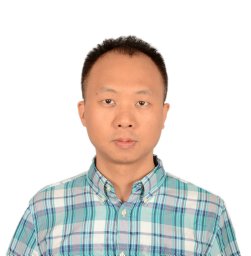 Ben Tan (谭奔)合作论文数WeBank8
 Yin Zhu (朱寅)合作论文数Shenzhen ZXTD Capital Management7
 Jiangtao Ren (任江涛)合作论文数5
 Suju Rajan合作论文数LinkedIn5
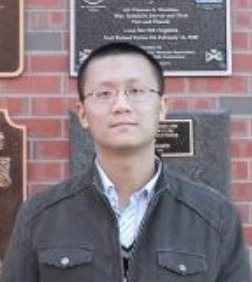 Nan Du合作论文数Tencent Medical AI Lab4
 Jing Peng合作论文数School of Computing, College of Science and Mathematics, Montclair State University4
 Nash Kaixiang Mo (莫凯翔)合作论文数Shopee4
 Zhongqi Lu (鲁钟琪)合作论文数4Zizhu Liu合作论文数3
 Kun Zhang合作论文数Xavier University of Louisiana3
 Qing Cao (曹清)合作论文数Shanghai Children's Medical Center, Shanghai Jiao Tong University School of Medicine3
 Kang Chen (陈康)合作论文数Ruijin Hospital, Shanghai Jiao Tong University School of Medicine3Lili Zhao合作论文数3
 Yue Shi合作论文数Facebook3
 Ying Shen (沈颖)合作论文数School of Intelligent Systems Engineering, Sun Yat-sen University3
 Bin Wu合作论文数3
 Sinno Jialin Pan合作论文数Department of Computer Science and Engineering, Faculty of Engineering, The Chinese University of Hong Kong3
 Andrew Brian Horner (康立德)合作论文数Department of Computer Science and Engineering , The Hong Kong University of Science and Technology3Evan Wei Xiang合作论文数3Li Yu合作论文数2Qiaoran Chen合作论文数2Wang Xiao合作论文数2
 Olivier Verscheure合作论文数Swiss Data Science Center;Federal Roads Office FEDRO;Lonza2Minzhe Zhou合作论文数2
 Weike Pan (潘微科)合作论文数Department of Computer Science and Technology, College of Computer Science and Software Engineering, Shenzhen University;Software Engineering Research Center, College of Computer Science and Software Engineering, Shenzhen University2Hao-Peng Zhou合作论文数1Zhi-Jun Zhou合作论文数1Junwei Wang合作论文数1Xiao Wang合作论文数1Ming Zuo合作论文数1JingSheng Lin (林靖生)合作论文数1
 Haoliang Li (李皓亮)合作论文数Department of Electrical Engineering, City University of Hong Kong1
 Linfu Zhou (周林福)合作论文数Jiangsu Province Hospital;NanJing Gaochun people's Hospital1Avradeep Bhowmik合作论文数University of Texas at Austin1
 Naiyan Wang (王乃岩)合作论文数Xiaomi EV1Li He合作论文数1Liang Dong合作论文数1
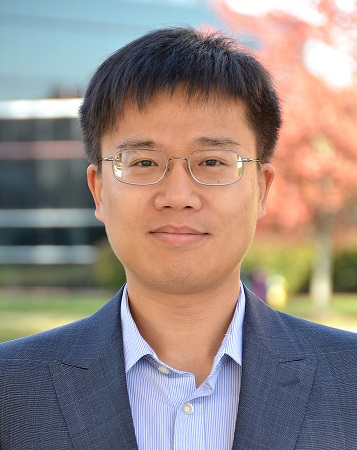 Yangqiu Song (宋陽秋)合作论文数Department of Computer Science and Engineering, The Hong Kong University of Science and Technology1
 Lei Xiao合作论文数1
 Xing Yi合作论文数1
 Rong Yan合作论文数1
 Sihong Xie (谢思泓)合作论文数Information Hub, The Hong Kong University of Science and Technology (Guangzhou)1
 Yong Li (李勇)合作论文数Department of Electronic Engineering, Tsinghua University1
 Beitao Li合作论文数Z League1
 Badri Narayan Bhaskar合作论文数The University of Wisconsin - Madison1




