The place of the Clovis techno-complex in Great Basin culture history remains enigmatic, both in relation to the Western Stemmed Tradition - the dominant Paleoindian artifact complex in the Intermountain West - and to the range of late Pleistocene/early Holocene habitats that people employing Clovis toolkits utilized. Here we describe the Nye Canyon Paleo Site (26Ly930), located in the Pine Grove Hills in western Nevada. The Nye Canyon Paleo Site stands alone in the Great Basin because it contains both fluted points and Clovis-style blades alongside Western Stemmed Tradition points and other tools, sits at a relatively high elevation, and potentially contains buried cultural deposits. Recent test excavations failed to locate an intact buried Paleoindian component, but the Nye Canyon Paleo Site nevertheless demonstrates the use of Clovis and Western Stemmed technology at a single upper montane locality in the western Great Basin and highlights regional Paleoindian upper montane land use.
Late prehistoric and early historic communal hunting sites along the southwestern mountainous margins of the Great Basin, United Sates, include timber-built corral-traps estimated to be only a few hundred years old. In most of these, no animal bones or direct evidence for the targeted species were found in the corrals. Our goals were to characterize and reconstruct past use of these sites, and we chose two distinct case studies, Anchorite Pass and Excelsior. We provide high-resolution documentation of the sites and their archaeological components, using nearly 10,000 aerial photographs as the basis for 3D modeling. We specifically address construction characteristics which include the incorporation of living trees and felling juniper timbers by fire. Drawing on limited ethnographic sources and current seasonal routes of local mule deer herds, we suggest the two sites were used for seasonal trapping of such herds. Forest fires and modern construction severely endanger such vulnerable sites.
American Rock Art Research Association, 2011, pp. 37–47. One always enters rock art sites equipped with a very sensitive, perceptive instrument: human eyes. This tool has permitted much fundamental understanding of rock art. Over the past decade or so, portable X-ray fluorescence (pXRF) devices have become more available as nondestructive field instruments. By measuring the presence of metallic elements in pictograph pigments, these portable devices produce semi-qualitative information efficiently and rapidly. In several hours, we can accumulate hundreds of measurements on pictograph pigments and compare those with readings on the background rock. The data are quantitatively inexact and highly variable but can be used cautiously for intra-site, relative comparisons of pictographs and to describe zeroth-order inter-site differences in pigment recipes. Using pXRF chemical information as an additional method, we hope ultimately to shed new light on archaeological problems, such as cultural-historical origins and development of rock art styles. Chemistry as a Criterion for Selecting Pictographs for Radiocarbon Dating: Lost Again Shelter in the Guadalupe Mountains of Southeastern New Mexico
In the Great Basin, large-scale trapping features designed to capture multiple artiodactyls include fences or drive lines and corrals with associated wings. More than 100 of these features are known in the Great Basin. An experimental project confirms that these features must have been built through group effort. The marked concentration of large-scale trapping features in western and eastern Nevada may be explained by ecological factors such as the presence of migrating herds of ungulates, nearby toolstone sources, pinyon nuts, and water. The proliferation of large-scale trapping feature planning and construction beginning ca. 5000 to 6000 years ago is supported by studies of trap-associated projectile points and rock art. Initial construction of traps may have been sparked by human population increases that created new challenges and encouraged the development of new sociological and ecological adaptations.
 Bryan S. Hockett合作论文数2evelyn billo合作论文数1Mark D. Willis合作论文数1Nicole D. George合作论文数1Margaret Berrier合作论文数1
 Evan Pellegrini合作论文数1Amnon Nachmias合作论文数Amuka 48, Merom Hagalil, Israel1
 Geoffrey M. Smith合作论文数Department of Anthropology, University of Nevada1
 Dave N. Schmitt合作论文数Antiquities Research1
 Jack M Broughton合作论文数Department of Anthropology, University of Utah1
 Dani Nadel合作论文数Institute of Archaeology;University of Haifa;Institute of Archaeology, University of Haifa1Karen L. Steelman合作论文数Department of Chemistry, Texas A&M University1Beth P. Smith合作论文数1
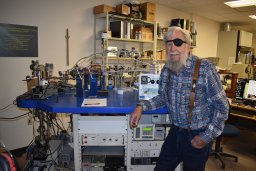 Marvin Rowe合作论文数Department of Chemistry, Texas A&M University1Thomas W. Stafford合作论文数Stafford Research Laboratories, Inc.1
 David Rhode合作论文数1Peggy H. Ostrom合作论文数Department of Zoology, Michigan State University1




