Urban heat risk is intensifying, yet many cities continue to rely on static assessment approaches that inadequately capture how risk evolves spatiotemporally. We argue for a more dynamic and context-sensitive approach to urban heat assessment and action. We outline five shifts that recognize the interacting roles of hazard, exposure, vulnerability, and adaptive responses, and propose a decision-support framework to support more targeted, equitable, and actionable urban heat preparedness and adaptation.
The pandemic offered a unique opportunity to shift gendered expectations and create a more equal division of domestic labor in the home. As an organizational unit, the home represents a significant domain to investigate gendered power relations and transformations. Change was especially possible for couples where employed fathers, who typically left for work, began to spend far more time at home. Surveys show that the opposite happened, and the share of domestic work done by women increased. This article explores the social dynamics that drove these trends. We draw on in-depth interviews with 20 couples (for a total of 40 parents). We leverage the variation between the accounts of each partner in a couple to explore how gender contributed to inequality in the home during the pandemic. We show that the physical and symbolic division of domestic space contributed to heightened gender inequalities during the pandemic. We divide our sample into three groups: cases where paternal income exceeds maternal income, cases where maternal income exceeds paternal income, and cases with comparable income levels for both parents. We demonstrate how the division of space, both physically and symbolically, contributes to the ongoing gender inequality experienced by all three groups. Our results expand on quantitative studies which show that gender inequality deepened during the pandemic by revealing the mechanisms and lived experinces behind the trend.
Sociological ForumEarly View FORUM ARTICLE The social life of climate projects Malcolm Araos, Malcolm Araos University of Utah, Salt Lake City, Utah, USASearch for more papers by this authorAnkit Bhardwaj, Ankit Bhardwaj Department of Sociology, New York University, New York City, New York, USASearch for more papers by this authorEric Klinenberg, Corresponding Author Eric Klinenberg [email protected] Department of Sociology, New York University, New York City, New York, USA Correspondence Eric Klinenberg, Department of Sociology, New York University, New York City, NY, USA. Email: [email protected]Search for more papers by this author Malcolm Araos, Malcolm Araos University of Utah, Salt Lake City, Utah, USASearch for more papers by this authorAnkit Bhardwaj, Ankit Bhardwaj Department of Sociology, New York University, New York City, New York, USASearch for more papers by this authorEric Klinenberg, Corresponding Author Eric Klinenberg [email protected] Department of Sociology, New York University, New York City, New York, USA Correspondence Eric Klinenberg, Department of Sociology, New York University, New York City, NY, USA. Email: [email protected]Search for more papers by this author First published: 06 May 2024 https://doi.org/10.1111/socf.12995Read the full textAboutPDF ToolsRequest permissionExport citationAdd to favoritesTrack citation ShareShare Give accessShare full text accessShare full-text accessPlease review our Terms and Conditions of Use and check box below to share full-text version of article.I have read and accept the Wiley Online Library Terms and Conditions of UseShareable LinkUse the link below to share a full-text version of this article with your friends and colleagues. Learn more.Copy URL Share a linkShare onEmailFacebookTwitterLinkedInRedditWechat REFERENCES Angelo, Hillary. 2021. How Green Became Good: Urbanized Nature and the Making of Cities and Citizens. Chicago: University of Chicago Press. Google Scholar Angelo, Hillary. 2023. "Boomtown: A Solar Land Rush in the West." Harper's Magazine. Google Scholar Araos, Malcolm. 2023. "Democracy Underwater: Public Participation, Technical Expertise, and Climate Infrastructure Planning in New York City." Theory and Society 52(1): 1–34. https://doi.org/10.1007/s11186-021-09459-9. 10.1007/s11186-021-09459-9 PubMedGoogle Scholar Baker, Zeke. 2017. "Climate State: Science-State Struggles and the Formation of Climate Science in the US from the 1930s to 1960s." Social Studies of Science 47(6): 861–887. https://doi.org/10.1177/0306312717725205. 10.1177/0306312717725205 PubMedWeb of Science®Google Scholar Basseches, Joshua A. 2023. "Who Pays for Environmental Policy? Business Power and the Design of State-Level Climate Policies." Politics and Society: 00323292231195184. https://doi.org/10.1177/00323292231195184. 10.1177/00323292231195184 Google Scholar Beckfield, Jason, and Daniel Alain Evrard. 2023. "The Social Impacts of Supply-Side Decarbonization." Annual Review of Sociology 49(1): 155–175. https://doi.org/10.1146/annurev-soc-031021-012201. 10.1146/annurev-soc-031021-012201 Google Scholar Bhardwaj, Ankit. 2022. "Styles of Decarbonization." Environmental Politics 32(4): 619–641. https://doi.org/10.1080/09644016.2022.2113611. 10.1080/09644016.2022.2113611 Google Scholar Bhardwaj, Ankit. 2023. "The Soils of Black Folk: W. E. B. Du Bois's Theories of Environmental Racialization." Sociological Theory 41(2): 105–128. https://doi.org/10.1177/07352751231164999. 10.1177/07352751231164999 Google Scholar Brulle, Robert J., and Kari Marie Norgaard. 2019. "Avoiding Cultural Trauma: Climate Change and Social Inertia." Environmental Politics 28(5): 886–908. https://doi.org/10.1080/09644016.2018.1562138. 10.1080/09644016.2018.1562138 Web of Science®Google Scholar Bryant, Jesse Callahan, and Justin Farrell. 2023. "Conservatism, the Far Right, and the Environment." Annual Review of Sociology. https://doi.org/10.31235/osf.io/u7c23. 10.31235/osf.io/u7c23 PubMedGoogle Scholar Castro, Brianna, and Raka Sen. 2022. "Everyday Adaptation: Theorizing Climate Change Adaptation in Daily Life." Global Environmental Change 75: 102555. 10.1016/j.gloenvcha.2022.102555 Google Scholar Cohen, Daniel Aldana. 2020. "New York City as 'Fortress of Solitude' After Hurricane Sandy: A Relational Sociology of Extreme Weather's Relationship to Climate Politics." Environmental Politics 30: 1–21. Google Scholar Collier, Stephen J., and Andrew Lakoff. 2021. The Government of Emergency: Vital Systems, Expertise, and the Politics of Security, Vol 25. Princeton: Princeton University Press. Google Scholar Elliott, James R., Kevin Loughran, and Phylicia Lee Brown. 2023. "Divergent Residential Pathways from Flood-Prone Areas: How Neighborhood Inequalities Are Shaping Urban Climate Adaptation." Social Problems 70(4): 869–892. 10.1093/socpro/spab059 Google Scholar Elliott, Rebecca. 2018. "The Sociology of Climate Change as a Sociology of Loss." European Journal of Sociology 59(3): 301–337. 10.1017/S0003975618000152 Web of Science®Google Scholar Elliott, Rebecca. 2021. Underwater: Loss, Flood Insurance, and the Moral Economy of Climate Change in the United States. New York: Columbia University Press. 10.7312/elli19026 Google Scholar Eyal, Gil. 2019. The Crisis of Expertise. Cambridge, UK: Polity Press. Google Scholar Falzon, Danielle. 2023. "The Ideal Delegation: How Institutional Privilege Silences 'Developing' Nations in the UN Climate Negotiations." Social Problems 70(1): 185–202. 10.1093/socpro/spab040 Google Scholar Goh, Kian. 2021. Form and Flow: The Spatial Politics of Urban Resilience and Climate Justice. Cambridge: MIT Press. 10.7551/mitpress/12801.001.0001 Google Scholar Gray, Ian. 2021. "Hazardous Simulations: Pricing Climate Risk in US Coastal Insurance Markets." Economy and Society 50(2): 196–223. https://doi.org/10.1080/03085147.2020.1853358. 10.1080/03085147.2020.1853358 Google Scholar Gray, Ian, and Jean Philippe Cointet. 2023. "Multilateralism of the Marginal: How the Least Developed Countries Find Their Voice in International Political Deliberations." American Journal of Sociology 129: 796–855. https://doi.org/10.1086/727753. 10.1086/727753 Google Scholar Jaeger, Andrew. 2023. "Silicon Valley Goes Green: The Origin of California's Climate Regime." Social Forces 102(1): 139–156. 10.1093/sf/soac121 Google Scholar Jasny, Lorien, and Dana R. Fisher. 2022. "How Networks of Social Movement Issues Motivate Climate Resistance." Social Networks 75: 159–169. https://doi.org/10.1016/j.socnet.2022.02.002. 10.1016/j.socnet.2022.02.002 Google Scholar Jerolmack, Colin. 2021. Up to Heaven and Down to Hell: Fracking, Freedom, and Community in an American Town. Princeton: Princeton University Press. Google Scholar Klinenberg, Eric, Malcolm Araos, and Liz Koslov. 2020. "Sociology and the Climate Crisis." Annual Review of Sociology 46: 649–669. https://doi.org/10.1146/annurev-soc-121919-054750. 10.1146/annurev-soc-121919-054750 Web of Science®Google Scholar Koslov, Liz. 2016. "The Case for Retreat." Public Culture 28(2): 359–387. 10.1215/08992363-3427487 Web of Science®Google Scholar Koslov, Liz. 2019. "Avoiding Climate Change: 'Agnostic Adaptation' and the Politics of Public Silence." Annals of the American Association of Geographers 109(2): 568–580. 10.1080/24694452.2018.1549472 Web of Science®Google Scholar Latour, Bruno. 2018. Down to Earth: Politics in the New Climatic Regime. New York: John Wiley & Sons. Google Scholar McCumber, Andrew, and Adam Davis. 2022. "Elite Environmental Aesthetics: Placing Nature in a Changing Climate." American Journal of Cultural Sociology 12: 53–84. https://doi.org/10.1057/s41290-022-00179-w. 10.1057/s41290-022-00179-w Google Scholar McDonnell, Terence E., Anna Gabur, and Rachel Keynton. 2023. "'I'm Saving Fuel to Buy More Guns': The Electric Vehicle as Cultural Object and Climate Policy Solution." Sociological Forum 38(4): 1408–1422. https://doi.org/10.1111/socf.12953. 10.1111/socf.12953 Google Scholar Mische, Ann. 2009. "Projects and Possibilities: Researching Futures in Action." Sociological Forum 24(3): 694–704. https://doi.org/10.1111/j.1573-7861.2009.01127.x. 10.1111/j.1573-7861.2009.01127.x Web of Science®Google Scholar Nasrin, Sohana, and Dana R. Fisher. 2022. "Understanding Collective Identity in Virtual Spaces: A Study of the Youth Climate Movement." American Behavioral Scientist 66(9): 1286–1308. https://doi.org/10.1177/00027642211056257. 10.1177/00027642211056257 Google Scholar Pellow, David N., and Hollie Nyseth Brehm. 2013. "An Environmental Sociology for the Twenty-First Century." Annual Review of Sociology 39: 229–250. 10.1146/annurev-soc-071312-145558 Web of Science®Google Scholar Prasad, Monica. 2021. "Pragmatism as Problem Solving." Socius 7: 2378023121993991. 10.1177/2378023121993991 Google Scholar Rea, Christopher M., and Scott Frickel. 2023. "The Environmental State: Nature and the Politics of Environmental Protection." Sociological Theory 41(3): 255–281. https://doi.org/10.1177/07352751231184462. 10.1177/07352751231184462 Google Scholar Ren, Xuefei. 2020. Governing the Urban in China and India: Land Grabs, Slum Clearance, and the War on Air Pollution. Princeton: Princeton University Press. Google Scholar Rhodes, Anna, and Max Besbris. 2022a. "Best Laid Plans: How the Middle Class Make Residential Decisions Post-Disaster." Social Problems 69(4): 1137–1153. 10.1093/socpro/spab026 Google Scholar Rhodes, Anna, and Max Besbris. 2022b. Soaking the Middle Class: Suburban Inequality and Recovery from Disaster. New York: Russell Sage Foundation. 10.7758/9781610449168 Google Scholar Riofrancos, Thea. 2020. Resource Radicals: From Petro-Nationalism to Post-Extractivism in Ecuador. Durham: Duke University Press Books. Google Scholar Scoville, Caleb. 2019. "Hydraulic Society and a 'Stupid Little Fish': Toward a Historical Ontology of Endangerment." Theory and Society 48(1): 1–37. https://doi.org/10.1007/s11186-019-09339-3. 10.1007/s11186-019-09339-3 Google Scholar Scoville, Caleb. 2022. "Constructing Environmental Compliance: Law, Science, and Endangered Species Conservation in California's Delta." American Journal of Sociology 127(4): 1094–1150. https://doi.org/10.1086/718277. 10.1086/718277 Google Scholar Sen, Raka. 2023. "Salt in the Wound: Embodied Everyday Adaptations to Salinity Intrusion in the Sundarbans." Ecology and Society 28(2): 210. https://doi.org/10.5751/ES-14037-280210. 10.5751/ES-14037-280210 Google Scholar Siders, A. R. 2019. "Social Justice Implications of US Managed Retreat Buyout Programs." Climatic Change 152(2): 239–257. 10.1007/s10584-018-2272-5 Web of Science®Google Scholar Tavory, Iddo, and Robin Wagner-Pacifici. 2022. "Climate Change as an Event." Poetics 93: 101600. https://doi.org/10.1016/j.poetic.2021.101600. 10.1016/j.poetic.2021.101600 Web of Science®Google Scholar Early ViewOnline Version of Record before inclusion in an issue ReferencesRelatedInformation
The early months of the COVID-19 pandemic were defined by distance and isolation, raising concerns about widespread loneliness. Drawing on 55 in-depth interviews with residents of New York City who lived alone during the first wave of the pandemic, this article examines the experience of living alone and dealing with loneliness during the early months of the COVID-19 pandemic, asking: What are the specific aspects of being or feeling alone that cause distress? Four key themes emerged from the interviews. First, although most interviewees reported experiencing loneliness at some point during the pandemic, they described themselves as being quite socially connected to friends and family. Second, being physically alone was especially distressing. Third, city residents who lived alone struggled with the loss of everyday interactions with neighbors and familiar strangers who had previously provided regular companionship in public gathering places. Fourth, solo dwellers reported that despite the social and emotional challenges of living alone, feeling abandoned or marginalized by society at large – a phenomenon that we refer to as “structural isolation” – was ultimately a greater emotional burden. These findings highlight the importance of social and structural dimensions of loneliness, helping to sharpen our existing sociological conceptualization of loneliness.
Abstract:The programs of social distancing that attended the COVID-19 pandemic produced isolation on an unprecedented scale. Yet, while many social networks were damaged during the pandemic, some groups were better equipped to reconstruct their networks. Though sociology has many words to describe the breaking of bonds, it has relatively few to describe their reconstitution. To fill this analytical gap, we offer the term “social repair,” which we define as the process by which threatened and broken social ties are restored and brought back to strength. We position this ability to mend broken ties as a previously unrecognized dimension of inequality.
What would it mean for sociology to make climate change a core disciplinary concern? This article reviews research on a selection of trends brought on by the climate crisis: ( a) compounding and cumulative disasters, infrastructure breakdown, and adaptation; ( b) intensifying migration and shifting patterns of settlement; and ( c) transformations in consumption, labor, and energy. While climate change's far-reaching implications remain peripheral to the discipline at large, sociologists studying these trends increasingly understand the crisis as a central problem for the study of social life. We show how sociologists can shed light on core problems emerging from and contributing to the crisis, and also reveal the conditions that make necessary social and cultural transformations more likely. Throughout, we illuminate how sociology can help chart a path out of the climate crisis by identifying alternatives to the high-carbon, low-equity social structures that organize the modern world. Finally, we identify possibilities for scholars who do not see themselves as “environmental sociologists” to contribute meaningful research on the climate crisis, and we encourage them to do so while we can make a difference.
Muestra de su incontrolado poderio, Amazon ha hecho competir a las ciudades estadounidenses por ver cual alberga su segunda sede - y sus correspondientes empleos- a cambio de exenciones fiscales. Alli por donde pasa la industria digital, los servicios publicos mueren, siendo sustituidos por plataformas en linea, pensadas no para servir al bien comun, sino para hacer dinero.
On October 22, 2012, an African easterly wave formed in the Caribbean Sea and quickly grew into a tropical storm with frightening potential. It was the hottest year in recorded human history (though that record has subsequently been shattered), and the seawater was unusually warm. Strong winds whipped the wet Caribbean air into a frenzy as the storm moved north and west, and by October 24 the system had become a hurricane. Meteorologists named it Sandy and predicted it would sweep through the Caribbean islands and make landfall somewhere on the eastern seaboard of the United States. Sandy turned out to be more dangerous than anyone initially anticipated. The “superstorm” intensified and grew as it moved across the Caribbean, ultimately covering an area more than one thousand miles in diameter, making it one of the largest hurricanes in American history. Its winds were punishingly severe, yet the weather system was painfully slow, and the steady, relentless storm seemed to pause so that it could inflict extra damage on nearly everything in its path. Sandy hit the Atlantic coast on October 29 — the worst possible moment. Not only was there a full moon with high tides, but there was also an early winter storm with arctic air moving into the northeastern region from the other direction, and the two systems collided to form what journalists called a hybrid “Frankenstorm.” As the primary target of the attacks on September 11, 2001, New York City had spent billions of dollars over the course of the following decade shoring up its security systems and preparing for a catastrophe. Terrorism was not its only con-
On October 22, 2012, an African easterly wave formed in the Caribbean Sea and quickly grew into a tropical storm with frightening potential. It was the hottest year in recorded human history (though that record has subsequently been shattered), and the seawater was unusually warm. Strong winds whipped the wet Caribbean air into a frenzy as the storm moved north and west, and by October 24 the system had become a hurricane. Meteorologists named it Sandy and predicted it would sweep through the Caribbean islands and make landfall somewhere on the eastern seaboard of the United States.Sandy turned out to be more dangerous than anyone initially anticipated. The “superstorm” intensified and grew as it moved across the Caribbean, ultimately covering an area more than one thousand miles in diameter, making it one of the largest hurricanes in American history. Its winds were punishingly severe, yet the weather system was painfully slow, and the steady, relentless storm seemed to pause so that it could inflict extra damage on nearly everything in its path. Sandy hit the Atlantic coast on October 29—the worst possible moment. Not only was there a full moon with high tides, but there was also an early winter storm with arctic air moving into the northeastern region from the other direction, and the two systems collided to form what journalists called a hybrid “Frankenstorm.”As the primary target of the attacks on September 11, 2001, New York City had spent billions of dollars over the course of the following decade shoring up its security systems and preparing for a catastrophe. Terrorism was not its only concern. Under Mayor Michael R. Bloomberg, the city also became a leader in planning for climate change, issuing high-profile reports about adaptation and mitigation and beginning the process of making the city more weather-resistant. In August 2011, New York City braced itself for the arrival of a severe storm system, Hurricane Irene, but was largely spared when the storm spun off to the north and west. The experience was something like a dress rehearsal for city officials and emergency managers, but it also gave residents a false sense of security and only bolstered the collective confidence that has historically served Gotham so well.Sandy laid waste to New York City’s spirit of invulnerability and to much of the city’s vital infrastructure as well. The storm surge, which reached fourteen feet, toppled the city’s flood protection systems. Subways filled up like bathtubs. The sewage system flooded and 11 billion gallons of soiled waters overflowed into rivers and streets. The communications system broke down, leaving more than 1 million residents and businesses without phone or Internet service. The power grid failed, massively, with outages lasting nearly a week in Lower Manhattan and much longer in parts of Brooklyn, Staten Island, and Queens. Several hospitals and nursing homes were evacuated. Tens of thousands of residents were displaced from their homes, some permanently. Officials estimated the economic toll at around $60 billion. Miraculously, in the United States fewer than one hundred people died.I had been doing research and writing about extreme weather events in cities for nearly two decades when Sandy hit. This current period, which a growing number of scholars are calling the “age of extremes,” has been punctuated by significant disasters that change the way we understand risk, vulnerability, and the future of cities. Superstorm Sandy was neither the deadliest nor the most expensive catastrophe in recent US history, and in global terms its impact was far less severe than other twenty-first-century disasters, from the Indian Ocean tsunami in 2004 (which killed more than two hundred thousand people) to the pan-European heat wave of 2003 (which killed around seventy thousand people). Yet Sandy is important for other reasons: not only did it reveal the surprisingly fragile physical and social infrastructure of one of the world’s wealthiest and best-protected metropolitan areas; it also directly affected the political, economic, and media elite of the United States, where the fossil fuel industry has had its greatest success promoting climate change denial and policy stagnation on all variety of environmental matters. Today a wide range of people and institutions that have the capacity to shape public opinion, social policy, and urban planning see the world differently than they did before Sandy hit. They are looking for new ideas—about how to reduce greenhouse gas emissions, how to protect vulnerable people and places, and how to rebuild cities, communities, and critical infrastructures so that the systems we depend upon don’t fall apart when we need them most.The research articles in this issue, all published here for the first time, were developed through a multiyear ethnographic research project on climate change adaptation and mitigation, around the world, conducted by some of the most innovative scholars working on climate, culture, and cities today. The hypothesis that guided our project was that the best techniques for safeguarding cities and critical infrastructure systems from the threats related to climate change have multiple benefits, strengthening the networks that promote health and prosperity during ordinary times as well as mitigating disaster damage. Our research involved a blend of fieldwork, interviews, photography, and policy analysis. Some of the articles aim to assess whether the emerging models for adaptation work as well in practice as they do in theory and to identify challenges for importing different strategies to different parts of the world; others step back from immediate policy debates to analyze the underlying cultural and political ecological dynamics that shape the ways we make sense of emerging climate concerns.The geographical scope of the articles here is wide, but they focus on a few major themes. Energy production—past, present, and future—is at the heart of global warming, so we feature several articles about emerging systems that planners, policy makers, and private corporations are introducing as substitutes for coal and oil. In an ethnographic study conducted in Mexico, anthropologists Cymene Howe and Dominic Boyer track the messy politics of a large-scale project to harness wind power as a source of renewable energy, showing how the project’s champions ignored local social inequities and the political grievances of the people whose lives would be immediately affected by the new system. “We cannot fail to use energy transitions as opportunities to rethink dominant political, economic, and social institutions” (217–18), they argue. “To ignore this dimension is to imperil our ability to dislodge carbon’s dominion and the many inequalities that carbon modernity helped to cement between the global North and South and between metropoles and resource-rich hinterlands” (218).In an exciting collaborative essay, sociologist Colin Jerolmack and photographer Nina Berman go to Pennsylvania to document the ways that fracking—which policy makers around the world have positioned as a bridge from oil and gas to renewable energy—fragments the body politic, undermining the sense of common purpose and shared vulnerability required to address climate change. And in a short essay, Valeria Procupez chronicles a series of lengthy blackouts in Buenos Aires, where rapid urban development and rising energy consumption has taxed the local power grid beyond its capacities, rendering much of the city susceptible to outages in all weather, but particularly during its frequent summer hot spells. Neither in Buenos Aires nor at the national level, she shows, is there a coherent policy in place for updating the energy system; instead, a number of discrete entities take up independent projects, and the state’s stated objectives—reducing emissions, developing renewable energy, establishing rational use protocols, and limiting consumption—are little more than rhetoric.If converting energy systems is the main challenge of climate change mitigation, coping with extremes of water—sometimes too much, sometimes too little—is perhaps the most vexing problem of climate change adaptation. In a polemical but persuasive article, ethnographer Liz Koslov maps out the implications of sea level rise for the billion or so people who live in flood zones and urges scholars and policy makers to begin planning for the inevitable: a massive retreat from low-lying coastal and riverine regions. Although her fieldwork is in Staten Island, New York, where thousands of residents are asking the state to subsidize their relocation to higher ground and return their former neighborhoods to Mother Nature, Koslov provides a global tour of sites where inhabited land may soon prove uninhabitable. In another essay, the political ecologist Daniel Aldana Cohen takes us inside the fight over water management and rationing in São Paulo, identifies reasons why climate justice projects have not fit well into traditional campaigns for public goods, and speculates about how that might change as water becomes scarce. And, drawing on fieldwork on the other side of the planet, Gökçe Günel takes a critical look at another extreme: fantasies of infinite water produced through new technologies and desalination facilities in the Arabian Peninsula.Global warming means that future states and societies will have to change more than their power and energy systems; in coming decades they’ll also have to update the critical infrastructures that make urban settlements possible, from transit networks to food supply chains and climate security systems that protect against heat waves, hurricanes, and floods. This issue includes articles on urban infrastructure adaptation in a range of settings. In Bogotá, Austin Zeiderman introduces the concept of “adaptive publics” to signal the emerging constituency clamoring for policies to cope with climate change in the city. Like Cohen, Zeiderman is interested in how entrenched progressive political actors with redistributive economic agendas integrate technical adaptation projects into a broad program of social inclusion. He charts the rise of “metrological citizenship,” whereby citizens demand both an assessment of their ecological vulnerability and a set of social infrastructure developments that will protect them.In Singapore, Jerome Whitington observes a different version of climate politics at work. Water management, flood control, and coastal protection have always been vital to the welfare of the island city-state. In recent years, Whitington argues, government officials have framed conventional population security policies as climate change adaptation strategies but have failed to plan for the kinds of large-scale ecological transformations that, to use his term, “pluripotential climate futures”—nonlinear transformations that arise in the conjunction of human and nonhuman systems—could bring (417).Andrew Lakoff is also interested in the ways that global warming alters the relationship between ecosystems and human-built systems. Drawing on new research in California, Lakoff chronicles the fascinating role of the delta smelt, a two-to three-inch translucent fish with a lifespan of roughly one year, in political fights over water management and new infrastructure in the parched state. His essay tracks the two-decade-long struggle, conducted by an alliance of fishery biologists, sport fishermen, and environmental advocacy groups, to protect the delta smelt and other native fish populations as policy makers attempt to circulate water to different constituencies. The negotiations Lakoff analyzes take up difficult questions: “What values are at play in efforts to sustain the existence of nonhuman life in a setting of intense competition over a diminishing and essential resource? What forms of knowledge are developed to gauge the health of threatened species, and what techniques are used to regulate the provision of water in the name of species protection?” (239–40). But they also reveal the ways that climate change adaptation policies necessarily intersect with other political concerns and interest groups, and even small, nonhuman actors can play powerful roles in shaping designs for vital systems work.After Sandy, the Rebuild by Design competition became an important source of ideas for these projects, in the United States and throughout the world. An initiative of President Barack Obama’s Hurricane Sandy Rebuilding Task Force, the competition attracted 148 entries from multidisciplinary, international teams that included architects, landscape architects, engineers, climate scientists, social scientists, and community organizers, among others. The federal government selected ten finalists, and after a nine-month process of research and extensive outreach, each team partnered with local stakeholders (governments as well as civic groups) and submitted formal proposals to a jury. There were six winning projects, all of which received federal funds for support and are currently in various stages of development. I was the research director for the competition, and part of our work involved assembling an international network of distinguished experts on the politics of designing for the climate changes to come. The group includes Fernando de Mello Franco, secretary for urban development, City of São Paulo; Mindy Thompson Fullilove, professor of clinical psychiatry and public health at Columbia University; Maarten Hajer, chief curator of the 2016 International Architecture Biennale Rotterdam; Henk Ovink, principal of Rebuild by Design and special envoy for international water affairs for the Netherlands; and Edgar Pieterse, South African Research Chair in Urban Policy and director of the African Center for Cities. For this issue, each of them talked to Cohen about their experiences with design. I’m excited to publish these conversations here.Collectively, the articles and interviews in this issue help establish a research agenda for the social study of climate change adaptation, one that focuses on struggles over infrastructure provision, on the problems of forced migration and resettlement, on the politics of design, on the relationship between extant and emerging social movements, on the cultural consequences of new energy projects and public policies, and on the thorny questions of whose vulnerability and security will matter as cities, nations, and international agencies face up to the challenge of global warming That reckoning is inevitable; the only question is when it will begin. We hope this special issue of Public Culture advances the conversation.Funding for much of the research and the production of this volume comes from the Robert Wood Johnson Foundation, which provided support for a large project on international models of climate change adaptation.
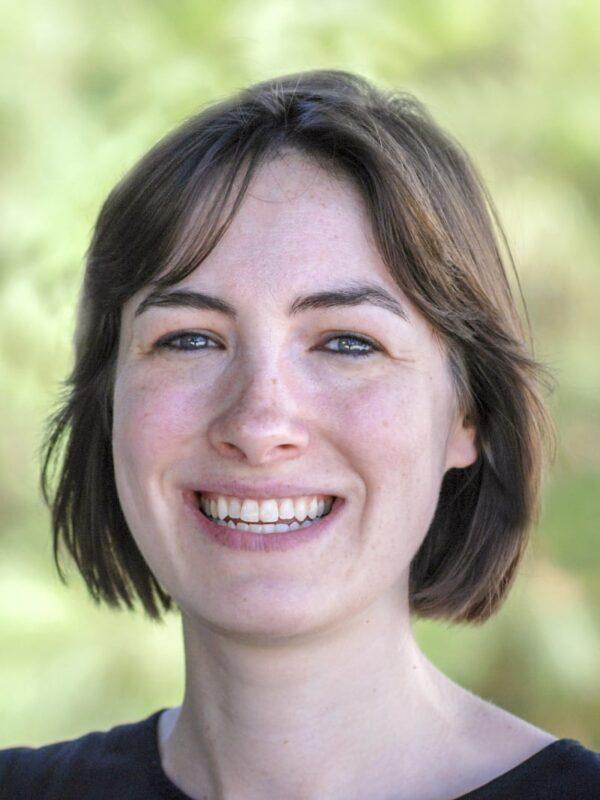 Liz Koslov合作论文数Institute of the Environment and Sustainability, University of California, Los Angeles2
 Malcolm Araos合作论文数Department of Geography, McGill University2
 zheng shu dao qi (正樹 嶋崎)合作论文数1Michelle Cera合作论文数1Jenny K Leigh合作论文数1
 Hector Gil Rodriguez合作论文数1Melina Sherman合作论文数Annenberg Sch Commun & Journalism, Univ Southern Calif1
 Ankit Bhardwaj合作论文数Dept Sociol, NYU1
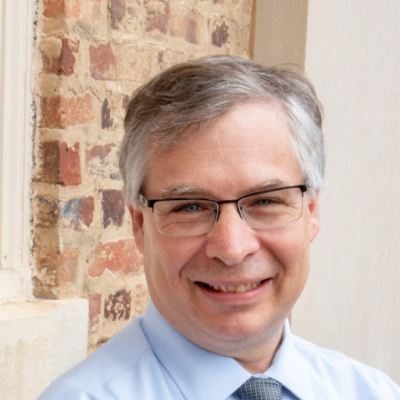 Andrew J. Perrin合作论文数Stavros Niarchos Foundation Agora Institute, Krieger School of Arts & Sciences, Johns Hopkins University1
 Ashish Sharma合作论文数School of Civil and Environmental Engineering, Faculty of Engineering, The University of New South Wales1
 Winston T. L. Chow合作论文数School of Geographical Sciences, Arizona State University1David C. Lewis合作论文数1




