Hummingbird-2 is an encryption algorithm with a 128-bit secret key and a 64-bit initialization vector. Hummingbird-2 optionally produces an authentication tag for each message processed. Like it's predecessor Hummingbird-1, Hummingbird-2 has been targeted for low-end microcontrollers and for hardware implementation in lightweight devices such as RFID tags and wireless sensors. Compared to the previous version of the cipher, and in response to extensive analysis, the internal state has been increased to 128 bits and a flow of entropy from the state to the mixing function has been improved. In this paper we present the Hummingbird-2 algorithm, its design and security arguments, performance analysis on both software and hardware platforms, and timing analysis in relation to the ISO 18000-6C protocol.
In this paper we propose a novel privacy-preserving mutual authentication protocol for RFID systems using the recently proposed ultra-lightweight cryptographic algorithm Hummingbird-2. The new protocol is resistant to the most common attacks against the security and privacy of RFID systems. Furthermore, we also address efficient implementation of the proposed protocol on a batteryless, MSP430-based WISP tag, and investigate the performance of the key search process on a laptop. Our experimental results demonstrate that the Hummingbird-2 mutual authentication protocol provides a highly effective and efficient security and privacy solution for low-cost passive RFID tags.
Due to the tight cost and constrained resources of high-volume consumer devices such as RFID tags, smart cards and wireless sensor nodes, it is desirable to employ lightweight and specialized cryptographic primitives for many security applications. Motivated by the design of the well-known Enigma machine, we present a novel ultra-lightweight cryptographic algorithm, referred to as Hummingbird, for resource-constrained devices in this paper. Hummingbird can provide the designed security with small block size and is resistant to the most common attacks such as linear and differential cryptanalysis. Furthermore, we also present efficient software implementation of Hummingbird on the 8-bit microcontroller ATmega128L from Atmel and the 16-bit microcontroller MSP430 from Texas Instruments, respectively. Our experimental results show that after a system initialization phase Hummingbird can achieve up to 147 and 4.7 times faster throughput for a size-optimized and a speed-optimized implementations, respectively, when compared to the state-of-the-art ultra-lightweight block cipher PRESENT[10] on the similar platforms.
The radiofrequency identification (RFID) technology provides an extensible, flexible and secure measure against product counterfeiting. However, due to the harsh cost and power constraints of RFID tags only dedicated cryptographic engines or low-power consumption microcontrollers can be integrated into tags to implement various security mechanisms. In this contribution, we investigate efficient implementation of an ultra-lightweight cryptographic algorithm Hummingbird on a zero-power 4-bit MARC4 microcontroller from Atmel and compare the performance of Hummingbird to another ultra-lightweight block cipher PRESENT on the same platform. Our experimental results show that after a system initialization phase Hummingbird can achieve about 58% faster throughput than the block cipher PRESENT on a 4-bit ATAM893-D microcontroller running at 16 KHz, 500 KHz and 2 MHz, respectively. In particular, Hummingbird can process one data block with less than 12 ms under a typical low power configuration of 4-bit microcontrollers such as an 1.8 V supply voltage and a 500 kHz clock frequency.
There exists a bidirectional regulatory circuit between the nervous and immune systems. This regulation has been shown to be mediated in part through neuroendocrine hormones and cytokines. Both systems have receptors for both types of signal molecules. The nervous system has receptors for cytokines and it also synthesizes cytokines. The immune system synthesizes and responds to cytokines. So, it is not too far-fetched to believe that neuroendocrine peptide hormones could bind to leukocytes and modulate immune functions. However, it is not widely known that the immune system also synthesizes functional, neuropeptide hormones. This will be discussed in this paper citing a plethora of evidence. The aim of this paper is to summarize this evidence by using three neuropeptides that are synthesized by leukocytes and modulate immune functions as examples; corticotropin (ACTH), endorphin (END), and corticotropin releasing factor (CRF). The production and action of these three neuropeptides in the immune system will be explained. Finally, the potential physiological role of leukocyte-derived ACTH, END, and CRF in inflammation as a localized hypothalamic-pituitary-like axis is discussed.
1. Aim: The hypothalamic-pituitary-adrenal (HPA) axis is a mediator for interactions between the immune and neuroendocrine systems. Pro-inflammatory cytokines such as interleukin-1 (IL-1), interleukin-6 (IL-6), and tumor necrosis factor-alpha (TNF-α) have been shown to activate the HPA axis. Recently, interleukin-10, an important anti-inflammatory cytokine in the immune system, has been shown to be expressed in the central nervous system and neuroendocrine system. Little is known, however, about IL-10’s functions in the HPA axis.
Understanding how and why the immune and nervous systems communicate in a bidirectional pathway has been fundamental to the development of the psychoneuroimmunology (PNI) field. This review will discuss some of the pivotal results that found the nervous and immune systems use a common chemical language for intra and inter-system communication. Specifically the nervous and immune systems produce a common set of peptide and nonpeptide neurotransmitters and cytokines that provides a common repertoire of receptors and ligands between the two systems. These studies led to the concept that through the sharing of ligands and receptors the immune system could serve as a sixth sense to detect things the body cannot otherwise hear, see, smell, taste or touch. Pathogens, tumors, and allergens are detected with great sensitivity and specificity by the immune system. As a sixth sense the immune system is a means to signal and mobilize the body to respond to these types of challenges. The paper will also review in a chronological manner some of the PNI-related studies important to validating the sixth sense concept. Finally, the review will suggest ways to apply the new found knowledge of the sixth sense to understanding a placebo effect and developing new therapeutic approaches for treatment of human diseases.
Herkinorin is the first μ opioid (MOP) selective agonist derived from salvinorin A, a hallucinogenic natural product. Previous work has shown that, unlike other opioids, herkinorin does not promote the recruitment of β-arrestin-2 to the MOP receptor and does not lead to receptor internalization. This paper presents the first in vivo evaluation of herkinorin's antinociceptive effects in rats, using the formalin test as a model of tonic inflammatory pain. Herkinorin was found to produce a dose-dependent decrease in the number of flinches evoked by formalin. These antinociceptive effects were substantially blocked by pretreatment with the nonselective antagonist naloxone, indicating that the antinociception is mediated by opioid receptors. Contralateral administration of herkinorin did not attenuate the number of flinches evoked by formalin, indicating that its effects are peripherally restricted to the site of injection. Following chronic administration (5-day), herkinorin maintained antinociceptive efficacy in both phases of the formalin test. Furthermore, unlike morphine, herkinorin was still able to inhibit flinching in both phases of the formalin test in animals made tolerant to chronic systemic morphine treatment. Collectively, these results suggest that herkinorin may produce peripheral antinociception with decreased tolerance liability and thereby represents a promising template for the development of agents for the treatment of a variety of pain states.
A new material, DuPont Buffer (DB), has been developed in DuPont Displays for use as a hole-injection layer in OLEDs. DB is a unique water-based, electrically conducting polymer dispersion which forms high quality, and high work-function films, even from pH neutral dispersions by various methods, including spin-coating and ink-jetting. This presentation reports on basic properties of DB, and improved device efficiency (2–3×) and operating lifetime (up to 20×) over a commercially available buffer material.
1. The aim of this study was to test whether CRF enhanced nuclear factor kappa B (NF-κB)-directed gene transcription in leukocytes and the receptor specificity of the effect. Initially, we examined the ability of CRF to modulate an antigen-specific, in vitro antibody response. Since that could be mediated by NF-κB transcription factor activity, we tested CRF in a NF-κB driven luciferase gene expression reporter assay.
Several lines of evidence indicate that cytokines can affect adrenal function. To date most of these cytokines have been shown to be pro-inflammatory, such as interleukin (IL)-1, tumor necrosis factor (TNFα), and IL-6. However, we have previously shown that IL-10−/− (IL-10 knockout) mice have higher serum corticosterone levels than IL-10+/+ (wild type) mice following acute immune and physiologic stress, implying that IL-10, an anti-inflammatory cytokine, regulates glucocorticoid synthesis in a negative manner. Here, we show that IL-10 knockout mice produce more corticosterone under basal conditions as well (shown by ELISA). We further support this contention by showing that in Y-1 adrenocortical cells IL-10 inhibits steroid production (StAR) (measured by the production of the corticosterone precursor, progesterone), the expression of steroidogenic acute regulatory protein (semi-quantitative RT-PCR), as well as the activity of the proximal steroidogenic enzymes P450scc and/or 3β-hydroxysteriod dehydrogenase (3β-HSD) (measured by progesterone production in 22(R)-hydroxycholesterol-treated cells). Interestingly, all of the above-mentioned effects of IL-10 occur through its inhibition of ACTH effects, but not by IL-10 alone. Furthermore, immunocytochemistry data shows that the region of the adrenal gland responsible for the vast majority of corticosterone synthesis, the zona fasciculata, predominantly expresses the IL-10 receptor 1 (IL-10R1), with little expression in the zona glomerulosa and reticularis. These data demonstrate that IL-10 could play an important role in the regulation of glucocorticoid biosynthesis and in maintenance of homeostasis and immunity during periods of stress.
1. Aim: Indoleamine 2,3-dioxygenase (IDO) catalyzation of tryptophan is the first rate-limiting step of the kynurenine pathway in the majority of tissues. The kynurenine pathway produces neurotoxic metabolites such as 3-hydroxykinurenine and quinolinic acid. IDO is inducible by the cytokine interferon-γ (IFN-γ) and has been proposed to mediate the sickness behavior of patients with infectious or other inflammatory diseases.
 James Blalock合作论文数Division of Pulmonary, Allergy and Critical Care Medicine, Heersink School of Medicine, The University of Alabama at Birmingham46
 Tk Hughes合作论文数40
 George B Stefano合作论文数Center for Cognitive-Molecular Neuroscience, 1st Medicine Faculty, Charles University;Department of Psychiatry, Charles University in Prague21Walter J. Meyer合作论文数10
 Peter L. Rady合作论文数Department of Dermatology, Mcgovern Medical School, The University of Texas Health Science Center at Houston10DV HARBOUR合作论文数9
 Daniel W. Engels合作论文数Dragon Associates, LLC;The AT&T Center for Virtualization, Southern Methodist University9
 Patrick Cadet合作论文数8
 Stephen K. Tyring合作论文数Department of Dermatology, McGovern Medical School, The University of Texas Health Science Center at Houston;Department of Clinical Sciences, Tilman J Fertitta Family College of Medicine, University of Houston;The Graduate School of Biomedical Sciences, The University of Texas Health Science Center at Houston8Mark R. Opp合作论文数8M K Leung合作论文数6Juelich Terry L合作论文数6Huolin Tu合作论文数5
 Kenneth L. Bost合作论文数Department of Biology, University of North Carolina at Charlotte;SoyMeds5O Duvaux-Miret合作论文数4peter schweitzer合作论文数4LD DION合作论文数4
 Guang Gong合作论文数Communications Security Lab, Department of Electrical and Computer Engineering, Engineering School, University of Waterloo4
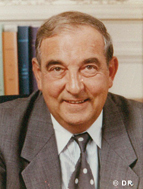 Andre Capron合作论文数Université de Lille;Institut Pasteur de Lille4D Harbour-McMenamin合作论文数3Kl Bost合作论文数3
 Farhad B Hashemi合作论文数Tehran University of Medical Sciences3
 Xinxin Fan合作论文数Department of Electrical and Computer Engineering, University of Waterloo3Te Kruger合作论文数2Ba Torres合作论文数2Fs Galin合作论文数2B Scharrer合作论文数2R. Charles合作论文数2
 Honggang Hu (胡红钢)合作论文数School of Cyber Science and Technology, Univeristy of Science and Technology of China2R. Chin合作论文数2Howard M. Johnson合作论文数2Judith A. Barnett合作论文数2
 Dorian H. Coppenhaver合作论文数2Carmelina Gemma合作论文数2Nina Koldzic-Zivanovic合作论文数2G. John Stanton合作论文数Department of Microbiology and Immunology, University of Texas Medical Branch at Galveston2
 Dale Hogan合作论文数2Audrey C. Morrill合作论文数2Eve W. Johnson合作论文数2L Neale合作论文数1H M Johnson合作论文数1TL KAO合作论文数1B. M. R. J. Woloski合作论文数1R D LeBoeuf合作论文数1Richard T. Meehan合作论文数1Ks Rozsa合作论文数1Robert Chin合作论文数1DA WEIGENT合作论文数1Ge Richards合作论文数1




