We provide analysis for the posterior distribution and expectation of (p_1, p_2) where Y|p_1,p_2 ∼Binomial(n, p_1 p_2) and (p_1, p_2) is uniformly distributed on the unit square [0,1]^2. We exhibit interesting expressions in terms of a truncated Beta distribution, a finite mixture of Beta distributions and harmonic numbers, and derive a simple large sample size n approximation for the posterior expectations 𝔼(p_i|y) as well as for the normalization constant in the posterior joint density.
In this article, we develop a new class of multivariate distributions adapted for count data, called Tree Pólya Splitting. This class results from the combination of a univariate distribution and singular multivariate distributions along a fixed partition tree. Known distributions, including the Dirichlet-multinomial, the generalized Dirichlet-multinomial and the Dirichlet-tree multinomial, are particular cases within this class. As we will demonstrate, these distributions are flexible, allowing for the modeling of complex dependence structures (positive, negative, or null) at the observation level. Specifically, we present the theoretical properties of Tree Pólya Splitting distributions by focusing primarily on marginal distributions, factorial moments, and dependence structures (covariance and correlations). A dataset of abundance of Trichoptera is used, on one hand, as a benchmark to illustrate the theoretical properties developed in this article, and on the other hand, to demonstrate the interest of these types of models, notably by comparing them to other approaches for fitting multivariate data, such as the Poisson-lognormal model in ecology or singular multivariate distributions used in microbiome.
For estimating the density of Y vertical bar mu similar to N-d(mu, nu I-d) based on X vertical bar mu similar to N-d(mu, sigma(2)(X) I-d) with known nu, sigma(2)(X), we consider the class P of "extended plug-in" predictive densities (q) over cap similar to N-d((mu) over cap, (nu) over capI(d)). For a given prior density pi for mu and Kullback-Leibler loss, we investigate the optimal choice (q) over cap (eb, pi) obtained by minimizing the expected posterior loss among (q) over cap is an element of P, as initially proposed by Okudo and Komaki (2024). With (q) over cap (eb, pi), having a simple form and a appealing alternative to the exact Bayesian predictive density, we investigate its Kullback-Leibler risk performance. Our main finding consists, for d >= 3 and a given superharmonic prior density pi, in the determination of a lower cut-off point (nu) over cap such that (q) over cap (eb, pi) dominates the benchmark minimum risk and minimax predictive density for nu >= (nu) over cap. Specific analyses are carried out and our results are illustrated for a pseudo-Bayes marginal density and a subclass of Strawderman prior densities.
For one-parameter continuous exponential families, we identify an unbiased estimator of the inverse of the natural parameter θ for cases where θ> 0, extending an earlier result of applicable to a normal model. We provide various applications for Gamma models, Inverse Gaussian models, distributions obtained by truncation, and ratios of normal means. Moreover, we extend the findings to estimating negative powers θ^-k, and more generally to complete monotone functions q(θ).
We consider the challenging problem of learning Signed Distance Functions (SDF) from sparse and noisy 3D point clouds. In contrast to recent methods that depend on smoothness priors, our method, rooted in a distributionally robust optimization (DRO) framework, incorporates a regularization term that leverages samples from the uncertainty regions of the model to improve the learned SDFs. Thanks to tractable dual formulations, we show that this framework enables a stable and efficient optimization of SDFs in the absence of ground truth supervision. Using a variety of synthetic and real data evaluations from different modalities, we show that our DRO based learning framework can improve SDF learning with respect to baselines and the state-of-the-art methods.
This letter proposes a QP-based visual servoing scheme for limiting motion blur during the achievement of a visual task. Unlike traditional image restoration approaches, we want to avoid any deconvolution step by keeping the image sequence acquired by the camera as sharp as possible. To do so, we select the norm of the image gradient as sharpness metric, from which we design a velocity constraint that is injected in a QP controller. Our system is evaluated for an Earth observation satellite. Simulation and experimental results show the effectiveness of our approach.
Wearable haptic devices can modify the haptic perception of an object touched directly by the finger in a portable and unobtrusive way.In this paper, we investigate whether such wearable haptic augmentations are perceived differently in Augmented Reality (AR) vs. Virtual Reality (VR) and when touching with a virtual hand instead of one's own hand.We first designed a system for real-time rendering of vibrotactile virtual textures without constraints on hand movements, integrated with an immersive visual AR/VR headset.We then conducted a psychophysical study with 20 participants to evaluate the haptic perception of virtual roughness textures on a real surface touched directly with the finger (1) without visual augmentation, (2) with a realistic virtual hand rendered in AR, and (3) with the same virtual hand in VR.On average, participants overestimated the roughness of haptic textures when touching with their real hand alone and underestimated it when touching with a virtual hand in AR, with VR in between.Exploration behaviour was also slower in VR than with real hand alone, although subjective evaluation of the texture was not affected.We discuss how the perceived visual delay of the virtual hand may produce this effect.
Wearable haptic devices are portable and unobtrusive technologies able to provide tactile sensations to the human skin. Their use in Augmented Reality (AR), where visual virtual content is integrated into the real world, has been little explored, especially for generating texture sensations. In this paper, we investigate the perception of simultaneous visual and haptic texture augmentation of real tangible surfaces touched directly with the fingertip in AR, using a wearable vibrotactile haptic device worn on the middle phalanx. When sliding on a tangible surface with an AR visual texture overlay, vibrations are generated based on data-driven texture models and finger speed to augment the haptic roughness perception of the surface. In a user study with twenty participants, we investigate the perception of the combination of nine representative pairs of visuo-haptic texture augmentations. Participants integrated roughness sensations from both visual and haptic modalities well, with haptics predominating the perception, and consistently identified and matched clusters of visual and haptic textures with similar perceived roughness.
For X_1, X_2 independently and normally distributed with means θ _1 and θ _2 , variances σ ^2_1 and σ ^2_2 , we consider Bayesian inference about θ _1 with the difference θ _1-θ _2 being lower-bounded by an uncertain m. We obtain a class of minimax Bayes estimators of θ _1 , based on a posterior distribution for (θ _1, θ _2)^⊤ taking values on ℝ^2 , which dominate the unrestricted MLE under squared error loss for θ _1-θ _2 ≥ 0 . We also construct and study an ad hoc credible set for θ _1 with approximate credibility 1-α and provide numerical evidence of its frequentist coverage probability closely matching the nominal credibility level. A spending function is incorporated which further increases the coverage.
For exponentially distributed lifetimes, we consider the prediction of future order statistics based on having observed the first m -order statistics. We focus on the previously less explored aspects of predicting: 1) an arbitrary pair of future order statistics, such as the next and last ones, as well as 2) the next N future order statistics. We provide explicit and exact Bayesian credible regions associated with Gamma priors, and constructed by identifying a region with a given credibility 1-lambda under the Bayesian predictive density. For (2), the highest posterior density region is obtained, while a two-step algorithm is given for (1). The predictive distributions are represented as mixtures of bivariate Pareto distributions, as well as multivariate Pareto distributions. For the noninformative prior density choice, we demonstrate that a resulting Bayesian credible region has matching frequentist coverage probability, and that the resulting predictive density possesses the optimality properties of best invariance and minimaxity.
In this letter, we describe a novel roadmap construction method in unknown environments, which relies on the extraction of the Hamilton-Jacobi skeleton of the free space. This skeleton is used to construct a graph of free-space bubbles, effectively compressing the skeleton information in a sparse data structure but retaining its topology. The bubbles also enforce safety directly in the roadmap structure. We first demonstrate the relevance of this approach for standard path-planning tasks. We also propose a frontiers-based exploration strategy able to autonomously and safely build a complete 2D map of the environment.
Manipulating virtual objects with bare hands is a key interaction in Augmented Reality (AR) applications. However, there are still several limitations that affect the manipulation, including the lack of mutual visual occlusion between virtual and real content as well as the lack of haptic sensations. To address the two abovementioned matters, the role of the visuo-haptic rendering of the hand as sensory feedback is investigated. The first experiment explores the effect of showing the hand of the user as seen by the AR system through an avatar, comparing six visual hand rendering. The second experiment explores the effect of the visuo-haptic hand rendering by comparing two vibrotactile contact techniques provided at four delocalized positions on the hand and combined with the two most representative visual hand renderings from the first experiment. Results show that delocalized vibrotactile haptic hand rendering improved perceived effectiveness, realism, and usefulness when provided close to the contact point. However, the farthest rendering position, i.e., on the contralateral hand, gave the best performance even though it was largely disliked. The visual hand rendering was perceived as less necessary for manipulation when the haptic hand rendering was available, but still provided useful feedback on the hand tracking.
We study the problem of loss estimation that involves for an observable $X \sim f_{\theta}$ the choice of a first-stage estimator $\hat{\gamma}$ of $\gamma(\theta)$, incurred loss $L=L(\theta, \hat{\gamma})$, and the choice of a second-stage estimator $\hat{L}$ of $L$. We consider both: (i) a sequential version where the first-stage estimate and loss are fixed and optimization is performed at the second-stage level, and (ii) a simultaneous version with a Rukhin-type loss function designed for the evaluation of $(\hat{\gamma}, \hat{L})$ as an estimator of $(\gamma, L)$. We explore various Bayesian solutions and provide minimax estimators for both situations (i) and (ii). The analysis is carried out for several probability models, including multivariate normal models $N_d(\theta, \sigma^2 I_d)$ with both known and unknown $\sigma^2$, Gamma, univariate and multivariate Poisson, and negative binomial models, and relates to different choices of the first-stage and second-stage losses. The minimax findings are achieved by identifying least favourable of sequence of priors and depend critically on particular Bayesian solution properties, namely situations where the second-stage estimator $\hat{L}(x)$ is constant as a function of $x$.
For two vast families of mixture distributions and a given prior, we provide unified representations of posterior and predictive distributions. Model applications presented include bivariate mixtures of Gamma distributions labelled as Kibble-type, non-central Chi-square and F distributions, the distribution of $R^2$ in multiple regression, variance mixture of normal distributions, and mixtures of location-scale exponential distributions including the multivariate Lomax distribution. An emphasis is also placed on analytical representations and the relationships with a host of existing distributions and several hypergeomtric functions of one or two variables.
Count data are omnipresent in many applied fields, often with overdispersion. With mixtures of Poisson distributions representing an elegant and appealing modelling strategy, we focus here on how the tail behaviour of the mixing distribution is related to the tail of the resulting Poisson mixture. We define five sets of mixing distributions and we identify for each case whenever the Poisson mixture is in, close to or far from a domain of attraction of maxima. We also characterize how the Poisson mixture behaves similarly to a standard Poisson distribution when the mixing distribution has a finite support. Finally, we study, both analytically and numerically, how goodness-of-fit can be assessed with the inspection of tail behaviour.
We study frequentist risk properties of predictive density estimators for mean mixtures of multivariate normal distributions, involving an unknown location parameter $\theta \in \mathbb{R}^d$, and which include multivariate skew normal distributions. We provide explicit representations for Bayesian posterior and predictive densities, including the benchmark minimum risk equivariant (MRE) density, which is minimax and generalized Bayes with respect to an improper uniform density for $\theta$. For four dimensions or more, we obtain Bayesian densities that improve uniformly on the MRE density under Kullback-Leibler loss. We also provide plug-in type improvements, investigate implications for certain type of parametric restrictions on $\theta$, and illustrate and comment the findings based on numerical evaluations.
We propose a new visual servoing method that controls a robot's motion in a latent space. We aim to extract the best properties of two previously proposed servoing methods: we seek to obtain the accuracy of photometric methods such as Direct Visual Servoing (DVS), as well as the behavior and convergence of pose-based visual servoing (PBVS). Photometric methods suffer from limited convergence area due to a highly non-linear cost function, while PBVS requires estimating the pose of the camera which may introduce some noise and incurs a loss of accuracy. Our approach relies on shaping (with metric learning) a latent space, in which the representations of camera poses and the embeddings of their respective images are tied together. By leveraging the multimodal aspect of this shared space, our control law minimizes the difference between latent image representations thanks to information obtained from a set of pose embeddings. Experiments in simulation and on a robot validate the strength of our approach, showing that the sought out benefits are effectively found.
This paper presents JAWS, an optimization-driven approach that achieves the robust transfer of visual cinematic features from a reference in-the-wild video clip to a newly generated clip. To this end, we rely on an implicit-neural-representation (INR) in a way to compute a clip that shares the same cinematic features as the reference clip. We propose a general formulation of a camera optimization problem in an INR that computes extrinsic and intrinsic camera parameters as well as timing. By leveraging the differentiability of neural representations, we can back-propagate our designed cinematic losses measured on proxy estimators through a NeRF network to the proposed cinematic parameters directly. We also introduce specific enhancements such as guidance maps to improve the overall quality and efficiency. Results display the capacity of our system to replicate well known camera sequences from movies, adapting the framing, camera parameters and timing of the generated video clip to maximize the similarity with the reference clip.
Most classical SLAM systems rely on the static scene assumption, which limits their applicability in real world scenarios. Recent SLAM frameworks have been proposed to simultaneously track the camera and moving objects. However they are often unable to estimate the canonical pose of the objects and exhibit a low object tracking accuracy. To solve this problem we propose TwistSLAM++, a semantic, dynamic, SLAM system that fuses stereo images and LiDAR information. Using semantic information, we track potentially moving objects and associate them to 3D object detections in LiDAR scans to obtain their pose and size. Then, we perform registration on consecutive object scans to refine object pose estimation. Finally, object scans are used to estimate the shape of the object and constrain map points to lie on the estimated surface within the bundle adjustment. We show on classical benchmarks that this fusion approach based on multimodal information improves the accuracy of object tracking.
This paper addresses the problem of an efficient predictive density estimation for the density q(‖y−θ‖2) of Y based on X∼p(‖x−θ‖2) for y,x,θ∈Rd. The chosen criteria are integrated L1 loss given by L(θ,qˆ)=∫Rd|qˆ(y)−q(‖y−θ‖2)|dy, and the associated frequentist risk, for θ∈Θ. For absolutely continuous and strictly decreasing q, we establish the inevitability of scale expansion improvements qˆc(y;X)=1cdq(‖y−X‖2/c2) over the plug-in density qˆ1, for a subset of values c∈(1,c0). The finding is universal with respect to p,q, and d≥2, and extended to loss functions γ(L(θ,qˆ)) with strictly increasing γ. The finding is also extended to include scale expansion improvements of more general plug-in densities q(‖y−θˆ(X)‖2), when the parameter space Θ is a compact subset of Rd. Numerical analyses illustrative of the dominance findings are presented and commented upon. As a complement, we demonstrate that the unimodal assumption on q is necessary with a detailed analysis of cases where the distribution of Y|θ is uniformly distributed on a ball centered about θ. In such cases, we provide a univariate (d=1) example where the best equivariant estimator is a plug-in estimator, and we obtain cases (for d=1,3) where the plug-in density qˆ1 is optimal among all qˆc.
 François Chaumette合作论文数Universitaire de Beaulieu82
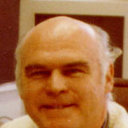 William Strawderman合作论文数26
 Amaury Dame合作论文数IRISA, CNRS26
 Muriel Pressigout合作论文数IRISA Lagadic, Université de Rennes 120
 Fabien Spindler合作论文数IRISA / INRIA Rennes17
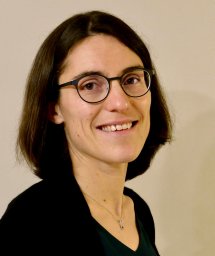 Maud Marchal合作论文数Universités à l'INSA de Rennes;IRISA;Institut Universitaire de France16
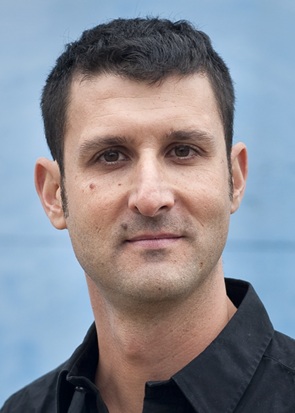 Anatole Lécuyer合作论文数Inria16
 Andrew I. Comport合作论文数Lagadic, IRISA-INRIA Rennes14Céline Teulière合作论文数Institut Pascal, Université Clermont Auvergne14
 Guillaume Caron合作论文数MIS Laboratory, Université de Picardie Jules Verne14Keyvan Kanani合作论文数14
 Christophe Collewet合作论文数INRIA-IRSTEA13
 Jérôme Ardouin合作论文数Laboratoire de Réalité Virtuelle et Systèmes Embarqués, ESIEA13Antoine Petit合作论文数11
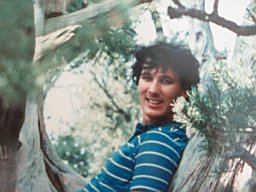 François Perron合作论文数Département de Mathématiques et de Statistique C.P. 6128, Succursale Centre-Ville Montréal11Hideaki Uchiyama合作论文数Kyushu University9
 Claire Dune合作论文数9
 Mohammad Jafari Jozani合作论文数Faculty of Mathematical Sciences, Shahid Beheshti University9
 El Mustapha Mouaddib合作论文数Université de Picardie Jules Verne9Servant, F.合作论文数8
 Nicolas Courty合作论文数University of Bretagne Sud8
 Alexandre Krupa合作论文数 IRISA / INRIA Rennes
Campus Universitaire de Beaulieu
8
Alexandre Krupa合作论文数 IRISA / INRIA Rennes
Campus Universitaire de Beaulieu
8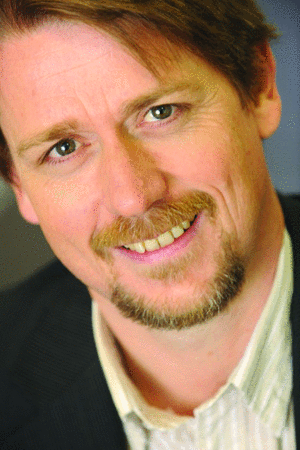 Vincent Drevelle合作论文数Université de Technologie de Compiègne8Bertrand Delabarre合作论文数7
 Tamadazte Brahim合作论文数asm international7Djilali Ait Aoudia合作论文数7Fabien Dionnet合作论文数6
 Xi Wang (王玺)合作论文数École Polytechnique6
 Salma Jiddi合作论文数Technicolor, Issy Les Moulineaux, France6
 Quentin Bateux合作论文数University of Rennes6
 Marc Christie合作论文数University Rennes6
 Philippe Robert合作论文数6
 E. Rutten合作论文数POP ART team;Inovall??e;INRIA Rh?0?0ne-Alpes6
 Julien Pettre合作论文数Inria6
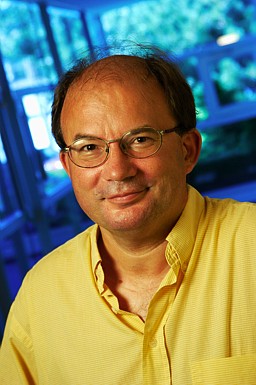 Patrick Bouthemy合作论文数Irisa/Inria Rennes Research Centre6
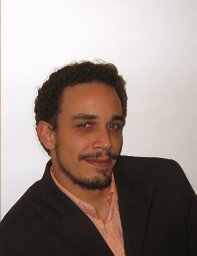 David Folio合作论文数Université Paul Sabatier6
 Guillaume Cortes合作论文数Realyz, Inria Rennes, Rennes, France5Mathieu Gonzalez合作论文数Institut de Recherche Technologique b-com/Inst Res & Technol5
 Amine Kacete合作论文数Inst Res & Technol B Com, Cesson Sevigne, France5
 le Cui合作论文数5Tatsuya Kubokawa合作论文数5
 Andrea Cherubini合作论文数LIRMM5Ahmad Parsian合作论文数5
 Laurent Eck合作论文数5
 Christophe Leroux合作论文数5Ide-Flore Kenmogne合作论文数4Tran Thi Thanh Hai合作论文数4