Small island states and territories (SISTs) face disproportionate climate risks, including sea-level rise, extreme weather events, and saltwater intrusion, yet adaptation strategies are constrained by geography, resources, and governance challenges. Nature-based Solutions (NbS) offer cost-effective, low-tech approaches that enhance resilience while delivering co-benefits for biodiversity and livelihoods. Despite their potential, NbS integration into SIST climate policies remains poorly understood. This research developed a replicable scorecard to evaluate NbS integration across 57 SIST. Undergoing iterative refinement and validation, the scorecard was based upon six categories: Inclusion of NbS; budget/economic considerations; community engagement; gender and social inclusion; anticipated benefits, and policy linkages. Policies were independently scored, with high inter-rater reliability (Cohen’s Kappa = 0.82). Results reveal substantial variation: Dominica scored highest (13 points out of a possible 20), while six SISTs scored zero. Budget/economic considerations and anticipated benefits were the highest scoring categories, whereas gender and social was the lowest scoring. Although 89% of policies referenced NbS-related activities, explicit use of the term “NbS” appeared in only 19.6% of policies. No significant upward trend in integration of NbS over time was observed. Classification and regression tree analysis identified three policy groupings based on emphasis rather than geography, highlighting gaps in budgeting and cross-policy linkages. The scorecard provides the first comprehensive assessment of NbS integration across SIST climate policies, offering opportunities for further research, practical insights for strengthening policy frameworks and informing future investment priorities. It provides a model for assessing policies across different sectors and at different scales, including continental contexts.
The morphology of a coral reef terrace (CRT) is a key parameter in the interpretation and quantification of past sea-level changes, but it is directly influenced by local morphodynamic and hydrodynamic conditions. Spatial differences in terrace morphology may therefore result in over- or underestimation of paleorelative sea levels and their associated uncertainties. To investigate this, we integrate high-precision field surveys from the island of Aruba (Leeward Antilles, Caribbean Sea) with a stratigraphic forward model (DionisosFlow (R)) to quantify the intra-island variability of the Quaternary coral reef sequence. We establish that a possible slight North-South tectonic tilt of the island may drive differences in the elevation of CRTs and the number of emerged fossil coral reefs imprinted on the coastal landscape. However, terrace geometry is primarily defined by the basement slope and wave exposure. All together, our results show that even small-scale environmental and hydrodynamic variability can introduce meter-scale errors in sea-level reconstructions derived from CRTs.
Researchers who wish to engage in policy processes to help address the biodiversity crisis are often hindered by fear of the potential drawbacks to doing so. The complexity of political systems, the necessity to interact with policymakers or politicians outside of the work environment, the potential professional risks that may arise from engagement, advocacy, or activism, and the lack of institutional recognition and support for engaging in the science–policy interface may be daunting. Following the negotiation and adoption of the Kunming‐Montreal Global Biodiversity Framework, a reflection on how biodiversity researchers may engage more in policy processes is timely. Here, we introduce and reflect on some of the tools that can empower researchers who would like to engage in (1) changing policies, (2) multidirectional communication, (3) building networks, (4) activism and advocacy, and (5) securing institutional support.
Extreme marine events determine different landform imprints, such as out-of-size deposits like coastal boulders with several tons in weight. These extreme marine events are usually connected to storms and tsunamis. Storms and tsunamis are characterized by a high-energy content, which is reflected in wave flow and wave height able to move the boulders. Several coastal boulders have been detected in Aruba, Bonaire, and Curacao (ABC) islands, overlying the marine terrace deposits that surround the seaward side of these islands. In this work, morpho-topographical surveys were performed on these coastal boulders in order to simulate the most probable events that caused their displacements. Unmanned Aerial Vehicle and close-range photogrammetry were used to reconstruct the volume and shape of boulders with their immersive scenario. Volume and shape of coastal boulders have been used to estimate the energy content able to determine their displacement. Furthermore, boulder samples were collected in order to assess their density and to obtain chronological constraints of the extreme marine events by applying U/Th and radiocarbon dating. Numerical models in Delft3D were applied to simulate the scenarios that could be responsible for the boulder movements. The results showed that the biggest boulders are located on Bonaire Island, located in the eastern part of the ABC archipelago, and were influenced by higher energy content than the Aruba and Curacao islands. This energy content could be related to three possible scenarios simulated in Delft3D: 1) a tsunami scenario connected to Venezuela earthquakes, 2) a Hurricane scenario impacting from the western side of the ABC archipelago, 3) a combination of multiple events (tsunami and storms) that caused differential boulders movement in the past.
Large coastal boulders are ubiquitous geomorphological features that are emplaced along coasts by extreme marine events such as storms, hurricanes, and tsunamis. Many large coastal boulders have been identified on emergent fossil coral reefs on the windward sides of the Aruba, Bonaire, and Cura & ccedil;ao (ABC) islands in the Leeward Antilles of the Caribbean. Here, structure-from-motion/multi-view stereo techniques were used to map boulder sizes at several coastal sites in the ABC Islands as well as construct digital terrain models of the surrounding areas. Chronological constraints on boulder transport were established through the radiocarbon dating of the vermetids and coral colonies that comprised boulders located along a ridge on Aruba Island. A suite of hydrodynamic models was used to empirically derive the required flow thresholds for boulder displacement to determine whether tsunamis or hurricanes were responsible for detaching and transporting these boulders. Our results suggest that multiple tsunamis, most likely triggered by the El Pilar fault, located near the Venezuelan coast, were the cause of boulder detachment and transport in this region during the Holocene, between 4000 and 500 years BP.
Purpose The GreenComp framework identifies 12 competences for sustainability as common ground for higher-education curricula. The framework can be used for self-assessment and the review of curricula. However, a step-by-step method to conduct such a self-assessment is not yet available for the GreenComp framework specifically. Therefore, the authors present the GreenComp Evaluation Roadmap allowing to evaluate the extent to which the frameworks’ competences for sustainability are integrated in higher-education curricula. The application of the GreenComp Evaluation Roadmap to a curriculum taught at the University of Aruba, allows to report on the benefits, limitations and future potential of the approach. Design/methodology/approach The proposed mixed-method approach combines hybrid qualitative and quantitative data collection on the integration of the 12 competences for sustainability of the GreenComp framework in higher-education curricula. The authors showcase its potential through application of the GreenComp framework as an evaluation tool to a science, technology, engineering and mathematics-based bachelor program taught at the University of Aruba. Findings The GreenComp Evaluation Roadmap not only allows for an evaluation of the curriculum and identification of competence gaps. It also supports educators to conduct a self-reflection on individual course(s) and the program as a whole. The paper shows promising results that the roadmap developed could be a reproducible approach. Moreover, it provides guidance to other higher education institutes for self-evaluation and self-reflection on how the competences for sustainability are integrated in their curricula and how this can be enhanced in the future. Originality/value The need to integrate sustainability throughout higher-education curricula is broadly recognized. The GreenComp Evaluation Roadmap contributes to the literature by offering a methodological approach to evaluate the integration of the 12 competences for sustainability throughout a curriculum.
PurposeUniversities of Small Island States (SIS) have the potential to fulfill a crucial role in implementing the Sustainable Development Goals (SDGs) but also face barriers to local capacity building. The University of Aruba partly addresses these challenges through the development of The Academic Foundation Year (AFY), a one-year pre-university program aiming to optimally equip students for higher education. This study aims to assess to what extent the program can foster the local embeddedness of the students in ecology, culture and history and an understanding of opportunities and challenges for sustainable development in SIS. Design/methodology/approachThe authors provide examples of how the program incorporates education for sustainable development and how it emphasizes experiential learning. In addition, quantitative survey data and qualitative analysis of focus group meetings are used to reflect on the program's achievements and its potential for further development. FindingsThe survey results suggest that AFY courses not only increase knowledge but also change students' perceptions regarding sustainability. Indeed, key impacts emerging from the student focus group related to both academic preparation and engagement with sustainability. Reflections by teachers emphasized the importance of experiential learning, an expansive view of the SDGs and preparing students as citizens. Originality/valueThis study highlights that the program could provide a starting point for the development of similar initiatives in other SIS, the common basis being the fostering of sustainability literacy and social adoption of the SDGs.
Mass tourism is a major driver of economic growth in the Caribbean. One major trade-off of this economic growth model is the loss of natural areas due to tourism activities and increasing urbanization. Aruba is one of the most tourist intense destinations within the region with a total of 1.1 million stay-over tourists in 2019. Moreover, this island has one of the largest population densities in the Caribbean and high-speed urbanization takes place in this formerly rural island state. Therefore, this study aims to assess the islands' carrying capacity in relation to its limited land resources by means of a geospatial methodological analysis coupled with a correlation analysis between socio-economic indicators and statistics. First, the past and present drivers and characteristics of urbanization are analyzed. Second, the correlation between socio-economic indicators and the number of tourists was assessed. Third, two future scenarios were developed to assess the maximum carrying capacity. From 1986 till 2020, Aruba's built environment increased from ~29–60 km2 and translates to one-third of the island. Expansion was characterized by sprawl in the earlier years and changed to infilling in the latter. Furthermore, the results indicate that all socio-economic indicators are strongly positive correlated to tourism. Lastly, the possible maximum physical carrying capacity for yearly visitors and number of inhabitants was calculated to be ~1.7 million and 150.000, respectively. We conclude that the proposed methodological framework is robust and adequate to serve as a low budget decision-making tool for sustainable tourism development on islands.
IntroductionSocio-metabolic risks (SMRs) are systemic risks associated with the availability of critical resources, the integrity of material circulation, and the distribution of their costs and benefits in a socio-ecological system. For resource-stressed systems like small island nations, understanding trade-offs and synergies between critical resources is not only crucial, but urgent. Climate change is already putting small islands at high risk through more frequent and intense extreme weather events, changing precipitation patterns, and threats of inundation with future sea-level rise. MethodsThis study compares the shifting resource-baseline for 14 Caribbean island nations for the year 2000 and 2017. We analyze water, energy, and food (WEF) and their nexus through the lens of SMRs, using indicators related to their availability, access, consumption, and self-sufficiency. ResultsOur findings point to the decreasing availability of all three resources within the Caribbean region. Meanwhile, between 2000 and 2017, consumption levels have increased by 20% with respect to water (from 230 to 275 m(3)/cap/yr) and primary energy (from 89 to 110 GJ/cap/yr), and 5% for food (from 2,570 to 2,700 kcal/cap/day). While universal access to these resources increased in the population, food and energy self-sufficiency of the region has declined. DiscussionCurrent patterns of resource-use, combined with maladaptive practices, and climate insensitive development-such as coastal squeeze, centralized energy systems, and trade policies-magnify islands' vulnerability. Disturbances, such as climate-induced extreme events, environmental changes, financial crises, or overexploitation of local resources, could lead to cascading dysfunction and eventual breakdown of the biophysical basis of island systems. This research is a first attempt at operationalizing the concept of SMRs, and offers a deeper understanding of risk-related resource dynamics on small islands, and highlights the urgency for policy response.
Reverse osmosis has become the dominant technique for desalination while at the same time there is a steady increase in reliance on desalination systems for water production globally. Resource recovery and mitigation of adverse effects from brine discharge are important factors and are increasingly being considered by researchers and industrial actors. The island nation of Aruba, with over 100 years of commercial desalination history, is used as a case study to illustrate the possibilities of shifting from centralized seawater desalination plants to seawater refineries in which freshwater is considered only one of the possible products. We identify possible economic value from desalination plants of medium scale (as is the case in Aruba) from the production of magnesium, caustic soda, chlorine-based products and rubidium and possible energy recovery possibilities through osmotic gradients and/or hydrogen storage while at the same time highlighting the insufficient potential for lithium harvesting from seawater desalination brines. We have found that the economic value from resources recovered from brine may be even larger than the value of the freshwater produced by these plants. Furthermore, reduction of salinity and quantity of brine can reduce the overall ecological impact from current brine effluents. & COPY; 2023 Society of Chemical Industry (SCI).
The Sustainable Development Goals (SDGs) aim to elicit global mobilization to implement the 2030 Agenda for Sustainable Development, and are increasingly used in support of Education for Sustainable Development (ESD). Previous studies have highlighted interdependencies between SDGs, with potential interactions between four Sustainability Domains: Economy, Governance, Planet and Society. This study aimed to assess whether people’s perception of the relative importance of the SDGs reflects recognition of the need to prioritize efforts across Domains, or whether this perception is based on different valuations of the Sustainability Domains themselves. We designed an interactive online tool in which participants used the Q-sort technique to rank the SDGs according to their subjective valuation of importance. We analyzed the rankings of 108 participants, all learners at universities in three Small Island States (SIS): Aruba, Suriname and Trinidad and Tobago. Analysis of the correlation structure among participants’ Q-sorts showed that higher perceived importance of the Society- and Economy-related SDGs 2, 3, 4, 8 and 9 traded off with lower perceived importance of the Planet-related SDGs 13, 14 and 15. Furthermore, SDG rankings of learners from Aruba occurred furthest toward the Planet-based part of this trade-off axis. For ESD programs, our method provides a novel tool to identify key interactions between SDGs that may not yet be recognized by program participants. In this way, communicating the need for simultaneous action and policy development across Sustainability Domains could be specifically tailored to the local context. Such connections may increase the effectiveness of ESD in addressing the substantial sustainability challenges facing SIS.
Abstract This article investigates Language Making processes in multilingual postcolonial societies where Creole languages are spoken. It raises the question whether or not Language Making in these settings differs from other contexts given the historical preconditions and social, economic, or political inequalities which persist after the colonial period. The paper discusses the potentials of Language Making to support or impede efforts of decolonization. With the help of examples from several Creole-speaking societies, it shows different approaches to conceptualizing Creole languages as linguistic entities with the creation or emergence of norms, different naming strategies or through language policy and planning. It examines the potential contribution of different agents of Language Making and illustrates cases in which Language Making is countered or languages are un-made. As a conclusion, the article shows that the concept of Language Making may need further expansion or nuancing in order to avoid a “Northern” or “Western” bias.
The current pilot study investigated the psychological mechanisms behind ethnic outgroup aggression, a significant outcome of intergroup conflicts. While previous research suggested several impactful predictors of ethnic outgroup aggression, such as intergroup contact and nationalism, no attempt has been made to synthesize all these constructs into a single cross-cultural study. Building on existing research, this pilot study is the first to assess a refined framework where we tested a proposed mediation model according to nationalism and emotion regulation mediate the relationship between intergroup contact, susceptibility to persuasion, and intergroup anxiety on the one hand and ethnic outgroup aggression on the other hand within a cross-cultural sample. An online questionnaire was distributed using convenience sampling among 2482 students with an ethnic majority background living and studying in ten (European) countries. Multigroup path analysis supported the larger part of the hypothesized model where we found that emotion regulation partially mediated the relationship between susceptibility to persuasion as a predictor and aggression as an outcome. As expected, we found that the higher the susceptibility to persuasion, the higher the emotion regulation, and the higher the regulation, the lower the aggression in all countries. Our pilot study provided preliminary evidence that emotion regulation, nationalism and susceptibility to persuasion are critical for the understanding of ethnic outgroup aggression in ethnically diverse societies. Future research needs to be carried out focusing on the development of an intergroup anxiety assessment in which possible gender differences in assessed constructs are considered.
Over the past decades, an increasing number of initiatives aimed at the introduction of the use of home languages of the majority of the populations of the territories of the Caribbean part of the Kingdom of the Netherlands in education, governance, and the judiciary have been the subject of lively and sometimes acrimonious debate. In this chapter, the authors discuss an inventory of popular beliefs on the adequateness for academic use and status of the different languages in the Caribbean part of the Kingdom of the Netherlands to understand the processes that underly the resistance to moves toward inclusive education in home languages of the majority of the populations of these islands. This inventory is produced by the three authors of this chapter, who at various levels have investigated attitudes and beliefs related to language in general, and the adoption of the former colonizer's state tradition and language regime in particular, in Aruba, Bonaire, Curaçao, St. Eustatius, and St. Maarten.
This contribution describes a study of internal communication at the University of Aruba. The consultancy focused on bottlenecks in internal communication strategies and practices as well as the employees’ experiences and expectations. Interviews and participant observation allowed for an analysis of the use of communication channels, which led to the conclusion that the communication challenges faced by the institute seem to have originated from the growth of the organization rather than from the multicultural society of which it is a part. Changes in organizational culture can have an important impact on communication.
Purpose Despite increasing efforts to incorporate sustainability in curricula and practices of institutions of higher education, effective implementation remains challenging. The purpose of this study is to present an approach to incorporate sustainability into a practice-oriented research skills course, which was implemented at a small island state university in the Caribbean. Design/methodology/approach First-year university students followed a four-week course module, starting with the introduction of the sustainable development goals, and culminating in a symposium in which the students present the findings of their research projects to the campus community. Pre-course module and post-course module surveys measured the students' knowledge and perceptions regarding sustainability. These survey results were also compared with the result of a similar survey held for the university's employees. Findings The survey results suggested that following the course module increased students' knowledge about sustainable development, as well as their support for the university campus and its community putting more emphasis on teaching, practicing and encouraging sustainability. Interestingly, university employees scored significantly higher on the latter component than students, suggesting that in this case a lack of interest of the staff is not a barrier toward a sustainable campus. Originality/value The presented course module offers a novel and low-cost approach to introducing sustainability into a broad range of academic curricula, specifically tailored to the needs of institutes of higher education in small island states. The survey results suggest that this type of education may not only ensure reaching academic goals but also increase students' interest in sustainable development within their local environment.
This chapter deals with the role of community based research in small island states and other postcolonial communities, presenting guiding principles and best practices, and focusing explicitly on issues related to community based research on language and education that will be illustrated by the case study of Statia. A brief archaeology of the concept of community based research is provided at the end of the chapter.
Sustainable development is needed for all countries, but especially small island states are vulnerable due to their small size and the many (largely external) challenges they face. Higher education needs to play a pivotal role towards the implementation of sustainable development policies and the corresponding SDGs (Cortese 2003) (Stephens, et al. 2008) (Karatzoglou 2013) (Hanefeld and Kickbush 2017; 358) (El-Jardali, Ataya and Fadlallah 2018) (Eppinga, de Scisciolo and Mijts 2019). For small island states, besides local governance strategies, local universities play a very crucial role in the implementation of the SDGs due to their contextual settings and their knowledge of the contextual variables of that specific island state. Compared to continental countries, small island states are subject to numerous extra threats due to their specific environmental, geographical, social and economic characteristics (Briguglio 2003) that lead to greater vulnerability. Multiple initiatives have been undertaken to build resilience to these threats, but the focus of these attempts is mostly externally oriented, rooted in international technical and logistical support and consultancy (Baldacchino 2018). Such solutions often do not consider the specifics of the local situation, and lead to a lack of institutional and social adoption in the island states concerned.
 Nicholas Faraclas合作论文数9
 Ellen-Petra Kester合作论文数8
 Maarten B. Eppinga合作论文数Copernicus Inst;Utrecht Univ;Multitrophic Interactions Dept;Multitrophic Interactions Dept, Utrecht Univ6
 Tobia de Scisciolo合作论文数5
 Patrick Boyden合作论文数MARUM Ctr Marine Environm Sci, Univ Bremen3
 Giovanni Scardino合作论文数3
 Bejarano Sonia合作论文数3
 Giovanni Scicchitano合作论文数Department of Geological Science, University of Catania3
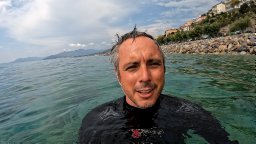 Alessio Rovere合作论文数Dipartimento per lo studio del Territorio e delle sue Risorse, Università di Genova DipTeRis3
 Maria J Santos合作论文数2
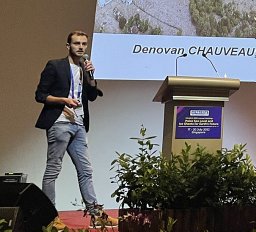 Denovan Chauveau合作论文数CNRS, Univ Brest2
 Elisa Casella合作论文数2
 N. A. K. Nandasena合作论文数2
 Skerdi Zahaj合作论文数1Nigel John合作论文数1Оlga A. Ryzhkina合作论文数1
 Herman Broring合作论文数1
 Jerzy Koch合作论文数Zakład Studiów Niderlandzkich i Południowoafrykańskich, Adam Mickiewicz University in Poznań1
 Ciro Cerrone合作论文数1
 Francisco Xavier Felix Martin del Campo合作论文数1
 Anastasia Batkhina合作论文数Doctoral Sch Psychol, HSE Univ1
 Idil Aksoz Efe合作论文数1
 Penny Papageorgopoulou合作论文数Natl & Kapodistrian Univ Athens1
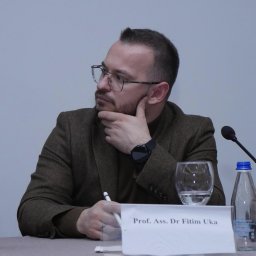 Fitim Uka合作论文数Dept Psychol, Univ Prishtina1
 Miranda Rutenfrans-Stupar合作论文数1
 Oriola Hamzallari合作论文数1Philipp Krämer合作论文数1
 Dr. Snezana Stupar-Rutenfrans合作论文数University College Roosevelt, Utrecht University1de Groot G合作论文数1
 Bart Van Der Bruggen合作论文数Department of Chemical Engineering, KU Leuven;Faculty of Engineering Science, KU Leuven;Division Sustainable Process Technology, KU Leuven1
 Nebojsa Petrovic合作论文数1
 Mollie Chapman合作论文数1
 Simron J. Singh合作论文数Faculty of Interdisciplinary Studies, Klagenfurt University Institute of Social Ecology1
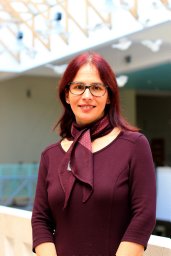 Daniela Garbin Pranicevic合作论文数1
 Anton Van Rompaey合作论文数Division of Geography and Tourism, Department of Earth and Environmental Sciences, Faculty of Architecture, KU Leuven;Faculty of Science, KU Leuven1
 Angela Bartens合作论文数1




