The authors propose a nascent concept for an iterative time-reversal radar (ITRR) that shows promise for detecting and tracking (localizing) a target of interest by using multiple transmit-receive pairs (distributed radars) and iteratively applying time reversal (TR). Existing research suggests that the ITRR methodology rapidly converges to a waveform that is better suited (matched) to a target, because the waveform’s frequency profile is better aligned with a target’s resonances. Hence an ITRR may provide a more effective way of generating waveforms that respond more dynamically to targets. The fundamental premise is to replace the matched filter of standard radar methodology, which assumes that the received and transmitted signals are the same, with an iterative TR (ITR) process that allows the environment to do the matched filtering, thereby achieving better cross-correlation between the transmitted and received signals. Important issues and open problems are noted.
This short descriptive paper provides a sense of the recent state of radiofrequency (RF) electromagnetic (EM) spectrum research and development (R&D), applications, management, and interference mitigation. Some historical developments, current research efforts and applications, and possible areas of research are noted. The discussion focuses on RF spectrum activities since 1995.
It is well-known that an iterative time-reversal (TR) process, applied via a distributed sensing system, can be used to produce a space-time waveform that maximizes the energy scattered from a stationary target back to the sensors. The TR process accomplishes this by automatically focusing energy, both spatially and spectrally, on the stationary target. When scatterers are moving, however, the TR focusing can break down. This article shows how to modify the TR process so that it automatically focuses energy on a moving target. This new TR process automatically generates a distributed beam that: 1) follows the target as it moves and 2) enhances the target resonances by concentrating the energy spectrally. This focusing occurs without a priori knowledge of the target's location or spectral response. The new TR algorithm is derived through a careful analysis of the idealized case of a single isotropic moving point scatterer. This article includes simulations that compare the TR focus both with and without the new modification. Although the simulations are carried out for the electromagnetic case, the theory applies equally well to the acoustic case when the target speed is significantly less than the ambient sound speed. Appendices are included with details of the calculations and with analysis of the range of relative velocities for which the modified TR process should be used.
IEEE Standard 1502 recommends standardized practices for radar cross-section (RCS) measurements. This document—geared toward test-range operators and managers as well as users of the acquired data—outlines suggested measurement processes, measurement techniques, imaging concepts, and documentation practices. Consequently, there is a need to revisit and update the standard periodically to remain current with the measurement technology and typical test objects. This article outlines the updates that have been made to the standard in its current release.
The recently revised and published IEEE standard, IEEE Std 1502™-2020 (Revision of IEEE Std 1502-2007) IEEE Recommended Practice for Radar Cross-Section Test Procedures, is briefly discussed. Topics include a short history of the standard, the definition of radar cross section (RCS), the major topics addressed by the standard, and a brief discussion of RCS test ranges.
Radar scattering is typically represented as the RCS of the test object. The term RCS evolved from the basic metric for radar scattering: the ratio of the power scattered from an object in units of power per solid angle (steradians) normalized to the plane-wave illumination in units of power per unit area. The RCS is thus given in units of area (or effective cross-sectional area of the target, hence the name). Note that the RCS of the test object is a property of the test object alone; it is neither a function of the radar system nor the distance between the radar and the test object, if the object is in the far field. Because the RCS of a target can have large amplitude variation in frequency and angle, it is expressed in units of decibels with respect to a square meter and is abbreviated as dBsm (sometimes DBSM or dBm2). In terms of this definition, the RCS of a radar target is a scalar ratio of powers. If the effects of polarization and phase are included, the scattering can be expressed as a complex polarimetric scattering (CPS) matrix. The measurement of the RCS of a test object requires the test object to be illuminated by an electromagnetic plane wave and the resultant scattered signal to be observed in the far field. After calibration, this process yields the RCS of the test object in units of area, or the full scattering matrix as a set of complex scattering coefficients.This paper describes the planned upgrades to the old IEEE Std 1502™-2007 IEEE Recommended Practice for Radar Cross-Section Test Procedures [1]. The new standard will reflect the recent improvements in numerical tools, measurement technology and uncertainty estimates in the past decade.
The objective of this chapter is to provide a high-level perspective on the growing conflict over use of the radio-frequency (RF) spectrum, a precious and highly sought resource extending from below 1 MHz to above 100 GHz, caused by the accelerating demand for consumer use via 4G and soon-to-be 5G wireless communications. The world at large now faces serious spectrum-compatibility problems that require new and innovative solutions-increased spectral congestion and crowding are especially challenging. However, anticipated improvements in electromagnetic (EM) systems up to 300 GHz are beginning to be realized. Less restrictive constraints on communication systems, inherent in one-way propagation paths and much less expensive components, have allowed that community to design and develop more diverse waveforms and systems. Consequently, commercial cellular systems are proliferating at incredible rates, resulting in extremely spectrally dense environments and fierce competition for spectrum that traditionally has been the almost exclusive province of radars as primary legal users. For radar applications, however, the promise is being realized much more slowly, and the inundation of communication devices from the commercial sector has caused significant radar-communication interference problems. In addition, radar and communication systems are important components of military operations, and advances in waveform-diversity signal and data-processing techniques that are likewise relevant to spectrum sharing offer the promise of significantly improved performance.
The articles in this special section focus on ultra wideband technologies and applications. Over the last three decades, ultrawideband (UWB) radars have been designed for military and civilian applications, such as ground-penetrating radar for detecting and imaging antipersonnel and antivehicular mines, sensing through canopies for opposing forces, identifying combatants and weapons in structures,...
Radio frequency (RF) spectrum crowding has resulted in the need for interoperability between radar and communications systems. Passive radar has been investigated as a means to exploit the proliferation of RF systems to perform functions such as detection and tracking of moving targets. Passive multistatic radar may alleviate spectral fratricide by replacing some active monostatic radar systems. Part 1 of this study presents results from a passive multistatic radar experiment that exploits worldwide interoperability for microwave access (WiMAX) communications waveforms to detect moving targets. Signal processing strategies for high-duty cycle, low pulse repetition frequency (PRF) waveforms are discussed and validated on experimental data. Part 2 of this article attempts to address the outstanding research issue of combining data from multistatic radar systems to increase performance.
Passive radar can reduce radio frequency (RF) spectrum crowding and facilitate RF system interoperability by eliminating the necessity to transmit. Part 1 of this study discussed a passive multistatic radar experiment using Worldwide Interoperability for Microwave Access (WiMAX) signals of opportunity and the accompanying signal processing techniques that were employed. Part 2 discusses the multistatic velocity backprojection technique for visualising multistatic radar data and applies this technique to simulated data and passive multistatic data from the experiment discussed in Part 1.
The objective of this review paper is to illustrate the principle of analytic continuation and provide its relationship to reduced rank modeling using the total least-squares-based singular value decomposition methodology. The principles are illustrated in the different domains using the matrix pencil method and the Cauchy method for various reduced computational applications. In a companion paper, the use of a nonparametric methodology will be illustrated.
One of the objectives of this paper is to outline the differences between the internal and external resonances of an electromagnetic structure. At an internal resonance of an object there is a component of the resonant current on the structure which is real and that current does not radiate nor does it couple to the incident field. The external resonances responsible for radiation that occurs at the singularities in the complex s-plane and lead to the currents that are complex in nature. These are the same solutions as discussed in the singularity expansion method and are responsible for radiation. This paper also illustrates that the nature of the current distribution on a radiating structure cannot be correlated with the amount of radiation emanating from the structure and nor do the currents have to be real and thus correlating them to resonances. Another topic to be discussed is the characteristic modes that can not only represent the currents on the structure but also the fields on the radiation sphere provided there is no internal resonances associated with this structure. In addition, the structure has to be completely lossless. These characteristic modes can also be correlated with the properties of the impedance matrix that are generated in a numerical electromagnetic field configuration. For computational purposes for the characteristic modes to exist the impedance matrix must be symmetric in order to generate real eigenvalues and a real orthogonal basis for the currents (that does not mean the actual currents are real-the basis functions are real in most of the deployments encountered in the solution of method of moments problems). This expansion in terms of the characteristic modes is valid provided the structure has no internal resonances at the frequency of analysis, the impedance matrix that is to be decomposed is perfectly symmetric and the structure has no losses. Finally, it is illustrated that the nature of radiation cannot be predicted from the solution of the current distribution on the structure. Just because the current distribution on the structure is real that does not mean it will provide enhanced radiation. On the contrary real resonant currents could be due to internal resonances and they do not radiate. These points are discussed in this short presentation.
It is our great pleasure and honor to introduce this first of two special issues of the IEEE Aerospace and Electronic Systems Magazine on waveform diversity (WD). WD has been an area of significant scientific and technological endeavor in the last decade or so. The objective of these special issues is to provide a mix of tutorial-like articles and ones that highlight new and forward-looking result...
This short expository paper provides a brief introduction to ultrawideband (UWB) theory, technology, applications, and systems with a focus on radar and brief observations on communications. The definition of UWB radar is discussed, and an experimental UWB radar (Microwave Microscope) is considered to illustrate system properties and the imaging effectiveness of UWB transmissions.
Current research on wireless radio frequency (RF) systems often makes unphysical simplifying assumptions and treats the associated signal processing and electromagnetic (EM) analyses independently, resulting in improper inclusion of the underlying physics (EM theory) of such systems and consequently leading to inaccurate and erroneous performance predictions. To achieve accurate modeling and predictions, EM theory and signal processing must be intelligently merged. Examples of such errors commonly appearing in both fields are the following: not including the platform on which an antenna is mounted, which leads to completely erroneous predictions of antenna coverage [1], a serious issue for designing relevant antennas for RF systems, and optimizing transmitted waveforms without including proper differentiability requirements imposed by Maxwellian electromagnetics yielding inaccurate and physically unrealizable waveforms [2]. Because discussions of these topics appear in [1] and [2], this article concentrates on the different concepts of channel capacity and their implications and on the antenna and its relationship to the maximum power transfer theorem. Although the discussion addresses communication systems, much of it is applicable to noncommunication systems. A future of improved performance and better spectral harmony requires coding at RF, initially envisioned by Shannon and subsequently investigated by Viterbi, which is similar to the coding in global positioning satellite (GPS) and satellite communication. Such a methodology can also be carried out in radar in which, for example, a radar can transmit coded waveforms, such as a Barker code, to increase detection capabilities.
Radar waveform diversity has received considerable attention in recent years due to increasing spectral congestion and the burgeoning capabilities of digital waveform generation. The promise of waveform diversity is far greater utilization of available degrees of freedom to enhance sensing performance and to even facilitate new operating modes. This tutorial provides an overview of this very broad topic, from the basic principles upon which it is founded to the myriad different areas being explored in research for practical sensing applications.
Conventionally, the design of antennas is narrowband and little attention is paid to the phase responses of the devices as functions of frequency. Even the use of the term broadband is misleading as one essentially takes a narrow band signal and sweeps it across the band of interest. In fact, it is not necessary to pay too much attention to the phase for narrowband signals, as the role played by the frequency factor is that of a scalar multiplier. However, if one now wants to use multiple frequencies and attempts to relate the data obtained at each frequency, then this frequency term can no longer be ignored. Depending on the application, this scale factor can actually have significant variations, which also depend on the size and the shape of the bandwidth over which the performance of the system is observed. In the time domain, the effect of this frequency term creates havoc as it provides a highly nonlinear operation and hence must be studied carefully. By broadband we mean temporal signals with good signal integrity. When it comes to waveform diversity, which implicitly assumes time-dependent phenomena, it is not possible to do any meaningful system design unless the effects of the antennas are taken into account. These effects will be illustrated in terms of the responses of the antennas and on the applicability of the current popular methodology of time reversal for the vector electromagnetic problem.
This paper considers a distributed wave-based sensing system that probes a scene consisting of multiple interacting idealized targets. Each sensor is a collocated transmit-receive pair that is capable of transmitting arbitrary wideband waveforms. We address the problem of finding the space-time transmit waveform that provides the best target detection performance in the sense of maximizing the energy scattered back into the receivers. Our approach is based on earlier theoretical work that showed, for an idealized infinite half-space geometry, that the solution could be constructed by an iterative time-reversal (TR) process. In this paper, we give a more realistic example involving a two-sensor time-domain system. We show that for this system, the iterative TR process can be used to tune automatically to all the target resonances that are within the bandwidth of the interrogating radar system. We show that although obtaining eigenvalues (and hence resonances) of the scattering operator is in general unstable, using the iterative TR process to obtain the resonances is a stable process. Moreover, we show that these resonance frequencies are connected to the poles of the singularity expansion method.
It is our great pleasure and honor to introduce the second of two special issues of the IEEE Aerospace and Electronic Systems Magazine on Waveform Diversity. The first paper,"Application of Waveform Weighting for a Frequency-Invariant Transmit Beampattern,"by Uysal et al. discusses a proposed method for implementing wideband beamforming in wideband active-array systems where precise beampatterns a...
A précis of spectrum congestion among RF users is given, with a focus on radar-communication co-existence. In particular, some recent efforts to mitigate this interference are briefly discussed, and intimations of requisite research and possible ways to achieve spectral harmony are provided.
 Magdalena Salazar Palma合作论文数Department of Signal Theory and Communications, Universidad Carlos III de Madrid;College of Engineering, Universidad Carlos III de Madrid28
 Tapan K. Sarkar合作论文数Department of Electrical Engineering and Computer Science, College of Engineering & Computer Science, Syracuse University22
 Margaret Cheney合作论文数Department of Mathematics, Colorado State University7
 Sujoy Samaddar合作论文数7
 Shannon Blunt合作论文数Department of Electrical Engineering & Computer Science, School of Engineering, University of Kansas;Radar Systems Lab, University of Kansas;Kansas Applied Research Lab, University of Kansas6
 Tegan Webster合作论文数5
 Kim, J.合作论文数4
 Frank Sabath合作论文数4Michael C. Wicks合作论文数University of Dayton Research Institute/Department of Electrical and Computer Engineering, University of Dayton4edmond tomas合作论文数3
 Arijit De合作论文数3
 Debalina Ghosh合作论文数3
 Raviraj Adve合作论文数The Edward S. Rogers Sr. Department of Electrical & Computer Engineering, Faculty of Applied Science and Engineering, University of Toronto3
 Vikass Monebhurrun合作论文数3
 Leo C. Kempel合作论文数Department of Electrical and Computer Engineering, College of Engineering, Michigan State University3Christopher M. Coleman合作论文数2Bh Cantrell合作论文数2
 Wonsuk Choi合作论文数2
 Dorsey, W.M.合作论文数Radar Div., U.S. Naval Res. Lab.;c;Radar Div., U.S. Naval Res. Lab.2
 Goldstein, Scott合作论文数2Scheff, K.合作论文数2
 Santana Burintramart合作论文数2
 Karl Gerlach合作论文数Naval Research Laboratory2
 Gregory L. Charvat合作论文数michigan state university2
 Thomas Higgins合作论文数2
 Miguel Ángel Lagunas合作论文数CTTC2
 Edward J. Rothwell合作论文数Department of Electrical and Computer Engineering, Michigan State University2Nuri Yilmazer合作论文数2
 Dennis L. Knepp合作论文数NorthWest Research Associates2m b sledd合作论文数1milissa benincasa合作论文数1Jamie Bergin合作论文数1kim scheff合作论文数1
 Miguel Angel Lagunas合作论文数1
 Mary Taylor合作论文数1David Zasada合作论文数1Bill Melvin合作论文数1scott w corzine合作论文数1
 S. Jang合作论文数1
 Nathan Blaunstein合作论文数1Hong Wang合作论文数Syracuse University1peter willett合作论文数1
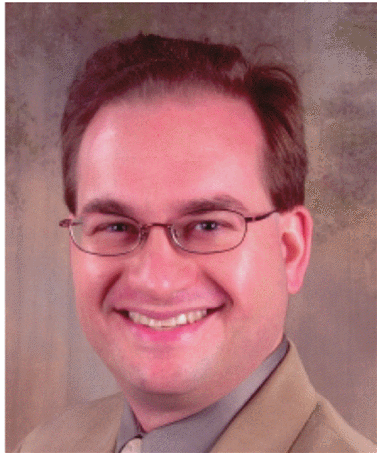 Vince Rodriguez合作论文数1
 Georgios I. Papadimitriou合作论文数Department of Informatics, Aristotle University of Thessaloniki1
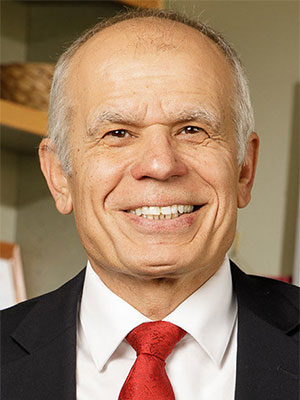 Christos Christodoulou合作论文数Antenna & RF Lab, Department of Electrical and Computer Engineering, School of Engineering, The University of New Mexico1Lawrence Cohen合作论文数1
 Michael L Picciolo合作论文数1
 John Jakabosky合作论文数Radar Syst Lab, Univ Kansas1




