En tentant de saisir les relations écologiques des sociétés, l’écologie sociale contemporaine a développé un vaste appareil théorique et analytique qui rend visible la matérialité de l’économie capitaliste contemporaine en tant que métabolisme social. L’écologie sociale propose une conception élargie du procès économique qui ajoute à l’analyse des rapports de production et de consommation, celle des relations extractives et dissipatives à la frontière avec la nature. L’article présente ces outils analytiques et propose, à partir de travaux antérieurs, un idéaltype du métabolisme social propre au capitalisme en général et à sa forme avancée. Finalement, l’article souligne comment la sociologie dialectique pourrait contribuer à faire de l’écologie sociale contemporaine une théorie critique plus complète des rapports sociétaux du capitalisme à la nature.
Since 2010, grassroots-led socio-ecological movements in Québec, Canada played a key role in overturning carbon extractivist proposals. Building on their successes, these groups now aim to move energy transition debates toward a broader conception of transition that includes radical social justice and post-capitalist alternatives. Meanwhile, corporate actors and the state enlisted major ENGOs and union federations into various technocentric “green growth” projects. These hegemonic and counter-hegemonic struggles define how transition unfolds in the province, yet few have studied how actual social actors organize to carry out these divergent responses to the climate crisis. We develop a structural analysis of the green growth policy-planning network in Québec. Starting from five organizations at the core of transition debates, we analyze the network of board interlocks they are embedded in. We describe the overall structure of the network and its main corporate, civil society, and individual actors. Analysis outlines the possibility of a new power bloc forming, positioned around the green growth project and the cleantech sector, close to achieving dominance in Quebec, that would threaten deeper decarbonization efforts. Thus, despite the recent ban on petroleum extraction, like elsewhere, energy transition in Quebec still faces deep social and ecological contradictions.
This paper examines how the latest iron ore mining cycle evolved and impacted Quebec’s mining industry and communities. Our research aims to explain how globally integrated mining corporations take advantage of and generate disruptive boom and bust dynamics, leading to specific forms of restructuring at the local level. Our main argument is that overcapacity and overproduction can enhance capital accumulation rather than undermine it, given the monopolistic nature of the contemporary mining sector.
Three models of democratic economic planning - Devine and Adaman's negotiated coordination, Albert and Hahnel's participatory economics, and Cockshott and Cottrell's computerized central planning - have important implications for the wider perspective of ecological economics. When the models are reviewed from the standpoint of the complexity and biophysical interdependence inherent in ecological systems, they are shown to contain a number of problematic areas, revealed in the way they tackle ecological challenges. A potential way to resolve these problems points toward a new framework for understanding democratic economic planning. A merger of the different models and insights can lead to new institutions that would be better adapted to confronting current environmental issues.
The planetary boundaries concept has profoundly changed the vocabulary and representation of global environmental issues. We bring a critical social science perspective to this framework through the notion of societal boundaries and aim to provide a more nuanced understanding of the social nature of thresholds. We start by highlighting the strengths and weaknesses of planetary boundaries from a social science perspective. We then focus on capitalist societies as a heuristic for discussing the expansionary dynamics, power relations, and lock-ins of modern societies that impel highly unsustainable societal relations with nature. While formulating societal boundaries implies a controversial process ‒ based on normative judgments, ethical concerns, and socio-political struggles ‒ it has the potential to offer guidelines for a just, social-ecological transformation. Collective autonomy and the politics of self-limitation are key elements of societal boundaries and are linked to important proposals and pluriverse experiences to integrate well-being and boundaries. The role of the state and propositions for radical alternative approaches to well-being have particular importance. We conclude with reflections on social freedom, defined as the right not to live at others’ expense. Toward the aim of defining boundaries through transdisciplinary and democratic processes, we seek to open a dialogue on these issues.
Energy, food, or mobility can be conceptualized as provisioning systems which are decisive to sustainability transformations in how they shape resource use and because of emissions resulting from them. To curb environmental pressures and improve societal well-being, fundamental changes to existing provisioning systems are necessary. In this article, we propose that provisioning systems be conceptualized as featuring integrated socio-metabolic and political-economic dimensions. In socio-metabolic terms, material stocks-buildings, infrastructures, and machines, for example-are key components of provisioning systems and transform flows of energy and materials into goods and services. In political-economic terms, provisioning systems are formed by actors, institutions, and capital. We loosely identify and closely analyze, from socio-metabolic and political-economic perspectives, five phases along which provisioning systems are shaped and in which specific opportunities for interventions exist. Relying mainly on examples from the fossil-fueled electricity system, we argue that an integrated conceptualization of provisioning systems can advance understanding of these systems in two essential ways: by (1) facilitating a more encompassing perspective on current forms of provisioning as relying on capitalist regulation and on material stocks and flows and by (2) embedding provisioning systems within their historical context, making it possible to conceive of more sustainable and just forms of provisioning under (radically) altered conditions.
This theoretical contribution will examine the process of displacement of the constitutive contradictions of advanced capitalist societies from interior to exterior during the postwar era known as the ‘capitalist Golden Age’ (1945 to 1980). I ask the following question: what if this displacement is both an inherent and necessary process? In that case, the apparent stability or expansion gained in the core during this era was not only at the expense of externalized instability and destruction ‘elsewhere’; rather, this displacement was a precondition for growth in the centre. This has normative, political and methodological implications for current projects of socio-ecological transformation based on a proverbial Green New Deal. By examining theories of unequal ecological exchange and biophysically expanded versions of the labour process as developed by ecological anthropologists such as Hornborg or ecological economists such as Georgescu-Roegen, I will explore the possibility of understanding the material trajectory of advanced capitalism as a zero-sum game. This leads to a view of capitalist development in the 20th century where the accumulation process is no longer seen as progressive. To substantiate this argument, I will re-examine the energy flow patterns that sustained the growth of American capitalism during the Fordist period of accumulation, or so-called Golden Age of American capitalism. This revision of the American experience of growth from 1945 to 1980 can be considered a contribution to the wider study of the development of the dependence of capitalism on fossil fuels, or ‘fossil capital’.
Giorgios Kallis argues that Degrowth, as a pluralistic convergence of both theoretical perspectives and social movements, is part of a renewal of the critique of capitalism based on the ecological contradictions of this social order. In "Socialism without Growth" Kallis engages with other, more classical, approaches that have examined the contradictions of capitalism and the material conditions for a future, ecologically viable postcapitalist social order. After a quick exposition of the lineaments of a general theory of surplus and accumulation based on Bataille, Polanyi and Georgescu-Roegen, Kallis mobilizes Marx's theory of accumulation to examine the growth drivers of capitalism. I will argue that economic growth in advanced capitalism can best be explained as a relation that articulates capitalist overproduction to overconsumption, and outline some analytical tools that such an explanation can provide to those interested in understanding the specific growth drivers of contemporary capitalism and their social and ecological consequences. This implies moving beyond the model outlined by Marx and mobilizing concepts and categories developed by the over-accumulation approach to capitalism, those developed by some of Degrowth's most vocal Marxist critics, such as Foster. Through my dialogue with Kallis I will try and bridge these two approaches.
Canada's political economy has been reshaped by extractivist forces based in the western tar sands. The objective of this article is to propose a model of these socioeconomic forces identifying the structures and dynamics that characterize the hydrocarbon extractive sector in an "age of extreme oil" through the development of a theory of the capitalist pressure to extract "unburnable carbon." This aspect of our model has wider significance for an ecological and political economics given the emerging policy consensus around the need to transition from carbon-based economies because the capitalist pressure to extract acts as a powerful counterforce to this ecological imperative.
The paper aims to deepen our understanding of advanced capitalism's drivers of growth by drawing on some theoretical insights from radical political economy and ecological economics. Through an institutional analysis of the structure of advanced capitalism as a monetary production economy, it is possible to propose a theory of accumulation that explains the tight coupling of overproduction and overconsumption on which rests its reproduction as a social form. It has been argued by pioneering figures such as Veblen and Baran and Sweezy that in such an economy ‘waste’ is not a byproduct of metabolic activity, it is a desired and planned mode of surplus absorption. This has important implications for any theory of ecological transition. This structural analysis will be complemented by a conjunctural analysis that will highlight some important contradictions of the current phase of advanced capitalism, late neoliberalism, where stagnationist tendencies are reworking the institutional forms and dynamics on which the coupling of overproduction and overconsumption rest in the global North. Address of the Author Dr. Eric Pineault Institute of Environmental Sciences and Department of Sociology Université du Québec à Montréal (UQAM) Email: pineault.eric@uquam.ca * This paper is for the most part a simplified version of a draft presented in 2015 in Jena at the Kolleg Postwachstumsgesellschaften, with some original material in the second part of the paper. A first and preliminary version was presented at the Leipzig Degrowth Conference in 2014. A long section on economic versus material growth has been left out, so has data that illustrates the theoretical model of over-accumulation. This is an ongoing project which will take on a book form eventually, and most probably generate some journal articles in forms that still have to be determined. Eric Pineault: Growth and Over-accumulation in Advanced Capitalism 1
La finance de masse est devenue une structure essentielle du capitalisme avancé, d’une position interstitielle pendant l’accumulation fordiste, elle est maintenant une régulation centrale d’un régime d’accumulation financiarisée. Cette finance de masse sert d’assise à la titrisation des créances des ménages, pratique à l’origine de la crise financière de 2008, mais depuis ayant été normalisée comme régulation économique de la relation de crédit de masse. La titrisation est ici abordé à partir du concept de réification que Marx construit dans le cadre de son analyse de l’accumulation financière. Nous suivons le processus de production de capital financier liquide dans le cadre de la réification des relations de crédit.
L e coup de départ de la crise fut donné par la paralysie soudaine des mar- chés monétaires globalisés au mois d'août 2007 à la suite de l'éclatement de la bulle immobilière américaine dans le marché résidentiel.Ce fut suivi du gel du crédit interbancaire à Londres, puis à New York pendant l'automne, l'effondrement de plusieurs des plus grandes banques d'investissements des deux côtés de l'Atlantique un an plus tard, en 2008, ainsi que de la faillite de grands assureurs de produits financiers.Cette cascade de catastrophes semblait sonner le glas du régime spéculatif né de la globalisation financière.La transmission de la crise financière vers le secteur de production de biens et services, par le resserrement du crédit aux ménages et aux entreprises en Amérique du Nord et en Europe qui accompagna ces développements, devait délégitimer la prétention du secteur financier à orienter la croissance capitaliste.Finalement, la nationalisation de fait de pans entiers de l'oligopole bancaire aux États-Unis et en Grande-Bretagne, ainsi que l'importance des plans de sauvetage d'oligopoles similaires ailleurs, devaient paver la voie à des changements radicaux dans la régulation des systèmes financiers.Voilà l'enchaînement des événements débouchant sur la plus importante récession ayant affecté l'économie mondiale depuis 1930.À partir de l'hiver 2009, les économies du centre sombrèrent l'une après l'autre, la croissance
 Melanie Pichler合作论文数Institute of Social Ecology, University of Natural Resources and Life Sciences Vienna5
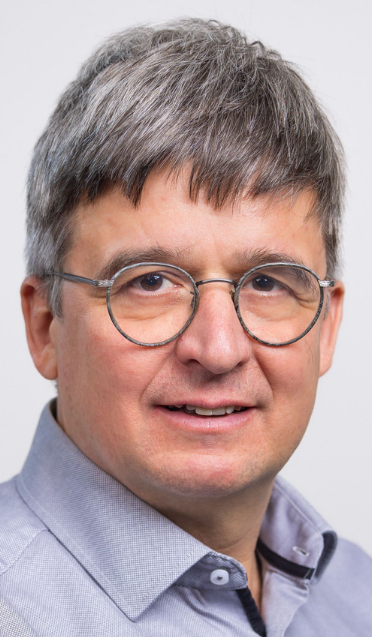 Helmut Haberl合作论文数Institute of Social Ecology, Department of Economics and Social Sciences, BOKU University5
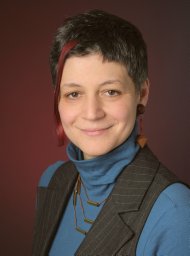 Barbara Muraca合作论文数University of Greifswald5
 Gabriel Riva合作论文数4Tone Smith合作论文数4
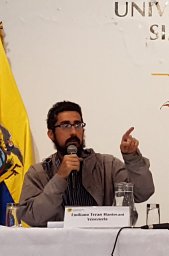 Emiliano Teran Mantovani合作论文数Institute of Environmental Science and Technology, Universitat Autònoma de Barcelona4
 Giorgos Velegrakis合作论文数Hist & Philosophy Sci Dept, Natl & Kapodistrian Univ Athens4
 Alina Brad合作论文数Department of Political Science, University of Vienna4
 Miriam Lang合作论文数Area Estudios Sociales & Globales, Univ Andina Simon Bolivar4eric duhaime合作论文数4Kristina Dietz合作论文数4Ashish Kothari合作论文数4
 Angela V. Carter合作论文数Department of Political Science & Balsillie School of International Affairs, University of Waterloo4Viviana Asara合作论文数Inst Multilevel Governance & Dev, Vienna Univ Econ & Business4
 Frederic Hanin合作论文数4
 Giorgos Kallis合作论文数Institut de Ciencia i Tecnologia Ambientals, Universitat Autonoma de Barcelona4
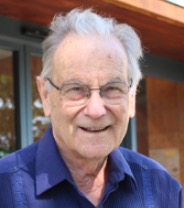 Joan Martinez Alier合作论文数Instituto De Cienciay Tecnologia Ambientales;Department of Economics and Economic History, Universitat Autonoma De Barcelona4Michelle Williams合作论文数4
 Qingzhi Huan (郇庆治)合作论文数School of Marxism, Peking University4
 Thomas Jahn合作论文数4
 Ulrich Brand合作论文数Arbeitsschwerpunkte: Internationale Politik und Internationale Politische Ökonomie;Staats- und Hegemonietheorie;Internationale Politik an der Universität Wien;DVPW, Assoziation für kritische Ges;Assoziation für kritische Ges, Universität Wien4Andreas Novy合作论文数4
 Vishwas Satgar合作论文数4
 Clive L. Spash合作论文数Institute for Multilevel Governance and Development, Wirtschaftsuniversität Wien4
 Marlyne Sahakian合作论文数4Markus Wissen合作论文数4
 Anke Schaffartzik合作论文数Inst Social Ecol, Alpen Adria Univ Klagenfurt Wien Graz4
 Christina Plank合作论文数4Francois L'Italien合作论文数3
 Christoph Görg合作论文数Department of Urban and Environmental Sociology, Helmholtz Centre for Environmental Research-UFZ3
 Jean-Marc Fontan合作论文数3Simon Tremblay-Pepin合作论文数2
 Ayse Bugra合作论文数2Gregory Albo合作论文数1
 Jean Philippe Sapinski合作论文数1Anna Saave-Harnack合作论文数1francois litalien合作论文数1Samuel Bédard合作论文数1rodolfo elbert合作论文数1
 Pablo Perez Ahumada合作论文数COES1Audrey Laurin-Lamothe合作论文数1Gavin Daniel Fridell合作论文数1Christoph Goerg合作论文数1Bengi Akbulut合作论文数Concordia Univ1
 Guilherme Leite Goncalves合作论文数Univ Estado Rio De Janeiro1
 Dominik Wiedenhofer合作论文数Institute of Social Ecology, Department of Economics and Social Sciences, University of Natural Resources and Life Sciences, Vienna1
 Karen Bakker合作论文数Department of Geography, Faculty of Arts, The University of British Columbia;Institute for Resources, Environment and Sustainability, The University of British Columbia;Radcliffe Institute for Advanced Study, Harvard University1
 Trevor Barnes合作论文数Department of Geography, The University of British Columbia1
 Jason Hackworth合作论文数Department of Geography and Planning, Faculty of Arts and Science, University of Toronto1




