A creative and/or innovative computer aided design environment is developed around the concept of an evolutionary optimization algorithm. Designs are generated within a set of prescribed design frameworks using a problem specific encoding and modified through operations including recombination, crossover and mutation. Evaluation of all candidate designs is performed by a user through a graphical user interface. A set of problems involving the creation of graphic images is presented. The examples include the generation of a set of two dimensional polygonal shapes, fractal images, path generation from a multi-degree freedom mechanical planar linkage and a mathematically prescribed pattern generation from a graphic design application utilized in quilting. Post design evaluation of the user input to the process provides insight into the individuals design strategy as well as determination of common user attributes in the creative design process.
Objective Due to its multiple applications, elastic metamaterial is of great interest for researchers today. In this article, in-plane wave propagation in 2-D anisotropic metamateials with anisotropic density and anisotropic Young’s modulus is comprehensively studied. Method Characteristics of wave propagation in 2-D metamaterial with different combinations of negative properties are provided, and the unnatural phenomenon is also explained. Based on Snell’s law and weld boundary condition, analysis of wave propagation from conventional isotropic material into anisotropic metamaterial is performed. Significance This paper can serve as a foundation for future study of massive modeling and simulation of both isotropic and anisotropic metamaterials.
Neural network technology is applied to the detection of a pipe wall thinning (PWT) in a pipe using a microwave signal reflection as an input. The location, depth, length, and profile geometry of the PWT are predicted by the neural network from input parameters taken from the resonance frequency plots for training data generated through computer simulation. The network is optimized using an evolutionary optimization routine, using the 108 training data samples to minimize the errors produced by the neural network model. The optimizer specified not only the optimal weights for the network links but also the optimal topology for the network itself. The results demonstrate the potential of the approach in that when data files were input that were not part of the training data set, fairly accurate predictions were made by the network. The results from the initial network models can be utilized to improve the future performance of the network.
In this paper, we propose and study a single-phase elastic metamaterial with periodic chiral local resonator, which is composed of cylindrical central core surrounded by evenly distributed ligaments and embedded in the matrix in a square lattice. Based on the analytical and numerical analysis, we prove that the translational resonance of the unit cell can lead to negative effective mass density, and the rotational resonance of it can produce negative effective modulus. They can also work together to generate double-negative effective material properties. The wave attenuation of elastic waves in this elastic metamaterial is also demonstrated, which is owing to the negative effective mass density. In addition, the damping of the base material is also considered in the simulation. We finally examine the existence of negative band, and this leads to the physics of negative refraction, which is induced by simultaneous translational and rotational resonance of the unit cell. Our work can serve as the theoretical foundation for the design of single-phase elastic metamaterials.
Research using microwaves (MWs) to detect pipe wall thinning (PWT) distinguishes the presence of wall thinning, but does not accurately locate the discontinuities. Ultrasonic testing (UT) is capable of accurately locating the PWT defect, but cannot do so without time-consuming linear scanning. This novel work combines the MW technique as a way to predict the location of a series of PWT specimens, and the UT technique as a way to characterize the PWT specimens in terms of location, depth, and profile shape. The UT probe is guided to the predicted location derived from the Phase One MW results, generating the Phase Two results to determine accurate location, depth measurement, and profile shape detection. The work uses the previously successful experimental setup for testing of an aluminum pipe with 154.051 mm inner diameter (ID) and 1 m length. A vector network analyzer (VNA) generates a MW sweeping frequency range of 1.4–2.3 GHz. This signal is propagated within reference pipes with both open end and short-circuit configurations for calibration of the system. The calibrated system is used to detect the presence and location of six PWT specimens, with two profile shapes, at three depths of thinning and three locations along the pipe. The predicted locations from Phase One are then used to guide a calibrated, manually guided straight beam UT probe to the predicted position. From that point, the UT probe is used in order to accurately localize and determine the depth and shape profile of the specimens.
Introduction This article presents a comprehensive study of two-dimensional acoustic metamaterial based on mass-in-mass lattice model with both one resonator and multi-resonators. We demonstrate the dynamic anisotropic property of a two-dimensional lattice system and the existence of multiple stop bands of mass-in-mass lattice systems with more than one resonator. Method A two-dimensional stable lattice plate structure, composed of unit mass-in-mass cells is proposed, and been studied by adapting both an exact model and a continuum model. Results The dispersion surfaces and stop band obtained by the exact model show that the stop band of this metamaterial exists, and it can be shifted and operated upon. In contrast, the dispersion surface obtained through the continuum model describes the acoustic mode well, but is only accurate at low frequencies for the optical mode. By attaching a secondary resonator to the primary resonator, an additional stop band is achieved. Finally, an acoustic metamaterial plate which has more than one stop band is proposed and studied numerically. Good agreement has been achieved between theoretical and numerical analyses.
Localised surface plasmon (LSP)-like resonance phenomena were simulated in COMSOL Multiphysics (TM), and the electric field enhancement was evaluated in eight pipe defects using the microwave band from 1.80 to 3.00 GHz and analysed by finite element analysis (FEA). The simulation was carried out, in each defect case, on a pipe that has 762 mm length and 152.4 mm inner diameter, and 12.7 mm pipe wall thickness. Defects were positioned in the middle of the pipe and were named as follows; SD: Square Defect, FCD: fillet corner defect, FD: fillet defect, HCD: half circle defect, TCD: triangle corner defect, TD: triangle defect, ZD: zigzag defect, GD: gear defect. The LSP electric field, and scattering parametric (S-21, and S-11) waves were evaluated in all cases and found to be strongly dependent on the size and the shape of the defect rather than the pipe and or the medium materials.
Agent based simulation has successfully been applied to model complex organizational behavior and to improve or optimize aspects of organizational performance. Agents, with intelligence supported through the application of a genetic algorithm are proposed as a means of optimizing the performance of the system being modeled. Local decisions made by agents and other system variables are placed in the genetic encoding. This allows local agents to positively impact high level system performance. A simple, but non trivial, peg game is utilized to introduce the concept. A multiple objective bin packing problem is then solved to demonstrate the potential of the approach in meeting a number of high level goals. The methodology allows not only for a systems level optimization, but also provides data which can be analyzed to determine what constitutes effective agent behavior.
A topological structural design approach is presented which is based upon the implementation of a two phase evolutionary optimization algorithm in conjunction with a finite element analysis code. The first phase utilizes a conventional genetic approach which performs a global search for the optimal design topology. Dual level material properties are specified within the genetic encoding and are applied to each individual element in the design mesh to represent either design material or a void. The second phase introduces a rule based refinement which allows for user design intent to accelerate the solution process and eliminate obvious design discrepancies resulting from the phase one search. A series of plate design problems are presented where the objective is to minimize the overall volume of the structure under predefined loading and constraint conditions. The constraints include both stress and deflection considerations where stress is calculated through the use of a commercial finite element package. The initial plate example incorporates a coarse mesh, but a gradual decrease in element size was employed for the remaining cases examined. Replacement of the phase one search with a set of randomly generated designs is demonstrated in order to form a greatly reduced design space which drastically increases the efficiency of the solution process. Comparison results are drawn between the conventional genetic algorithm and the two phase procedure.
One of the most interesting applications of genetic algorithms falls into the area of decision support. Decision support problems involve a series of decisions, each of which is influenced by all decisions made prior to that point. This class of problems occurs often in enterprise management, particularly in the area of scheduling or resource allocation. In order to demonstrate the formulation of this class of problems, a series of maze problems will be presented. The complexity of the mazes is intensified as each new maze is introduced. Two solving scenarios are introduced and comparison results are provided. The first scenario incorporated the traditional genetic algorithm procedure for the intended purpose of acquiring a solution based upon a purely evolutionary approach. The second scenario utilized the genetic algorithm in conjunction with embedded domain specific knowledge in the form of decision rules. The implementation of domain specific knowledge is intended to enhance solution convergence time and improve the overall quality of offspring produced which significantly increases the probability of acquiring a more accurate and consistent solution. Results are provided below for all mazes considered. These results include the traditional genetic algorithm final result and the genetic algorithm optimization approach with embedded rules result. Both results were incorporated for comparison purposes. Overall, the incorporation of domain specific knowledge outperformed the traditional genetic algorithm in both performance and computation time. Specifically, the traditional genetic algorithm failed to adequately find an acceptable solution for each example presented and prematurely converged on average within 54% of their specified generations. Additionally, the most complex maze generated an optimal path directional sequence (i.e. N, S, E, W) via a traditional genetic algorithm which possessed only 50% of the required allowable path sequences for maze completion. The incorporation of embedded rules enabled the genetic algorithm to locate the optimum path for all examples considered within 5% of the traditional genetic algorithm computation time.
Short Retraction Notice The paper does not meet the standards of "Open Journal of Optimization". This article has been retracted to straighten the academic record. In making this decision the Editorial Board follows COPE's Retraction Guidelines. The aim is to promote the circulation of scientific research by offering an ideal research publication platform with due consideration of internationally accepted standards on publication ethics. The Editorial Board would like to extend its sincere apologies for any inconvenience this retraction may have caused. Editor guiding this retraction: Prof. Moran Wang (EiC of TEL) The full retraction notice in PDF is preceding the original paper, which is marked "RETRACTED".
Structural designs (i.e. truss structures) are derived by the use of a three phase genetic optimization approach, where the minimization of volume is the objective of each truss structure considered. A genetic algorithm is employed which controls the three phase optimization technique. The first phase utilizes the conventional functionality of the genetic algorithm from an evolutionary perspective, however designer interaction by the use of constant rules is provided to ensure an effective evolutionary search outcome. The second phase enhances the best design constructed from phase one by the use of domain specific knowledge in the form of design rules. Phase three improves the final design assembled within phase two by the reduction of truss element areas. This refinement process ensures that the design constraints provided are active, indicating an optimal search solution. All phases operate from a global perspective; however the phase two optimization methodology operates from a more radical approach which encompasses the concept of designing from a “blank sheet of paper” point of view. Results are provided upon the conclusion of each truss example considered which includes the outcomes of each phase for comparison purposes.
This analysis has established a new hybrid RF/UT system for non-destructive testing of pipe walls for pipe wall thinning (PWT) in order to predict location, and enable measurement of the depth of defect by combining the group velocity method and calibration condition. A simulation of microwave (MW) behavior in a 91% brass waveguide (762mm pipe, Young’s Modulus 102KN/mm2) was developed using Computer Simulation Technology (CST). The model included a frequency band of 1.283GHz for the TMnm mode (TM01 and TM21), with a sweeping frequency from 0.70GHZ to 2.00GHz. The model includes 14 instances of full-circumferential PWT, regularly spaced along the length of the waveguide with step-width of 50.8mm on center. For each we have modeled four cases of increasing PWT (5.08mm, 10.16mm, 15.24mm and 20.32mm). Considering the measurement with MW as a prediction of the location of the PWT, rather than a measurement, we can guide a straight-beam UT probe to the position predicted by MW, and use the appropriate signal velocity ultrasound to accurately measure the depth to defect from the outer surface of the pipe. The straight beam UT is found to be no better at determining the geometry of the defect than MW, but the accurate depth to defect (DDO) measurement would allow estimation of the volume of the PWT.
In this paper, we proposed a type of local resonator which works by introducing more than one vibration modes, and thus may provide a new approach to formulate acoustic/elastic metamaterial. Such new concept of resonator is fundamentally different from traditional translational and rotational resonators. The potential application and design of acoustic/elastic metamaterial based on this kind of structures are also illustrated. The acoustic metamaterial filter we developed has unique property that only the waves with specific frequency can pass the material while other waves will be attenuated. We also proposed a kind of plane wave lens which can transfer plane wave with uniformly distributed amplitude profiles into pure plane wave. With these novel resonators, the research and application regarding it are highly anticipated in the near future.
Numerical simulations created with Computer Simulation Technology (CST) modeling are used to classify and evaluate the microwave signal (waveform) in order to determine whether various parameters of pipe wall thinning (PWT) can be identified. Microwaves are used to carry out the measurement of PWT in 9 CST simulations using three cross-sectional profiles, three lengths of PWT, and three depths of PWT, to determine whether there are differences in waveforms that can be used to distinguish the parameters of unknown discontinuities (PWT). The modeled system uses the pipe as a circular waveguide (bandwidth 0.486GHz) with sweeping frequencies from 1.914GHz to 2.4GHz. Waveforms are found to be distinguishable based on the three parameters modeled in the study. This research establishes the possibility of creating a nondestructive testing system with which PWT discontinuities might be characterized using microwaves in the S-11 and S-21 scattering parametrics. The waveforms generated for known series of PWT cases, once cataloged, can be used in the future to identify discontinuities in test pipes, and to determine their degree of similarity to the standardized waveforms via pattern recognition algorithms.
The traveling salesman problem has long been regarded as a challenging application for existing optimization methods as well as a benchmark application for the development of new optimization methods. As with many existing algorithms, a traditional genetic algorithm will have limited success with this problem class, particularly as the problem size increases. A rule based genetic algorithm is proposed and demonstrated on sets of traveling salesman problems of increasing size. The solution character as well as the solution efficiency is compared against a simulated annealing technique as well as a standard genetic algorithm. The rule based genetic algorithm is shown to provide superior performance for all problem sizes considered. Furthermore, a post optimal analysis provides insight into which rules were successfully applied during the solution process which allows for rule modification to further enhance performance.
Pattern recognition using correlation analysis (Cij) method is useful for non-destructive testing of physical objects, including pipes. An evaluation of the technique based on Computer Simulation Technology (CST) models has demonstrated the advantages of using the technique to detect and classify pipe wall thinning (PWT) in pipes. Given enough increments, the technique can be refined to detect any possible combination of PWT attributes. For this research 71 different simulations were modeled for purposes of calibration of the system, based on five varied properties of the modeled PWT instances. These properties include: location (29 simulations based on distance from origin and two lengths of PWT, for a total of 58 simulations), width (standardized at 25.4mm), depth (four simulations as radius of PWT at 78.74mm, 81.28mm, 83.82mm, and 86.36mm), length (four simulations as percentage of circumference: 25%, 50%, 75% and 100% circumferential PWT) and type of defect (five simulations based on five discrete profiles).Microwaves were simulated from port 1 and port 2, with a sweeping frequency range (0.5 GHz bandwidth), analyzed as S-11 and S-21 for measuring and calibrating the response to the standards. The resulting waveforms became the standard patterns against which 11 unknown simulations were compared, sometimes using S-11 waveforms for comparison, and at other times S-21.The correlation analysis technique was able to distinguish parameters for the unknown test cases. The technique is able to determine the correlation between the resonance frequency peak (RFP) and waveform for an unknown case, and those of nearby calibration models, via pattern recognition. For example, 0.847 and 0.872 correlations to two standard patterns for an unknown RFP which appears midway between two standard RFPs, produces a peak for the unknown that is equidistant from the RFPs for the standards.
This research investigates the application of microwave nondestructive testing (NDT) to oil and gas pipe wall reductions (PWR) in manufacturing that are less than full-circumferential in extent. Pipes were modeled using Computer Simulation Technology (CST) simulation software, CST Microwave Studio holding pipe length, wall thickness, depth of PWR and configuration constant. The study looks at 32 models in order to determine sweeping frequency limitations for full-circumferential, half-circumferential, three-quarter-circumferential and quarter-circumferential extents of PWR with 8 widths ranging from 6.35mm to 50.8mm. The limitations were determined to be between the extremes. The 6.35mm width did not cause a resonance peak even with a full-circumferential PWR. The 50.8mm width produced a detectible resonance peak, but it is within the range established by the six middle widths.
The diversity of ultrasound techniques used in oil and gas pipeline plants provides us with a wealth of information on how to exploit this technology when combined with other techniques, in order to improve the quality of analysis. The fundamental theory of ultrasonic nondestructive evaluation (NDE) technology is offered, along with practical limitations as related to two factors (wave types and transducers). The focus is limited to the two main techniques used in pipe plants: First, straight beam evaluation and second, angle beam evaluation. The depth of defect (DD) is calculated using straight beam ultrasonic in six different materials according to their relative longitudinal wave (LW) velocities. The materials and respective velocities of LW are: rolled aluminum (6420 m/s), mild steel (5960 m/s), stainless steel-347 (5790 m/s), rolled copper (5010 m/s), annealed copper (4760 m/s), and brass (4700 m/s). In each material eight defects are modeled; the first represents l00% of the material thickness (D), 50.8 mm. The other seven cases represent the DD, as 87.5% of the material thickness, 75%, 62.5%, 50%, 37.5%, 25%, and 12.5%, respectively. Using angle beam evaluation, several parameters are calculated for six different reflection angles (βR) (45°, 50°, 55°, 60°, 65° and 70°). The surface distance (SD), ½skip distance (SKD), full SKD, and 1½SKD,½sound path (SP) length, full SP, and 1½ SP are calculated for each βR. The relationship of SKD and SP to the βR is graphed. A chief limitation is noted that ultrasound testing is heavily dependent on the expertise of the operator, and because the reading of the outcome is subjective, precision may be hard to achieve. This review also clarifies and discusses the options used in solving the industrial engineering problem, with a comprehensive historical summary of the information available in the literature. Merging various NDE inspection techniques into the testing of objects is discussed. Eventually, it is hoped to find a suitable technique combined with ultrasonic inspection to deliver highly effective remote testing.
 Wissam Alobaidi合作论文数Dept Syst Engn, Univ Arkansas17
 Entidhar Alkuam合作论文数Coll Arts Letters & Sci, Univ Arkansas5
 David J. Webb合作论文数5
 Hussain Al-Rizzo合作论文数Systems Engineering Department;Donaghey College of Information Science and Systems;Engineering University of Arkansas at Little Rock;Donaghey College of Information Science and Systems, Engineering University of Arkansas at Little Rock5
 Sheng Sang (桑胜)合作论文数4Ziping Wang合作论文数2Clifford E. Kintner合作论文数1
 Miles Vincent Barnhart合作论文数Dept Mech & Aerosp Engn, Univ Missouri1
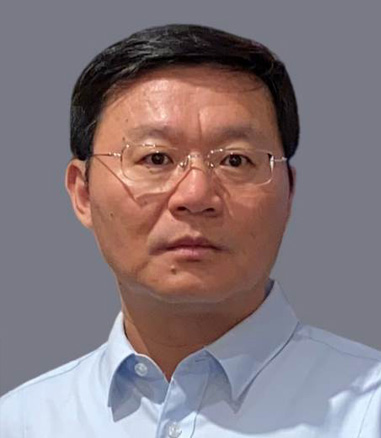 Guoliang Huang (黄国良)合作论文数College of Engineering, Peking University1
 Kota Sasaki合作论文数1
 Nima Zeid A合作论文数Center for Integrative Nanotechnology Sciences, University of Arkansas at Little Rock1
 Rui Zhu (朱睿)合作论文数School of Aerospace Engineering, Beijing Institute of Technology1Timothy M Cameron合作论文数1
 Noritaka Yusa合作论文数Nuclear Professional School, University of Tokyo1
 Hidetoshi Hashizume (橋爪秀利)合作论文数Department of Quantum Science and Energy Engineering Energy Physics Engineering, Graduate School of Engineering, Tohoku University1




