When we interact with each other, we frequently see faces from different viewpoints. Changes in viewpoint can result in significant variations in the way emotional facial expressions appear. Although the visibility of features is not qualitatively affected between front and three-quarter views, in profiles some features are hidden, and actions such as mouth widening and eyebrow narrowing, which contain important horizontally-oriented information, are partly hidden. To evaluate how profiles uniquely affect emotional facial expression processing, we recorded response times and error rates in a two-choice discrimination task involving two emotions (happiness and anger) from five different viewpoints (front 0 degrees, left and right 45 degrees three-quarter, left and right 90 degrees profile) in normal and inverted presentations, with 99 young adult participants. We found higher response times and error rates for profiles than for other views, and the inversion effect was significant only for profiles. There was no difference between the three-quarter and front views. In normal presentations, differences in viewpoint were more obvious with response times than with error rates. We also found an asymmetry with slower response times for the right than for the left profiles. Our results support the idea that emotional facial expressions are processed in a view-dependent manner.
Younger adults have difficulties identifying emotional facial expressions from faces covered by face masks. It is important to evaluate how face mask wearing might specifically impact older people, because they have lower emotion identification performance than younger adults, even without face masks. We compared performance of 62 young and 38 older adults in an online task of emotional facial expression identification using masked or unmasked pictures of faces with fear, happiness, anger, surprise, and neutral expression, from different viewpoints. Face masks affected performance in both age groups, but more so in older adults, specifically for negative emotions (anger, fear), in favour of the saliency hypothesis as an explanation for the positive advantage. Additionally, face masks more affected emotion recognition on profile than on three-quarter or full-face views. Our results encourage using clearer and full-face expressions when dealing with older people while wearing face masks.
Word reading requires a range of spatial attention processes, such as orienting to a specific word and selecting it while ignoring other words. This study investigated whether deficits of these spatial attention processes can show dissociations after hemispheric lesions. Thirty-nine patients with left or right focal epilepsy and 66 healthy participants had to read aloud four-letter words presented in the left and right visual hemifields. There were three successive blocks of presentation: in the unilateral block, a single word was presented in one of the visual hemifields; in the bilateral block, two words were presented simultaneously, one in each visual hemifield; in the cued block, two words were also presented, but only the cued word had to be reported. Twenty-one patients, twelve with a left and nine with a right hemisphere lesion, showed a word reading deficit. Four had specific difficulties in the cued block, suggesting an attentional selection reading deficit. Twelve patients had an asymmetric reading deficit, suggesting an attention orientation or a visual field deficit. Five patients had more complex deficits. The visual field presentation procedure may help to reveal different types of reading disorders in patients with epilepsy and to dissociate orienting and selecting deficits.
Younger adults have difficulties identifying emotional facial expressions from faces covered by face masks. It is important to evaluate how face mask wearing might specifically impact older people, because they have lower emotion identification performance than younger adults, even without face masks. We compared performance of 62 young and 38 older adults in an online task of emotional facial expression identification using masked or unmasked pictures of faces with fear, happiness, anger, surprise, and neutral expression, from different viewpoints. Face masks affected performance in both age groups, but more so in older adults, specifically for negative emotions (anger, fear), in favour of the saliency hypothesis as an explanation for the positive advantage. Additionally, face masks more affected emotion recognition on profile than on three-quarter or full-face views. Our results encourage using clearer and full-face expressions when dealing with older people while wearing face masks.
Attention deficits are encountered very early in the development of Alzheimer's disease. While these deficits may be detected using classic clinical tests or even from simple observation, experimental tools enable a more precise evaluation of these deficits, typically by subtracting between conditions which vary the quantity of necessary attention, and by recording response times which allow a more precise and modulated measurement. The sensitivity of these tools can be further increased by analyzing the intra-individual variability of performance in these experiments, this variability being particularly important during the earliest stages of the disease. We present the cognitive aspects of these deficits by regrouping them according to the type of experiment used to highlight each deficit. Thus, we distinguish deficits of spatial attention orientation, of executive control and of sustained attention. In each section we present several of the more often employed experiments (spatial cueing, spatial search, dual-tasks, conflict tasks, vigilance tests), and draw a parallel between these experiments and everyday life.
Visual perception is humans' preferred way for taking information on the surrounding world. Visual perception is frequently impaired in patients with Alzheimer's disease, lessening patients' quality of life, and making evaluation of other cognitive deficits more complicated. Our review covers the recent literature describing visual perception deficits in patients suffering from Alzheimer's disease by classifying them according to their neuroanatomical correspondence: retina, visual pathway, subcortical structures, occipital visual cortex, occipito-temporal "what" and occipito-parietal "where" pathways. Overall, both low-level and high-level visual perception disorders seem quite common in Alzheimer's disease, including, on a low-level, loss of visual field, decreased acuity and contrast sensitivity, and impaired color vision, and on a high-level, impaired color vision, motion perception, visuospatial deficits, object agnosia, prosopagnosia and impaired recognition of facial emotional expressions. Professionals working with Alzheimer's disease should be aware of visuoperceptual deficits, which could impair the quality of life of the patients, and distort the results of neuropsychological tests using visual material. Moreover, some tests assessing visual perception could be of interest for early diagnosis of the disease.
Visual perception is humans' preferred way for taking information on the surrounding world. Visual perception is frequently impaired in patients with Alzheimer's disease, lessening patients' quality of life, and making evaluation of other cognitive deficits more complicated. Our review covers the recent literature describing visual perception deficits in patients suffering from Alzheimer's disease by classifying them according to their neuroanatomical correspondence: retina, visual pathway, subcortical structures, occipital visual cortex, occipito-temporal what and occipito-parietal where pathways. Overall, both low-level and high-level visual perception disorders seem quite common in Alzheimer's disease, including, on a low-level, loss of visual field, decreased acuity and contrast sensitivity, and impaired color vision, and on a high-level, impaired color vision, motion perception, visuospatial deficits, object agnosia, prosopagnosia and impaired recognition of facial emotional expressions. Professionals working with Alzheimer's disease should be aware of visuoperceptual deficits, which could impair the quality of life of the patients, and distort the results of neuropsychological tests using visual material. Moreover, some tests assessing visual perception could be of interest for early diagnosis of the disease.
Word processing in left (LVF) and right (RVF) visual fields may be affected by lefthemisphere activation during reading and by script direction. We evaluated the effect of script direction by presenting words in left-to-right (French) and right-to-left (Hebrew) scripts to bilingual French participants. Words of different lengths were presented in the LVF and the RVF in a naming task. Results showed (1) a stronger word length effect in the LVF than in the RVF in French, and no difference of word length effect between LVF and RVF in Hebrew; (2) a first-letter advantage only in the LVF in French and in the RVF in Hebrew, showing an effect of script direction on letter processing; and (3) a stronger advantage of external over internal letters in words presented in the LVF than in the RVF for both languages, showing a left hemisphere influence on letter activation. Thus, script direction and left hemisphere activation may affect different processes when reading words in LVF and RVF. Selective attention may orient and redistribute a processing window over the letter string according to script direction, and the modulation of attentional resources is influenced by left hemisphere activation.
Acquired spatial dyslexia is a reading disorder frequently occurring after left or right posterior brain lesions. This article describes several types of spatial dyslexia with an attentional approach. After right posterior lesions, patients show left neglect dyslexia with errors on the left side of text, words, and non-words. The deficit is frequently associated with left unilateral spatial neglect. Severe left neglect dyslexia can be detected with unlimited exposure duration of words or non-words. Minor neglect dyslexia is detected with brief presentation of bilateral words, one in the left and one in the right visual field (phenomenon of contralesional extinction). Neglect dyslexia can be explained as a difficulty in orienting attention to the left side of verbal stimuli. With left posterior lesions, spatial dyslexia is also frequent but multiform. Right neglect dyslexia is frequent, but right unilateral spatial neglect is rare. Attentional dyslexia represents difficulty in selecting a stimulus, letter or word among other similar stimuli; it is a deficit of attentional selection, and the left hemisphere plays a crucial role in selection. Two other types of spatial dyslexia can be found after left posterior lesions: paradoxical ipsilesional extinction and stimulus-centred neglect dyslexia. Disconnections between left or right parietal attentional areas and the left temporal visual word form area could explain these deficits. Overall, a model of attention dissociating modulation, selection control, and selection positioning can help in understanding these reading disorders.
Reading a letter string requires attentional orienting toward the beginning of the string (left-dominant orientation), followed by orienting along the string. These attentional-orienting processes differ according to the lexicality of the letter string: Sequential processes apply when reading nonwords or pseudowords, while words can be processed more globally. The aim of this study was to evaluate the development of these attentional processes involved in reading. We conducted two experiments in 6- (first grade), 7- (second grade), and 9-year-old (fourth grade) children, using a procedure that required the detection of a letter (Experiment 1) or a nonletter (Experiment 2) target in a string of five characters. The target character could occur in the second (left) or fourth (right) position in the string. Results showed an advantage for left nonletter targets as early as age 6 and of left letter targets as early as age 7. In 6-year-olds, only good readers detected a left letter target faster than a right letter target; others detected a right letter target faster. Thus, dominant orienting toward the beginning of the letter string is not fully developed in children before the second year of reading. A possibility is that beginning readers have difficulties inhibiting an attention-orienting bias toward the right visual field in linguistic tasks. The results also showed that the lexicality effect on these attentional processes develops gradually until the fourth year of reading. We believe that the procedure used in this study will be very valuable for evaluating attentional difficulties during reading acquisition.
Preparatory attention (PA) is the ability to allocate attention to a stimulus prior to its occurrence and is a crucial component of attentional control. We investigated the role of brain hemispheres in PA using an experimental test in which normal participants responded to a target that could appear in the right or the left visual fields, thus projecting to the left or the right hemispheres, while ignoring a central distractor that could appear in the preparatory phase preceding the target. This experimental test measures the ability of participants to modulate PA directed to a target location when the probability of a distractor occurrence varies across three blocks of trials (0%, 33%, 67%). The competition between distractors and target for PA should produce slower response times when the probability of distractors is high. Three experiments were conducted varying the temporal predictability of the target occurrence within a trial (high predictability in Experiments 1 and 3, and low predictability in Experiment 2), and the task used (location in Experiments 1 and 2, and detection in Experiment 3). We found that the modulation of PA by the expected probability of events was different in each visual field/hemisphere. Whereas the left hemisphere PA was influenced by the mere probability of events in each block of trials, the right hemisphere PA was mainly influenced by events with high temporal predictability. These results suggest that each hemisphere uses a different strategy to modulate PA when directed to a target location at the perceptual level of visual processing.
A written word is identified more easily when it is presented in the right than in the left visual field. This right visual field superiority (RVFS) may be explained by the left hemisphere's role in reading and by reading direction in left-to-right scripts. However, the comparison of left-to-right and right-to-left scripts had not resulted in systematic differences. It had also been found that the linguistic environment has an effect on visuospatial bias. We hypothesized that the linguistic environment might also affect RVFS. In an identification task, French and Hebrew words were presented in each visual field to four groups of 24 neurologically healthy participants, all of whom read French and Hebrew as a first or second language: native French speakers in France, native French speakers in Israel, native Hebrew speakers in Israel, and native Hebrew speakers in France. Results showed a greater RVFS with French than with Hebrew words in all groups except the native Hebrew speakers in Israel. Thus, at least for native Hebrew speakers, the country where participants lived also had an effect on the differential RVFS between languages, suggesting an effect of environmental script or reading practice.
Faces learned from multiple viewpoints are recognized better with left than right three-quarter views. This left-view superiority could be explained by perceptual experience, facial asymmetry, or hemispheric specialization. In the present study, we investigated whether left-view sequences are also more effective in recognizing same and novel views of a face. In a sequential matching task, a view sequence showing a face rotating around a left (−30°) or a right (+30°) angle, with an amplitude of 30°, was followed by a static test view with the same viewpoint as the sequence (−30° or +30°) or with a novel one (0°, +30°, or −30°). We found a superiority of left-view sequences independently of the test viewpoint, but no superiority of left over right test views. These results do not seem compatible with the perceptual experience hypothesis, which predicts superiority only for left-side test views (−30°). Also, a facial asymmetry judgement task showed no correlation between the asymmetry of individual faces and the left-view sequence superiority. A superiority of left-view sequences for novel as well as same test views argues in favour of an explanation by hemispheric specialization, because of the possible role of the right hemisphere in extracting facial identity information.
Orienting of attention was investigated in 6-, 8-, and 10-year-olds and in young adults, in a spatial cueing experiment comparing nonpredictive, predictive, and counterpredictive cues (in different blocks). A larger positive orienting effect (advantage of valid over invalid cues) in the predictive than in the nonpredictive condition occurred in all groups, showing efficient endogenous orienting of attention. However, this effect was larger in 6-year-olds, as if the ability to distribute attention between the different locations (and not only to orient to the most probable location) developed between 6 and 8 years. Moreover, only 10-year-olds and adults showed a significant negative orienting effect (advantage of invalid cues) in the counterpredictive condition, indicating inhibition of attentional capture by goal-irrelevant stimuli. Therefore, our results indicate a large change in the modulation of endogenous orienting between 6 and 10 years.
When faces are learned from rotating view sequences, novel views may be recognized by matching them with an integrated representation of the sequence or with individual views. An integrated-representation process should benefit from short view durations, and thus from the inclusion of views in a short temporal window, allowing the distribution of attention over the entire sequence. A view-matching process should benefit from long view durations, allowing the attention to focus on each view. In a sequential comparison task, we tested the recognition of learned and novel interpolated and extrapolated views after learning faces from rapid and slow sequences (240 ms or 960 ms for each view). We found a superiority of rapid over slow sequences, in favour of the integrated-representation hypothesis. In addition, the recognition pattern for the different viewpoints in the sequence depended on the absence or presence of extrapolated views, showing a bias of the distribution of attention.
OBJECTIVE:The right visual field superiority (RVFS) for words may be explained by the cerebral lateralization for language, the scanning habits in relation to script direction, and spatial attention. The present study explored the influence of spatial attention on the RVFS in relation to scanning habits in school-age children.METHODS:French second- and fourth-graders identified briefly presented French parafoveal words. Tunisian second- and fourth-graders identified Arabic words, and Tunisian fourth-graders identified French words. The distribution of spatial attention was evaluated by using a distracter in the visual field opposite the word.RESULTS:The results of the correct identification score showed that reading direction had only a partial effect on the identification of parafoveal words and the distribution of attention, with a clear RVFS and a larger effect of the distracter in the left visual field in French children reading French words, and an absence of asymmetry when Tunisian children read Arabic words. Fourth-grade Tunisian children also showed an RVFS when reading French words without an asymmetric distribution of attention, suggesting that their native language may have partially influenced reading strategies in the newly learned language. However, the mode of letter processing, evaluated by a qualitative error score, was only influenced by reading direction, with more sequential processing in the visual field where reading "begins."CONCLUSION:The distribution of attention when reading parafoveal words is better explained by the interaction between left hemisphere activation and strategies related to reading direction. We discuss these results in light of an attentional theory that dissociates selection and preparation.
Words presented to the right visual field (RVF) are recognized more readily than those presented to the left visual field (LVF). Whereas the attentional bias theory proposes an explanation in terms of attentional imbalance between visual fields, the attentional advantage theory assumes that words presented to the RVF are processed automatically while LVF words need attention. In this study, we exploited coupling between attention and saccadic eye movements to orient spatial attention to one or the other visual field. The first experiment compared conditions wherein participants had to remain fixated centrally or had to make a saccade to the visual field in which subsequent verbal stimuli were displayed. The orienting of attention by saccade preparation improved performance in a lexical decision task in both the LVF and the RVF. In the second experiment, participants had to make a saccade either to the visual field where verbal stimuli were presented subsequently or to the opposite side. For RVF as well as for LVF presentation, saccade preparation toward the opposite side decreased performance compared to the same side condition. These results are better explained by the attentional bias theory, and are discussed in the light of a new attentional theory dissociating two major components of attention, namely preparation and selection.
 Gabriel Arnold合作论文数8
 Henri Lenoir合作论文数7
 Paolo Bartolomeo合作论文数Institut du Cerveau – Paris Brain Institute;INSERM5
 Virginie Leclercq合作论文数4
 Ambre Piquard合作论文数4
 Caroline decaix合作论文数Université René Descartes (Paris 5), CNRS URA 85814
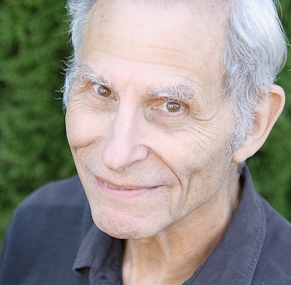 Michael I. Posner合作论文数Department of Psychology, College of Arts and Sciences, University of Oregon3
 Laurent Auclair合作论文数Université de Savoie;René Descartes, Université;Université de Savoie, Université René Descartes3
 Sylvie Chokron合作论文数3Lucette Lacomblez合作论文数3Miléna Riva合作论文数3Laura Gabriela Fernandez合作论文数2Christian Derouesné合作论文数2
 Anne-Marie Ergis合作论文数2Isabelle Jambaqué合作论文数2Anne-Catherine Bachoud-Levi合作论文数1Charlotte Joly合作论文数1Agathe Laurent合作论文数1
 Serdar Kocer合作论文数Dept Rehabil, Hop Jura1C Billard合作论文数1
 Christelle Lemoine-Lardennois合作论文数1Haehnel-Benoliel Nathalie合作论文数1Bricout-Tomasi Laure合作论文数1Olivier Dulac合作论文数1
 Juan Lupianez合作论文数Departamento de Psicología Experimental y Fisiología del Comportamiento, Universidad de Granada1
 Pierre Brugieres合作论文数INSERM U841-Equipe 1, “Neuropsychologie Interventionnelle”, Faculté de Médecine de Paris XII, Créteil, France1
 Michal Lavidor合作论文数Department of Psychology, University of Hull1Marika Urbanski合作论文数1Jacqueline Fagard合作论文数1
 Alexander Pollatsek合作论文数Department of Psychological and Brain Sciences, College of Natural Sciences, University of Massachusetts Amherst1Christian Derouesne合作论文数1
 Riadh Dahmen合作论文数1Laure Bricout合作论文数1David L. Laberge合作论文数School of Social Sciences, University of California, Irvine1Alain Picard合作论文数1Dorine Vergilino-Perez合作论文数1
 Maryline Couette合作论文数1Karine Dore-Mazars合作论文数1Bruce Milliken合作论文数Department of Psychology, McMaster University1




