The symmetric group S_n is generated by transpositions, and problems of sorting permutations using transpositions are well studied. In recent work, Adin, Alon, and Roichman studied the related problem of sorting n points on a circle, and gave a formula for the maximum number of adjacent swaps required. This is equivalent to the number of adjacent transpositions required to transform any permutation into a power of the cyclic permutation (1,2,…, n). The focus of this work is an analogous question in the alternating group A_n, which is generated by 3-cycles. That is, using 3-cycles instead of transpositions, what is the maximum number of steps required to transform an even permutation into a power of (1,2,…, n) in the alternating group? We determine this number exactly for even n and n ≡ 1 4. For n ≡ 3 4, we show that the sorting number can take one of two possible values and give explicit constructions demonstrating that the larger value occurs infinitely often.
A cover by left ideals of an associative (not necessarily commutative or unital) ring R is a collection of proper left ideals whose set-theoretic union equals R. If such a cover exists, then eta(l)(R) is the cardinality of a minimal cover, and R is eta(l) elementary if eta(l)(R)
We study the problem of calculating noncommutative distances on graphs, using techniques from linear algebra, specifically, Birkhoff-James orthogonality. A complete characterization of the solutions is obtained in the case when the underlying graph is a path.
A (v,k,λ, μ)-partial difference set (PDS) is a subset D of size k of a group G of order v such that every nonidentity element g of G can be expressed in either λ or μ different ways as a product xy^-1, x, y ∈ D, depending on whether or not g is in D. If D is inverse closed and 1 ∉ D, then the Cayley graph Cay(G,D) is a (v,k,λ, μ)-strongly regular graph (SRG). PDSs have been studied extensively over the years, especially in abelian groups, where techniques from character theory have proven to be particularly effective. Recently, there has been considerable interest in studying PDSs in nonabelian groups, and the purpose of this paper is develop character theoretic techniques that apply in the nonabelian setting. We prove that analogues of character theoretic results of Ott about generalized quadrangles of order s also hold in the general PDS setting, and we are able to use these techniques to compute the intersection of a putative PDS with the conjugacy classes of the parent group in many instances. With these techniques, we are able to prove the nonexistence of PDSs in numerous instances and provide severe restrictions in cases when such PDSs may still exist. Furthermore, we are able to use these techniques constructively, computing several examples of PDSs in nonabelian groups not previously recognized in the literature, including an infinite family of genuinely nonabelian PDSs associated to the block-regular Steiner triple systems originally studied by Clapham and related infinite families of genuinely nonabelian PDSs associated to the block-regular Steiner 2-designs first studied by Wilson.
A ( v , k , λ , μ ) -partial difference set (PDS) is a subset D of a group G such that | G | = v , | D | = k , and every nonidentity element x of G can be written in either λ or μ different ways as a product g h - 1 , depending on whether or not x is in D . Assuming the identity is not in D and D is inverse-closed, the corresponding Cayley graph Cay ( G , D ) will be strongly regular. Partial difference sets have been the subject of significant study, especially in abelian groups, but relatively little is known about PDSs in nonabelian groups. While many techniques useful for abelian groups fail to translate to a nonabelian setting, the purpose of this paper is to show that examples and constructions using abelian groups can be modified to generate several examples in nonabelian groups. In particular, in this paper we use such techniques to construct the first known examples of PDSs in nonabelian groups of order q 2 m , where q is a power of an odd prime p and m ≥ 2 . The groups constructed can have exponent as small as p or as large as p r in a group of order p 2 r . Furthermore, we construct what we believe are the first known Paley-type PDSs in nonabelian groups and what we believe are the first examples of Paley–Hadamard difference sets in nonabelian groups, and, using analogues of product theorems for abelian groups, we obtain several examples of each. We conclude the paper with several possible future research directions.
Sabatini [5] defined a subgroupHofGto be anexponential subgroupifx|G:H|is an element of Hfor allx is an element of G, in which case we writeH <= expG. Exponential subgroups are a generalization of normal (andsubnormal) subgroups: all subnormal subgroups are exponential, but not conversely. Sabatini provedthat all subgroups of a finite groupGare exponential if and only ifGis nilpotent. The purpose of thispaper is to explore what the analogues of a simple group and a solvable group should be in relation toexponential subgroups. We say that an exponential subgroupH <= expGisexp-trivialif eitherH=Gor the exponent ofG, exp(G), divides|G:H|, and we say that a groupGisexp-simpleif all exponentialsubgroups ofGare exp-trivial. We classify finite exp-simple groups by provingGis exp-simple if andonly if exp(G) = exp(G/N) for all proper normal subgroupsNofG, and we illustrate how the class ofexp-simple groups differs from the class of simple groups. Furthermore, in an attempt to overcome theobstacle that prevents all subgroups of a generic solvable group from being exponential, we say that asubgroupHofGisweakly exponentialif, for allx is an element of G, there existsg is an element of Gsuch thatx|G:H|is an element of Hg. Ifall subgroups ofGare weakly exponential, thenGiswexp-solvable. We prove that all solvable groupsare wexp-solvable and almost all symmetric and alternating groups are not wexp-solvable. Finally, wecompletely classify the groups PSL(2,q) that are wexp-solvable. We show that if pi(n) denotes thenumber of primes less thannandw(n) denotes the number of primespless thannsuch that PSL(2,p)is wexp-solvable, then lim n ->infinity w(n)/pi(n) = 1/4
Let $F$ be a field and $M_n(F)$ the ring of $n \times n$ matrices over $F$. Given a subset $S$ of $M_n(F)$, the null ideal of $S$ is the set of all polynomials $f$ with coefficients from $M_n(F)$ such that $f(A) = 0$ for all $A \in S$. We say that $S$ is core if the null ideal of $S$ is a two-sided ideal of the polynomial ring $M_n(F)[x]$. We study sufficient conditions under which $S$ is core in the case where $S$ consists of $3 \times 3$ matrices, all of which share the same irreducible characteristic polynomial. In particular, we show that if $F$ is finite with $q$ elements and $|S| \geqslant q^3-q^2+1$, then $S$ is core. As a byproduct of our work, we obtain some results on block Vandermonde matrices, invertible matrix commutators, and graphs defined via an invertible difference relation.
For nearly a century, mathematicians have been developing techniques for constructing abelian automorphism groups of combinatorial objects, and, conversely, constructing combinatorial objects from abelian groups. While abelian groups are a natural place to start, recent computational evidence strongly indicates that the vast majority of transitive automorphism groups of combinatorial objects are nonabelian. This observation is the guiding motivation for this paper. We propose a new method for constructing nonabelian automorphism groups of combinatorial objects, which could be called the combinatorial transfer method, and we demonstrate its power by finding (1) the first infinite families of nonabelian Denniston partial difference sets (including nonabelian Denniston PDSs of odd order), (2) the first infinite family of Spence difference sets in groups with a Sylow 3-subgroup that is non-normal and not elementary abelian, (3) the first infinite families of McFarland difference sets in groups with a Sylow p-subgroup that is non-normal and is not elementary abelian, (4) new infinite families of partial difference sets in nonabelian p-groups with large exponent, (5) an infinite family of semiregular relative difference sets whose forbidden subgroup is nonabelian, and (6) a converse to Dillon's Dihedral Trick in the PDS setting. We hope this paper will lead to more techniques to explore this largely unexplored topic.
Strongly regular graphs (SRGs) provide a fertile area of exploration in algebraic combinatorics, integrating techniques in graph theory, linear algebra, group theory, finite fields, finite geometry, and number theory. Of particular interest are those SRGs with a large automorphism group. If an automorphism group acts regularly (sharply transitively) on the vertices of the graph, then we may identify the graph with a subset of the group, a partial difference set (PDS), which allows us to apply techniques from group theory to examine the graph. Much of the work over the past four decades has concentrated on abelian PDSs using the powerful techniques of character theory. However, little work has been done on nonabelian PDSs. In this paper we point out the existence of genuinely nonabelian PDSs, that is, PDSs for parameter sets where a nonabelian group is the only possible regular automorphism group. We include methods for demonstrating that abelian PDSs are not possible for a particular set of parameters or for a particular SRG. Four infinite families of genuinely nonabelian PDSs are described, two of which-one arising from triangular graphs and one arising from Krein covers of complete graphs constructed by Godsil-are new. We also include a new nonabelian PDS found by computer search and present some possible future directions of research.
Sabatini (2024) defined a subgroup H of G to be an exponential subgroup if x^|G:H|∈ H for all x ∈ G. Exponential subgroups are a generalization of normal (and subnormal) subgroups: all subnormal subgroups are exponential, but not conversely. Sabatini proved that all subgroups of a finite group G are exponential if and only if G is nilpotent. The purpose of this paper is to explore what the analogues of a simple group and a solvable group should be in relation to exponential subgroups. We say that an exponential subgroup H of G is exp-trivial if either H = G or the exponent of G, exp(G), divides |G:H|, and we say that a group G is exp-simple if all exponential subgroups of G are exp-trivial. We classify finite exp-simple groups by proving G is exp-simple if and only if exp(G) = exp(G/N) for all proper normal subgroups N of G, and we illustrate how the class of exp-simple groups differs from the class of simple groups. Furthermore, in an attempt to overcome the obstacle that prevents all subgroups of a generic solvable group from being exponential, we say that a subgroup H of G is weakly exponential if, for all x ∈ G, there exists g ∈ G such that x^|G:H|∈ H^g. If all subgroups of G are weakly exponential, then G is wexp-solvable. We prove that all solvable groups are wexp-solvable and almost all symmetric and alternating groups are not wexp-solvable. Finally, we completely classify the groups PSL(2,q) that are wexp-solvable. We show that if π(n) denotes the number of primes less than n and w(n) denotes the number of primes p less than n such that PSL(2,p) is wexp-solvable, then lim_n →∞w(n)/π(n) = 1/4.
A cover of an associative (not necessarily commutative nor unital) ring R is a collection of proper subrings of R whose set-theoretic union equals R. If such a cover exists, then the covering number sigma(R) of R is the cardinality of a minimal cover, and a ring R is called sigma-elementary if sigma(R) < sigma(R/I) for every nonzero two-sided ideal I of R. If R is a ring with unity, then we define the unital covering number sigma(u)(R) to be the size of a minimal cover of R by subrings that contain 1R (if such a cover exists), and R is sigma(u)-elementary if sigma(u)(R) < sigma(u)(R/I) for every nonzero two-sided ideal of R. In this paper, we classify all sigma-elementary unital rings and determine their covering numbers. Building on this classification, we are further able to classify all sigma(u)-elementary rings and prove sigma(u)(R) = sigma(R) for every sigma(u)-elementary ring R. We also prove that, if R is a ring without unity with a finite cover, then there exists a unital ring R' such that sigma(R) = sigma(u)(R'), which in turn provides a complete list of all integers that are the covering number of a ring.Moreover, if epsilon(N) := {m : m <= N, sigma(R) = m for some ring R},then we show that |epsilon(N)| = Theta(N/ log N), which proves that almost all integers are not covering numbers of a ring.(c) 2023 Elsevier Inc. All rights reserved.
A cover of an associative (not necessarily commutative nor unital) ring R is a collection of proper subrings of R whose set-theoretic union equals R. If such a cover exists, then the covering number σ(R) of R is the cardinality of a minimal cover, and a ring R is called σ-elementary if σ(R) < σ(R/I) for every nonzero two-sided ideal I of R. In this paper, we provide the first examples of σ-elementary rings R that have nontrivial Jacobson radical J with R/J noncommutative, and we determine the covering numbers of these rings.
Spence [9] constructed ( 3^d+1(3^d+1-1)/2, 3^d(3^d+1+1)/2, 3^d(3^d+1)/2) -difference sets in groups K × C_3^d+1 for d any positive integer and K any group of order 3^d+1-1/2 . Smith and Webster [8] have exhaustively studied the d=1 case without requiring that the group have the form listed above and found many constructions. Among these, one intriguing example constructs Spence difference sets in A_4 × C_3 by using (3, 3, 3, 1)-relative difference sets in a non-normal subgroup isomorphic to C_3^2 . Drisko [3] has a note implying that his techniques allow constructions of Spence difference sets in groups with a noncentral normal subgroup isomorphic to C_3^d+1 as long as 3^d+1-1/2 is a prime power. We generalize this result by constructing Spence difference sets in similar families of groups, but we drop the requirement that 3^d+1-1/2 is a prime power. We conjecture that any group of order 3^d+1(3^d+1-1)/2 with a normal subgroup isomorphic to C_3^d+1 will have a Spence difference set (this is analogous to Dillon’s conjecture in 2-groups, and that result was proved in Drisko’s work). Finally, we present the first known example of a Spence difference set in a group where the Sylow 3-subgroup is nonabelian and has exponent bigger than 3. This new construction, found by computing the full automorphism group Aut(𝒟) of a symmetric design associated to a known Spence difference set and identifying a regular subgroup of Aut(𝒟) , uses (3, 3, 3, 1)-relative difference sets to describe the difference set.
The Birkhoff polytope graph has a vertex set equal to the elements of the symmetric group of degree $n$, and two elements are adjacent if one element equals the product of the other element with a cycle. Maximal and maximum cliques (sets of pairwise adjacent elements) and independent sets (sets of pairwise nonadjacent elements) of the Birkhoff polytope graph are studied. Bounds are obtained for different sizes of such sets.
We study locally s-arc-transitive graphs arising from the quasiprimitive product action (PA). We prove that, for any locally (G,2)-arc-transitive graph with G acting quasiprimitively with type PA on both G-orbits of vertices, the group G does not act primitively on either orbit. Moreover, we construct the first examples of locally s-arc-transitive graphs of PA type that are not standard double covers of s-arc-transitive graphs of PA type, answering the existence question for these graphs.
In [7, Theorem 1.1], it is claimed that every finite 2-group of exponent 4 occurs as the group of units of a finite ring with characteristic 2. We now know this claim to be false: specifically, [7, Proposition 3.9] and its proof are incorrect. The purpose of this note is to provide a revised statement of [7, Theorem 1.1], which holds for any finite 2-group of exponent 4 and nilpotency class at most 2 and for some (perhaps most) finite 2-groups of exponent 4 and nilpotency class 3. We also exhibit an example of a group of order 64 with exponent 4 and nilpotency class 4 that is not realizable in characteristic 2.
The covering number of a group $G$, denoted by $\sigma(G)$, is the size of a minimal collection of proper subgroups of $G$ whose union is $G$. We investigate which integers are covering numbers of groups. We determine which integers $129$ or smaller are covering numbers, and we determine precisely or bound the covering number of every primitive monolithic group with a degree of primitivity at most $129$ by introducing effective new computational techniques. Furthermore, we prove that, if $\mathscr{F}_1$ is the family of finite groups $G$ such that all proper quotients of $G$ are solvable, then $\mathbb{N}-\{\sigma(G):G\in \mathscr{F}_1\}$ is infinite, which provides further evidence that infinitely many integers are not covering numbers. Finally, we prove that every integer of the form $(q^m-1)/(q-1)$, where $m\neq3$ and $q$ is a prime power, is a covering number, generalizing a result of Cohn.
A cover of a unital, associative (not necessarily commutative) ring Ris a collection of proper subrings of Rwhose set-theoretic union equals R. If such a cover exists, then the covering number sigma(R) of R is the cardinality of a minimal cover, and a ring R is called sigma-elementary if sigma(R) < sigma(R/I) for every nonzero two-sided ideal I of R. In this paper, we show that if R has a finite covering number, then the calculation of sigma(R) can be reduced to the case where Ris a finite ring of characteristic pand the Jacobson radical Jof Rhas nilpotency 2. Our main result is that if Rhas a finite covering number and R/Jis commutative (even if R itself is not), then either sigma(R) = sigma(R/J), or sigma(R) = p(d) + 1for some d >= 1. As a byproduct, we classify all commutative s-elementary rings with a finite covering number and characterize the integers that occur as the covering number of a commutative ring. (C) 2020 Elsevier B.V. All rights reserved.
Nearly 60 years ago, László Fuchs posed the problem of determining which groups can be realized as the group of units of a commutative ring. To date, the question remains open, although significant progress has been made. Along this line, one could also ask the more general question as to which finite groups can be realized as the group of units of a finite ring. In this paper, we consider the question of which 2groups are realizable as unit groups of finite rings, a necessary step toward determining which nilpotent groups are realizable. We prove that all 2-groups of exponent 4 and exponent 2 are realizable in characteristic 2, and we prove that many 2-groups with exponent 4 and nilpotency class 3 are realizable in characteristic 2. On the other hand, we provide an example of a 2-group with exponent 4 and nilpotency class 4 that is not realizable in characteristic 2. Moreover, while some groups of exponent greater than 4 are realizable as unit groups of rings, we prove that any 2-group with a self-centralizing element of order 8 or greater is never realizable in characteristic 2, and consequently any indecomposable, nonabelian group with a self-centralizing element of order 8 or greater cannot be the group of units of a finite ring.
Ostrom and Wagner (1959) proved that if the automorphism group $G$ of a finite projective plane $\pi$ acts $2$-transitively on the points of $\pi$, then $\pi$ is isomorphic to the Desarguesian projective plane and $G$ is isomorphic to $\mathrm{P\Gamma L}(3,q)$ (for some prime-power $q$). In the more general case of a finite rank $2$ irreducible spherical building, also known as a \emph{generalized polygon}, the theorem of Fong and Seitz (1973) gave a classification of the \emph{Moufang} examples. A conjecture of Kantor, made in print in 1991, says that there are only two non-classical examples of flag-transitive generalized quadrangles up to duality. Recently, the authors made progress toward this conjecture by classifying those finite generalized quadrangles which have an automorphism group $G$ acting transitively on antiflags. In this paper, we take this classification much further by weakening the hypothesis to $G$ being transitive on ordered pairs of collinear points and ordered pairs of concurrent lines.
 Nicholas J. Werner合作论文数14
 John Bamberg合作论文数5
 James A. Davis合作论文数California Geological Survey4Ken W. Smith合作论文数Department of Mathematics, Central Michigan University4
 Padraig O Cathain合作论文数School of Mathematics, Statistics and Applied Mathematics, National University of Ireland4
 John B. Polhill合作论文数Department of Mathematics, Computer Science, and Statistics, Bloomsburg University4
 Ronan Egan合作论文数Natl Univ Ireland, Sch Math Stat & Appl Math, Galway, Ireland2
 Caiheng Li (李才恒)合作论文数Department of Mathematics, College of Science, Southern University of Science and Technology2
 Wossenu Abtew合作论文数2Á. Seress合作论文数Department of Mathematics;The Ohio State University2
 Richard Scott Huebner合作论文数2Luise-Charlotte Kappe合作论文数2Violeta Ciuca合作论文数2
 Chi-Kwong Li (李志光)合作论文数Department of Mathematics, College of William and Mary;Institute for Quantum Computing, University of Waterloo;Sungkyunkwan University2Alex Schaefer合作论文数1
 Camilla Hollanti合作论文数1Torger Olson合作论文数1Gabrielle Tauscheck合作论文数1Santana F. Afton合作论文数1Guillermo Nunez Ponasso合作论文数1brian p corr合作论文数1Irene Pivotto合作论文数1
 Gabriel Verret合作论文数Department of Mathematics, Faculty of Science, The University of Auckland1
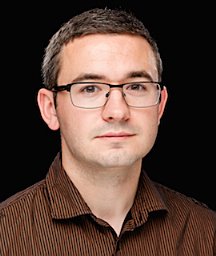 Luke Morgan合作论文数1
 Oliver W. Gnilke合作论文数1
 Melissa Lee合作论文数Department of Mathematics, Faculty of Science, The University of Auckland1
 Martino Garonzi合作论文数1
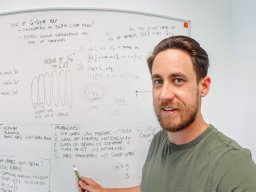 Daniel R. Hawtin合作论文数1Marcus Greferath合作论文数School of Mathematical Sciences, University College Dublin1Daniela Nikolova-Popova合作论文数1South Florida合作论文数1
 Alice Devillers合作论文数School of Mathematics and Statistics, The University of Western Australia1
 Michael Giudici合作论文数Department of Mathematics and Statistics, The University of Western Australia;Centre for the Mathematics of Symmetry and Computation, The University of Western Australia1
 Nung-Sing Sze (施能聖)合作论文数Department of Applied Mathematics,The Hong Kong Polytechnic University1
 Zejun Huang (黄泽军)合作论文数School of Mathematics and Science, Shenzhen University1
 Stephen Glasby合作论文数Department of Pure Mathematics, The University of Sydney1Edward Poon合作论文数1




