This work proposes a general framework for the optimal design of radiofrequency pulses in MRI. Based on optimal control theory, it proposes a Python-based numerical implementation using state-of-the-art nonlinear optimization solver (IPOPT). This study proposes three main contributions. It allows the incorporation of hard constraints to the problem and their consistent integration into the optimization process. It proposes to express the pulse as wavelet coefficients which proves to be highly effective in an applicative context. Finally, an innovative approach to minimize the pulse peak amplitude is presented by taking advantage of the efficient constraint management. The proposed framework is made available through a Python package, along with Jupyter Notebooks to reproduce the paper results. It also allows external users to solve their own design problem, benefiting from the generality and flexibility of the proposed implementation. The efficacy of the proposed method is validated in the context of short- T 2 $$ {T}_2 $$ selective excitation and B 1 $$ {B}_1 $$ -robust problems, with a primary focus on power and energy minimization. The optimized pulses provide a substantial enhancement regarding the compromise between energy/peak power and overall pulse performances, when compared to state-of-the-art solutions.
Many medical protocols benefit from the wide variety of soft tissue contrasts that can be obtained from magnetic resonance imaging (MRI) with high spatial resolution. However, acquiring high-resolution 3D MRI volumes for different contrasts can require significant acquisition time. In this respect, multicontrast reconstruction strategies offer a potential solution. To circumvent acquisition time, the presence of information redundancy in the measurements can be exploited. Multicontrast super-resolution (MSR) uses anatomical information from a specific contrast, typically obtained from an isotropic reference, to reconstruct another contrast that has been undersampled. In this work, we propose a reference-free MSR variational method for obtaining isotropic multicontrast volumes from anisotropic volumes, each obtained with a different orientation and contrast. The proposed MSR method is able to produce high-quality results that are qualitatively comparable to those obtained when a reference volume is used. Results are presented on in vivo T1-, T2- and T2-FLAIR weighted 3D TSE SPACE MRI data.
This study presents a novel image processing pipeline for accurately registering pre- and postoperative brain MRI scans with intraoperative optical images of the cerebral cortex. This pipeline, seamlessly integrated into the clinical workflow, requires no additional devices during surgery. Compared to a landmark-based validation approach across nine patients, we achieved a mean registration error of 1.43 +/- 0.72 mm. Furthermore, we observed a high degree of correspondence (Dice coefficient = 0.71) between functional activations identified with intraoperative optical imaging and preoperative fMRI data, demonstrating the clinical potential of this innovative approach. (c) 2025 The Author(s)
Contrast methods based on dipolar coupling are of great interest for imaging tissues containing large macromolecules, such as myelin. Most of these conventional methods deal with various "relaxation" phenomena influenced by dipolar coupling such as inhomogeneous magnetization transfer. In this work we propose to investigate the benefit of using another method, called magic sandwich echo (MSE), which allows direct modulation of the dipolar coupling (Hd) as described by the work of Matsui and the Redfield theory. To verify the potential of this method in biological tissue, we first proposed an experimental model for dipolar coupling modulation in an ex vivo tendon (as a highly anisotropic tissue) and used it to prove Hd modulation by varying the amplitude of the spin-lock radiofrequency pulse of this sequence. We then proposed a potential in vivo usable metric, directly related to the residual amount of Hd, which we called MaSteR for Magic sandwich echo to Stimulated echo ratio, as it is based on the ratio of the signal acquired with the MSE sequence and a stimulated echo sequence. First, we show that the higher Hd, the more effective the spin-lock radiofrequency amplitude. We measured with MaSteR that the change in radiofrequency amplitude allowed us to distinguish between different Hd intensities, with a greater MaSteR when Hd is higher.
The aim of the current study is to demonstrate the feasibility of radiofrequency (RF) pulses generated via an optimal control (OC) algorithm to perform magnetic resonance elastography (MRE) and quantify the mechanical properties of materials with very short transverse relaxation times (T2 < 5 ms) for the first time. OC theory applied to MRE provides RF pulses that bring isochromats from the equilibrium state to a fixed target state, which corresponds to the phase pattern of a conventional MRE acquisition. Such RF pulses applied with a constant gradient allow to simultaneously perform slice selection and motion encoding in the slice direction. Unlike conventional MRE, no additional motion-encoding gradients (MEGs) are needed, enabling shorter echo times. OC pulses were implemented both in turbo spin echo (OC rapid acquisition with refocused echoes [RARE]) and ultrashort echo time (OC UTE) sequences to compare their motion-encoding efficiency with the conventional MEG encoding (classical MEG MRE). MRE experiments were carried out on agar phantoms with very short T2 values and on an ex vivo bovine tendon. Magnitude images, wave field images, phase-to-noise ratio (PNR), and shear storage modulus maps were compared between OC RARE, OC UTE, and classical MEG MRE in samples with different T2 values. Shear storage modulus values of the agar phantoms were in agreement with values found in the literature, and that of the bovine tendon was corroborated with rheometry measurements. Only the OC sequences could encode motion in very short T2 samples, and only OC UTE sequences yielded magnitude images enabling proper visualization of short T2 samples and tissues. The OC UTE sequence produced the best PNRs, demonstrating its ability to perform anatomical and mechanical characterization. Its success warrants in vivo confirmation in further studies.
Complementary technique to preoperative fMRI and electrical brain stimulation (EBS) for glioma resection could improve dramatically the surgical procedure and patient care. Intraoperative RGB optical imaging is a technique for localizing functional areas of the human cerebral cortex that can be used during neurosurgical procedures. However, it still lacks robustness to be used with neurosurgical microscopes as a clinical standard. In particular, a robust quantification of biomarkers of brain functionality is needed to assist neurosurgeons. We propose a methodology to evaluate and optimize intraoperative identification of brain functional areas by RGB imaging. This consist in a numerical 3D brain model based on Monte Carlo simulations to evaluate intraoperative optical setups for identifying functional brain areas. We also adapted fMRI Statistical Parametric Mapping technique to identify functional brain areas in RGB videos acquired for 12 patients. Simulation and experimental results were consistent and showed that the intraoperative identification of functional brain areas is possible with RGB imaging using deoxygenated hemoglobin contrast. Optical functional identifications were consistent with those provided by EBS and preoperative fMRI. We also demonstrated that a halogen lighting may be particularity adapted for functional optical imaging. We showed that an RGB camera combined with a quantitative modeling of brain hemodynamics biomarkers can evaluate in a robust way the functional areas during neurosurgery and serve as a tool of choice to complement EBS and fMRI.
MRI contrast enhancement by Optimal Control is a new approach to design optimal magnetization preparation. This allows to maximize the contrast between target tissues characterized by their relaxation times. Recent numerical implementations have made possible the optimization of such preparation in a steady state sequence without full recovery between each repetition. This abstract demonstrates the contrast flexibility offered by this approach when combined with a MPRAGE sequence on pelvis imaging at 3T.
This article proposes a numerical framework to determine the optimal magnetization preparation in a three-dimensional magnetization-prepared rapid gradient-echo (MP-RAGE) sequence to obtain the best achievable contrast between target tissues based on differences in their relaxation times. The benefit lies in the adaptation of the algorithm of optimal control, GRAdient Ascent Pulse Engineering (GRAPE), to the optimization of magnetization preparation in a cyclic sequence without full recovery between each cycle. This numerical approach optimizes magnetization preparation of an arbitrary number of radio frequency pulses to enhance contrast, taking into account the establishment of a steady state in the longitudinal component of the magnetization. The optimal control preparation offers an optimized mixed T 1 / T 2 contrast in this traditional T 1 -weighted sequence. To show the versatility of the proposed method, numerical and in vitro results are described. Examples of contrasts acquired on brain regions of a healthy volunteer are presented for potential applications at 3 T.
RGB optical imaging is a marker-free, contactless, and non-invasive technique that is able to monitor hemodynamic brain response following neuronal activation using task-based and resting-state procedures. As opposed to functional task-based analyses, resting-state functional connectivity aims to identify the low frequency cortical hemodynamic fluctuations during patient rest that are linked to resting-state networks. Using intraoperative optical imaging, the main issues of using resting-state procedures come from the partial access to the brain cortex, whereas fMRI or fNIRS resting-state models used whole brain imaging. Task-based fMRI brain maps were compared to intraoperative optical functional brain maps by registering these maps to a preoperative anatomical MRI volume. The objective is to improve the patient care process before, during and after neurosurgery. With the task-based procedure, the RGB brain map showed a good correspondence with task-based fMRI (DICE = 0.75). With the resting-state procedure, the RGB brain map showed a good correspondence with task-based fMRI (seed correlation method: DICE = 0.58 and ICA method: DICE = 0.75).
Magnetic Resonance Elastography (MRE) quantifies the mechanical properties of tissues, typically applying motion encoding gradients (MEG). Multifrequency results allow better characterizations of tissues using data usually acquired through sequential monofrequency experiments. High frequencies are difficult to reach due to slew rate limitations and low frequencies induce long TEs, yielding magnitude images with low SNR. We propose a novel strategy to perform simultaneous multifrequency MRE in the absence of MEGs: using RF pulses designed via the Optimal Control (OC) theory. Such pulses control the spatial distribution of the MRI magnetization phase so that the resulting transverse magnetization reproduces the phase pattern of an MRE acquisition. The pulse is applied with a constant gradient during the multifrequency mechanical excitation to simultaneously achieve slice selection and motion encoding. The phase offset sampling strategy can be adapted according to the excitation frequencies to reduce the acquisition time. Phantom experiments were run to compare the classical monofrequency MRE to the OC based dual-frequency MRE method and showed excellent agreement between the reconstructed shear storage modulus G'. Our method could be applied to simultaneously acquire low and high frequency components, which are difficult to encode with the classical MEG MRE strategy.
The present work investigates the possibilities of enhancing MRI contrast between two target tissues in a three-dimensional Magnetization-Prepared Rapid Gradient-Echo (MP-RAGE) based on relaxation time's differences. The benefit lies in the adaptation of the GRAPE algorithm to the optimization of a magnetization preparation in a cyclic sequence without full recovery between each cycle. This numerical approach allows optimizing a magnetization preparation of an arbitrary number of radio frequency pulses to enhance contrast, taking in account the establishment of a steady state in the longitudinal component of the magnetization. In vivo validation on rat brain is performed at 11. 7T and shows the benefit of an optimized T 2 Prep-IR compared to a simple inversion to enhance contrast between white and gray matter.
 Helene Ratiney合作论文数CREATIS-LRMN, Université de Lyon;INSA-Lyon, Université Lyon 1;Université de Lyon, Université Lyon 126
 Olivier Beuf合作论文数24
 K. Tse Ve Koon合作论文数Laboratoire de Physique de l', Universite de Bourgogne;Universite de Bourgogne;Laboratoire de Physique de l'Universite de Bourgogne, Universite de Bourgogne16Poh Chueh Loo合作论文数Department of Biomedical Engineering, National University of Singapore12
 Dominique Sugny合作论文数Institut Carnot de Bourgogne12Pilar Sango Solanas合作论文数11Denis Grenier合作论文数11
 Steffen Glaser合作论文数Department of Chemistry, Technische Universitat Munchen11
 Cyrielle Caussy合作论文数8
 Pauline M. Lefebvre合作论文数Lab Anal & Architectures Syst LAAS, CNRS7
 Tan Cher Heng合作论文数Department of Diagnostic Radiology, The University of Texas M.D. Anderson Cancer Center7Michaël Sdika合作论文数Department of Neurology;University of California;Department of Neurology, University of California , San Francisco7Benoît Vernier合作论文数6Michael Tesch合作论文数6
 Tham Ivan W K合作论文数6marina nicolas合作论文数5
 Pascal Bertolino合作论文数Université Grenoble Alpes;Spooqs5Kevin Tse-Ve-Koon合作论文数4
 Bruno Montcel合作论文数Univ Lyon 1, Univ Lyon, INSA Lyon, UJM St Etienne,CNRS,Inserm,CREATIS UMR5220,U1206, F-69616 Lyon, France4Pilleul F合作论文数4
 Simon Auguste Lambert合作论文数4
 Yu Xin Yang合作论文数4Jacques Guyotat合作论文数4
 Elisabeth Brusseau合作论文数4
 Laurent Mahieu-Williame合作论文数3Charly Caredda合作论文数Université Claude Bernard Lyon 1, Université Jean Monnet Saint Étienne3
 Raphaël Sablong合作论文数3
 Marc Lapert合作论文数Laboratoire Interdisciplinaire Carnot de Bourgogne ( ICB )3
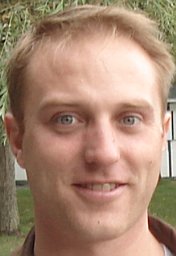 Fabien C. Schneider合作论文数Centre de Neurosciences Cognitives UMR 5229, Bron, France3E. Brusseau合作论文数2Tiffany Bakir Ageron合作论文数2Paul-Antoine Libourel合作论文数Faculté de Médecine R.T.H. Laennec, Centre de Recherche en Neurosciences de Lyon2Fabien Chauveau合作论文数Université de Lyon2
 Thomas Grenier合作论文数CNRS UMR, Université de Lyon2
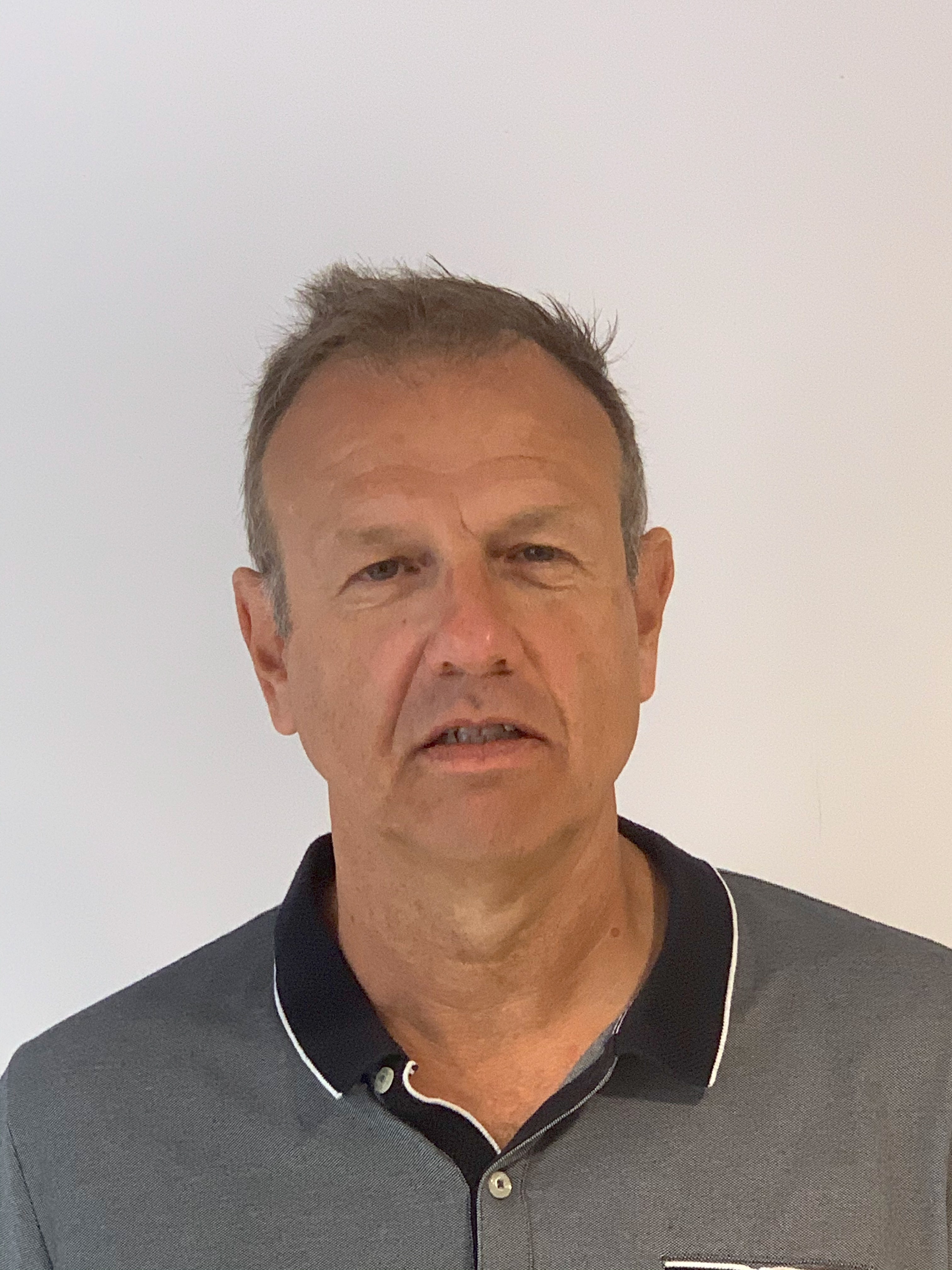 Pierre-Hervé Luppi合作论文数Lyon Neuroscience Research Centre, UMR 5292 CNRS/U1028 INSERM, University Claude Bernard Lyon 12Olivier Hamelin合作论文数1Kenneth Sheah合作论文数1Jean-François Palierne合作论文数1Christoph Wilkmann合作论文数1Geetha Soujanya合作论文数1
 Thiebaud Picart合作论文数Dept Tumoral & Vasc Neurosurg, Hosp Civils Lyon1K S Lim合作论文数1Thomas Tourdias合作论文数Univ Bordeaux, Bordeaux, France1
 Thomas Kraus合作论文数1
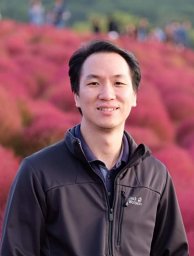 Akkawutvanich, C.合作论文数1Teo S K合作论文数1
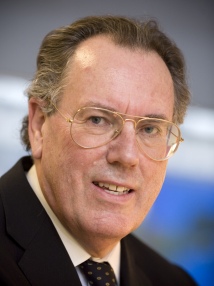 Richard Kitney合作论文数Department of Bioengineering, Faculty of Engineering, Imperial College London;Centre for Translational Nutrition and Food Research, Imperial College London;SynbiCITE1




