An abstract is not available for this content so a preview has been provided. Please use the Get access link above for information on how to access this content.
However the human listener manages to parse sentences, he or she must frequently manage to do so without ever having simultaneous access to the entire surface of the input sentence. This follows from two very simple and undisputed facts. First, the physical speech signal fades extremely rapidly. The complex wave form that carries speech is damped almost immediately upon delivery. Mercifully, perhaps, the air at the surface of the earth has no resonant properties by which to provide echoes of words, phrases, or sentences. With the exception of caves and canyons, the physical circumstances of speech ordinarily guarantee a transient life for the speech signal. To a certain extent, the human cognitive apparatus compensates for the rapid demise of the physical signal. Short term memory provides some of the resonant capacity that the speech environment lacks. However, the second fact intrudes for human short term memory is notoriously limited. Although exact estimates of short term memory capacity disagree, still there are no estimates of the capacity of immediate memory that would even remotely suggest that the human listener can hold in mind (say) the entire 15-25 words of a modestly complicated spoken sentence. There are two consequences that follow directly from the fact that the human parser's simultaneous access to the surface of the sentence—“window-is frequently too narrow to encompass a sentence, which it nevertheless parses successfully.” These consequences take the form of constraints that any empirically adequate model of parsing must obey. The first such constraint might be called the weak left-to-right constraint. The second constraint might be called the left accessibility constraint.
 Lila R. Gleitman合作论文数Department of Psychology, University of Pennsylvania7
 Barbara Landau合作论文数Language and Cognition Lab, Department of Cognitive Science, Krieger School of Arts & Sciences, Johns Hopkins University5
 Henry Gleitman合作论文数4Moira Yip合作论文数1Herbert H. Clark合作论文数1Edward E. Smith合作论文数1Laura Pettito合作论文数1
 Myrna F. Schwartz合作论文数Moss Rehabilitation Research Institute1
 Rebecca Treiman合作论文数Department of Education, College of Arts and Sciences, Washington University;Reading and Language Lab, College of Arts and Sciences, Washington University1
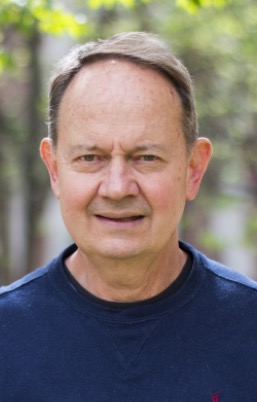 David Balota合作论文数Department of Psychological & Brain Sciences, Washington University;Department of Psychology, Washington University1
 Karalyn Patterson合作论文数Cambridge Language Sciences Interdisciplinary Research Centre, University of Cambridge;Department of Clinical Neurosciences, University of Cambridge1
 Isabelle Peretz合作论文数Departement de Psychologie, Faculte des Arts et des Sciences, Universite de Montreal1
 Jonathan Baron合作论文数university of pennsylvania1
 Keith E. Stanovich合作论文数Department of Applied Psychology & Human Development, Ontario Institute for Studies in Education, University of Toronto1
 Anthony Jorm合作论文数Melbourne School of Population and Global Health, University of Melbourne1
 Michael K. Tanenhaus合作论文数Center for Language Sciences, School of Arts & Sciences, University of Rochester1
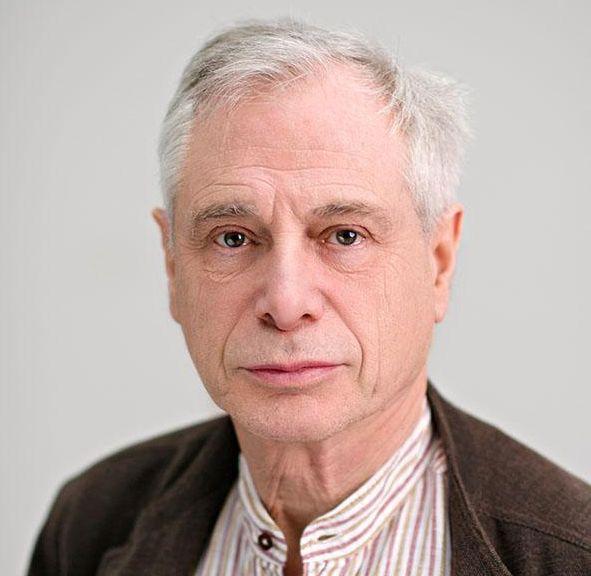 Dan Sperber合作论文数Institut Jean Nicod, ENS;Department of Cognitive Science, Central European University;Department of Philosophy, Central European University1
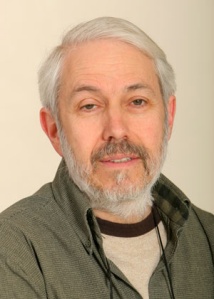 Raymond Klein合作论文数Department of Psychology and Neuroscience, Faculty of Computer ScienceDalhousie University1
 Martha J. Farah合作论文数Center for Neuroscience & Society, University of Pennsylvania1
 Philip B. Gough合作论文数Department of Psychology, College of Liberal Arts, University of Texas at Austin1
 Gary S Dell合作论文数Department of Psychology, College of Liberal Arts & Sciences, University of Illinois at Urbana-Champaign1Uli H. Frauenfelder合作论文数1
 Serge Larochelle合作论文数1Jonas Langer合作论文数1
 Alan Leslie合作论文数Department of Psychology, School of Art and Sciences, Rutgers, The State University of New Jersey1




