The mechanisms guiding nocturnal insect migration remain poorly understood. Although many species are thought to use the geomagnetic field, the sensory basis of magnetic orientation in insects has yet to be clarified. We developed an indoor experimental system to investigate the integration of geomagnetic and visual cues in the seasonal orientation of a globally distributed pest moth, the fall armyworm (Spodoptera frugiperda), a highly invasive species which in the past decade has colonized almost all potentially habitable regions of the globe. Our results demonstrate that fall armyworms require both geomagnetic and visual cues for accurate migratory orientation, with visual cues being indispensable for magnetic orientation. When visual and geomagnetic cues are placed in conflict, moths become disoriented, although not immediately, indicating that sensory recognition of the conflict requires time to process. We also show that the absence of visual cues leads to a significant loss of flight stability, which likely explains the disruption in orientation. Our findings highlight that visual cues are critical for stable magnetic orientation in the fall armyworm, offering a basis for future investigations of visual-magnetic integration in noctuid migrants.
Many different types of insects make seasonal migrations over vast distances, typically from one broad geographical region to another, most often involving a latitudinal change in one direction in spring with a reversal of this direction in autumn. However, a small handful of these species instead migrate from an enormous geographical area to a highly specific destination they have never previously visited, a journey they make only once. Of these, only two - the diurnal monarch butterfly and the nocturnal bogong moth - are well studied. Even though these lepidopterans have sophisticated multisensory compass mechanisms to guide their long journeys, some studies question whether they are capable of navigating to their goal, or whether they just end up there more or less by chance, pushed by the prevailing winds (a 'stochastic wind-borne' transport mechanism). At the other extreme is the possibility that monarch butterflies and bogong moths are 'true navigators', with the ability to directly travel to their distant goal by using a 'compass' to guide them in their inherited migratory direction and a 'map' that continuously updates their current position. In this Review, we will argue that the evidence for stochastic wind-borne transport and true navigation is weak, and that the current weight of evidence supports 'vector navigation'. We present a hypothesis that individual Lepidoptera use vector navigation to migrate to a distant goal by employing favourable winds and global compass mechanisms to choose their desired flight directions during consecutive journey segments (or vectors), each of different length and direction, and with each vector transition being initiated by innate recognition of local sensory cues. We further hypothesise that this recognition is passed on to coming generations via epigenetic memory.
Bogong moths (Agrotis infusa) migrate biannually up to 1,000 km between their breeding areas and geographically restricted aestivation sites in the Australian Alps 1,2 . These moths navigate towards their distant goal using the stars as a compass 3 but navigate correctly even when the stars are obscured by clouds 3 , suggesting that their magnetic sense 4 likely harnesses the Earth’s magnetic field as a compass. However, the nature of this compass, and of the magnetic sense underlying it, remain unknown. Here we show that Bogong moths, tethered in a flight arena under a full-spectrum randomised starry night sky, navigate in their inherited migratory direction using the geomagnetic field alone. If both field inclination and polarity are turned by 180°, or if inclination is turned alone, moths fly in the opposite direction. If polarity is turned alone, moths fail to turn. Furthermore, if violet-blue light (380 nm < λ < 500 nm) is removed from the illumination spectrum, or if tethered moths are exposed to weak broadband radiofrequency fields (150 kHz – 60 MHz), magnetic orientation is abolished. Our results indicate that Bogong moths use the geomagnetic field as an inclination compass for long-distance navigation at night and possess a light-dependent radical-pair-based magnetic sense 5 .
Many animals, such as birds and bats, are capable of migrating over vast distances to specific destinations. Remarkably, even insects such as the North American Monarch butterfly and the Australian Bogong moth undertake similarly long-distance migrations to specific sites. Here, we provide an overview of our current understanding of the migration of these insects and outline the sensory cues and neural mechanisms that underpin their journeys. We propose that their migrations can be divided into two phases: a “global” phase relying on global compass cues for long-distance navigation towards the goal, and a “local” phase where local sensory cues trigger innate recognition of features near and at the goal. The relevance of each phase depends on the insect's distance from its destination and is characterised by a specific relative weighting of sensory cues. We further propose a neural substrate for migration that supports robust decision-making about when to transition between phases, enabling migrants to navigate to their destinations with high efficiency.
The Lepidoptera, butterflies and moths, display an astonishing diversity of spatial orientation strategies essential for survival, reproduction, and ecological success. These spatial orientation strategies range from basic taxes to light, wind, gravity, and chemical cues, to more advanced strategies such as straight-line dispersal, multigenerational migration across continents, and complex trap-lining foraging involving long-term spatial memory. These orientation behaviours are tightly integrated with the ecological roles of lepidopterans as pollinators, prey, and bioindicators, and are supported by a flexible neuronal network. Of special interest for successful orientation are higher-order integration centres like the mushroom bodies (centres for learning and memory) and the central complex (the centre for spatial orientation and locomotion). These centres support cue integration, compass orientation, memory, and directional decision-making. However, anthropogenic stressors, including habitat fragmentation, light pollution, pesticides, and electromagnetic noise, threaten both the environmental cues and the neural systems facilitating lepidopteran navigation, with potential cascading effects on biodiversity and ecosystem health. By combining insights from behavioural ecology, neurobiology, and conservation, we aim to provide a comprehensive overview of the challenges and adaptations that shape the navigational toolkit of lepidopterans, underlining their significance as animal models for studying spatial orientation in a changing world.
Visual ecology, the study of how animals acquire and respond to visual information in nature, has grown rapidly over the past few decades. Research in this field has transformed our understanding of fundamental processes, such as the neurobiological basis of behavior and the diversification of species through sensory drive. The recent growth in the field has been accompanied by leaps in our understanding of the diversity of visual systems and in the development of novel technologies and techniques (for example, those allowing us to measure scenes and signals). With such growth, however, it is more important than ever to integrate wide perspectives and expertise to move the field forward in the most productive way. To that end, in summer 2024, 30 visual ecologists from around the world - spanning all career stages - met to discuss the state of the field. From that meeting, we identified two broad emerging themes in the study of visual ecology. (1) Can we further 'step inside' the perceptual experience of a non-human animal? (2) Can foundational 'rules' of vision and visual stimuli be identified? Although large questions such as these can feel unanswerable, this is where some of the most exciting discoveries in visual ecology remain to be made. Here, we outline eight relevant areas of research and identify ways in which researchers can bring us closer to answering these complex questions.
The Australian Bogong moth (Agrotis infusa) is a small noctuid moth that undertakes annual, nocturnal migrations of up to 1000 km to escape the summer heat of its breeding grounds. The moths travel to cool alpine caves, where they enter a dormant state (aestivation) before returning to reproduce and die. During migration, their brains integrate magnetic and visual cues to guide their flight direction. While the Bogong moth’s neurobiology is increasingly understood, its visual system has remained unexplored. Here, we describe the morphology, ultrastructure, optics, and visual opsins of the Bogong moth’s compound eyes and ocelli. Using light and electron microscopy, micro-computed tomography, in situ hybridization, and spectral absorbance measurements, we show that the compound eyes are typical superposition eyes with a tiered rhabdom, similar to other noctuid moths. The ocelli are small but structurally complex, featuring a two-tiered retina with spectrally distinct receptor cells and a lens forming a focused image on the ocellar retina. At the molecular level, the Bogong moth expresses three canonical opsins (UV, blue, and long-wavelength) and an additional red-shifted long-wavelength opsin, suggesting enhanced sensitivity to long-wavelength light. These opsins exhibit distinct expression patterns across the compound eyes, indicating functionally distinct dorsal and ventral eye hemispheres. Overall, the Bogong moth’s visual system displays multiple adaptations to nocturnal vision. These features, likely shared across noctuid moths, may have contributed to the evolution of the exceptional navigational abilities during long-distance migrations in dim light that define the Bogong moth, but which are also widespread across noctuid moths.
In celebration of the excellence of articles published in the Journal of Comparative Physiology A, Editors’ and Readers’ Choice Awards are annually conferred to the top papers in the categories Original Research Paper and Review/Review-History Article. The recipients of the 2025 Editors’ Choice Awards were selected based on votes cast by the Editorial Board on articles published in 2024. In the category Original Research Paper, this distinction goes to ‘Tonotopic Ca2+ dynamics and sound processing in auditory interneurons of the bush-cricket Mecopoda elongata’ by Timothy Bayley and Berthold Hedwig (J Comp Physiol A 210:353–369, 2024). In the category Review/Review-History Article, this distinction goes to ‘Mechanoecology: biomechanical aspects of insect-plant interactions’ by Gianandrea Salerno, Manuela Rebora, Elena Gorb, and Stanislav Gorb (J Comp Physiol A 210:249–265, 2024). The winners of the 2025 Readers’ Choice Awards were determined by the number of online accesses of articles published in 2023. In the category Original Research Paper, the winner is ‘Coleoptera claws and trichome interlocking’ by Gianandrea Salerno, Manuela Rebora, Silvana Piersanti, Valerio Saitta, Elena Gorb, and Stanislav Gorb (J Comp Physiol A 209:299–312, 2023). In the category Review/Review-History Article, the winner is ‘Olfactory navigation in arthropods’ by Theresa J. Steele, Aaron J. Lanz, and Katherine I. Nagel (J Comp Physiol A 209:467–488, 2023), which already won the Editors’ Choice Award in 2024.
Each spring, billions of Bogong moths escape hot conditions across southeast Australia by migrating up to 1,000 km to a place that they have never previously visited—a limited number of cool caves in the Australian Alps, historically used for aestivating over summer 1,2 . At the beginning of autumn, the same individuals make a return migration to their breeding grounds to reproduce and die. Here we show that Bogong moths use the starry night sky as a compass to distinguish between specific geographical directions, thereby navigating in their inherited migratory direction towards their distant goal. By tethering spring and autumn migratory moths in a flight simulator 3–5 , we found that, under naturalistic moonless night skies and in a nulled geomagnetic field (disabling the moth’s known magnetic sense 4 ), moths flew in their seasonally appropriate migratory directions. Visual interneurons in different regions of the moth’s brain responded specifically to rotations of the night sky and were tuned to a common sky orientation, firing maximally when the moth was headed southwards. Our results suggest that Bogong moths use stellar cues and the Earth’s magnetic field to create a robust compass system for long-distance nocturnal navigation towards a specific destination.
The Journal of Comparative Physiology A is the premier peer-reviewed scientific journal in comparative physiology, in particular sensory physiology, neurophysiology, and neuroethology. Founded in 1924 by Karl von Frisch and Alfred Kühn, it celebrates its 100th anniversary in 2024. During these 100 years, many of the landmark achievements in these disciplines were published in this journal. To commemorate these accomplishments, we have compiled a list of the Top 100 Authors over these 100 years, representing approximately 1
Vespula germanica and Vespula vulgaris are two common European wasps that have ecological and economic importance as a result of their artificial introduction into many different countries and environments. Their success has undoubtedly been aided by their capacity for visually guided hunting, foraging, learning and using visual cues in the context of homing and navigation. However, the visual systems of V. germanica and V. vulgaris have not received any deep attention. We used electrophysiology, together with optical and anatomical techniques, to measure the spatial resolution and optical sensitivity of the compound eyes of both species. We found that both wasps have high anatomical spatial resolution with narrow interommatidial angles (Δϕ between 1.0 and 1.5 deg) and a distinct acute zone in the fronto-ventral part of the eye. These narrow interommatidial angles are matched to photoreceptors having narrow angular sensitivities (acute zone acceptance angles Δρ below 1.3 deg), indicating eyes of high spatial resolution that are well suited to their ecological needs. Additionally, we found that both species possess an optical sensitivity that is typical of other day-flying hymenopterans.
Many species rely on celestial cues as a reliable guide for maintaining heading while navigating. In this paper, we propose a method that extracts the Milky Way (MW) shape as an orientation cue in low-light scenarios. We also tested the method on both real and synthetic images and demonstrate that the performance of the method appears to be accurate and reliable to motion blur that might be caused by rotational vibration and stabilisation artefacts. The technique presented achieves an angular accuracy between a minimum of 0.00° and a maximum 0.08° for real night sky images, and between a minimum of 0.22° and a maximum 1.61° for synthetic images. The imaging of the MW is largely unaffected by blur. We speculate that the use of the MW as an orientation cue has evolved because, unlike individual stars, it is resilient to motion blur caused by locomotion.
Moving in straight lines is a behaviour that enables organisms to search for food, move away from threats, and ultimately seek suitable environments in which to survive and reproduce. This study explores a vision-based technique for detecting a change in heading direction using the Milky Way (MW), one of the navigational cues that are known to be used by night-active insects. An algorithm is proposed that combines the YOLOv8m-seg model and normalised second central moments to calculate the MW orientation angle. This method addresses many likely scenarios where segmentation of the MW from the background by image thresholding or edge detection is not applicable, such as when the moon is substantial or when anthropogenic light is present. The proposed YOLOv8m-seg model achieves a segment mAP@0.5 of 84.7% on the validation dataset using our own training dataset of MW images. To explore its potential role in autonomous system applications, we compare night sky imagery and GPS heading data from a field trial in rural South Australia. The comparison results show that for short-term navigation, the segmented MW image can be used as a reliable orientation cue. There is a difference of roughly 5–10° between the proposed method and GT as the path involves left or right 90° turns at certain locations.
The seasonal migrations of insects involve a substantial displacement of biomass with significant ecological and economic consequences for regions of departure and arrival. Remote sensors have played a pivotal role in revealing the magnitude and general direction of bioflows above 150 m. Nevertheless, the takeoff and descent activity of insects below this height is poorly understood. Our lidar observations elucidate the low-height dusk movements and detailed information of insects in southern Sweden from May to July, during the yearly northward migration period. Importantly, by filtering out moths from other insects based on optical information and wingbeat frequency, we have introduced a promising new method to monitor the flight activities of nocturnal moths near the ground, many of which participate in migration through the area. Lidar thus holds the potential to enhance the scientific understanding of insect migratory behavior and improve pest control strategies.
The Editors’ and Readers’ Choice Awards were established in 2022 to celebrate some of the outstanding articles published every year in the Journal of Comparative Physiology A. The recipients of the 2024 Editors’ Choice Awards were selected based on votes cast by the Editorial Board on articles published in 2023. In the category Original Paper, this distinction goes to ‘Views from ‘crabworld’: the spatial distribution of light in a tropical mudflat’ by Jochen Zeil (J Comp Physiol A 209:859–876, 2023); and in the category Review Article to ‘Olfactory navigation in arthropods’ by Theresa J. Steele and colleagues (J Comp Physiol A 209:467–488, 2023). The winners of the 2024 Readers’ Choice Awards were determined by the number of online accesses of articles published in 2022. In the category Original Paper, the winner is ‘Broadband 75–85 MHz radiofrequency fields disrupt magnetic compass orientation in night‑migratory songbirds consistent with a flavin‑based radical pair magnetoreceptor’ by Bo Leberecht and colleagues (J Comp Physiol A 208:97–106, 2022). In the category Review Article, the winner is ‘Magnetic maps in animal navigation’ by Kenneth J. Lohmann and colleagues (J Comp Physiol A 208:41–67, 2022), which already won the Editors’ Choice Award in 2023.
A fateful decision as a 15-year-old high school student, and good advice from a distinguished professor of zoology, were the catalysts that not only decided my entire career but also led me to the Journal of Comparative Physiology A , and to the myriad biological wonders that were held within its covers. In my celebration of JCPA , I look back on the formative years of my career in Australia, and the crucial role that the journal played in shaping my emerging research interests, and ultimately my entire life.
During the 99 years of its history, the Journal of Comparative Physiology A has published many of the most influential papers in comparative physiology and related disciplines. To celebrate this achievement of the journal’s authors, annual Editors’ Choice Awards and Readers’ Choice Awards are presented. The winners of the 2023 Editors’ Choice Awards are ‘Contact chemoreception in multi‑modal sensing of prey by Octopus’ by Buresch et al. (J Comp Physiol A 208:435–442, 2022) in the Original Paper category; and ‘Magnetic maps in animal navigation’ by Lohmann et al. (J Comp Physiol A 208:41–67, 2022) in the Review/Review-History Article category. The winners of the 2023 Readers’ Choice Awards are ‘Coping with the cold and fighting the heat: thermal homeostasis of a superorganism, the honeybee colony’ by Stabentheiner et al. (J Comp Physiol A 207:337–351; 2021) in the Original Paper category; and ‘Einstein, von Frisch and the honeybee: a historical letter comes to light’ by Dyer et al. (J Comp Physiol A 207:449–456, 2021) in the Review/Review-History category.
 Marie Dacke合作论文数Lund Vision Group, Lund University32
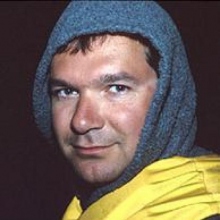 Sonke Johnsen合作论文数Nicholas School of the Environment, Duke University;Department of Biology, Duke University27
 Almut Kelber合作论文数21
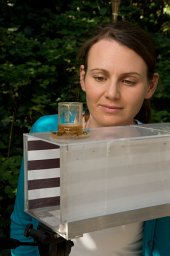 Emily J Baird合作论文数Department of Biology, Lund University18
 David Dreyer合作论文数17
 El Jundi Basil合作论文数Dept Biol, Lund Univ14
 William T. Wcislo合作论文数Smithsonian Tropical Research Institute14
 Marcus J Byrne合作论文数School of Animal, Plant and Environmental Sciences, University of the Witwatersrand14
 Thomas Cronin合作论文数Department of Biological Sciences, College of Natural and Mathematical Sciences, University of Maryland, Baltimore County13
 David Charles O'Carroll合作论文数Department of Biology, Faculty of Science, Lund University13
 Stanley Heinze合作论文数12
 Justin Marshall合作论文数Queensland Brain Institute, University of Queensland11
 Dan-Eric Nilsson合作论文数Lund Vision Group, Department of Biology, Lund University;Department of Cell and Organism Biology, Lund University10
 Hema Somanathan合作论文数Centre for Ecological Sciences, Indian Institute of Science10
 Anna Stockl合作论文数Vision Group, Lund University9
 Jesse R A Wallace合作论文数School of Biology, Australian National University8Birgit Greiner合作论文数8
 Willi Ribi合作论文数8
 Richard Brill合作论文数Virginia Institute of Marine Science7
 Jochen Smolka合作论文数7
 Uwe Homberg合作论文数Department of Neurobiology/Ethology, Faculty of Biology, Philipps-Universität Marburg;Center for Mind, Brain and Behavior7Kerstin A. Fritsches合作论文数7
 Henrik Malm合作论文数Fosters and Partners7k a fritsches合作论文数6
 Andrea Adden合作论文数6
 Wolfgang Rossler合作论文数Biocentre, University of Würzburg6
 Keram Pfeiffer合作论文数Department of Physiology and Biophysics, Dalhousie University6
 Clarke Scholtz合作论文数Department of Zoology and Entomology, University of Pretoria6Ken Green合作论文数6Renee M. Borges合作论文数Indian Institute of Science Centre for Ecological Sciences6
 Magnus Oskarsson合作论文数Centre for Mathematical Sciences, Lund University6Peter D. Mcintyre合作论文数6
 Therese Reber合作论文数5
 Henrik Mouritsen合作论文数Department of Biology and Environmental Sciences, University of Oldenburg5
 Andrea Megela Simmons合作论文数Department of Cognitive, Linguistic, and Psychological Sciences, Brown University/Department of Neuroscience, Brown University5Günther K.H. Zupanc合作论文数5
 Barrie Frost合作论文数Queen's University5Rita Wallén合作论文数5
 Anna Gislén合作论文数Lund Vision Group, Lund University5Charlotte Helfrich-Forster合作论文数5
 Damian Moran合作论文数4
 Myriam Franzke合作论文数4
 Christian Kraus合作论文数4
 M Jerome Beetz合作论文数4
 Theobald Jamie合作论文数Department of Biological Sciences, Florida International University4
 Jochen Zeil合作论文数Division of Ecology and Evolution, Research School of Biology, College of Science, Australian National University4Shaun P Collin合作论文数4
 Javaan Singh Chahl合作论文数School of Engineering, University of South Australia4
 Nadav Shashar合作论文数Department of Biological Sciences;University of Maryland;Department of Biological Sciences, University of Maryland Baltimore County4




