We propose physics-informed digital twin (PIDT): a fiber parameter estimation approach that combines a parameterized split-step method with a physics-informed loss. PIDT improves accuracy and convergence speed with lower complexity compared to previous neural operators.
Multi-band elastic optical networks (MB-EONs) transmit information in multiple bands to increase the available capacity. However, they suffer from quality of transmission (QoT) degradation caused by the inter-channel stimulated Raman scattering effect, which requires addressing through tailored resource assignment. Additionally, dynamically arriving and departing optical service requests generate spectrum fragmentation (SF), where spectrum resources become scattered into non-continuous chunks and aggravate service blocking ratio (SBR) even when the total available bandwidth is sufficient. To jointly address these challenges, we propose an SF- and QoT-aware algorithm for routing, band, modulation format, and spectrum assignment (RBMSA), along with proactive spectrum defragmentation (SD), referred to as SFQA-defrag. The algorithm considers SF metrics and QoT levels of available channels across multiple candidate paths to ensure that the QoT requirements are met while minimizing the SF. The SD process proactively reorganizes spectrum allocation to reduce fragmentation by consolidating the spectrum gaps, which leads to lower blocking of future requests. The SFQA-defrag algorithm is evaluated against benchmark algorithms that independently consider either QoT or SF in three reference backbone topologies. The results demonstrate that SFQA-defrag significantly reduces the SBR and SF compared to benchmarks, albeit with a slight increase in the average path length.
Time-varying distortions in communication systems can significantly degrade the performance of soft-decision forward error correction. This paper presents a burst-aware (BA) low-density parity-check (LDPC) decoding scheme for channels affected by bursty phase noise. By applying differential coding to a Wiener process with time-varying innovation variance, bursty differential phase noise is obtained. Simulation results demonstrate that, compared to conventional decoding, the BA scheme achieves gains in the signal-to-noise ratio of up to 0.7 dB at a bit error rate (BER) of 4·10^-3 and more than 1 dB at a packet error rate (PER) of 1·10^-2. Furthermore, by iterating between channel estimation and ldpc decoding, forming the proposed iterative burst-aware (IBA) decoding scheme, the gains increase to 1.4 dB and more than 3 dB, respectively. More importantly, the IBA scheme significantly improves robustness to bursty phase noise. Compared with the conventional scheme, the IBA scheme can reduce both ber and per by up to two orders of magnitude under severe bursty phase noise.
New lattice quantizers with lower normalized second moments than previously reported are constructed in 13 and 14 dimensions and conjectured to be optimal. Our construction combines an initial numerical optimization with a subsequent analytical optimization of families of lattices, whose Voronoi regions are constructed exactly. The new lattices are constructed from glued products of previously known lattices, by scaling the component lattices and then optimizing the scale factors. A two-parameter family of lattices in 13 dimensions reveals an intricate landscape of phase changes as the parameters are varied.
As the bedrock of the Internet, optical fibers are ubiquitously deployed and historically dedicated to ensuring robust data transmission. Leveraging their extensive installation, recent endeavors have focused on utilizing these telecommunication fibers also for environmental sensing, exploiting their inherent sensitivity to various environmental disturbances. In this paper, we consider integrated sensing and communication (ISAC) systems that combine data transmission and sensing functionalities, by monitoring the state of polarization to detect environmental changes. In particular, we investigate various machine learning techniques to enhance the performance and capabilities of such polarization-based ISAC systems. Gradient-based techniques such as adaptive zero-forcing equalization are examined for their potential to enhance sensing accuracy at the expense of communication performance, with strategies discussed for mitigating this trade-off. Additionally, the paper reviews novel machine-learning-based approaches for blind channel estimation using variational autoencoders, aimed at improving channel estimates compared to traditional adaptive equalization methods. We also discuss the problem of distributed polarization sensing and review a recent physics-based learning approach for Jones matrix factorization, potentially enabling spatial resolution of sensed events. Lastly, we discuss the potential of leveraging dual-functional autoencoders to optimize ISAC transmitters and the corresponding transmit waveforms. Our paper underscores the potential of telecom fibers for joint data transmission and environmental sensing, facilitated by advancements in digital signal processing and machine learning.
We propose an LDPC decoding scheme for bursty residual phase noise channels, using Viterbi-based channel state estimation and burst-aware LLRs. Simulations show improved bit and packet error rates over conventional schemes with and without interleaving. (c) 2025 The Author(s)
The capacity of a discrete-time channel with correlated phase noises is investigated. In particular, the electro-optic frequency comb system is considered, where the phase noise of each subchannel is a combination of two independent Wiener phase-noise sources. Capacity upper and lower bounds are derived for this channel and are compared with lower bounds obtained by numerically evaluating the achievable information rates using quadrature amplitude modulation constellations. Capacity upper and lower bounds are provided for the high signal-to-noise ratio (SNR) regime. The multiplexing gain (pre-log) is shown to be M-1, where M represents the number of subchannels. A constant gap between the asymptotic upper and lower bounds is observed, which depends on the number of subchannels M. For the specific case of M=2, capacity is characterized up to a term that vanishes as the SNR grows large.
Lattices with minimal normalized second moments are designed using a new numerical optimization algorithm. Starting from a random lower-triangular generator matrix and applying stochastic gradient descent, all elements are updated towards the negative gradient, which makes it the most efficient algorithm proposed so far for this purpose. A graphical illustration of the theta series, called theta image, is introduced and shown to be a powerful tool for converting numerical lattice representations into their underlying exact forms. As a proof of concept, optimized lattices are designed in dimensions up to 16. In all dimensions, the algorithm converges to either the previously best known lattice or a better one. The dual of the 15-dimensional laminated lattice is conjectured to be optimal in its dimension and its exact normalized second moment is computed.
Multidimensional Voronoi constellations (VCs) are shown to be more power-efficient than quadrature amplitude modulation (QAM) formats given the same uncoded bit error rate, and also have higher achievable information rates. However, a coded modulation scheme to sustain these gains after forward error correction (FEC) coding is still lacking. This paper designs coded modulation schemes with soft-decision FEC codes for VCs, including bit-interleaved coded modulation (BICM) and multilevel coded modulation (MLCM), together with three bit-to-integer mapping algorithms and log-likelihood ratio calculation algorithms. Simulation results show that VCs can achieve up to 1.84 dB signal-to-noise ratio (SNR) gains over QAM with BICM, and up to 0.99 dB SNR gains over QAM with MLCM for the additive white Gaussian noise channel, with a surprisingly low complexity.
Emerging video services are associated with stringent quality-of-service (QoS) and high data-rate requirements. Moreover, the presence of data-rate-hungry mobile users in future networks necessitate sophisticated design strategies. The deployment of unmanned aerial vehicle access point (UAP)-assisted networks (UANs) has been proposed to ensure high data-rates to mobile users. Moreover, UAPs can be equipped with energy-efficient caches to facilitate video delivery with stringent QoS. However, the mobility of users and UAPs may cause temporal variations in the QoS experienced by users. This paper conducts an extensive performance evaluation of a UAN, by studying the effect of user behavior, mobility of users and UAPs, and a temporal variation of video popularity on the QoS. The QoS is measured in terms of the delay experienced by the users. To that end, a time-dependent queueing model and its associated fluid approximation models are derived, which are illustrated to be reasonably accurate in an appropriate asymptotic regime. A detailed analysis of these models reveals that low delay, i.e., high QoS, can be ensured in UANs. Finally, a reinforcement-learning (RL) approach based on these models is utilized to minimize the number of deployed UAPs and the playout buffer size while guaranteeing a certain QoS.
We consider the problem of recovering spatially resolved polarization information from receiver Jones matrices. We introduce a physics-based learning approach, improving noise resilience compared to previous inverse scattering methods, while highlighting challenges related to model overparameterization.
Traffic demands in future elastic optical networks are expected to be heterogeneous with time-varying bandwidth. Estimating the physical-layer impairments (PLIs) for random bandwidth demands is important for cross-layer network resource provisioning. State-of-the-art PLI estimation techniques yield conservative PLI estimates using the maximum bandwidth, which leads to significant over-provisioning. This paper uses probabilistic information on random bandwidth demands to provide a computationally efficient, accurate, and flexible PLI estimate. The proposed model is consistent with the needs of future self-configuring fiber-optic networks and maximally avoids up to a 25% overestimation of PLIs compared to the benchmark for the cases studied, thus reducing the network design margin at a negligible extra computational cost.
Multidimensional (MD) modulation formats enable a larger minimum Euclidean distance than conventional two-dimensional formats. As a structured geometric shaping method, MD Voronoi constellations (VCs) avoid the use of look-up tables and can be implemented with low-complexity encoding and decoding algorithms, outperforming quadrature amplitude modulation (QAM) formats in terms of mutual information. However, it is challenging to maintain the shaping gain in a practical system requiring bit-mapping and forward error correction (FEC) coding. By using a hybrid labeling and multilevel coding scheme integrated with soft-decision FEC coding, MD VCs can achieve high shaping gain compared to QAM formats after soft-decision (SD) decoding. In practical systems, transceiver impairments significantly degrade the system performance, especially for high-cardinality constellations. To investigate of performance of high spectral-efficiency (SE) MD VCs, we employ a 24-dimensional (24D) VC with uncoded SE of 8 bit/symbol/dimension-pair to a spectral superchannel spanning the full C-band. Specifically, the 24D VC with a record constellation size of 7.9×10 28 is applied to dual-polarization coherent transmission over six time slots. The superchannel is composed of 5.0 Gbaud channels spaced at 5.2 GHz, resulting in an overall spectral efficiency of 12.2 bit/s/Hz and a net throughput of 54.2 Tb/s over the entire C-band after 40 km single-mode fiber. It is the first experimental demonstration of a high-SE MD format providing a significant shaping gain after SD decoding.
We implemented and evaluated probabilistically-shaped multilevel coded modulation and soft-information based performance monitoring at throughputs from 200 Gb/s to 1.2 Tb/s for multi-haul fiber-optic communications. Error-free operations were observed in 5- to 128-ary modulation formats.
40 years ago, Conway and Sloane proposed using the highly symmetrical Coxeter-Todd lattice $K_{12}$ for quantization, and estimated its second moment. Since then, all published lists identify $K_{12}$ as the best 12-dimensional lattice quantizer. Surprisingly, $K_{12}$ is not optimal: we construct two new 12-dimensional lattices with lower normalized second moments. The new lattices are obtained by gluing together 6-dimensional lattices.
Lattices with minimal normalized second moments are designed using a new numerical optimization algorithm. Starting from a random lower-triangular generator matrix and applying stochastic gradient descent, all elements are updated towards the negative gradient, which makes it the most efficient algorithm proposed so far for this purpose. A graphical illustration of the theta series, called theta image, is introduced and shown to be a powerful tool for converting numerical lattice representations into their underlying exact forms. As a proof of concept, optimized lattices are designed in dimensions up to 16. In all dimensions, the algorithm converges to either the previously best known lattice or a better one. The dual of the 15-dimensional laminated lattice is conjectured to be optimal in its dimension.
A lattice quantizer approximates an arbitrary real-valued source vector with a vector taken from a specific discrete lattice. The quantization error is the difference between the source vector and the lattice vector. In a classic 1996 paper, Zamir and Feder show that the globally optimal lattice quantizer (which minimizes the mean square error) has white quantization error: for a uniformly distributed source, the covariance of the error is the identity matrix, multiplied by a positive real factor. We generalize the theorem, showing that the same property holds (i) for any lattice whose mean square error cannot be decreased by a small perturbation of the generator matrix, and (ii) for an optimal product of lattices that are themselves locally optimal in the sense of (i). We derive an upper bound on the normalized second moment (NSM) of the optimal lattice in any dimension, by proving that any lower- or upper-triangular modification to the generator matrix of a product lattice reduces the NSM. Using these tools and employing the best currently known lattice quantizers to build product lattices, we construct improved lattice quantizers in dimensions 13 to 15, 17 to 23, and 25 to 48. In some dimensions, these are the first reported lattices with normalized second moments below the best known upper bound.
We propose a modified low-complexity architecture for hierarchical distribution matching (DM), achieving 222-ary quadrature amplitude modulation or 4.32-Tb/s data rate on a field programmable gate array with a limited rate loss. Such a performance-complexity balanced DM helps minimizing the power consumption with probabilistic shaping.
Voronoi constellations (VCs) are considered as an effective geometric shaping method due to their high power efficiencies and low complexity. In this paper, the performance of 16- and 32-dimensional VCs with a variety of spectral efficiencies transmitted in the nonlinear fiber channel are investigated. Both single-channel and wavelength-division multiplexing systems are considered for the transmission of the VCs, as well as different signal processing schemes, including chromatic dispersion compensation and digital backpropagation. Multiple performance metrics including the uncoded bit error rate, mutual information (MI), and generalized mutual information (GMI) of VCs are evaluated. Compared with quadrature amplitude modulation (QAM) formats, the VCs provide 1.0–2.4 dB launch power gains, up to 0.50 bits/symbol/dimension-pair MI gains, up to around 30% potential reach increase at the same MI, and up to 0.30 bits/symbol/dimension-pair GMI gains in a limited launch power range. The observed performance gains over QAM are found higher than in the back-to-back case. Moreover, a general GMI estimation method for very large constellations using importance sampling is proposed for the first time.
We give a detailed description of the Voronoi region of the Barnes–Wall lattice $\Lambda _{16}$ , including its vertices, relevant vectors, and symmetry group. The exact value of its quantizer constant is calculated, which was previously only known approximately. To verify the result, we estimate the same constant numerically and propose a new very simple method to quantify the variance of such estimates, which is far more accurate than the commonly used jackknife estimator.
 Lars Magnus Ingemar Karlsson合作论文数Department of Microtechnology and Nanoscience, Chalmers University of Technology129
 Alex Alvarado合作论文数Department of Electrical Engineering, Eindhoven University of Technology47
 Pontus Johannisson合作论文数chalmers university of technology37
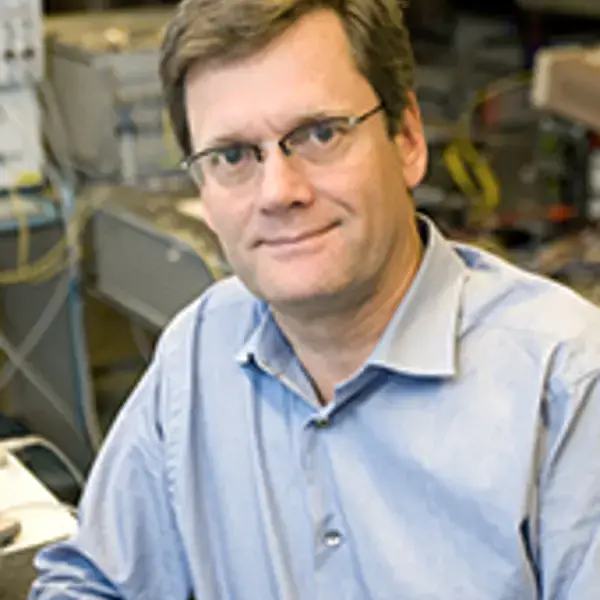 Peter Andrekson合作论文数Department of Microtechnology and Nanoscience, Chalmers University of Technology34
 Henk Wymeersch合作论文数Department of Electrical Engineering, Chalmers University of Technology33
 Johnny Karout合作论文数Chalmers, Dept Signals & Syst, SE-41296 Gothenburg, Sweden22
 Tsuyoshi Yoshida合作论文数Inf. Technol. R&D Center, Mitsubishi Electr. Corp.;c;Inf. Technol. R&D Center, Mitsubishi Electr. Corp.18
 Krzysztof Szczerba合作论文数Clinic of Internal and Occupational Diseases;Medical Academy;Clinic of Internal and Occupational Diseases, Medical Academy15
 Christian Häger合作论文数Department of Electrical Engineering, Chalmers University of Technology15
 Fredrik Brannstrom合作论文数Chalmers University of Technology;Department of Computer Engineering;Department of Computer Engineering, Chalmers University of Technology15
 Tobias A. Eriksson合作论文数14
 Erik Ström合作论文数Division of Communications, Antennas, and Optical Networks, Chalmers University of Technology14Lotfollah Beygi合作论文数Department of Signals and Systems, Chalmers University of Technology14
 Benjamin J. Puttnam合作论文数13
 Martin Sjodin合作论文数School of Chemical Sciences, Dublin City University13
 Marco Secondini合作论文数Scuola Superiore Sant'Anna13
 Yan, Li合作论文数12
 Naga V. Irukulapati合作论文数11Shen Li合作论文数11
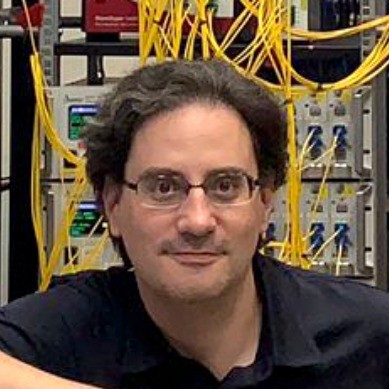 Ruben S. Luís合作论文数National Institute of Information and Communications Technology11
 Kamran Keykhosravi合作论文数Dept. of Electr. Eng., Sharif Univ. of Technol.;c;Dept. of Electr. Eng., Sharif Univ. of Technol.11
 Tony Ottosson合作论文数Communication Systems Group;Dept . of Signals and Systems;Chalmers University of Technology;Communication Systems Group, Chalmers University of Technology11
 Alexandre Graell I Amat合作论文数Department of Electronics, Institut TELECOM-TELECOM Bretagne11
 Gabriele Liga合作论文数10
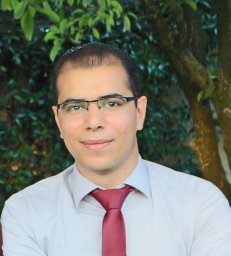 Ali Mirani合作论文数Sharif Univ Technol, Dept Elect Engn, Tehran, Iran10
 Naoya Wada合作论文数National Institute of Information and Communications Technology10
 Johan Lassing合作论文数Dept . of Signals and Systems;Chalmers University of Technology10
 Yoshinari Awaji合作论文数10
 Arne Svensson合作论文数Department of Electrical Engineering, Chalmers University of Technology10
 Jochen Schröder合作论文数Photonics Laboratory, Department of Microtechnology and Nanoscience, Chalmers University of Technology8
 Bruce Allen合作论文数Albert Einstein Institute, Max Planck Institute For Gravitational Physics;Department Observational Relativity and Cosmology, Max Planck Institute For Gravitational Physics;Leibniz Universität Hannover8
 Polina Bayvel合作论文数Department of Electronic & Electrical Engineering, University College London7
 Frank R. Kschischang合作论文数The Edward S. Rogers Sr. Department of Electrical & Computer Engineering, Faculty of Applied Science and Engineering, University of Toronto7
 Maïté Brandt Pearce合作论文数School of Engineering and Applied Science, University of Virginia7Ahmet Serdar Tan合作论文数7Daniel Pook-Kolb合作论文数6
 Georg Rademacher合作论文数Institute of Electrical and Optical Communications, University of Stuttgart6
 Cristian B. Czegledi合作论文数6Koji Igarashi合作论文数Biosci Div, Tosoh Corp6Hongxia Zhao (赵虹霞)合作论文数School of Environmental Science and Technology, Dalian University of Technology6Leszek Szczecinski合作论文数Institut National de la Recherche Scientifique
Energy, Materials & Telecommunications6
Cristian B. Czegledi合作论文数6Koji Igarashi合作论文数Biosci Div, Tosoh Corp6Hongxia Zhao (赵虹霞)合作论文数School of Environmental Science and Technology, Dalian University of Technology6Leszek Szczecinski合作论文数Institut National de la Recherche Scientifique
Energy, Materials & Telecommunications6 Anders Larsson合作论文数NVIDIA6
 Petter Westbergh合作论文数Photon Lab, Chalmers6
 Mohammad Farsi合作论文数Department of Electrical Engineering, Chalmers University of Technology5Yuxin Xu合作论文数5
 Jose Manuel Delgado Mendinueta合作论文数Department of Electronic Technology, Universidad Carlos III de Madrid5
 Werner Klaus合作论文数National Institute of Information and Communications Technology5
 Dharmaweera, N.合作论文数Sch. of Eng., Monash Univ.;c;Sch. of Eng., Monash Univ.5
 Domenico Marsella合作论文数5




