The introduction of vessel-based Individual Transferable Quotas (ITQs) in Danish demersal fisheries in 2007 caused significant structural changes in the fleet, towards fewer and larger vessels deploying otter trawls. Mainly smaller coastal vessels deploying Danish seines and gillnets reduced in numbers. The ecosystem effects of this structural change were investigated by comparing the sustainability of a local, small-scale, coastal fishery (Thorupstrand) using Danish seines and gillnets with that of demersal trawling by larger vessels using the same fishing grounds. The fisheries were compared using six ecological and socio-economic indicators: 1), discards (food web), 2), by-catch incidences (food web/biodiversity), 3), seabed impacts, 4), fuel use efficiency, 5), quality of fish landed (food provision), and 6), social and cultural gains and drawbacks (social and cultural features). Except for by-catch of vulnerable species, the fisheries using Danish seines and gillnets scored better in all indicators when compared to otter trawls. Additional commercial and cultural benefits of establishing a local fishery guild with share-owned quotas and land-based facilities were investigated. The results and lessons learned are discussed in the context of an ecosystem approach to fisheries management and the current reform of the common fisheries policy of the European Union.
General information Publication status: Published Organisations: National Institute of Aquatic Resources, Section for Ecosystem based Marine Management, Public Sector Consultancy, Section for Monitoring and Data, Section for Freshwater Fisheries Ecology Contributors: Gislason, H., Dalskov, J., Dinesen, G. E., Egekvist, J., Eigaard, O. R., Jepsen, N., Larsen, F., Poulsen, L. K. , Sørensen, T. K., Hoffmann, E. Number of pages: 83 Publication date: 2014
An integrated ecosystem assessment was carried out for the Limfjord over the period from 1984 to 2008 to describe changes in ecosystem structure and potentially important drivers. The Limfjord is a eutrophic transitional Danish fjord system with the main inflow from the North Sea in the west and main outflow to the Kattegat in the east. We showed that from 1990 to 1995, the ecosystem structure shifted from dominance by demersal fish species (eelpout, whiting, flounder, plaice) to that of pelagic fish species (sprat, herring, sticklebacks), small-bodied fish species (black goby, pipefish), jellyfish, common shore crab, starfish and blue mussels. We interpret this change as a regime shift that showed a similar temporal pattern to regime shifts identified in adjacent seas. The observed changes in trophic interactions and food web reorganisation suggested a non-linear regime shift. The analyses further showed the regime shift to be driven by a combination of anthropogenic pressures and possible interplay with climatic disturbance.
The heavily eutrophicated Limfjorden (Denmark) provides a good illustration of the value of long-term monitoring, especially if this is combined with an experimental, interdisciplinary research approach. Here, we first give a short overview of the environmental status of Limfjorden, including the historical development of nutrient overloading and subsequent oxygen depletion in near-bottom water, and how the annual landings of edible bottom-dwelling fish species (plaice, flounder, eel and others) caught in Limfjorden have decreased from about 2,500 t in the early 1920s to only about 20 t in recent years where the fish have been replaced by an increasing number of especially the moon jellyfish, Aurelia aurita, which mainly preys on zooplankton. Next, we evaluate the ecological consequences of the present high number of jellyfish, based on data from recent years' research on the abundance of jellyfish, their population dynamics and predation impact. In Limfjorden, the benthic polyp stage of A. aurita ensures a large number of small ephyrae in the early spring and subsequently a large population of adult medusae that control the zooplankton during summer and autumn. The holopelagic invasive ctenophore Mnemiopsis leidyi, which was observed in Limfjorden for the first time in 2007, is a second carnivore adding additional predation pressure of the indigenous A. aurita so that copepods and other mesozooplankton organisms may be virtually absent, as observed in 2008 and 2009 where ciliates made up a substantial part of the zooplankton biomass. Marine environmental management programmes should be aware of the increasing importance of both indigenous and new invasive jellyfish species that may show mass occurrence in especially eutrophicated and over-fished areas.
The predatory neogastropod Ocinebrellus inornatus was first reported from Europe in W France in 1995 and has since been detected at other sites in NW and N France and The Netherlands. It is native to the North Pacific where it preys on the Pacific oyster Crassostrea gigas. Here we report on the occurrence of the species in beds of European oysters (Ostrea edulis) in the Limfjord, NW Jutland, Denmark. The morphology-based identification has been confirmed by genetic analysis. The species was probably introduced with oysters imported from France in the 1970s and 1980s. The invasion is still relatively localized but as the species has established a reproductive population, it may eventually spread to other parts of the fjord and in time pose a problem to the oyster fishery. The species’ invasion history is reviewed.
Abstract Hoffmann, E. and Pérez-Ruzafa, A. 2008. Marine Protected Areas as a tool for fishery management and ecosystem conservation: an Introduction. – ICES Journal of Marine Science, 66: 1–5.
 Per Dolmer合作论文数Department of Marine Fisheries, Danish Institute for Fisheries Research14
 grete e dinesen合作论文数National Institute for Aquatic Resources (DTU Aqua),, Technical University of Denmark8
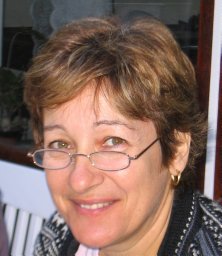 Josianne Gatt Støttrup合作论文数Section for Ecosystem based Marine Management, National Institute of Aquatic Resources, Technical University of Denmark8
 kerstin geitner合作论文数4Finn Larsen合作论文数4
 Stiig Markager合作论文数Department of Marine Ecology, National Environmental Research Institute4
 Jens Kjerulf Petersen合作论文数4
 Helle Torp Christensen合作论文数3
 Karen Timmermann合作论文数National Institute of Aquatic Resources, Technical University of Denmark3
 Ole Ritzau Eigaard合作论文数National Institute of Aquatic Resources, Technical University of Denmark3s sverdrupjensen合作论文数2
 Thomas Kirk Sørensen合作论文数2
 Marianne Holmer合作论文数Department of Biology, Faculty of Science, University of Southern Denmark2
 Eva Roth合作论文数2
 Henrik Glenner合作论文数Centre for Ancient Genetics & Evolution;Bohr Institute & Institute of Biology, Niels;University of Copenhagen;Niels Bohr Institute & Institute of Biology, University of Copenhagen2Sten Munch-Petersen合作论文数2
 Maciej T. Tomczak合作论文数DTU Aqua, Technical University of Denmark2
 Marie Maar合作论文数Dept Biosci, Aarhus Univ2Jørgen Lützen合作论文数2Henrik Jensen合作论文数1d a ahsan合作论文数1rasmus borgstrom合作论文数1sten munchpetersen合作论文数1holger hovgard合作论文数1Mathilde Højrup合作论文数1h jarlbaek合作论文数1Henrik Gislason合作论文数1
 Henrik Elvang Jensen合作论文数Department of Veterinary and Animal Sciences, University of Copenhagen1
 Joergen Dalskov合作论文数1Tørring Ditte Bruunshøj合作论文数1Marco Faasse合作论文数National Museum of Natural History Naturalis1
 Hans Ulrik Riisgård合作论文数Marine Biological Research Centre, University of Sourthern Denmark1
 Per Kragh Andersen合作论文数Dept. Biostatistics, Inst. Public Health, Univ. Copenhagen1
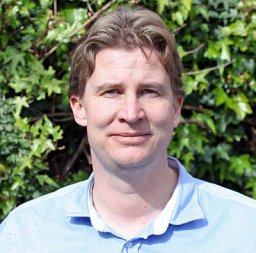 Adriaan Gittenberger合作论文数National Museum of Natural History1
 Niels Jepsen合作论文数Danish Institute for Fisheries Research;Department of Inland Fisheries;Department of Inland Fisheries, Danish Institute for Fisheries Research1David J. Rees合作论文数National Centre for Occupational Health1Josefine Egekvist合作论文数1Louise K. Poulsen合作论文数Danish Institute for Fisheries Research;Department of Marine Ecology and Aquaculture1
 Steen Hvitfeldt Poulsen合作论文数Aarhus Universitetshospital;Department of Clinical Medicine, Aarhus University;The Department of Cardiological Medicine B, Aarhus University1
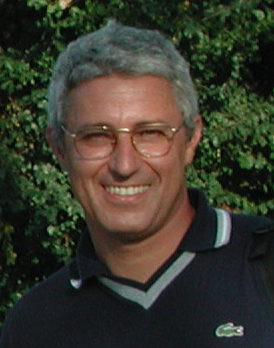 Angel Perez-Ruzafa合作论文数Department of Ecology and Hydrology, Faculty of Biology, University of Murcia1
 Francois Bastardie合作论文数Department of Marine Fisheries;Danish Institute for Fisheries Research;Technical University of Denmark;Danish Institute for Fisheries Research, Technical University of Denmark1
 Jonas Teilmann合作论文数National Environmental Research Institute1




