Many organizations struggle to attract a demographically diverse workforce. How does adding a measurable goal to a public diversity commitment-for example, "We care about diversity" versus "We care about diversity and plan to hire at least one woman or racial minority for every White man we hire"-impact application rates from women and racial minorities? Extant psychological theory offers competing predictions about how historically marginalized applicants might respond to such goals. On one hand, measurable diversity goals may raise belongingness concerns among marginalized group members who are uncomfortable with being recruited and hired based on their demographics. On the other, measurable goals might increase organizational attraction by signaling that marginalized group members are more likely to be hired. In a preregistered field experiment (n = 5,557), including measurable diversity goals in job advertisements increased application likelihood among marginalized group members-women and racial minorities-by 6.5%, without sacrifices to candidate quality. These field effects were primarily driven by White women, who were 10.5% more likely to apply after seeing a measurable diversity goal. Follow-up studies with women (total n = 893, preregistered) and racial minorities (total n = 865, preregistered) suggest that although measurable diversity goals signal a more instrumental approach to diversity, they also increase perceived strategic benefits and beliefs that the organization's commitment is genuine among both groups, which in turn are tied to increased willingness to apply. We discuss the tensions marginalized group members face when evaluating organizational diversity initiatives.
Women are consistently underrepresented in leadership roles. One contributor may be that women are generally less willing than equally-qualified men to enter competitions (e.g., for jobs or promotions). We draw from research on “stereotype reactance”—the idea that telling people about stereotyped expectations can encourage defiance—to propose and test whether telling women about the gender gap in competition entry can increase their willingness to compete. Our prediction contrasts with prior work on stereotype threat and descriptive norms suggesting that highlighting the gender competition gap might lead women to refrain from competing. In two incentive-compatible, preregistered online experiments, we find that informing women about the gender competition gap increases their likelihood of competing for higher pay, and this effect is mediated by stereotype reactance, consistent with our theorizing. Moreover, exposing both men and women to information about the gender competition gap closes the gap. We then test this informational intervention in a large-scale field experiment on an executive job search platform (n = 4,245), examining whether telling women about the gender competition gap increases their willingness to compete for leadership roles relative to a control message that tells them about an identity-irrelevant competition gap. We find that relative to our control message, informing women about the gender gap in willingness to compete increases submitted job applications by over 20% on the day of condition assignment. This suggests that women’s willingness to compete is affected not just by confidence, but also by cultural expectations and motivation to defy stereotypical norms. Funding: The authors thank the Wharton School (and in particular, the Wharton Behavioral Laboratory and Analytics at Wharton) for funding support. Supplemental Material: The online appendix is available at https://doi.org/10.1287/orsc.2024.19563 .
Effective information sharing is critical for the success of organizations and governments. Because information that is easy to access is more likely to be adopted, leaders often minimize friction in information delivery. However, one type of friction may increase engagement: piquing curiosity by posing relevant questions prior to sharing information. To test this, we shared identical information about COVID-19 in either question-andanswer format or via direct statements across two preregistered field experiments in Ghana and Michigan (total n = 49,395). Q&A-style communication increased information seeking about directly related topics (e.g., how to wear a mask properly) by 1.0 percentage point (216%) in Ghana and by 1.1 percentage points (19%) in Michigan (p's < 0.001) and increased self-reported behavior change by 1.3 percentage points (4%) in Michigan (p = 0.002). However, sharing information in Q&A format did not increase interest in general COVID-19 information in either setting, suggesting that the impact of Q&A-style messaging on information seeking may be issue specific. In Michigan, both Q&A-style and direct statement messaging produced less information seeking than sending no informational messages, likely because of differential attrition: the more texts participants received, the more likely they were to opt out of receiving messages, which made it impossible for them to seek more information via text. In a follow-up implementation experiment with social media ads (a messaging strategy without attrition challenges), Q&A-style ads generated 9%-11% more unique clicks to the CDC website per dollar spent than ads that directly stated information about vaccines (p < 0.001). We speculate that Q&A-style information delivery may stimulate curiosity, driving its benefits.
To boost diversity, organizations are increasingly using "diversity incentives," or payouts for managers or executives dependent on progress toward a specific diversity goal. Diversity incentives can affect both actors-managers incentivized to meet the goal- and targets-marginalized group members who are the focus of the incentivized goal. Whereas the effects of incentives on actors are well documented, it is unclear how targets will be affected. We examine how gender diversity incentives affect women's aspirations to lead. On one hand, diversity incentives may generate identity threat and concerns about backlash among women; on the other, they may be viewed as costly signals of organizational support for women's leadership aspirations. A preregistered field experiment (n = 2,035) shows that communicating the existence of organizational diversity incentives increases women's aspirations to lead by 11.3% relative to sharing a goal-free diversity statement and by 11.7% relative to communicating diversity goals alone. We replicate these findings across three preregistered experiments (total n = 2,495) and provide evidence that diversity incentives increase women's expectations of receiving sponsorship from their managers, thereby increasing their willingness to state leadership aspirations. Our findings contribute to our understanding of the drivers of female leadership aspirations.
People appreciate members of their in-group, and they cooperate with them-tendencies we refer to as in-group love. Being a member of a minority (vs. majority) is a common experience that varies both between groups in a context and within a group between contexts, but how does it affect in-group love? Across six studies, we examined when and why being in the minority boosts in-group love. In Study 1, being in the minority boosted people's appreciation of various real-life in-groups but not out-groups. In Study 2, a real-life interaction between and within groups, people cooperated more with minority in-group (but not minority out-group) members. In Studies 3-6, we measured cooperation (Study 3, incentive-compatible), appreciation (Studies 4-6), and four mediators: perceived in-group distinctiveness, experienced in-group belongingness, expected in-group cooperation, and perceived in-group status. These four mediators independently and simultaneously explained why being in the minority boosted in-group love. In Studies 5 and 6, we observed two theoretical boundary conditions for the effect. The size of the effect was smaller when the minority in-group had many (vs. few) members (Study 5), and when the imbalance between the in-group and out-group was either low or high (here: 46% minority and 54% majority or 20% minority and 80% majority) rather than moderate (here: 33% minority and 67% majority). We discuss how these findings align with and build on optimal distinctiveness theory and other theoretical accounts. (PsycInfo Database Record (c) 2025 APA, all rights reserved).
Discrimination in the evaluation of others is a key cause of social inequality around the world. However, relatively little is known about psychological interventions that can be used to prevent biased evaluations. The limited evidence that exists on these strategies is spread across many methods and populations, making it difficult to generate reliable best practices that can be effective across contexts. In the present work, we held a research contest to solicit interventions with the goal of reducing discrimination based on physical attractiveness using a hypothetical admissions task. Thirty interventions were tested across four rounds of data collection (total N > 20,000). Using a signal detection theory approach to evaluate interventions, we identified two interventions that reduced discrimination by lessening both decision noise and decision bias, while two other interventions reduced overall discrimination by only lessening noise or bias. The most effective interventions largely provided concrete strategies that directed participants' attention toward decision-relevant criteria and away from socially biasing information, though the fact that very similar interventions produced differing effects on discrimination suggests certain key characteristics that are needed for manipulations to reliably impact judgment. The effects of these four interventions on decision bias, noise, or both also replicated in a different discrimination domain, political affiliation, and generalized to populations with self-reported hiring experience. Results of the contest for decreasing attractiveness-based favoritism suggest that identifying effective routes for changing discriminatory behavior is a challenge and that greater investment is needed to develop impactful, flexible, and scalable strategies for reducing discrimination. (PsycInfo Database Record (c) 2025 APA, all rights reserved).
People tasked with replacing a departing group member are disproportionately likely to choose a replacement with the same demographic identity, leading to demographic “stickiness” in group composition. We examine this effect in 2,163 U.S. federal judge appointments over 75 years, in the selection of 5,616 S&P 1500 board directors from 2014 to 2019, and in four preregistered experiments (n = 2,900). The patterns we document are generally consistent with both impact aversion (desires to minimize changes to group composition and dynamics) and diversity loss aversion (outsized concerns about losing ground on demographic diversity relative to interests in gaining ground). Ultimately, our results suggest that replacement decisions are influenced by loss-averse preferences regarding the demographic identities of departing group members. The propensity to choose new group members based on whether they demographically resemble their predecessors suggests that once progress toward diversification has occurred, it should be “sticky,” so backsliding is less likely than might otherwise be expected. An optimistic outlook is that one-time interventions to change group composition may have a lasting impact, and change agents committed to diversification may have enduring effects on equality beyond their tenure. This paper was accepted by Yuval Rottenstreich, behavioral economics and decision analysis. Supplemental Material: The data files and online supplement are available at https://doi.org/10.1287/mnsc.2023.4897 .
Why do some homogeneous groups face backlash for lacking diversity, whereas others escape censure? We show that a homogeneous group’s size changes how it is perceived and whether decision makers pursue greater diversity in its ranks. We theorize that people make different inferences about larger groups than smaller ones—with consequences for diversity management—due to Bayesian reasoning. This can produce sensitivity to a lack of diversity in large groups and limited sensitivity to a lack of diversity in small groups. Because each group member represents the outcome of a hiring decision, larger homogeneous groups signal a diversity problem more strongly than smaller homogeneous groups. Across three preregistered experiments (n = 4,283), we show that decision makers are more likely to diversify larger homogeneous groups than smaller ones and view larger homogeneous groups as (i) more likely to have resulted from an unfair selection process; (ii) less diverse; (iii) more likely to face diversity-related impression management concerns; and (iv) less open to the influence of newly added underrepresented members. Further, (i)–(iii) mediate the relationship between homogeneous group size and decisions to diversify. We extend our findings to S&P 1500 corporate boards, showing that larger homogeneous boards are more likely to add women or racial minorities as directors. Larger homogeneous boards are also rarer than expected, whereas smaller homogeneous boards are surprisingly abundant. This suggests that decision makers neglect homogeneity in smaller groups, while investing extra effort toward diversifying larger homogeneous groups. Our findings highlight how group size shapes diversity-related perceptions and decisions and identify mechanisms that kickstart diversification efforts. Supplemental Material: The online supplement is available at https://doi.org/10.1287/orsc.2020.14705 .
People often rely on numeric metrics to make decisions and form judgments. Numbers can be difficult to process, leading to their underutilization, but they are also uniquely suited to making comparisons. Do people decide differently when some dimensions of a choice are quantified and others are not? We explore this question across 21 preregistered experiments (8 in the main text, N = 9,303; 13 in supplement, N = 13,936) involving managerial, policy, and consumer decisions. Participants face choices that involve tradeoffs (e.g., choosing between employees, one of whom has a higher likelihood of advancement but lower likelihood of retention), and we randomize which dimension of each tradeoff is presented numerically and which is presented qualitatively (using verbal estimates, discrete visualizations, or continuous visualizations). We show that people systematically shift their preferences toward options that dominate on tradeoff dimensions conveyed numerically—a pattern we dub “quantification fixation.” Further, we show that quantification fixation has financial consequences—it emerges in incentive-compatible hiring tasks and in charitable donation decisions. We identify one key mechanism that underlies quantification fixation and moderates its strength: When making comparative judgments, which are essential to tradeoff decisions, numeric information is more fluent than non-numeric information. Our findings suggest that when we count, we change what counts.
Competition is prevalent in organizations. For example, people often compete against their colleagues for status and recognition in the workplace or for opportunities for advancement. Workers also compete against others to get hired into organizations in the first place. It is thus both practically and theoretically important to understand the interpersonal consequences of competition–broadly construed–in organizations. We present five empirical papers that examine understudied or poorly understood areas of research related to organizational competition and provide novel insights into the consequences of competition on important organizational outcomes such as hiring, group decision making, organizational fit perceptions, and negotiation outcomes. The first paper draws on theories from the realm of the psychological consequences of competition and optimal distinctiveness to shed light on instances when workers are more likely to join groups in which their salient identities will be underrepresented. The second paper significantly extends rivalry theory by integrating it with other theories of motivation and performance and uncovers two key moderators of the effects of rivalry on performance. The third paper examines how feelings of (in)authenticity shape the experiences and behaviors of individuals following a status gain. The fourth paper draws on theories of regulatory focus and attribution to examine the impact that being an alternate choice has on newcomer socialization behaviors and outcomes, such as feedback seeking and performance. The fifth paper expands upon the conflict expression theoretical framework, evidencing why status claims may backfire and how challengers can manage the defender’s perceptions of the status negotiation. Together, we hope the papers in this symposium provide important insights into the consequences of competition in organizations and provide actionable insights for managers, while also spurring future research by academics. Organizational Competition: A Catalyst for Workplace Diversity and Desires for Uniqueness Presenter: Samantha Nicole Smith; Harvard Business School Presenter: Edward Chang; Harvard Business School Presenter: Erika Kirgios; The Wharton School, U. of Pennsylvania Presenter: Katherine Milkman; U. of Pennsylvania The Role of Identity Authenticity in Shaping Group-Oriented Behaviors Following Status Gains Presenter: Sarah Doyle; U. of Arizona Presenter: Sijun Kim; Texas A&M U., Mays Business School Presenter: Hee Young Kim; Rider U. How Individual Skill and Risk of Status Loss Moderate the Effects of Rivalry on Performance Presenter: Tom Grad; Copenhagen Business School Presenter: Christoph Riedl; Northeastern U. Presenter: Gavin J. Kilduff; New York U. Alternate Choice Aftermath: Implications for Newcomer Socialization Presenter: Samir Nurmohamed; The Wharton School, U. of Pennsylvania Presenter: Zoe Schwingel-Sauer; Ross School of Business, U. of Michigan Respect Affirmation: A Strategy for Claiming Status in Status Negotiation Presenter: Jieun Pai; U. of Virginia Presenter: Corinne Bendersky; U. of California, Los Angeles
Receiving help can make or break a career, but women and racial/ethnic minorities do not always receive the support they seek. Across two audit experiments—one with politicians and another with students—as well as an online experiment (total n = 5,145), we test whether women and racial/ethnic minorities benefit from explicitly mentioning their demographic identity in requests for help, for example, by including statements like “As a Black woman…” in their communications. We propose that when a help seeker highlights their marginalized identity, it may activate prospective helpers’ motivations to avoid prejudiced reactions and increase their willingness to provide support. Here we show that when women and racial/ethnic minorities explicitly mentioned their demographic identity in help-seeking emails, politicians and students responded 24.4% (7.42 percentage points) and 79.6% (2.73 percentage points) more often, respectively. These findings suggest that deliberately mentioning identity in requests for help can improve outcomes for women and racial/ethnic minorities.
The COVID-19 pandemic has highlighted and exacerbated social inequality within the U.S. As a result, many organizations have attempted to increase the gender and racial/ethnicity diversity of their organizations to potentially help reduce social inequality. The papers in this symposium test assumptions regarding various diversity efforts to examine the effects of these efforts on organizational perceptions and on people’s feelings of inclusion and belonging. The first paper investigates the effectiveness of asking applicants to provide diversity statements to see whether asking for these statements increases the diversity of applicants/hires and signals to applicants that the organization values equity, diversity, and inclusion. The second paper explores how disclosure of employee diversity data influences impressions of organizations. The third paper investigates concerns that dominant group members may have towards organizational diversity efforts and explores ways to garner support from dominant group members for diversity efforts. Finally, the fourth paper explores how structured evaluation processes may increase employees’ perceptions of inclusion and belonging within organizations. Together, the papers in this symposium provide insights into how managers can potentially increase diversity, equity, and inclusion within organizations. Exploring the Effects of “Personal EDI Statements” on Applicants and Organizations Presenter: Joyce He; U. of California, Los Angeles Presenter: Grusha Agarwal; U. of Toronto, Rotman School of Management Presenter: Sonia Kang; U. of Toronto Disclosing Workforce Diversity Data Increases Perceptions of Progress (Even When There Isn’t Any) Presenter: Evan P. Apfelbaum; MIT Sloan School of Management Presenter: Eileen Y. Suh; Boston U. Questrom School of Business We Need You! Diversity Messages That Enlist Dominant Group Members in Diversity Efforts Presenter: Kaylene McClanahan; U. of California, Los Angeles Presenter: Hannah Birnbaum; Northwestern Kellogg School of Management Presenter: Margaret Shih; U. of California, Los Angeles Structured Evaluations Processes Increase Employees’ Perceptions of Inclusion and Belonging Presenter: Aeroelay Chyei Vinluan; Harvard Business School Presenter: Erika Kirgios; The Wharton School, U. of Pennsylvania Presenter: Edward Chang; Harvard Business School
Recently, there has been a growing push for organizations to diversify and address issues of inclusion and inequality. In the wake of both scholarly and corporate attention to diversity, research attempting to understand how organizations can increase their diversity has proliferated. However, initiatives to increase organizational diversity often fail or produce mixed results, and overall progress towards increasing diversity in organizations has been slow. Across five presentations, this symposium brings together papers that examine issues of diversity and inequality in organizations, with two key areas of focus: (1) identifying hurdles that may impede organizational diversity efforts, (2) illuminating theory-driven solutions organizations can implement to diversify. Following the presentations, Dr. Peter Belmi, a renowned scholar who studies diversity and inequality in organizations, will facilitate a discussion about the papers and insights generated to advance future research on this topic. Thus, this symposium will illuminate key considerations that can help organizations effectively address issues of diversity and inequality. Insider versus Outsider Judgments of Group Diversity Presenter: Aneesh Rai; The Wharton School, U. of Pennsylvania Presenter: Erika Kirgios; The Wharton School, U. of Pennsylvania Presenter: Katherine Milkman; U. of Pennsylvania Equality is Prevented from the Misperception that it Harms Advantaged Groups Presenter: N. Derek Brown; Haas School of Business, UC Berkeley Presenter: Drew Jacoby-Senghor; - Presenter: Isaac Raymundo; Columbia Business School On the Limits of Anonymization for Promoting Diversity in Organizations Presenter: Linda Chang; The Wharton School, U. of Pennsylvania Presenter: Edward Chang; Harvard Business School Participation through Collaboration: Evidence from the United Nations Presenter: Colleen Stuart; Johns Hopkins U. Presenter: Alexander Oettl; Georgia Institute of Technology Presenter: Trudy Fraser; Policy Advisory Benefits of Women's Representation in Leadership: Evidence from the Field Presenter: Matthew Asher Lawson; Fuqua School of Business, Duke U. Presenter: Ashley E. Martin; Stanford Graduate School of Business Presenter: Imrul Huda; Columbia U. Presenter: Sandra Matz; Columbia Business School
Policy-makers are increasingly turning to behavioural science for insights about how to improve citizens' decisions and outcomes(1). Typically, different scientists test different intervention ideas in different samples using different outcomes over different time intervals(2). The lack of comparability of such individual investigations limits their potential to inform policy. Here, to address this limitation and accelerate the pace of discovery, we introduce the megastudy-a massive field experiment in which the effects of many different interventions are compared in the same population on the same objectively measured outcome for the same duration. In a megastudy targeting physical exercise among 61,293 members of an American fitness chain, 30 scientists from 15 different US universities worked in small independent teams to design a total of 54 different four-week digital programmes (or interventions) encouraging exercise. We show that 45% of these interventions significantly increased weekly gym visits by 9% to 27%; the top-performing intervention offered microrewards for returning to the gym after a missed workout. Only 8% of interventions induced behaviour change that was significant and measurable after the four-week intervention. Conditioning on the 45% of interventions that increased exercise during the intervention, we detected carry-over effects that were proportionally similar to those measured in previous research(3-6). Forecasts by impartial judges failed to predict which interventions would be most effective, underscoring the value of testing many ideas at once and, therefore, the potential for megastudies to improve the evidentiary value of behavioural science.
 Katherine L. Milkman合作论文数Operations, Information and Decisions Department, The Wharton School, University of Pennsylvania18
 Edward H. Chang合作论文数10Edward Chang合作论文数9
 Aneesh Rai合作论文数Dept Operat Informat & Decis, Univ Penn9Joyce C. He合作论文数6Grusha Agarwal合作论文数3Linda Chang合作论文数3
 Angela Duckworth合作论文数Department of Psychology, School of Arts and Sciences, University of Pennsylvania;Graduate School of Education, University of Pennsylvania;Character Lab3Eileen Y. Suh合作论文数2Yeji Park合作论文数2
 Hannah J. Birnbaum合作论文数Olin Business School, Washington University in St. Louis2
 Natalya M. Alonso合作论文数Org Behav & Human Resources PhD Program, Univ British Columbia2Ariella Kristal合作论文数Dept Org Behav, Harvard Sch Business2Rachel Ruttan合作论文数Rotman School of Management, University of Toronto2
 Margaret Shih合作论文数Anderson School of Management, University of California, Los Angeles2
 Dean Karlan合作论文数Kellogg School of Management, Northwestern University;ImpactMatters;Innovations for Poverty Action2Felix Danbold合作论文数School of Management, Faculty of Engineering Sciences, University College London2Belmi Peter合作论文数2Kay Joseph S合作论文数2
 Ashley Martin合作论文数Graduate School of Business, Stanford University2
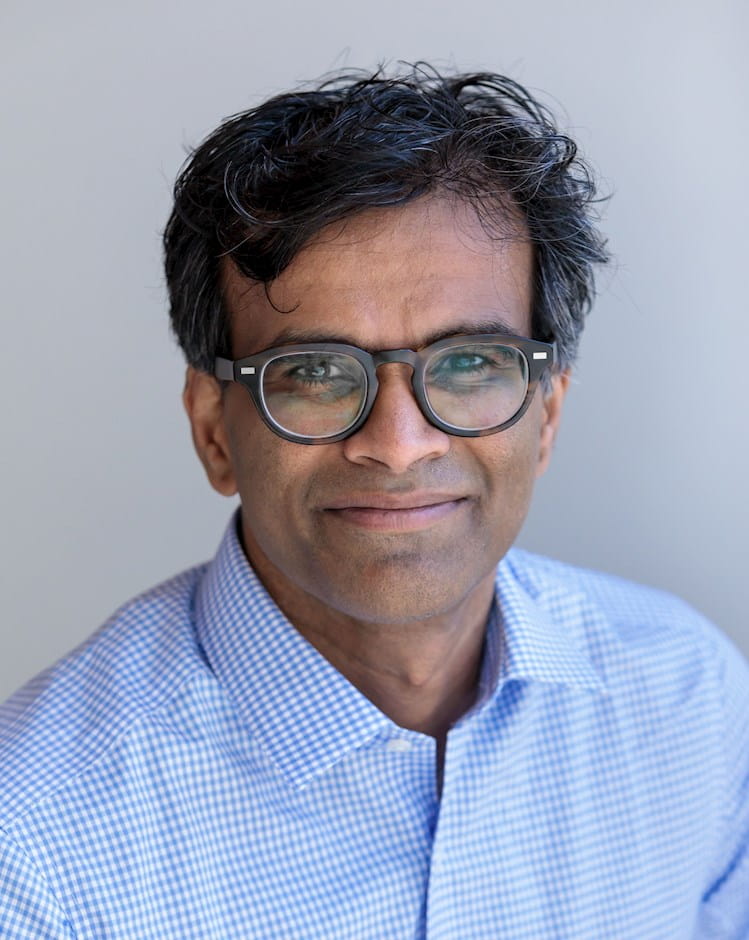 Sendhil Mullainathan合作论文数Department of Economics, Massachusetts Institute of Technology;Dandelion Health AI2
 Sonia Kang合作论文数Institute for Management & Innovation, University of Toronto Mississauga2Dena M. Gromet合作论文数Department of Psychology, Green Hall Princeton University2Jennifer R. Steele合作论文数1Katherine Ann DeCelles合作论文数1Samuel Skowronek合作论文数1
 Balbir Singh合作论文数1Angelica Leigh合作论文数1
 Yalda Daryani合作论文数1Chloe Kovacheff合作论文数1Joachim Talloen合作论文数1Jose Cervantez合作论文数1Timothy W Lee合作论文数1
 Alice Lee-Yoon合作论文数1Manuela Collis合作论文数1Pepi Pandiloski合作论文数1Grace Cormier合作论文数1Xin Yang合作论文数1
 Vanessa Conzon合作论文数1
 Beth Anne Helgason合作论文数1Mindy Truong合作论文数1Joowon Klusowski合作论文数1Camellia Bryan合作论文数1Hung Ho合作论文数1Samantha Nicole Smith合作论文数1molly offerwestort合作论文数Stanford Grad Sch Business, 655 Knight Way, Stanford, CA 94305 USA1
 Tim Kautz合作论文数Math Inc1
 Luiza Santos合作论文数Dept Psychol, Stanford Univ1
 Tom Grad合作论文数Copenhagen Business School1




