Recently a great deal of attention has been focused on quantum computation following a sequence of results [Bernstein and Vazirani, in Proc. 25th Annual ACM Symposium Theory Comput., 1993, pp. 11--20, SIAM J. Comput., 26 (1997), pp. 1277--1339], [Simon, in Proc. 35th Annual IEEE Symposium Foundations Comput. Sci., 1994, pp. 116--123, SIAM J. Comput., 26 (1997), pp. 1340--1349], [Shor, in Proc. 35th Annual IEEE Symposium Foundations Comput. Sci., 1994, pp. 124--134] suggesting that quantum computers are more powerful than classical probabilistic computers. Following Shor's result that factoring and the extraction of discrete logarithms are both solvable in quantum polynomial time, it is natural to ask whether all of $\NP$ can be efficiently solved in quantum polynomial time. In this paper, we address this question by proving that relative to an oracle chosen uniformly at random with probability 1 the class $\NP$ cannot be solved on a quantum Turing machine (QTM) in time $o(2^{n/2})$. We also show that relative to a permutation oracle chosen uniformly at random with probability 1 the class $\NP \cap \coNP$ cannot be solved on a QTM in time $o(2^{n/3})$. The former bound is tight since recent work of Grover [in {\it Proc.\ $28$th Annual ACM Symposium Theory Comput.}, 1996] shows how to accept the class $\NP$ relative to any oracle on a quantum computer in time $O(2^{n/2})$.
In this paper we study quantum computation from a complexity theoretic viewpoint. Our first result is the existence of an efficient universal quantum Turing machine in Deutsch's model of a quantum Turing machine (QTM) [Proc. Roy. Soc. London Ser. A, 400 (1985), pp. 97--117]. This construction is substantially more complicated than the corresponding construction for classical Turing machines (TMs); in fact, even simple primitives such as looping, branching, and composition are not straightforward in the context of quantum Turing machines. We establish how these familiar primitives can be implemented and introduce some new, purely quantum mechanical primitives, such as changing the computational basis and carrying out an arbitrary unitary transformation of polynomially bounded dimension. We also consider the precision to which the transition amplitudes of a quantum Turing machine need to be specified. We prove that $O(\log T)$ bits of precision suffice to support a $T$ step computation. This justifies the claim that the quantum Turing machine model should be regarded as a discrete model of computation and not an analog one. We give the first formal evidence that quantum Turing machines violate the modern (complexity theoretic) formulation of the Church--Turing thesis. We show the existence of a problem, relative to an oracle, that can be solved in polynomial time on a quantum Turing machine, but requires superpolynomial time on a bounded-error probabilistic Turing machine, and thus not in the class $\BPP$. The class $\BQP$ of languages that are efficiently decidable (with small error-probability) on a quantum Turing machine satisfies $\BPP \subseteq \BQP \subseteq \Ptime^{\SP}$. Therefore, there is no possibility of giving a mathematical proof that quantum Turing machines are more powerful than classical probabilistic Turing machines (in the unrelativized setting) unless there is a major breakthrough in complexity theory.
We consider a version of on-line maximum matching where an edge may be matched when either endpoint arrives. In contrast with previous work, we work with general undirected graphs with arbitrary edge weights. Our algorithms are inspired by the maxim A bird in the hand is worth two in the bush. For the weighted case, we give a deterministic algorithm with a worst-case performance ratio of ${1 \over 4}$. We prove an upper bound on the worst case performance ratio of any deterministic on-line algorithm of ${1 \over 3}$. For the unweighted case, we prove a tight bound of ${2 \over 3}$ on the possible worst-case performance ratio of any deterministic on-line algorithm. All running times are small polynomials ($O(\size{V}\cdot\size{E})$) using naive implementations and no complicated data structures. As justified by previous work, problems of this nature are of practical importance.
Recently a great deal of attention has focused on quantum computation following a sequence of results (4, 16, 15) suggesting that quantum computers are more powerful than classical probabilistic computers. Following Shor's result that factoring and the extraction of discrete logarithms are both solvable in quantum polynomial time, it is natural to ask whether all of NP can be ecien tly solved in quantum polynomial time. In this paper, we address this question by proving that relative to an oracle chosen uniformly at random, with probability 1, the class NP cannot be solved on a quantum Turing machine in time o(2 n=2 ). We also show that relative to a permutation oracle chosen uniformly at random, with probability 1, the class NP\ co{NP cannot be solved on a quantum Turing machine in time o(2 n=3 ). The former bound is tight since recent work of Grover (13) shows how to accept the class NP relative to any oracle on a quantum computer in time O(2 n=2 ).
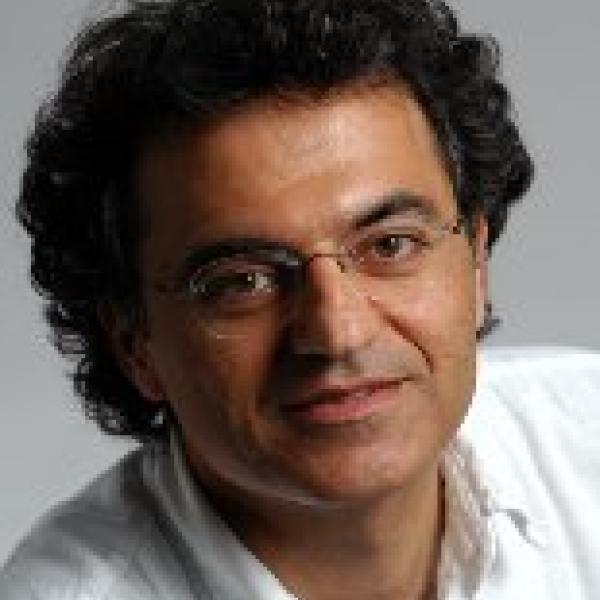 Umesh V. Vazirani合作论文数Computer Science Division, University of California, Berkeley;Berkeley Quantum Computation Center3
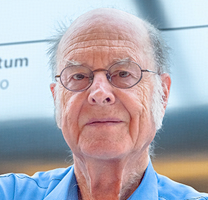 Charles H. Bennett合作论文数Thomas J. Watson Research Center, IBM Research2
 Gilles Brassard合作论文数Department of Computer Science and Operations Research, Faculty of Arts and Science, Université de Montréal2
 Microsoft Corporation合作论文数1




