Misinformation is by no means a new topic. Documented efforts to misinform date back as far as 44 BC with a political smear campaign against Mark Antony carved on coins. Advances in communication technology, ranging from the invention of the printing press to the explosion of social media platforms, have accelerated the speed with which misinformation can travel and its global reach. Research has revealed numerous diverse contributors to our susceptibility to misinformation, including cognitive processing factors or reasoning styles; characteristics of the information and source; ease of consumption; political ideology; and demographic factors. Dr. Shurney elaborates on some of these factors later in this issue. Misinformation about the COVID-19 pandemic has been rampant since the outset, particularly with regard to mask-wearing and vaccines. In fact, theWorldHealthOrganization and other global health organizations called on the world leaders and other stakeholders to take action tomanage the parallel infodemic (ie, overabundance of information that includes incorrect information to undermine the public health response). The first Surgeon General’s Advisory issued during the Biden Administrationwas released byDr.VivekMurthy in July, 2021 to caution the American public about the urgent threat of health misinformation. The Surgeon General warned that misinformation (ie, information that is false, inaccurate, or misleading based on the best evidence available) “can cause confusion, sow mistrust, and undermine public health efforts, including our ongoing work to end the COVID-19 pandemic.” Misinformation has also led to the use of unproven – and potentially dangerous – treatments for COVID-19, including ivermectin, an antiparasitic drug used to deworm animals. In addition to overdoses that required hospitalization in some cases, people’s use of this baseless treatment has caused a shortage of the drug for animals who need it. Research has uncovered links between hundreds of deaths and thousands of hospitalizations globally and misinformation about other untested COVID-19 treatments. Beyond the pandemic, misinformation also has very real and dire consequences in other areas, not the least of which is its potential to influence voting behavior and spur violence. Addressing the threat of misinformation will require coordinated and comprehensive efforts on the part of the media; health care In This Issue
Teamwork in healthcare is particularly salient in the dynamic domains of critical care: emergency medicine, surgery, and trauma and resuscitation. Within and across these services, teams must be coordinated to provide optimal care in order to provide optimal delivery of health care. Although many disciplines study teamwork, it is unclear how scholars and clinicians conceptualize, study, and apply these processes. The current systematic review investigates how these fields 1) study teams through the application of a teamwork processes rubric and 2) distinguish themselves from other medical disciplines through the empirical research. We drew upon a taxonomy of teamwork processes (Marks et al., Acad. Manag. Rev. 26, 356 ‐376; LePine et al., Person. Psychol. 61, 273 ‐307), operationalizing transition, action, and interpersonal processes, to guide this work. Overall, the dynamic domains of literature studied teamwork processes at high rates, relative to other medical fields. Specifically, they were strongly associated with transition and action processes and the content areas of leadership and performance. Given these emphases, research and practical interventions may want to focus on more interpersonal and collaborative approaches in teamwork
Across many industries, reliance on teamwork has skyrocketed over the last few decades. In tandem, the problems facing today’s teams increasingly require collaboration from across a wide variety of disciplines. As a result, organizations have increasingly looked to transdisciplinary teams to innovate, problem solve, and find answers to their most complex problems. This trend is particularly evident in healthcare promotion, a field that is by nature multidisciplinary and often relies on professionals’ ability to collaborate with institutional stakeholders to promote health knowledge, skills, attitudes, and behaviors in workplaces. To help improve teams’ ability to coordinate expertise, organizations often rely on team training. The robust science of team training indicates that well-designed team training boosts team performance across a wide variety of contexts. While many principles of team training are relevant across industries, the multidisciplinary nature of health promotion generates a unique set of challenges that can be mitigated by team training and other development interventions focused on improving coordination across disciplines. The purpose of this paper is to catalyze findings from team science as they apply to multidisciplinary health promotion teams, focusing on the teamwork knowledge, skills, and abilities most relevant to multidisciplinary health promotion teams. Accordingly, the paper is organized in 3 sections. The first section reviews the science of team training, noting training best practices and insights for health promotion teams. Second, we focus on key challenges facing multidisciplinary health promotion teams including role ambiguity, psychological safety, and team conflict. Finally, the third section is focused on team behaviors that can be developed through training to help teams overcome these challenges.
As health care delivery moves toward more complex, team-based systems, the topic of medical teamwork has gained considerable attention and study across disciplines. This systematic review integrates empirical research on teamwork and health care to identify broad trends. We identified and coded 1,818 relevant, English, and peer-reviewed journal articles using a teamwork processes rubric. Several themes emerged. The health care teamwork literature has grown substantially over the past 20 years. Approximately half of the studies were descriptive (rather than interventional or psychometric); the majority relied on quantitative methods. Health care teamwork was also studied in thematically distinct manners. Interpersonal processes were most commonly studied across fields. Of all disciplines, medicine focused most on transition processes, whereas those from team science centered more highly on action processes. There were also finer grained disciplinary differences in content areas of communication and collaboration. Interprofessional journals represent a potential area for interdisciplinary efforts. Implications and future directions are discussed.
 Allison Traylor合作论文数Psychology Department, Clemson University4
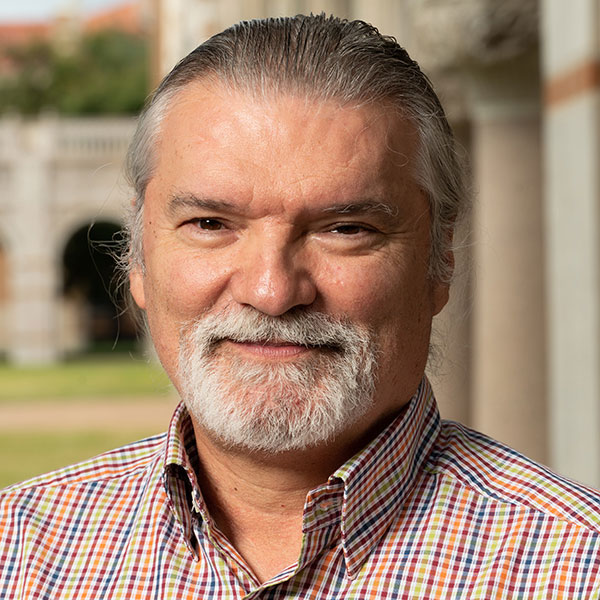 Eduardo Salas合作论文数Department of Psychological Sciences, School of Social Sciences, Rice University4
 Joshua A. Perez合作论文数2Akshaya Venkatesh合作论文数2Molly P. Kilcullen合作论文数2
 Julie Vy Dinh合作论文数Texas Children's Hospital, Rice University2George Stock合作论文数1Kim Christfort合作论文数1Adam Hickman合作论文数1
 Liana Kreamer合作论文数Univ N Carolina1
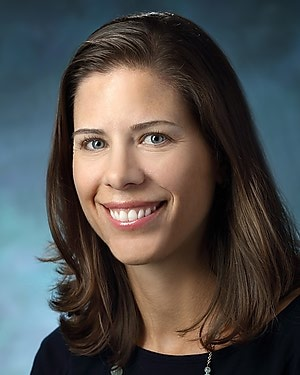 Sara B. Johnson合作论文数Population Center, Krieger School of Arts & Sciences, Johns Hopkins University1
 Rebecca Grossman合作论文数1
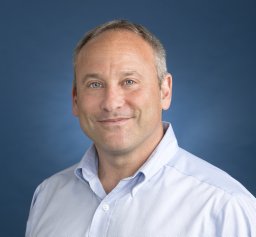 Steven G. Rogelberg合作论文数University of North Carolina at Charlotte1




