In this paper, we propose novel closed-form lower and upper bound expressions on coverage probability of repulsive wireless networks modeled by Matèrn hard-core process type II (MHCP-II). The derived mathematical expressions are matched well with simulation results especially when the hard-core distance, $\delta$ , of MHCP-II model is larger than the communication distance between transmitter and receiver, $R$ . It is worth noting that the case that $\delta \geq R$ is very important in practical repulsive wireless networks. We also propose a novel closed-form expression on coverage probability of in-homogeneous Poisson point process model in order to approximate the coverage probability of repulsive wireless networks when $\delta < R$ . Through extensive computer simulations, we validate that the proposed mathematical analysis matches well with simulation results in various system parameters. To the best of our knowledge, the proposed closed-form expressions are the first mathematically tractable and effective theoretical results in the literature.
We characterize the interference characteristics of directional unmanned aerial vehicle (UAV) networks based on the stochastic geometry, where each UAV is equipped with a directional antenna and is placed in three dimensional (3D) locations. In particular, the 3D location of UAVs is assumed to be uniformly distributed in a certain volume, which is modeled by Poisson point process. Given a beamwidth, we first design an ideal 3D directional antenna model with a constant gain of both main-lobe and side-lobe. Then, we investigate the aggregate interference at a typical UAV receiver from multiple UAVs. Extensive simulation results show that the aggregate interference becomes significantly decreased if the beamwidth decreases or the antenna gain of side-lobe decreases.
In this paper, we propose a novel machine learning (ML) based link-to-system (L2S) mapping technique for inter-connecting a link-level simulator (LLS) and a system-level simulator (SLS). For validating the proposed technique, we utilized 5G K-Simulator, which was developed through a collaborative research project in Republic of Korea and includes LLS, SLS, and network-level simulator (NS). We first describe a general procedure of the L2S mapping methodology for 5G new radio (NR) systems, and then, we explain the proposed ML-based exponential effective signal-to-noise ratio (SNR) mapping (EESM) method with a deep neural network (DNN) regression algorithm. We compared the proposed ML-based EESM method with the conventional L2S mapping method. Through extensive simulation results, we show that the proposed ML-based L2S mapping technique yielded better prediction accuracy in regards to block error rate (BLER) while reducing the processing time.
In this paper, we model and characterize interference of directional unmanned aerial vehicle (UAV) networks based on stochastic geometry, where each UAV is equipped with a directional antenna and it communicates with another UAV that is located in the three dimensional (3D) space. In particular, the 3D location of UAVs is assumed to be uniformly distributed in a certain volume, which is modeled by Poisson point process. Given a beamwidth, we first design an ideal 3D directional antenna beam pattern with a constant gain of both main-lobe and side-lobe. To model the interference in the UAV network, we analyze the effect of elevation and azimuth between a typical UAV receiver and an interfering UAV transmitter with spherical coordinate system. Then, we investigate distribution of the aggregate interference at a typical UAV receiver from multiple UAVs in terms of side-lobe gain, beamwidth, height of UAV, and distance of a UAV transmitter-receiver pair. (C) 2019 The Korean Institute of Communications and Information Sciences (KICS). Publishing services by Elsevier B.V.
In this letter, we propose a threshold-based interference management scheme in directional wireless networks to cancel strong interference when interference nodes are distributed in 2-dimensional space by stochastic geometry (SG). Conventionally, interference nodes are configured in a directional wireless network according to PPP or MHCP distributions. However, these existing PPP and MHCP are suitable schemes for interference nodes with omni-directional antenna. When the existing schemes are applied to a directional wireless network, performance degradation occurs. Thus, in this letter, we assume an ideal sector antenna and compare the performance of existing PPP and MHCP with that of the proposed scheme under the same density of interference nodes.
Machine nodes (MNs) such as monitoring devices and utility devices can be handled with machine-to-machine (M2M) group communications in commercial 3GPP LTE networks. However, the current LTE networks are designed for human-oriented communication, i.e., human-to-human (H2H) communication, as a main service. Hence, the M2M group communications may utilize a limited amount of radio resource in the LTE networks so that they do not degrade the quality-of-services (QoS) of the H2H communications. Under the resource limitation, the MNs in the M2M communication group may suffer resource contentions when they simultaneously send uplink data packets to a base station (BS). In this paper, we first mathematically model the overall procedure of the M2M group communications. Then, we also optimize the system parameters for the M2M group communications to maximize resource utilization of the LTE networks and minimize the packet transmission delay, while satisfying the resource constraint.
This paper proposes a machine learning (ML)-based exponential effective signal-to-noise ratio (SNR) mapping (EESM) method for simulating the system-level performance of cellular networks, which utilizes a deep neural network (DNN) regression algorithm. We first explain overall procedure of the link-to-system (L2S) mapping algorithm which has been used in commercial standardization organizations such as IEEE 802.16 and 3GPP LTE. Then, we apply the proposed ML-based EESM method to the existing L2S mapping procedure. The processing time of the L2S mapping becomes significantly reduced through the proposed method while the mean squared errors (MSE) between the actual block-error rate (BLER) from the link-level simulator and the estimated BLER from the L2S mapping technique is also decreased, compared with the conventional L2S mapping method.
In this paper, we propose a novel low-complexity multi-user superposition transmission (MUST) technique for 5G downlink networks, which allows multiple cell-edge users to be multiplexed with a single cell-center user. We call the proposed technique diversity-controlled MUST technique since the cell-center user enjoys the frequency diversity effect via signal repetition over multiple orthogonal frequency division multiplexing (OFDM) sub-carriers. We assume that a base station is equipped with a single antenna but users are equipped with multiple antennas. In addition, we assume that the quadrature phase shift keying (QPSK) modulation is used for users. We mathematically analyze the bit error rate (BER) of both cell-edge users and cell-center users, which is the first theoretical result in the literature to the best of our knowledge. The mathematical analysis is validated through extensive link-level simulations.
LTE/LTE-A systems have specified a discontinuous reception (DRX) mechanism for battery energy saving of user equipment (UE). Until now, most analytical works have been on the DRX mechanism based on a single packet server. However, a single packet server typically yields low performance in energy saving under high arrival rates. On the other hand, practical LTE/LTE-A systems can allocate a variable size of resource for UE at one service time. To reflect the variable size of resource allocation and analyze the exact DRX mechanism under high arrival rates, we first model the DRX mechanism based on a batch server with varying buffer thresholds and server capacities. We also investigate the effect of system parameters such as buffer threshold, server capacity, DRX cycle, and inactivity timer in terms of delay and sleep ratio. Then, we find the optimal system parameter values of the batch packet server based DRX mechanism while satisfying the given delay requirements and maximizing the sleep ratio simultaneously. Finally, we show that the batch packet server yields the longer sleep ratio from 0.6 to 0.9 at high arrival rates, compared to a single packet server.
In this paper, we consider a two-way relay network consisting of a single relay node and two source nodes, where both the relay node and source nodes are equipped with multiple antennas. Two source nodes are assumed to transmit data with spatial modulation (SM) and the relay node is assumed to try to decode the network-coded packet (via bit-wise exclusive OR operation) of the two packets received from two source nodes, respectively. We propose a maximum-likelihood (ML) signal detection technique for the physical-layer network coded packet with SM for the relay node. Extensive simulation results show that the bit-error rate (BER) at the relay node becomes significantly improved with the proposed SM-based physical-layer network coding (PNC) technique, compared with the conventional PNC technique that achieving the same data rate. In particular, the performance of the proposed technique becomes excellent when the number of antennas at the nodes is large and the data rate is high, which implies that the proposed technique is suitable for the next-generation wireless communication system, i. e. 5G. Note that the proposed SM-based PNC technique does not require channel state information at transmitter (CSIT) and thus it can be implemented easily in practice.
In this letter, we consider a 7-step transmission procedure of a large number of machine nodes when they simultaneously request random access to transmit uplink data. We model the radio resource utilization of LTE systems, and analyze the overloaded resources. From the simulation results, we show that the resource of PDCCH becomes significantly overloaded as the number of machine nodes increases in a cell. To alleviate the overload of PDCCH, we allocate radio resource of PDSCH to PDCCH. The shows that resource utilization of PDCCH is improved.
M2M (machine-to-machine) 통신 서비스는 스마트 미터링, 원격 감시, 트랙킹 서비스 등과 같은 다양한 분야에서 사용되고 있다. 스마트 미터링 서비스는 다수의 노드들이 짧은 패킷을 보내는 서비스이다. 이에 반해, 원격 감시 서비스는 적은 수의 노드들이 긴 패킷을 보내는 서비스이다. 본 논문에서는 M2M 서비스에 한정된 자원이 할당이 되었을 때, 자원 효율에 영향을 주는 시스템 파라미터를 파악하고 자원 효율을 최대화 하는 시스템 파라미터 최적화를 수행하면 머신 노드들의 전송 성공 확률이 증가됨을 보여 준다.
본 논문은 지향성 안테나를 활용한 무선 송수신기가 포아송 분포로 무작위적으로 분포하는 무선통신 네트워크에서 간섭의 통계적인 특성을 분석한다. 본 논문에서 제시한 이상적인 섹터 안테나 이득을 이용하여 일반적인 지향성 안테나 이득을 상한 근사화할 수 있음을 제시한다. 또한, 시뮬레이션을 통하여 빔폭에 따른 포아송 무선 네트워크의 간섭의 통계적 특성을 보인다.BR
The binary-exponential sleep mode (BE-SM) operation is an energy saving technique for mobile stations (MSs) in IEEE 802.16e/m system (WiMAX cellular network). Until now, it has been mainly studied under a delay requirement from a network perspective. In terms of human's subjective quality, the remaining battery energy directly affects quality-of-experience (QoE) for energy-sensitive MSs although the same delay is experienced. However, the existing QoE model only considers quality-of-service (QoS) factors such as delay and loss. In this letter, we present a remaining energy-aware QoE model by considering the remaining battery energy as well as QoS factors, and then propose a remaining energy-aware QoE based BE-SM operation to minimize the energy consumption of the MSs. Numerical results show that our proposed scheme outperforms the existing schemes.
 Bang Chul Jung合作论文数Dept Elect Engn, Chungnam Natl Univ16
 Dan Keun Sung (成檀根)合作论文数School of Electrical Engineering, Korea Advanced Institute of Science and Technology8
 Hyung-Joo Lee合作论文数5Jongmin Kim合作论文数Dept Bio & Brain Engn, Korea Adv Inst Sci & Technol3
 Nah-Oak Song合作论文数3
 Inkyu Bang合作论文数3
 Taehoon Kim合作论文数2
 Jeong Seon Yeom合作论文数Department of Electronics Engineering, Chungnam National University2
 Jaedon Park合作论文数School of Engineering, Information & Communications University2
 Byoung Hoon Jung合作论文数School of EECS, Korea Advanced Institute of Science and Technology2Janghyuk Yoon合作论文数1
 Ju Lee合作论文数1
 In-Woong Kang合作论文数1
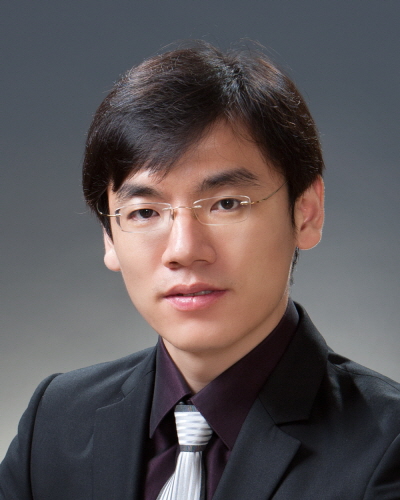 Hu Jin合作论文数School of Electrical Engineering, Hanyang University1Hansung Leem合作论文数1
 Hyun Jik Kim合作论文数Department of Otolaryngology Head and Neck Surgery 134, Yonsei University College of Medicine1
 Hoyoung Yoo合作论文数Dept Elect Engn, Korea Adv Inst Sci & Technol1Yunju Park合作论文数1Sung Park合作论文数1




