According to the EU's organic regulation, the use of organic seed is generally binding in organic farming. Because of an organic seed shortage, derogations to use nonorganic seed can be obtained. By 2036, the EU plans to phase out these derogations and achieve 100% organic seed use. Previous attempts at achieving this, though, have failed. Ensuring organic seed supply is of particular EU-wide importance to meet EU policy goals, such as the farm-to-fork strategy. To assess the impact of measures to smooth this transition, we developed the VAL-MAS model (VALue chain Multi-Agent System). VAL-MAS is a multiagent model based on a heterogeneous agent population and mathematical programming that can provide insights into the performance of different seed system interventions. We selected organic fresh market carrots in Germany for their importance in the national and European organic sector as an example case. Our model suggests that the end of the derogation system poses a challenge to the seed value chain in terms of seed supply and farm incomes. The most effective mitigation solution is an investment in improved pest control during seed multiplication, accompanied by a stepwise phasing out of derogations for the use of nonorganic seed.
The lack of sufficient information about organic seed production and use is among the key factors affecting the development of the organic seed market in the EU. Currently, only very basic organic seed market data are being reported at the country level. Those available from each member state are seldom comparable over time between countries and sometimes even within one country. This study provides the first overall statistics on European organic seed supply and demand. Estimates of the organic seed demand and supply of twelve important crops in EU organic agriculture are provided by developing and testing innovative approaches to improve data collection and analysis, such as multiple imputation (MI) techniques to estimate missing values. The estimates are based on data extracted from official EU datasets from 2014 to 2018 and collected by an online survey of 756 farmers, as well as various expert assessments across the EU. The results were provided by four EU geographical regions, with a specific focus on wheat, lucerne, carrot, and apple. Although strong sector and regional differences currently characterise the organic seed market, organic seed demand considerably exceeds supply for most crops. Generally, farms in the central and northern regions revealed a higher organic seed supply than those in the southern and eastern regions, and organic seed supply is higher for wheat than other crops. A significant output of this study is the development of recommendations to improve methodologies to increase the transparency and availability of organic seed market data.
A changing regulatory environment and growing awareness are driving the need for crop improvement in organic agriculture. Contrary to conventional breeding, evidence on the economic effects of research and development in organic breeding is lacking. This study assesses adoption, economic impact, and rates of return to organic crop improvement research. The economic surplus method is used to quantify the impact of the Wiwa winter wheat variety. The standard model is enhanced by considering the economic benefits of improvements in crop nutrient and processing quality as well as resilience gains. Results show substantial economic returns of 18.6 per cent for the period from 1988 to 2019. The reduced downside risk of the organic cultivar is a key distinguishing factor in the analysis as organic breeding aims at providing farmers with resilient cultivars. Further investment in organic breeding appears as a promising element in the strategy for resilient and sustainable food systems.
Organic seed and cultivars markets are highly distorted. Political or private sector interventions to overcome market failures need to be found to comply with the demands of organic agriculture. Simulation models are useful tools to assess such interventions in ex-ante assessments. This study outlines a conceptual framework to simulate the seed value chain of EU organic agriculture: We deem a positive recursive-dynamic model with decision-making through a combination of mathematical programming and heuristics of a multi-agent system as the most suited approach. Potential modelling scenarios comprise a number of regulatory measures, as well as public and private investments in training and research along the seed value chain.
To meet policy goals targeting increasing the share of organic agriculture, an organic seed needs to be provided. Currently, this is far from being the case. This study investigates two cases of important crop country combinations in organic agriculture, namely perennial ryegrass in South-West England and durum wheat in Italy. A novel multi-agent value chain approach was developed to assess public and private-sector interventions aiming at increasing organic seed use. Phasing out of derogations for non-organic seed comes with 2–7% gross margin losses at the farm level. Seed producers and breeders profit by 9–24%. Mitigating measures can be subsidies of 28 €/ha or price premiums of 12 €/ton at the farm gate for durum wheat, in the case of durum wheat in Italy, and subsidies of 13 €/ha or price premiums of 70 €/ton for lamb meat, in the case of perennial ryegrass in England. Further mitigating measures are the promotion of farm-saved durum wheat seed and investments in breeding for better nitrogen efficiency in organic perennial ryegrass seed production.
The development of an independent organic breeding and seed sector poses a significant challenge for organic agriculture in Europe. It should deliver cultivars suitable to the principles and conditions of organic farming and secure the integrity of future product supply. This study seeks to identify promising pathways to address this challenge by analyzing value chain organization. It is based on a mixed method approach combining the assessment of qualitative data from a stakeholder dialogue with an analysis of quantitative farm survey data. The results from the stakeholder dialogue show that a value chain partnership is a promising strategy to distribute the burden for refinancing breeding, as the whole organic sector would profit from organic breeding. A cross-sector pool funding strategy is proposed for joining forces among all value chain partners of the organic sector to invest in organic breeding and collectively secure the integrity of the future organic product supply. Four success factors have been identified: a long-term commitment, a pool fund for organic cultivar development, awareness-raising on the importance of breeding, and a high level of transparency in the process. The funding strategy is backed up by findings on market channels. Farmers who market their products through long value chains use less organic seed than those marketing through short value chains. This highlights the need to better integrate long organic value chains such as processors, traders, and retailers, and seed supply. Regardless of the marketing channel, farmers consider the development of organic breeding a vital measure to achieve higher organic seed use. This indicates that overcoming organic seed shortage is more likely to be achieved when also including breeding activities.
The new European Organic Regulation 2018/848 has announced the phasing out of derogations for the use of untreated non-organic seed by 2036. However, the use of organic seed by organic farmers is currently limited. This paper aims to identify the factors affecting the use of organic seed. It is based on data collected from 749 organic farmers in 20 European countries, by conducting an online survey and using a network sampling. Results of the descriptive statistics and linear mixed models indicate that: (1) the situation of organic seed use is not consistent across geographical regions and crop sectors; (2) the use of organic seed is higher on farms selling directly to consumers than on those selling to supermarkets; (3) larger and more recently converted farms use less organic seed than established organic farms. In the second part of the paper, we analyse farmers' attitudes towards organic seed use. The structural equation model (SEM) suggests that the highest contribution to explaining intention to use organic seed comes from social norms, i.e., farmers' perception of societal expectations, particularly from the consumer and the organic certifier. Such expectations, if communicated in the public and political discourse, could stimulate the use of organic seed.
Four industry driven pilots to incentivise use of organic seed in Italy, the Netherlands, Hungary and Romania are presented. The summary identifies four main areas in which incentives can be offered: pre-financing of organic seed through the value chain, offering access to varieties requested by the market, expanding the range of locally adapted cultivars and improving seed quality. The summary of the case studies provides some details of how the initiatives originated, what incentives were involved and their outcomes. It is meant to give insights to anyone interested in financing innovation in the organic seed supply chain that is not comfortable reading the longer version in English.
Increasing consumer awareness on sustainability issues has led to the growing adoption of voluntary sustainability standards in agriculture. This study assesses the sustainability performance of typical conventional and certified coffee production systems in Brazil and Ethiopia based on expert judgements. We apply the SMART-Farm Tool, which represents an operationalization of the SAFA (Sustainability Assessment of Food and Agriculture systems) framework of FAO. Data were collected through expert interviews and uncertainties were estimated using Monte-Carlo simulations. A higher sustainability performance of the certified systems was observed regarding product information (+37%) and transparency (+39%) in Ethiopia. In Brazil, the certified system showed a higher overall sustainability performance compared to the conventional system in the environmental dimension and in some social and governance aspects, e.g., gender equality (+49%) and public health (+36%). Geographical or political conditions and farm type also had a strong influence on the observed sustainability performance. Typical smallholder production systems in Ethiopian coffee production performed comparable in the environmental dimension since all were low-input systems due to economic constraints. The conventional Brazilian system showed a better performance concerning employment relations (+14%) and profitability (+13%), as compared to the certified Brazilian systems, because larger farms were more likely to employ permanent staff and benefit from economies of scale.
Four industry-driven pilots to incentivise use of organic seed in Italy, the Netherlands, Hungary and Romania are analysed. The booklet identifies four main areas in which incentives can be offered: pre-financing of organic seed through the value chain, offering access to varieties requested by the market, expanding the range of locally adapted cultivars and improving seed quality. The case studies provide details of how the initiatives originated, what incentives were involved and their outcomes, as well as the farmers’ point of view. It provides insights for anyone interested in financing innovation in the organic seed supply chain.
Challenge for agriculture is: Increasing and securing food production with increasing demands on quality by processors and consumers. The importance of an independent organic breeding is explained as well as a financing model for a sustainable organic breeding is presented.
Ubersicht - Strategien und Ansatze der okologischen Pflanzenzuchtung - Zuchtung weisser Lupinen auf Anthraknosetoleranz - Selektion des Holobionts (Pflanze + Mikroorganismen): Erforschung der Beziehung zwischen Erbsenmikrobiom und Toleranz gegenuber Bodenmudigkeit - Zuchtung fur Mischkulturen: Erbsen & Gerste - Zuchtung der Soja auf Unkrautunterdruckung - Partizipative Zuchtungsansatze bei Soja
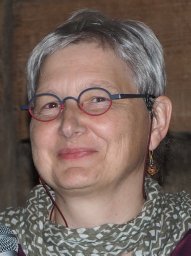 Monika Messmer合作论文数Swiss Federal Research Station for Agroecology and Agriculture8
 Freya Schaefer合作论文数7
 Christian Grovermann合作论文数Research Institute of Organic Agriculture FiBL6
 Stefano Orsini合作论文数6
 Francesco Solfanelli合作论文数6
 Joachim Aurbacher合作论文数5
 Raffaele Zanoli合作论文数Polytechnic University of Marche4
 Emel Ozturk合作论文数3Maaike Raaijmakers合作论文数2Ágnes Bruszik合作论文数2Judit Feher合作论文数2
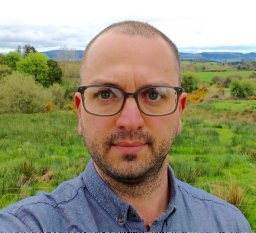 Matteo Petitti合作论文数Rete Semi Rurali2Matthias Klaiss合作论文数1
 Mariateresa Lazzaro合作论文数1
 Benedikt Haug合作论文数1L. Levy Häner合作论文数1Seraina Vonzun合作论文数1Beatrice Steinemann合作论文数Research Institute of Organic Agriculture (FiBL), Department of Crop Sciences, Ackerstrasse 113, 5070 Frick, Switzerland1Mareike Weiner合作论文数1Joelle Herforth-Rahme合作论文数1Joris A Alkemade合作论文数1
 Emilia Cubero Dudinskaya合作论文数Dipartimento Sci Agr Alimentari & Ambientali D3A, Univ Politecn Marche1
 Amritbir Riar合作论文数Sch Chem Engn, Vellore Inst Technol1Ambrogio Costanzo合作论文数1
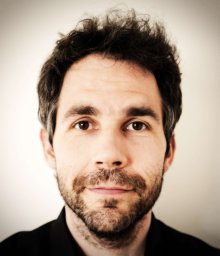 Pierre Hohmann合作论文数Bio-Protection Research Centre, Lincoln University1
 Christian Schader合作论文数FiBL - Research Institute of Organic Agriculture1
 Serena Mandolesi合作论文数Dipartimento di Scienze Agrarie, Alimentari e Ambientali (D3A),, Università Politecnica delle Marche1
 Lukas Wille合作论文数1
 Susanne Padel合作论文数Organic Research Group;University of Wales;Organic Research Group, University of Wales1
 Lukas Baumgart合作论文数1
 Simona Naspetti合作论文数University of Ancona1Christine Arncken合作论文数1
 Juan Manuel Herrera合作论文数Institute of Plant Sciences, ETH Zurich1Matthias Stolze合作论文数Research Institute of Organic Agriculture1Hansjakob Schärer合作论文数1
 Michael A Curran合作论文数Department of Immunology, The University of Texas MD Anderson Cancer Center/MD Anderson Cancer Center UTHealth Graduate School of Biomedical Sciences1
 Thomas Oberhansli合作论文数1




