Consistency between apatite and zircon petrochronology supports the robustness in fingerprinting igneous processes in porphyry systems. In this paper, we systematically investigate geochronology and mineral chemistry of apatite and zircon hosted in syenogranite and monzogranite intrusive rocks in the large Hutouya skarn-type Cu–Pb–Zn–Fe deposit, in order to corroborate their potential chronological monitoring capabilities in fingerprinting igneous processes in porphyry systems. Zircon grains of magmatic origin provide crystallization ages of 224.70 ± 0.61 Ma in the syenogranite and 225.75 ± 0.66 Ma / 226.31 ± 0.78 Ma in the monzogranite, respectively. Apatite yield ages of 229.0 ± 6.6 Ma in syenogranite and 224.3 ± 4.5 Ma / 223.7 ± 3.9 Ma in monzogranite and are within analytical uncertainty of ages displayed by zircon. Geochronology results suggest that the associated hydrothermal mineralization events at Hutouya probably have similar short durations of just a few million years or less. Trace element compositions in the two intrusives indicate the apatite and zircon crystallized under volatile-undersaturated conditions and have primary a magmatic origin. However, in the later volatile-oversaturated stage, the early crystallizing zircon is altered by the fluid phase, and shows distinctive amorphous textures with pores filled with numerous hydrothermal minerals. Accordingly, U–Pb dates of apatite and zircon, as well as corresponding in-situ trace element compositions, can provide constraints on rock formation ages, temperature, oxygen fugacity, magma source, and tectonic background.
Apatite low-temperature thermochronology can be double or even triple dated allowing for a reconstruction of the thermal history of rock from ~ 550 oC to near-surface temperatures. Even though it has disadvantageous U–Th–Pb contents (high Pb contents and low U and Th contents) and an unstable nature, apatite is still regarded to have the same robustness in fingerprinting igneous processes in porphyry systems as zircon, so far as to be replace zircon. Hence, we systematically studied characteristics of morphology, geochronology and geochemistry of apatite hosted in syenogranite and monzogranite intrusive rocks in the large Hutouya skarn deposit, in order to corroborate its potential thermochronological monitoring capabilities like zircon in fingerprinting igneous processes in porphyry systems. In this study, apatite grains can be subdivided into two types, FI-free Apatite I formed in the early less fractionated magma and FI-rich Apatite II crystallized in the late highly fractionated magma stage. We obtained ages of 229.0 ± 6.6 Ma in syenogranite and 224.3 ± 4.5 Ma / 223.7 ± 3.9 Ma in monzogranite from Apatite I of magmatic origins. Zircon grains in the two granites can be classified into three types. Zircon I is characterized by transparent and bright zones, Zircon II by dark and metamict features, and Zircon III by mineral inclusions. Zircon I grains with a magmatic texture of well-developed bright oscillatory zones, are most likely primary magmatic zircon that crystallized early in the evolution of granitic magma, dating results of which are 224.70 ± 0.61 Ma in syenogranite intrusions and 225.75 ± 0.66 Ma / 226.31 ± 0.78 Ma in monzogranite, respectively. The apatite–zircon timing is coincident. Furthermore, apatite trace rare earth element contents in the syenogranite and monzogranite intrusions display a negative-slope chondrite-normalized distribution from La to Lu with strong negative Eu anomalies and weak positive Ce anomalies, with major element contents that are statistically identical with enriched F but poor Cl. Zircon trace element compositions in the two intrusions show consistent and steeply increasing chondrite-normalized REE diagrams from La to Lu with negative Eu anomalies and strong positive Ce anomalies. Accordingly, apatite U–Pb dates and the corresponding in-situ trace element compositions and isotopes can test precise constraints on rock formation ages, temperature, oxygen fugacity, material source, and tectonic background, which can be relatively more robust when used as proxies for magma oxidation state.
The Mines Gasp & eacute; area hosts multiple Cu-Mo skarn and porphyry orebodies near the town of Murdochville in the northeastern part of the Gasp & eacute; Peninsula, Qu & eacute;bec. The orebodies occur within overlapping alteration aureoles in calcareous Lower Devonian sedimentary rocks. The strata are intruded by numerous multiphase porphyry sills, dykes, and plugs of Devonian age. The Porphyry Mountain intrusion and a sill in the Copper Mountain pit have been dated at 378.80 +/- 0.37 and 377.60 +/- 0.45 Ma, respectively, refining the results of previous studies, and demonstrating Porphyry Mountain intrusion emplacement at least 0.38 m.y. before Copper Mountain. Circa 392 Ma inherited zircon grains at Mines Gasp & eacute; suggest an early phase of magmatism that produced the extensive skarn alteration aureoles throughout the Gasp & eacute; Peninsula at sites such as Mines Gasp & eacute; and the nearby McGerrigle Complex, followed by significantly later ( >10 m.y.) porphyritic intrusions and associated mineralization that added to existing skarn resources. Epidote at both Mines Gasp & eacute; and Sullipek occur as disseminated/granular crystals within the host groundmass and as larger crystals within veinlets or veinlet halos in metasomatised sedimentary rocks. Epidote ages suggest that there are several different propylitic hydrothermal events within the region at Mines Gasp & eacute; and Sullipek, which combined with new zircon U-Pb ages implies a prolonged and complex history of propylitic alteration within Gasp & eacute;sie.
The Tasmanian Devonian granites were emplaced during the Tabberabberan Orogeny when the East and West Tasmania Terranes were sutured. The primary aim of this study is to determine zircon O and Lu-Hf isotope constraints on, and relationships between, the magmas forming these granites. A second aim is to determine if these zircon isotopic compositions can be used to inform granite-related ore endowment. Several granites (n = 11 in East Tasmania Terrane, n = 1 West Tasmania Terrane) were previously dated by U-Pb geochronology using SHRIMP, and the zircon pits from the dating analyses were targeted firstly in O and later in Lu-Hf isotope analyses. The magmatic zircon delta O-18(VSMOW) results ranged from mantle-like values (< 5.7 parts per thousand) to values like supracrustal rocks (similar to 12 parts per thousand). The granites with the lowest most mantle-like zircon delta O-18 are all I-types, and these include the relatively mafic Lisle to the very felsic and highly fractionated Mt Stronach and Tombstone Creek plutons. The Tombstone Creek zircon epsilon Hf-i results are significantly lower than those of Lisle and Mt Stronach, indicating distinct melt sources from which the zircons crystallized. The magmatic zircon delta O-18 and epsilon Hf-i results revealed two distinct paths of infracrustal to upper crustal rock epsilon Hf-i- delta O-18 melt evolution: one "high epsilon Hf" path linking the results from the Lisle, Mt Stronach, Hazards, Henbury, Lottah, Gipps Creek and Royal George granites, and the other "low epsilon Hf" path linking those from Tombstone Creek, Meredith, Poimena, Bicheno and Ansons Bay granites. The paths are statistically different and modeled results are consistent with mixing of Mathinna Supergroup rocks with different isotopically defined infracrustal/mantle-like components. The high epsilon Hf group of granites are strongly associated with granite-related Au, Sn, and Sn-W ore deposits. (C) 2022 International Association for Gondwana Research. Published by Elsevier B.V. All rights reserved.
Research Article| June 01, 2020 Exploring the Green Rock Environment: An Introduction Orovan Evan; Orovan Evan 1Australian Research Council (ARC) Industrial Transformation Research Hub for Transforming the Mining Value Chain, University of Tasmania, Private Bag 79, Hobart, Tasmania 7001, Australia2Centre for Ore Deposit and Earth Sciences (CODES), University of Tasmania, Private Bag 79, Hobart, Tasmania 7001, Australia †Corresponding author, e-mail: Evan.Orovan@utas.edu.au Search for other works by this author on: GSW Google Scholar Hollings Pete Hollings Pete 3Geology Department, Lakehead University, 955 Oliver Road, Thunder Bay, Ontario P7B 5E1, Canada Search for other works by this author on: GSW Google Scholar Economic Geology (2020) 115 (4): 695–700. https://doi.org/10.5382/econgeo.4751 Article history first online: 04 Jun 2020 Cite View This Citation Add to Citation Manager Share Icon Share Facebook Twitter LinkedIn MailTo Tools Icon Tools Get Permissions Search Site Citation Orovan Evan, Hollings Pete; Exploring the Green Rock Environment: An Introduction. Economic Geology 2020;; 115 (4): 695–700. doi: https://doi.org/10.5382/econgeo.4751 Download citation file: Ris (Zotero) Refmanager EasyBib Bookends Mendeley Papers EndNote RefWorks BibTex toolbar search Search Dropdown Menu toolbar search search input Search input auto suggest filter your search All ContentBy SocietyEconomic Geology Search Advanced Search Exploration for porphyry deposits in the past few decades has become increasingly expensive, with new discoveries often occurring at considerable depths or obscured through extensive postmineralization cover (Schodde, 2017; Cooke et al., 2020a). Given these complexities, new exploration techniques or novel applications of known techniques are needed to ensure continued discoveries into the future. Mineral chemistry has the potential to be a valuable tool in porphyry exploration and has been applied and refined over many decades to help predict prospectivity and vector to a concealed mineralized porphyry center (e.g., Williams and Cesbron, 1977; Ballard et al.,... You do not have access to this content, please speak to your institutional administrator if you feel you should have access.
Elemental mass changes were calculated for 154 samples from four rock types around the Ann Mason porphyry-Cu-(Mo-Au) deposit, Yerington district, Nevada. The purpose of these calculations was to investigate addition and depletion patterns in two-dimensional (2-D) map space. Mass changes in Ca, Mg, Na, P, Cu, Mo, As, Sb, Sr, and Pb from samples in the pre- to syn-mineralisation Yerington batholith vary systematically with lateral and vertical distance from the Ann Mason deposit. At the core of the Ann Mason deposit, Cu and Mo were strongly added (> 10,000% relative to average protolith values), with restricted lateral mass addition halos around the deposit. Copper is depleted in wall rocks surrounding the deposit. Calcium and Sr were removed (up to 98% depletion) from parts of the deposit centre due to the destruction of calcic-plagioclase and other calcium-bearing minerals during potassic alteration. Calcium (up to 1570%) and Sr (up to 315%) were added outside the deposit and were concentrated around 4 km from the deposit centre where epidote alteration is most intense. Arsenic and Sb were removed from the deposit centre (up to 99% depletion) where silicate-mineral alteration assemblages dominate. Antimony shows an addition halo (ranging from 25% up to 1900%) that extends from the deposit centre 500 m laterally away, and correlates spatially with the increased abundance of pyrite that typically surrounds porphyry deposits. Epidote-altered samples of Shamrock monzonite from outside the Casting Copper skarn show addition of Ca (up to 196%), Sb (up to 1100%), and depletion of Na (up to - 98%). Samples from the central part of the post-mineralisation Shamrock monzonite record lower mass changes in Mg, Ca, P, and Mo, compared to other parts of the batholith. Some samples from the northern contact of the Shamrock batholith exhibit addition of Ca (up to 554%), Sr (up to 504%), and depletion in Na (up to - 98%). These samples are coincident with strong epidote alteration. Our results provide a rock-normalised geochemical map that reflects quantified element addition and depletion patterns, which is useful for interrogating geological processes at a regional scale. Although interpreting relative element addition and depletion in map space is possible using conventional immobile element ratio approaches, mass balance calculations provide the benefit of quantified results.
Research Article| January 01, 2018 A Special Issue Devoted to Porphyry and Epithermal Deposits of the Southwest Pacific: An Introduction Pete Hollings; Pete Hollings 1 Geology Department, Lakehead University, 955 Oliver Road, Thunder Bay, Ontario P7B 5E1, Canada †Corresponding author: e-mail, peter.hollings@lakeheadu.ca Search for other works by this author on: GSW Google Scholar Michael J. Baker; Michael J. Baker 2 ARC Research Hub for Transforming the Mining Value Chain, CODES, University of Tasmania, Private Bag 79, Hobart, Tasmania 7001, Australia Search for other works by this author on: GSW Google Scholar Evan Orovan; Evan Orovan 2 ARC Research Hub for Transforming the Mining Value Chain, CODES, University of Tasmania, Private Bag 79, Hobart, Tasmania 7001, Australia Search for other works by this author on: GSW Google Scholar Marc Rinne Marc Rinne 3 Manitoba Geological Survey, 360-1395 Ellice Ave., Winnipeg, Manitoba R3G 3P2, Canada Search for other works by this author on: GSW Google Scholar Author and Article Information Pete Hollings 1 Geology Department, Lakehead University, 955 Oliver Road, Thunder Bay, Ontario P7B 5E1, Canada Michael J. Baker 2 ARC Research Hub for Transforming the Mining Value Chain, CODES, University of Tasmania, Private Bag 79, Hobart, Tasmania 7001, Australia Evan Orovan 2 ARC Research Hub for Transforming the Mining Value Chain, CODES, University of Tasmania, Private Bag 79, Hobart, Tasmania 7001, Australia Marc Rinne 3 Manitoba Geological Survey, 360-1395 Ellice Ave., Winnipeg, Manitoba R3G 3P2, Canada †Corresponding author: e-mail, peter.hollings@lakeheadu.ca Publisher: Society of Economic Geologists First Online: 27 Feb 2018 Online Issn: 1554-0774 Print Issn: 0361-0128 © 2018 Society of Economic Geologists.Society of Economic Geologists Economic Geology (2018) 113 (1): 1–6. https://doi.org/10.5382/econgeo.2018.4541 Article history First Online: 27 Feb 2018 Cite View This Citation Add to Citation Manager Share Icon Share Facebook Twitter LinkedIn MailTo Tools Icon Tools Get Permissions Search Site Citation Pete Hollings, Michael J. Baker, Evan Orovan, Marc Rinne; A Special Issue Devoted to Porphyry and Epithermal Deposits of the Southwest Pacific: An Introduction. Economic Geology 2018;; 113 (1): 1–6. doi: https://doi.org/10.5382/econgeo.2018.4541 Download citation file: Ris (Zotero) Refmanager EasyBib Bookends Mendeley Papers EndNote RefWorks BibTex toolbar search Search Dropdown Menu toolbar search search input Search input auto suggest filter your search All ContentBy SocietyEconomic Geology Search Advanced Search The southwest Pacific is host to a number of mineralization styles, including numerous world-class porphyry Cu-Au and epithermal Au-Ag deposits (Cooke et al., 2005; Garwin et al., 2005). The majority of the giant porphyry and epithermal Au and Cu deposits were formed within a series of middle to late Cenozoic (25–1 Ma) arcs (Garwin et al., 2005; Maryono et al., 2018). These arcs form a complex boundary between the Eurasian, Pacific, and Indian-Australian tectonic plates, stretching from Japan in the northeast and Myanmar in the northwest, through the Philippines, Indonesia, New Guinea, and the... You do not have access to this content, please speak to your institutional administrator if you feel you should have access.
A long-standing controversy exists regarding the tectonic division, lithospheric architecture and evolution of the eastern Yidun Terrane in the Late Triassic. A compilation of geochronological, geochemical and isotopic data (91 whole-rock Nd and 413 laser points of zircon Hf) for volcanic and intrusive rocks across the entire eastern Yidun Terrane has allowed for a detailed investigation into its lithospheric architecture. Two subterranes were identified using Hf–Nd isotopic mapping. They include a high ƐHf(t) (>−3.0) and ƐNd(t) (>−3.5) domain constrained in the Southern Yidun Terrane (SYT), and a low ƐHf(t) (<−3.0) and ƐNd(t) (<−3.5) domain constrained in the Northern Yidun Terrane (NYT). The NYT and SYT are characterized by distinctive arc-related volcanic and plutonic rocks (NYT: 235–230Ma basalt, andesite, dacite and rhyolite, as well as a 225–215Ma granite batholith; SYT: 228–215Ma adakite-like andesite, as well as diorite to monzonite porphyry), detrital zircon populations (NYT: ~2.50–2.45Ga, ~980–880Ma and ~480–400Ma; SYT: ~2.50–2.40Ga, ~1.90–1.75Ga, ~1000–720Ma, ~480–400Ma and ~240–220Ma) and mineralization styles (NYT: volcanic massive sulfide Ag–Cu–Pb–Zn and epithermal Ag–Hg deposits hosted in the ~230Ma rhyolites; SYT: porphyry–skarn Cu–Mo–Fe deposits genetically related to the ~216Ma dioritic to monzonitic porphyries). This dataset collectively shows that the NYT magmas were likely derived from a Paleoproterozoic or older mafic to intermediate lower crust with a variably minor addition of Triassic juvenile mantle melts, whereas the magmas for the SYT magmatic rocks were dominated by the arc juvenile mantle wedge melts with subordinate input of Late Mesoproterozoic or older crustal materials. The different melting processes between the NYT and SYT were attributed to changing subduction dip in space and time, with earlier steeper subduction at ~235–230Ma, and later shallow-dip subduction from ~228–220Ma. During the steeper dip subduction phase, it is likely that the NYT experienced a slightly greater degree of extension than the SYT, raising the possibility of a slab segmented by a major transform fault resulting in slightly steeper subduction beneath the NYT.
The late Miocene, calc-alkalic, Wainaulo Cu-Au porphyry deposit of the Namosi district, Fiji, hosts distinct styles of alteration and mineralization that overlapped to produce a substantial porphyry Cu-Au resource. The early stages produced medium-grade Cu, low-grade Au and concentric calc-potassic to propylitic alteration that is zoned around the early-stage diorite intrusions. Discrete zones of high-grade Cu and Au and calc-sodic alteration were then superimposed during the intrusion of the main-stage quartz diorites and the formation of quartz-sulfide and epidote-sulfide veins. As the magmatic-hydrothermal system waned, lower Cu and Au grades, with a weaker intensity of calc-sodic alteration and lower density of veins, were produced coincident with emplacement of subsequent quartz diorite intrusions. Late-stage anhydrite-pyrite veins and chlorite-illite alteration overprinted the quartz diorite intrusive complex. The final hydrothermal event consisted of argillic alteration that was concentrated in and around steeply dipping, ENE-trending shears. These structures appear to have controlled the emplacement of the quartz diorite complex and distribution of high-grade Cu-Au mineralization, suggesting they were active during the pre-and synmineralization stages. Stable and radiogenic isotopic data provide evidence for direct seawater contributions to the magmatic-hydrothermal system. Measured delta S-34(sulfide) (-5.0 to 3.8%) and delta S-34(sulfate) (9.0-16.8%) values are consistent with a predominantly magmatic source, whereas an elevated bulk sulfur composition (6.7%) suggests mixing with an isotopically heavy fluid (e.g., seawater). Estimates of delta D-fluid derived from epidote (-9.1 to 11.3%) and delta O-18(fluid) from epidote and anhydrite (-0.2 to 4.7%) approach that of Vienna standard mean ocean water, and the initial Sr isotope ratios of epidote (0.70364-0.70378) suggest a component of seawater Sr ranging from 3.2 to 5.8%. These results are consistent with the inferred submarine paleogeographic setting and may explain the abundance of albite- and epidote-rich alteration assemblages at Wainaulo.
Zircon trace element chemistry, particularly when combined with U Pb dating of zircon, can provide crucial information on the temporal, and chemical evolution of magmatic-hydrothermal systems. Sixteen samples representing six different igneous units were analysed for 33 elements using LA-ICPMS. Zircons from the mineralised Luhr Hill intrusion have smaller negative Eu/Eu* anomalies than zircons from the post-mineralisation Shamrock intrusion. Zircons from the Shamrock intrusion show a different trace element chemistry to zircons from either pre or syn-mineralisation intrusions. Zircons from the Shamrock batholith contain elevated Ho, P, U, Yb and Er. Zircons from the Yerington batholith contain elevated Dy, Tb, Y, Lu, and Yb.
 David Cooke合作论文数School of Natural Sciences, University of Tasmania;Centre for Ore Deposit and Earth Sciences, University of Tasmania5
 Peter Hollings合作论文数Lakehead University3
 Ayesha D. Ahmed合作论文数2
 Ivan Belousov合作论文数2
 Shihua Zhong (钟世华)合作论文数School of Marine Geosciences, China Ocean University2
 Michael Rowe合作论文数School of Environment, Faculty of Science, The University of Auckland2Qu Hong-Ying (瞿泓滢)合作论文数2
 Michael B. Baker合作论文数Division of Geological and Planetary Sciences, California Institute of Technology2
 J. Rowland合作论文数Department of Geology;University of Auckland;Department of Geology, University of Auckland2
 Jingwen Mao (毛景文)合作论文数MNR Key Laboratory of Metallogeny and Mineral Assessment, Institute of Mineral Resources, Chinese Academy of Geological Sciences2Paul Agnew合作论文数1Mike Baker合作论文数1Erin Lawlis合作论文数1marc rinne合作论文数1John L Everard合作论文数1Ralph Bottrill合作论文数1Yitian Wang (王义天)合作论文数1
 Xue Gao合作论文数1
 Shawn Hood合作论文数GoldSpot Discoveries Corp1
 Michael F. Gazley合作论文数RSC Min & Mineral Explorat1Thompson Jay M合作论文数1
 Liqiang Yang (杨立强)合作论文数School of Earth Sciences and Resources, China University of Geosciences (Beijing)1
 Sebastien Meffre合作论文数Centre for Ore Deposit Research, University of Tasmania1
 Richard Friedman合作论文数1
 Simon Bodorkos合作论文数Geological Survey of Western Australia1
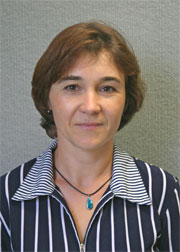 Elena Belousova合作论文数ARC National Key Centre for Geochemical evolution and Metallogeny of Continents, Department of Earth and Planetary Sciences, School of Natural Sciences, Faculty of Science and Engineering, Macquarie University;ARC Centre of Excellence for Core to Crust Fluid Systems, Macquarie University1Alan F. Kobussen合作论文数1
 Matthew J. Cracknell合作论文数1
 Anthony C. Harris合作论文数CODES ARC Centre of Excellence in Ore Deposits, University of Tasmania1




