Interpolation methods have previously been found to be effective for handling coarticulation effects in speech recognition when there is insufficient data to reliably train models for all combinations of phonemes. These interpolation models employed Hidden Markov Models (HMM’s), trained on one output class at a time. Here, a neural network analog of the HMM interpolation methods is discussed and applied to the problem of analyzing facial expressions. The task was to recognize facial actions defined in the Facial Action Coding System (Ekman & Friesen, 1978). This system defines 46 component actions that comprise facial expressions, and are the analog of phonemes in facial expression. As in speech, there are thousands of "words" that the face can express (Scherer & Ekman, 1982). The network demonstrated robust recognition for the six upper facial action units, whether they occurred individually or in combination.
The Facial Action Coding System (FACS) is the leading standard for measuring facial expressions in the behavioral sciences (Ekman & Friesen, 1978). FACS coding is presently performed manually by human experts, it is slow, and requires extensive training. Automating FACS coding could have revolutionary effects in our understanding of human facial expression and on the development of computer systems that understand facial expressions. Two teams, one at University of California San Diego and the Salk Institute, and another at University of Pittsburgh and Carnegie Mellon University, were challenged to develop prototype systems for automatic recognition of spontaneous facial expressions. Working with spontaneous expressions required solving technical and theoretical challenges which had not been previously addressed in the field. This document describes the system developed by the UCSD team. The approach employs 3-D pose estimation and warping techniques to reduce image variability due to general changes in pose. Machine learning techniques are then applied directly on the warped images or on biologically inspired representations of these images. No efforts are made to detect contours or other hand-crafted image features. This system employed general purpose learning mechanisms that can be applied to recognition of any action unit. The approach is parsimonious and does not require defining a different set of feature parameters or image operations for each facial action. The system was tested on a set of eyelid and eyebrow movements and successfully identified these movements in novel subjects. We showed that 3D tracking and warping followed by machine learning techniques directly applied to the warped images, is a viable and promising technology for automatic facial action recognition. One exciting aspect of the approach presented here is that information about movement dynamics emerged out of filters which were derived from the statistics of images. We believe all the pieces of the puzzle are ready for the development of automated systems that recognize spontaneous facial actions at the level of detail required by FACS. The main factor impeding development in this field is the lack of sufficiently large databases for training a greater variety of action units, and which may become a standard for comparison between different approaches. Based on our experience in this project we estimate that a database of 500 subjects, with 1 minute of rich facial behavior per subject, would be sufficient for dramatic improvements in the field.
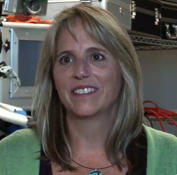 Marian Stewart Bartlett合作论文数Institute for Neural Computation, University of California4
 Bjorn Braathen合作论文数3
 John Hershey合作论文数Google AI Perception2
 Terrence Sejnowski合作论文数Department of Neurobiology, School of Biological Sciences, University of California, San Diego;Howard Hughes Medical Institute;The Salk Institute for Biological Studies2
 Javier Movellan合作论文数Asiago2
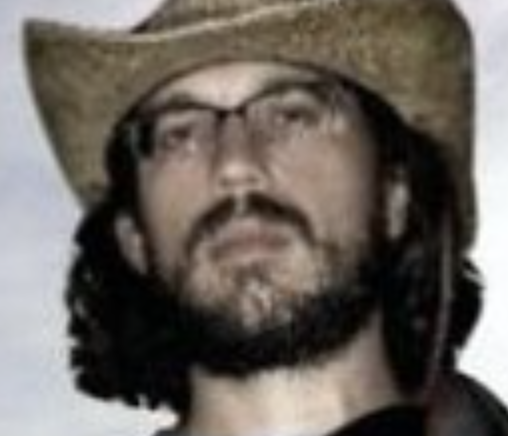 Ian Fasel合作论文数Apple2
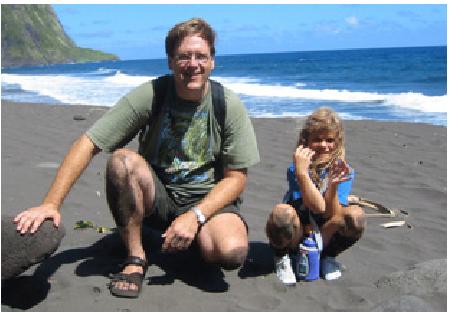 Gwen Littlewort合作论文数Machine Perception Laboratory;;Institute for Neural Computation2
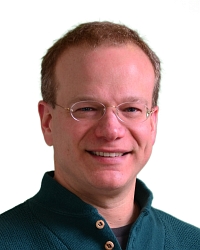 Tim K. Marks合作论文数Mitsubishi Electric research Laboratories2Alexander Cousland合作论文数1Phillip Bartel合作论文数1Sally Luo合作论文数1Joseph Arevalo合作论文数1Ryan Denu合作论文数1Pj Campagna合作论文数1Barwick Amy合作论文数1Katie Peterson合作论文数1Gwen Littlewort-Ford合作论文数1Emily Davis合作论文数1Chelsea Becker合作论文数1Darshan Shankar合作论文数1
 Patrick M Markey合作论文数Villanova University1Kristen Bridges合作论文数1Jacqueline Craig合作论文数1Nicholas J. Porubsky合作论文数1




