Background: The role of transsphenoidal resection of pituitary adenomas on recovery of preoperative hypopituitarism and the incidence of postoperative hypopituitarism is not well understood. The presence of preoperative deficits has been used to predict postoperative to predict postoperative outcomes following transsphenoidal resection of pituitary adenomas. This study attempts to identify rates of preoperative hormonal deficits and rates of postoperative hormonal levels with postoperative resolution of those deficiencies.
Background: Patients with a pituitary gland mass, or sellar mass, are likely to have clinical presentations that fall into three categories: visual defects, neurologic symptoms, and hormone. These effects can be related to pathology or mass effect. Identifying preoperative features that correlate with postoperative outcomes following a transsphenoidal surgery can be a useful method to screen patients at high risk for adverse outcomes. This study addresses a high-risk group of elderly patients (age at surgery > or equal to 65 years old) and calculates rates of preoperative deficient hormonal levels and postoperative resolution of those deficiencies.
To examine whether the outcome of a rat’s own choices (“personal information”) and the choice behavior of another rat (“social information”) can jointly control spatial choices, rats were tested in an open field task in which they searched for food. For the rats of primary interest (Subject Rats), the baited locations were all on one side of the arena, but the specific locations baited and the side on which they occurred varied over trials. The Subject Rats were sometimes tested together with an informed “Model” rat that had learned to find food in the same five locations (all on the same side of the arena) on every trial. Unintended perceptual cues apparently controlled spatial choices at first, but when perceptual cues to food location were not available, choices were controlled by both personal information (allowing the baited side of the arena to be determined) and social information (allowing baited locations to be determined more precisely). This shows that control by personal and social information are not mutually exclusive and supports the view that these two kinds of information can be used flexibly and adaptively to guide spatial choices. This article is part of a Special Issue entitled: tribute to Tom Zentall.
Does the presence of irrelevant neuroscience information make explanations of psychological phenomena more appealing? Do fMRI pictures further increase that allure? To help answer these questions, 385 college students in four experiments read brief descriptions of psychological phenomena, each one accompanied by an explanation of varying quality (good vs. circular) and followed by superfluous information of various types. Ancillary measures assessed participants' analytical thinking, beliefs on dualism and free will, and admiration for different sciences. In Experiment 1, superfluous neuroscience information increased the judged quality of the argument for both good and bad explanations, whereas accompanying fMRI pictures had no impact above and beyond the neuroscience text, suggesting a bias that is conceptual rather than pictorial. Superfluous neuroscience information was more alluring than social science information (Experiment 2) and more alluring than information from prestigious "hard sciences" (Experiments 3 and 4). Analytical thinking did not protect against the neuroscience bias, nor did a belief in dualism or free will. We conclude that the "allure of neuroscience" bias is conceptual, specific to neuroscience, and not easily accounted for by the prestige of the discipline. It may stem from the lay belief that the brain is the best explanans for mental phenomena.
Background and Objective: Up to half of patients with amyotrophic lateral sclerosis (ALS) may have cognitive difficulty, but most cognitive measures are confounded by a motor component. Studies relating impaired cognition in ALS to disease in gray matter and white matter are rare. Our objective was to assess executive function in patients with ALS using a simple, untimed measure with minimal motor demands, and to relate performance to structural disease.Methods: We gave the Visual-Verbal Test to 56 patients with ALS and 29 matched healthy controls. This brief, untimed measure of cognitive flexibility first assesses participants' ability to identify a feature shared by 3 of 4 simple geometric designs. The participants' cognitive flexibility is challenged when they are next asked to identify a different feature shared by another combination of 3 of the same 4 geometric designs. In a subset of 17 patients who underwent magnetic resonance imaging, regression analyses related test performance to gray matter atrophy and reduced white matter fractional anisotropy.Results: The patients with ALS showed significant impairment in cognitive flexibility (P<0.01), with 48.2% making an error on the test. Regression analyses related impaired cognitive flexibility to gray matter atrophy in inferior frontal and insular regions, and to reduced fractional anisotropy in white matter projections in the inferior fronto-occipital and uncinate fasciculi and corpus callosum.Conclusions: Our patients with ALS had impaired cognitive flexibility on an untimed measure with minimal motor demands, a finding related in part to a large-scale frontal network that is degraded in ALS.
 Alexander Graf合作论文数2
 Christopher Farrell合作论文数2Garzon-Muvdi Tomas合作论文数Department of †Neurosurgery;‡Oncology Center-Chemical Therapeutics, The Johns Hopkins University School of Medicine;§Technion Faculty of Medicine, Technion-Israel Institute of Technology;Technion-Israel Institute of Technology, The Johns Hopkins University School of Medicine2
 Gurston G Nyquist合作论文数2Bisbing Teagan合作论文数Department of Psychology, Villanova University2Rabinowitz Mindy R合作论文数2
 Judd Fastenberg合作论文数Bronx2
 Marc Rosen合作论文数2Eileen Moran合作论文数1McCluskey Leo合作论文数1Katya Rascovsky合作论文数Department of Neurology, Perelman School of Medicine, University of Pennsylvania1Corey T Mcmillan合作论文数Department of Neurology, Perelman School of Medicine, University of Pennsylvania1
 Christopher A Olm合作论文数Department of Psychology and;Center for Brain Science, Harvard University;Department of Psychology and;Center for Brain Science, Harvard University1Elman Lauren B合作论文数1
 Christian, C合作论文数1Stokesbury Andrew合作论文数1Ruff Jennifer合作论文数1
 Marie E. Saxon合作论文数1
 Ashley Boller合作论文数1
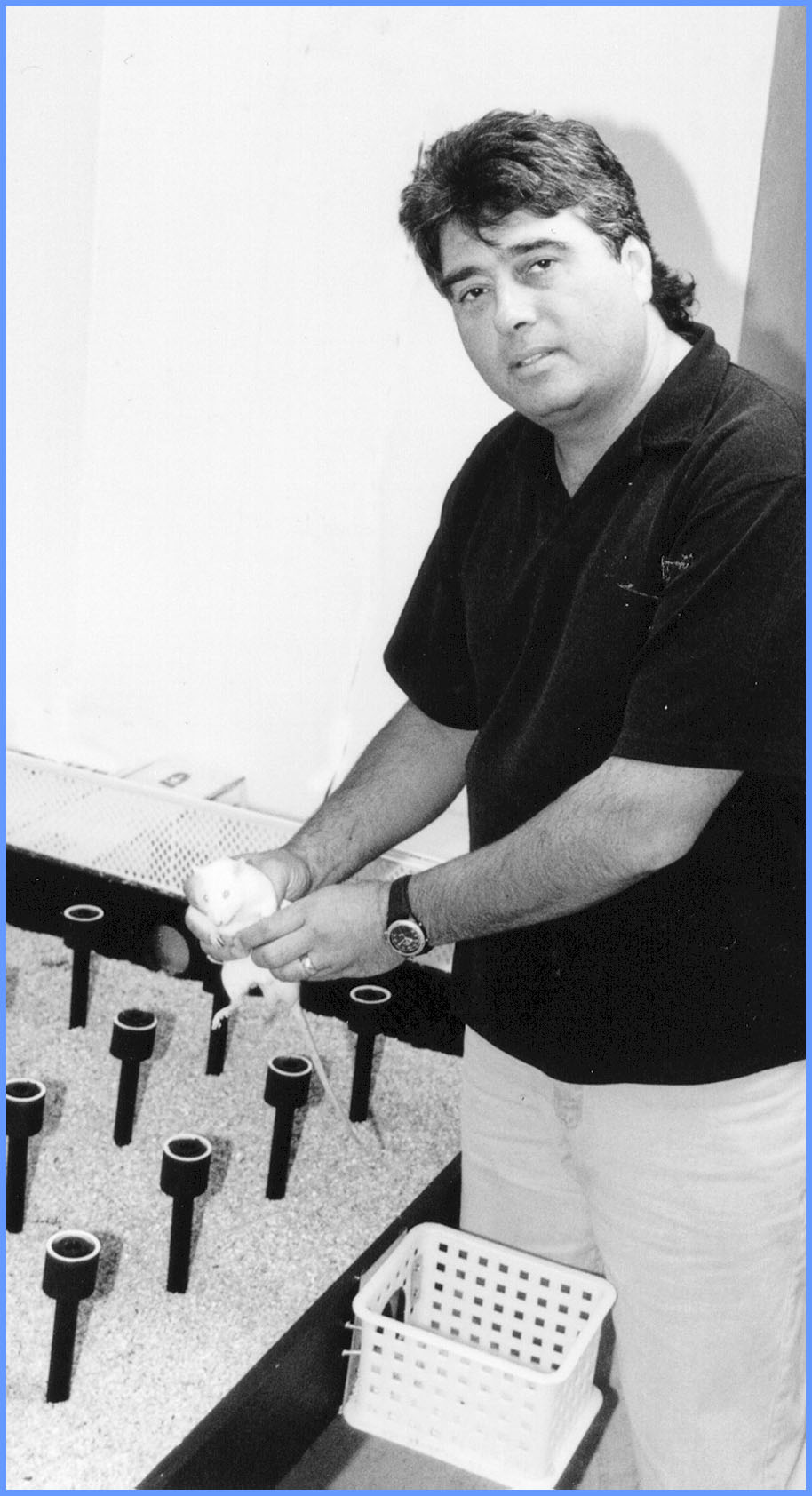 Michael F. Brown合作论文数Psychology Department Villanova University1
 Diego Fernandez-Duque合作论文数Department of Psychology;Villanova University;Department of Psychology, Villanova University1Sara Hodges合作论文数University of Oregon, University of Oregon Eugene1
 Murray Grossman合作论文数Department of Neurology, Perelman School of Medicine, University of Pennsylvania;Penn Frontotemporal Degeneration Center, University of Pennsylvania1




