An aerobic hyperthermophilic CO-oxidizing archaeon, Sulfolobus sp. strain ETSY, was isolated and characterized. Presently, it is the only known representative of both hyperthermophiles and Archaea that is capable of aerobic oxidation of CO, a gas of global importance for atmospheric chemistry and of local importance as one of the substrates for the microbial communities of hydrothermal vents. In the genome of Sulfolobus sp. ETSY we found genetic determinants of aerobic CO oxidation: a coxFMSLDE gene cluster and two separately located coxG genes. We also found such gene clusters in the genomes of certain strains of Sulfolobus islandicus and Sulfolobus solfataricus. On the phylogenetic tree of large subunits of aerobic CO-dehydrogenases (CoxLs), these proteins of Sulfolobus representatives formed a compact cluster within one of the branches formed by bacterial form I CoxLs. Thus we argue that the ability to oxidize CO aerobically was acquired by Sulfolobus ancestor from Bacteria relatively late in the evolution, presumably after the formation of the atmosphere with a high oxygen content.
Enrichment and pure cultures of hyperthermophilic archaea capable of anaerobic growth on one-carbon compounds (CO and/or formate) were obtained from deep-sea sites of hydrothermal activity at the Mid-Atlantic Ridge, Lau Basin, and Guaymas Basin. All isolates belonged to the T. barophilus‒T. paralvinellae group within the genus Thermococcus. In all cases available for analysis, the genomes of Thermococcus strains capable of growth by hydrogenogenic utilization of CO and/or formate contained clusters of genes encoding energy-converting hydrogenase and either CO dehydrogenase or formate dehydrogenase and formate transporter. Apart from the previously known processes of hydrogenogenic oxidation of CO and formate, the oxidation of these substrates coupled to sulfur reduction was observed, processes previously unknown among archaea. The capacities for hydrogenogenic or sulfidogenic oxidation of CO and formate occurred in the studied strains in all possible combinations, which could only in part be explained by peculiarities of organization of genetic determinants revealed in the genomes. Investigation of CO and formate consumption kinetics revealed that T. barophilus strain Ch5 was able to grow at concentrations close to the environmental ones. Thus, it was shown that hyperthermophilic archaea from deep-sea hydrothermal vents are able to utilize one-carbon substrates of abiotic origin both in the presence of an electron acceptor (sulfur) and in its absence. These processes were probably of importance under the conditions of the early Earth biosphere.
We report here the complete sequence and fully manually curated annotation of the genome of strain Ch5, a new member of the piezophilic hyperthermophilic species Thermococcus barophilus.
Qualitative and quantitative analysis of the structure of the archaeal community of the photic zone of the Black Sea water column was carried out. Real-time PCR revealed 2 × 10⁴ archaeal cells/mL (4.2% of the total cell number) at a 15-m depth. The structure of archaeal communities in the subsurface water column was investigated using the sequencing by synthesis technology (Illumina/Solexa) of the 16S rRNA genes. The Marine Group II phylogenetic cluster belonging to the phylum Euryarchaeota was the most numerous archaeal group (1.2–1.7 × 10⁴ cells/mL). The Marine Group I phylogenetic cluster (phylum Thaumarchaeota) was the second most numerous group (40% of the free-living archaea or 7.7 × 10³ cells/mL). Sequences of the ‘Nitrosopumilus’ cluster were revealed among Marine Group I sequences due to high homology (over 90%). A group of archaea belonging to the Deep-sea Hydrothermal Vent Euryarchaeotic Group 6 (DHVEG-6) (phylum Euryarchaeota) was also detected. The 16S rRNA gene sequences belonging to this cluster were revealed only in the suspension fraction. High homology level (over 90%) suggested classification of most DHVEG-6 sequences within the ‘Parvarchaeum’ cluster. In spite of a noticeable methane peak detected at 15-m depth, no sequences of methanogens were found.
A strain of a hyperthermophilic filamentous archaeon was isolated from a sample of Kamchatka hot spring sediment. Isolate 1807-2 grew optimally at 85 °C, pH 6.0-6.5, the parameters being close to those at the sampling site. 16S rRNA gene sequence analysis placed the novel isolate in the crenarchaeal genus Thermofilum; Thermofilum pendens was its closest valid relative (95.7 % of sequence identity). Strain 1807-2 grew organothrophically using polysaccharides (starch and glucomannan), yeast extract or peptone as substrates. The addition of other crenarchaea culture broth filtrates was obligatory required for growth and could not be replaced by the addition of these organisms’ cell wall fractions, as it was described for T. pendens. The genome of strain 1807-2 was sequenced using Illumina and PGM technologies. The average nucleotide identities between genome of strain 1807-2 and T. pendens strain HRK 5T and “T. adornatus” strain 1910b were 85 and 82 %, respectively. On the basis of 16S rRNA gene sequence phylogeny, ANI calculations and phenotypic differences we propose a novel species Thermofilum uzonense with the type strain 1807-2T (= DSM 28062T = JCM 19810T). Project information and genome sequence was deposited in Genbank under IDs PRJNA262459 and CP009961, respectively.
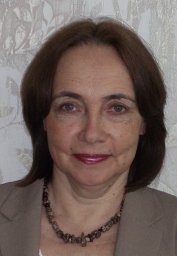
 Tatyana G. Sokolova合作论文数5
 Elizaveta A. Bonch-Osmolovskaya合作论文数Institute of Microbiology;Russian Academy of Sciences4А. В. Лебединский合作论文数3
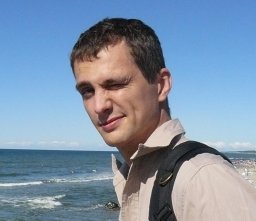 Toshchakov Stepan V合作论文数Immanuel Kant Baltic Federal University3
 Valeriy K. Chasovnikov合作论文数2
 Valeriia Korneeva合作论文数2
 Nikolay V. Pimenov合作论文数2Bonch-Osmolovskaia E A合作论文数2
 Anna Kozhevnikova合作论文数Timiryazev Institute of Plant Physiology, Russian Academy of Sciences2Nadezhda a Kostrikina合作论文数2Alexander V. Lebedinsky合作论文数2а л брюханов合作论文数1A. L. Bryukhanov合作论文数1А. Ю. Меркель合作论文数1И. Ю. Тарновецкий合作论文数1Nazar I Samarov合作论文数1I. Yu. Tarnovetskii合作论文数1Darya A Kozhevnikova合作论文数1Maxim V Patrushev合作论文数1Oleg I Mozhei合作论文数1
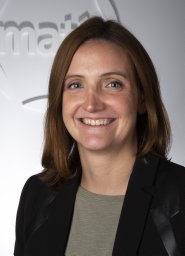 Pauline Vannier合作论文数Department of Research and Innovation, MATIS1P Oger合作论文数1
 Aleksei A Korzhenkov合作论文数Immanuel Kant Balt Fed Univ, Kaliningrad, Russia1Kang Sung Gyun合作论文数1Lee Hyun Sook合作论文数1
 Olga a Podosokorskaya合作论文数Winogradsky Institute of Microbiology, Russian Academy of Sciences1
 Irina Dominova合作论文数1
 Merkel Alexander Y合作论文数Winogradsky Institute of Microbiology, Russian Academy of Sciences1Chernykh N A合作论文数1
 Jung-Hyun Lee合作论文数Department of Chemical and Biological Engineering, College of Engineering, Korea University1
 Kae Kyoung Kwon合作论文数KORDI Marine Biotechnology & New Material Research Division1
 Michail Yakimov合作论文数Astrobiology Laboratory, Istituto di Scienze Polari Consiglio Nazionale delle Ricerche Sede di Messina;Biotechnology and Astrobiology Group, Istituto di Scienze Polari Consiglio Nazionale delle Ricerche Sede di Messina;Institute of Biological Resources and Marine Biotechnology, Italian National Research Council1
 Ilya V Kublanov合作论文数Institute of Microbiology, Russian Academy of Sciences1
 Nikolay Chernyh合作论文数1I. O. Mazunin合作论文数1




