We propose a digital-analog quantum algorithm for simulating the Hubbard-Holstein model, describing strongly-correlated fermion-boson interactions, in a suitable architecture with superconducting circuits. It comprises a linear chain of qubits connected by resonators, emulating electron-electron (e-e) and electron-phonon (e-p) interactions, as well as fermion tunneling. Our approach is adequate for a digital-analog quantum computing (DAQC) of fermion-boson models including those described by the Hubbard-Holstein model. We show the reduction in the circuit depth of the DAQC algorithm, a sequence of digital steps and analog blocks, outperforming the purely digital approach. We exemplify the quantum simulation of a half-filling two-site Hubbard-Holstein model. In such example we obtain fidelities larger than 0.98, showing that our proposal is suitable to study the dynamical behavior of solid-state systems. Our proposal opens the door to computing complex systems for chemistry, materials, and high-energy physics.
We introduce a hardware-specific, problem-dependent digital-analog quantum algorithm of a counterdiabatic quantum dynamics tailored for optimization problems. Specifically, we focus on trapped-ion architectures, taking advantage from global M & oslash;lmer-S & oslash;rensen gates as the analog interactions complemented by digital gates, both of which are available in the state-of-the-art technologies. We show an optimal configuration of analog blocks and digital steps leading to a substantial reduction in circuit depth compared to the purely digital approach. This implies that, using the proposed encoding, we can address larger optimization problem instances, requiring more qubits, while preserving the coherence time of current devices. Furthermore, we study the minimum gate fidelity required by the analog blocks to outperform the purely digital simulation, finding that it is below the best fidelity reported in the literature. To validate the performance of the digital-analog encoding, we tackle the maximum independent set problem, showing that it requires fewer resources compared to the digital case. This hybrid co-design approach paves the way towards quantum advantage for efficient solutions of quantum optimization problems.
Deterministic single-photon sources are important and ubiquitous in quantum information protocols. However, to the best of our knowledge, none of them work in the ultrastrong light-matter coupling regime, and each excitation process can only emit one photon. We propose a deterministic single-photon source in circuit QED which can work in the ultrastrong coupling regime. Here, two qubits are excited simultaneously in one process and two deterministic single photons can be sequentially emitted with an arbitrary time separation. This happens through two consecutive adiabatic transfers along the one-photon solutions of the two-qubit Rabi and Jaynes-Cummings model, which has constant eigenenergy in the whole coupling regime. Unlike the stimulated Raman adiabatic passage, the system goes back to the initial state of another period automatically after photon emission. Our scheme can approach unity single-photon efficiency, indistinguishability, and purity simultaneously. With the assistance of the Stark shift, a deterministic single photon can be generated within a time proportional to the inverse of the resonator frequency.
We present a hybrid classical-quantum computing paradigm where the quantum part strictly runs within the coherence time of a quantum annealer, a method we call variational coherent quantum annealing (VCQA). It involves optimizing the schedule functions governing the quantum dynamics by employing a piecewise family of tailored functions. We also introduce auxiliary Hamiltonians that vanish at the beginning and end of the evolution to increase the energy gap during the process, subsequently reducing the algorithm times. We develop numerical tests using z-local terms as the auxiliary Hamiltonian while considering linear, cyclic, and star connectivity. Moreover, we test our algorithm for a non-stoquastic Hamiltonian such as a Heisenberg chain, showing the potential of the VCQA proposal in different scenarios. In this manner, we achieve a substantial reduction in the ground-state error with just six variational parameters and a duration within the device coherence times. Therefore, the proposed VCQA paradigm offers exciting prospects for current quantum annealers.
We study the quantum correlations embedded in open quantum Rabi systems. Specifically, we study how the quantum correlation depends on the coupling strength, number of qubits, and reservoir temperatures. We numerically calculate the quantum correlations of up to three qubits interacting with a single field mode. We find that the embedded quantum correlations exhibit a maximum for a given coupling strength, which depends inversely on the number of subsystems and the reservoir temperature. We explore how this feature affects the performance of a many-qubit Otto heat engine, finding numerical evidence of a direct correspondence between the minimum of the extractable work and the maximum of the embedded quantum correlations in the qubit-cavity bi-partition. Furthermore, as we increase the number of qubits, the maximum extractable work is reached at smaller values of the coupling strength. This work could help design more sophisticated quantum heat engines that rely on many-body systems with embedded correlations as working substances.
We propose the implementation of the swap test using a charge qubit in a double quantum dot. The swap test is a fundamental quantum subroutine in quantum machine learning and other applications for estimating the fidelity of two unknown quantum states by measuring an auxiliary qubit. Our proposal uses a controlled three-qubit gate, which is natural to quantum dot charge qubits. It allows us to implement a swap test with a circuit depth of six layers, and an estimated gate time of less than 3 ns, that is below the coherence time of double quantum dots. This work paves the way for enhancing the toolbox of quantum machine learning developments in semiconductor qubits.
The quantum approximate optimization algorithm (QAOA) has proved to be an effective classical-quantum algorithm serving multiple purposes, from solving combinatorial optimization problems to finding the ground state of many-body quantum systems. Since QAOA is an ansatz-dependent algorithm, there is always a need to design ansatz for better optimization. To this end, we propose a digitized version of QAOA enhanced via the use of shortcuts to adiabaticity. Specifically, we use a counterdiabatic (CD) driving term to design a better ansatz, along with the Hamiltonian and mixing terms, enhancing the global performance. We apply our digitized-counterdiabatic QAOA to Ising models, classical optimization problems, and the P-spin model, demonstrating that it outperforms standard QAOA in all cases we study.
We study the entanglement and memristive properties of three coupled quantum memristors. We consider quantum memristors based on superconducting asymmetric SQUID architectures which are coupled via inductors. The three quantum memristors are arranged in two different geometries: linear and triangular coupling configurations. We obtain a variety of correlation measures, including bipartite entanglement and tripartite negativity. We find that, for identical quantum memristors, entanglement and memristivity follow the same behavior for the triangular case and the opposite one in the linear case. Finally, we study the multipartite correlations with the tripartite negativity and entanglement monogamy relations, showing that our system has genuine tripartite entanglement. Our results show that quantum correlations in multipartite memristive systems have a non-trivial role and can be used to design quantum memristor arrays for quantum neural networks and neuromorphic quantum computing architectures.
We propose the encoding of memristive quantum dynamics on a digital quantum computer. Using a set of auxiliary qubits, we simulate an effective non-Markovian environment inspired by a collisional model, reproducing memristive features between expectation values of different operators in a single qubit. We numerically test our proposal in an IBM quantum simulator with 32 qubits, obtaining the pinched hysteresis curve that is characteristic of a quantum memristor. Furthermore, we extend our method to the case of two coupled quantum memristors, opening the door to the study of neuromorphic quantum computing in the NISQ era.
We propose an adaptive random quantum algorithm to obtain an optimized eigensolver. Specifically, we introduce a general method to parametrize and optimize the probability density function of a random number generator, which is the core of stochastic algorithms. We follow a bioinspired evolutionary mutation method to introduce changes in the involved matrices. Our optimization is based on two figures of merit: learning speed and learning accuracy. This method provides high fidelities for the searched eigenvectors and faster convergence on the way to quantum advantage with current noisy intermediate-scaled quantum computers.
We consider digitized-counterdiabatic quantum computing as an advanced paradigm to approach quantum advantage for industrial applications in the NISQ era. We apply this concept to investigate a discrete mean-variance portfolio optimization problem, showing its usefulness in a key finance application. Our analysis shows a drastic improvement in the success probabilities of the resulting digital quantum algorithm when approximate counterdiabatic techniques are introduced. Along these lines, we discuss the enhanced performance of our methods over variational quantum algorithms like QAOA and DC-QAOA.
General solutions to the quantum Rabi model involve subspaces with an unbounded number of photons. However, for the multiqubit multimode case, we find special solutions with at most one photon for an arbitrary number of qubits and photon modes. Such solutions exist for arbitrary single qubit-photon coupling strength with constant eigenenergy, while still being qubit-photon entangled states. Taking advantage of their peculiarities and the reach of the ultrastrong coupling regime, we propose an adiabatic scheme for the fast and deterministic generation of a two-qubit Bell state and arbitrary single-photon multimode W states with nonadiabatic error less than 1%. Finally, we propose a superconducting circuit design to catch and release the W states, and shows the experimental feasibility of the multimode multiqubit quantum Rabi model.
Quantum integer factorization is a potential quantum computing solution that may revolutionize cryptography. Nevertheless, a scalable and efficient quantum algorithm for noisy intermediate-scale quantum computers looks far-fetched. We propose an alternative factorization method, within the digitized-adiabatic quantum computing paradigm, by digitizing an adiabatic quantum factorization algorithm enhanced by shortcuts to adiabaticity techniques. We find that this fast factorization algorithm is suitable for available gate-based quantum computers. We test our quantum algorithm in an IBM quantum computer with up to six qubits, surpassing the performance of the more commonly used factorization algorithms on the long way towards quantum advantage.
Shortcuts to adiabaticity are well-known methods for controlling the quantum dynamics beyond the adiabatic criteria, where counter-diabatic (CD) driving provides a promising means to speed up quantum many-body systems. In this work, we show the applicability of CD driving to enhance the digitized adiabatic quantum computing paradigm in terms of fidelity and total simulation time. We study the state evolution of an Ising spin chain using the digitized version of the standard CD driving and its variants derived from the variational approach. We apply this technique in the preparation of Bell and Greenberger-Horne-Zeilinger states with high fidelity using a very shallow quantum circuit. We implement this proposal in the IBM quantum computer, proving its usefulness for the speed up of adiabatic quantum computing in noisy intermediate-scale quantum devices.
The characterization of observables, expressed via Hermitian operators, is a crucial task in quantum mechanics. For this reason, an eigensolver is a fundamental algorithm for any quantum technology. In this work, we implement a semi-autonomous algorithm to obtain an approximation of the eigenvectors of an arbitrary Hermitian operator using the IBM quantum computer. To this end, we only use single-shot measurements and pseudo-random changes handled by a feedback loop, reducing the number of measures in the system. Due to the classical feedback loop, this algorithm can be cast into the reinforcement learning paradigm. Using this algorithm, for a single-qubit observable, we obtain both eigenvectors with fidelities over 0.97 with around 200 single-shot measurements. For two-qubits observables, we get fidelities over 0.91 with around 1500 single-shot measurements for the four eigenvectors, which is a comparatively low resource demand, suitable for current devices. This work is useful to the development of quantum devices able to decide with partial information, which helps to implement future technologies in quantum artificial intelligence.
We study a quantum Otto engine at finite time, where the working substance is composed of a two-level system interacting with a harmonic oscillator, described by the quantum Rabi model. We obtain the limit cycle and calculate the total work extracted, efficiency, and power of the engine by numerically solving the master equation describing the open system dynamics. We relate the total work extracted and the efficiency at maximum power with the quantum correlations embedded in the working substance, which we consider through entanglement of formation and quantum discord. Interestingly, we find that the engine can overcome the Curzon-Ahlborn efficiency when the working substance is in the ultrastrong coupling regime. This high-efficiency regime roughly coincides with the cases where the entanglement in the working substance experiences the greatest reduction in the hot isochoric stage. Our results highlight the efficiency performance of correlated working substances for quantum heat engines.
The characterization of an operator by its eigenvectors and eigenvalues allows us to know its action over any quantum state. Here, we propose a protocol to obtain an approximation of the eigenvectors of an arbitrary Hermitian quantum operator. This protocol is based on measurement and feedback processes, which characterize a reinforcement learning protocol. Our proposal is composed of two systems, a black box named environment and a quantum state named agent. The role of the environment is to change any quantum state by a unitary matrix $\hat{U}_E=e^{-i\tau\hat{\mathcal{O}}_E}$ where $\hat{\mathcal{O}}_E$ is a Hermitian operator, and $\tau$ is a real parameter. The agent is a quantum state which adapts to some eigenvector of $\hat{\mathcal{O}}_E$ by repeated interactions with the environment, feedback process, and semi-random rotations. With this proposal, we can obtain an approximation of the eigenvectors of a random qubit operator with average fidelity over 90\% in less than 10 iterations, and surpass 98\% in less than 300 iterations. Moreover, for the two-qubit cases, the four eigenvectors are obtained with fidelities above 89\% in 8000 iterations for a random operator, and fidelities of $99\%$ for an operator with the Bell states as eigenvectors. This protocol can be useful to implement semi-autonomous quantum devices which should be capable of extracting information and deciding with minimal resources and without human intervention.
We propose a method for the implementation of one-way quantum computing in superconducting circuits. Measurement-based quantum computing is a universal quantum computation paradigm in which an initial cluster-state provides the quantum resource, while the iteration of sequential measurements and local rotations encodes the quantum algorithm. Up to now, technical constraints have limited a scalable approach to this quantum computing alternative. The initial cluster state can be generated with available controlled-phase gates, while the quantum algorithm makes use of high-fidelity readout and coherent feedforward. With current technology, we estimate that quantum algorithms with above 20 qubits may be implemented in the path towards quantum supremacy. Moreover, we propose an alternative initial state with properties of maximal persistence and maximal connectedness, reducing the required resources of one-way quantum computing protocols.
The isoenergetic cycle is a purely mechanical cycle comprised of adiabatic and isoenergetic processes. In the latter the system interacts with an energy bath keeping constant the expectation value of the Hamiltonian. This cycle has been mostly studied in systems consisting of particles confined in a power-law trap. In this work we study the performance of the isoenergetic cycle for a system described by the quantum Rabi model for the case of controlling the coupling strength parameter, the resonator frequency and the two-level system frequency. For the cases of controlling either the coupling strength parameter or the resonator frequency, we find that it is possible to closely approach to maximal unit efficiency when the parameter is sufficiently increased in the first adiabatic stage. In addition, for the first two cases the maximal work extracted is obtained at parameter values corresponding to high efficiency which constitutes an improvement over current proposals of this cycle.
We propose a superconducting circuit platform for simulating spin-1 models. To this purpose we consider a chain of N ultrastrongly coupled qubit-resonator systems interacting through a grounded SQUID. The anharmonic spectrum of the qubit-resonator system and the selection rules imposed by the global parity symmetry allow us to activate well controlled two-body quantum gates via AC-pulses applied to the SQUID. We show that our proposal has the same simulation time for any number of spin-1 interacting particles. This scheme may be implemented within the state-of-the-art circuit QED in the ultrastrong coupling regime.
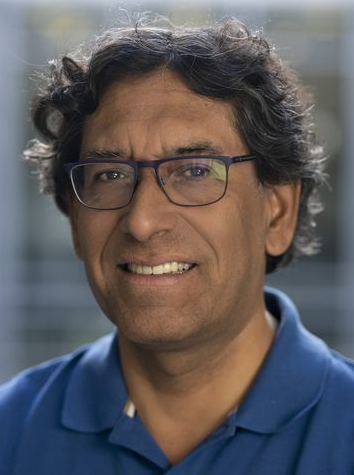 Enrique Solano合作论文数Kipu Quantum18
 G. Alvarado Barrios合作论文数Shanghai University14
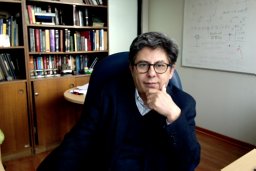 Juan Carlos Retamal合作论文数Departamento de F ´ õsica;Universidad de Santiago de Chile;Departamento de F ´ õsica, Universidad de Santiago de Chile10
 L. Lamata合作论文数5G. Romero合作论文数5F. A. Cárdenas-López合作论文数Int Ctr Quantum Artificial Intelligence Sci & Tec, Shanghai Univ5
 Natasha Barraza合作论文数4
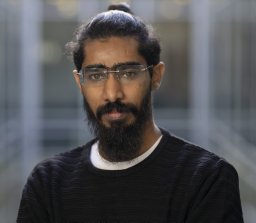 Narendra N. Hegade合作论文数Dept Phys, Shanghai Univ4
 Koushik Paul合作论文数Int Ctr Quantum Artificial Intelligence Sci & Tec, Shanghai Univ4
 Xi Chen (陈玺)合作论文数Qianweichang College, Shanghai University;College of Sciences, Shanghai University4
 Pranav Chandarana合作论文数Univ Basque Country, UPV EHU2Jie Peng合作论文数2
 Pinghua Tang合作论文数Key Lab. for Micro-/Nano-Optoelectron. Devices of Minist. of Educ., Hunan Univ.;c;Key Lab. for Micro-/Nano-Optoelectron. Devices of Minist. of Educ., Hunan Univ.2
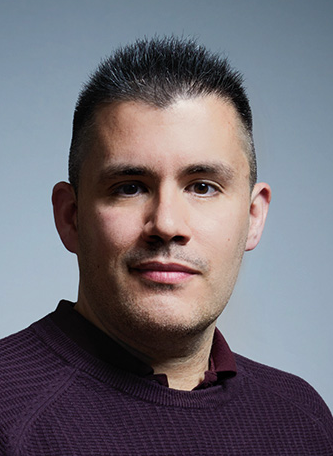 Mikel Sanz合作论文数Basque Center for Applied Mathematics;Department of Physical Chemistry, Faculty of Science and Technology, University of the Basque Country2
 Lucas Lamata Manuel合作论文数Departamento de Física Atómica, Molecular Y Nuclear, Universidad de Sevilla2Alejandro Gomez Cadavid合作论文数1Jianing Tang合作论文数1Hadiseh Alaeian合作论文数1Y. -D. Li合作论文数1Jing Yu合作论文数1Juncong Zheng合作论文数1
 M. Ahumada合作论文数Departamento de Física, Universidad Técnica Federico Santa María1
 Shubham Kumar合作论文数Int Ctr Quantum Artificial Intelligence Sci & Tech, Shanghai Univ1
 Yongcheng Ding合作论文数Dept Phys Chem, Univ Basque Country UPV EHU1Tian Junlong合作论文数1
 Francisco J. Pena合作论文数1
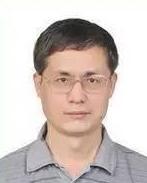 Zhongzhou Ren (任中洲)合作论文数School of Physics Science and Engineering, Tongji University1
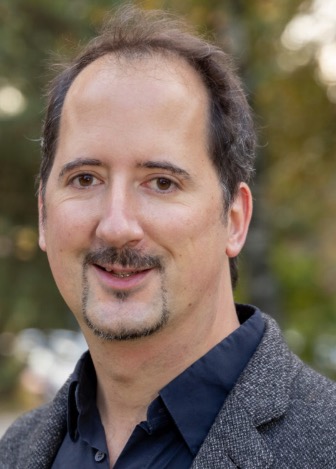 Adolfo del Campo合作论文数Department of Physics and Materials Science, Faculty of Science, Technology and Medicine, University of Luxembourg;Donostia International Physics Center;Department of Physics, University of Massachusetts Boston1
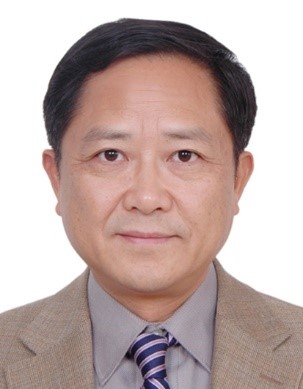 Jianxin Zhong (钟建新)合作论文数Department of Physics, College of Sciences, Shanghai University1
 Patricio Vargas合作论文数Departamento de Física, Universidad Técnica Federico Santa María1




