A measurement of the fragmentation functions of jets into charged particles in p Pb collisions and pp collisions is presented. The analysis utilizes 28 nb(-1) of p Pb data and 26 pb(-1) of pp data, both at root(TN)-T-s= 5.02 TeV, collected in 2013 and 2015, respectively, with the ATLAS detector at the LHC. The measurement is reported in the centre-of-mass frame of the nucleon-nucleon system for jets in the rapidity range vertical bar y*vertical bar <1.6 and with transverse momentum 45 < p(T) < 260 GeV. Results are presented both as a function of the charged-particle transverse momentum and as a function of the longitudinal momentum fraction of the particle with respect to the jet. The pp fragmentation functions are compared with results from Monte Carlo event generators and two theoretical models. The ratios of the p +Pb to pp fragmentation functions are found to be consistent with unity. (C) 2018 CERN for the benefit of the ATLAS Collaboration. Published by Elsevier B.V.
Bose-Einstein correlations between identified charged pions are measured for $p$+Pb collisions at $\sqrt{s_{\mathrm{NN}}}=5.02$ TeV using data recorded by the ATLAS detector at the LHC corresponding to a total integrated luminosity of $28$ $\mathrm{nb}^{-1}$. Pions are identified using ionization energy loss measured in the pixel detector. Two-particle correlation functions and the extracted source radii are presented as a function of collision centrality as well as the average transverse momentum ($k_{\mathrm{T}}$) and rapidity ($y^{\star}_{\pi\pi}$) of the pair. Pairs are selected with a rapidity $-2<y^{\star}_{\pi\pi}<1$ and with an average transverse momentum $0.1<k_{\mathrm{T}}<0.8$ GeV. The effect of jet fragmentation on the two-particle correlation function is studied, and a method using opposite-charge pair data to constrain its contributions to the measured correlations is described. The measured source sizes are substantially larger in more central collisions and are observed to decrease with increasing pair $k_{\mathrm{T}}$. A correlation of the radii with the local charged-particle density is demonstrated. The scaling of the extracted radii with the mean number of participating nucleons is also used to compare a selection of initial-geometry models. The cross-term $R_\mathrm{ol}$ is measured as a function of rapidity, and a nonzero value is observed with $5.1\sigma$ combined significance for $-1<y^{\star}_{\pi\pi}<1$ in the most central events.
The extended use of tracking information at the trigger level in the LHC is crucial for the trigger and data acquisition (TDAQ) system to fulfill its task.Precise and fast tracking is important to identify specific decay products of the Higgs boson or new phenomena, as well as to distinguish the contributions coming from the many collisions that occur at every bunch crossing.However, track reconstruction is among the most demanding tasks performed by the TDAQ computing farm; in fact, complete reconstruction at full Level-1 trigger accept rate (100 kHz) is not possible.In order to overcome this limitation, the ATLAS experiment is planning the installation of a dedicated processor, the Fast Tracker (FTK), which is aimed at achieving this goal.The FTK is a pipeline of high performance electronics, based on custom and commercial devices, which is expected to reconstruct, with high resolution, the trajectories of charged-particle tracks with a transverse momentum above 1 GeV, using the ATLAS inner tracker information.Pattern recognition and the track parameter extraction are expected to be performed in roughly 100 µs, allowing all the high level trigger selections to use the tracks provided by FTK in order to build high quality and robust triggering.
Real time tracking is a key ingredient for online event selection at hadron colliders. The Silicon Vertex Tracker at the CDF experiment and the Fast Tracker at ATLAS are two successful examples of the importance of dedicated hardware to reconstruct full events at hadron colliders. We present the future evolution of this technology, for applications to the High Luminosity runs at the Large Hadron Collider where Data processing speed will be achieved with custom VLSI pattern recognition and linearized track fitting executed inside modern FPGAs, exploiting deep pipelining, extensive parallelism, and efficient use of available resources. In the current system, one large FPGA executes track fitting in full resolution inside low resolution candidate tracks found by a set of custom ASIC devices, called Associative Memories. The FTK dual structure, based on the cooperation of VLSI AM and programmable FPGAs, will remain, but we plan to increase the FPGA parallelism by associating one FPGA to each AM chip. Implementing the two devices in a single package would achieve further performance improvements, plus miniaturization and integration of the state of the art prototypes. We present the new architecture, the design of the FPGA logic performing all the complementary functions of the pattern matching inside the AM, the tests performed on hardware
 Christos Gentsos合作论文数4
 Francesco Crescioli合作论文数LPNHE CNRS4
 Szymon Gadomski合作论文数Département d'Astronomie, Université de Genève;Department of Particle Physics, University of Geneva3
 Mauro Dell'Orso合作论文数3Dimitrios Sampsonidis合作论文数3John Alison合作论文数3Carlo Enrico Pandini合作论文数3Pierre Thor Elliot Taylor合作论文数3Chariclia Petridou合作论文数3Jian Cong Zeng合作论文数3Mathis Kolb合作论文数3
 Karol Krizka合作论文数3Alessandra Camplani合作论文数3Chiara Meroni合作论文数3Viviana Cavaliere合作论文数3Yuki Sakurai合作论文数3James Proudfoot合作论文数3Mauro Citterio合作论文数3Stefan Schmitt合作论文数Deutsches Elektronen-Synchrotron DESY3
 Stamatis (Akis) Gkaitatzis合作论文数University of Pisa3tomoya iizawa合作论文数3blake burghgrave合作论文数3Markus Atkinson合作论文数3Johanna Gramling合作论文数3paolo dondero合作论文数3Vincenzo Cavasinni合作论文数Universita di Pisa;Istituto Nazionale di Fisica Nucleare3
 Young-Kee Kim合作论文数Department of Physics, Physical Sciences Division, The University of Chicago;The Enrico Fermi Institute, The University of Chicago3
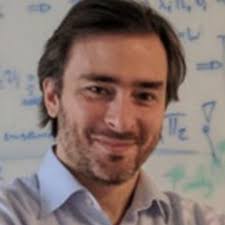 Simone Donati合作论文数Dipartimento di Fisica, Università di Pisa3Antonio Boveia合作论文数3Naoki Kimura合作论文数3
 Mario Antonelli合作论文数Laboratori Nazionali di Frascati LNF, Istituto Nazionale di Fisica Nucleare3james saxon合作论文数3
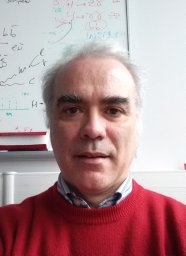 Giovanni Calderini合作论文数3
 Valerio Vercesi合作论文数Istituto Nazionale di Fisica Nucleare3philip chang合作论文数3Beretta Matteo Mario合作论文数Laboratori Nazionali di Frascati, Istituto Nazionale di Fisica Nucleare3Nicolo Vladi Biesuz合作论文数3
 A. Stabile合作论文数INFN Sezione di Milano,Milano,Italy3
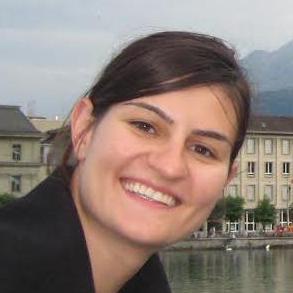 Nikolina Ilic合作论文数Department of Physics, Faculty of Arts and Science, University of Toronto3Agostino Lanza合作论文数3Marianna Testa合作论文数3Jeremy Love合作论文数3N. Andari合作论文数European Organization for Nuclear Research(CERN),Geneve,Switzerland3
 Alberto Annovi合作论文数INFN3
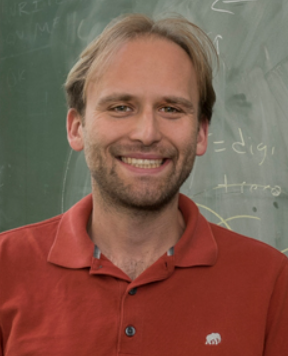 John Adelman合作论文数Department of Physics, Northern Illinois University3
 Mark Neubauer合作论文数Department of Physics, The Grainger College of Engineering, University of Illinois at Urbana-Champaign;National Center for Supercomputing Applications, University of Illinois at Urbana-Champaign3
 Attilio Andreazza合作论文数Dipartimento di Fisica, Università degli studi di Milano;Laboratorio di Trattamento Numerico dei Dati Sperimentali, Università degli studi di Milano;Istituto Nazionale di Fisica Nucleare3
 André Schöning合作论文数Institute of Physics, Heidelberg University3Paola Giannetti合作论文数3




