A bstract A search for the exclusive decays of the Higgs and Z bosons to a ϕ or ρ meson and a photon is performed with a pp collision data sample corresponding to an integrated luminosity of up to 35 . 6 fb −1 collected at $$ \sqrt{s}=13 $$ s = 13 TeV with the ATLAS detector at the CERN Large Hadron Collider. These decays have been suggested as a probe of the Higgs boson couplings to light quarks. No significant excess of events is observed above the background, as expected from the Standard Model. Upper limits at 95% confidence level were obtained on the branching fractions of the Higgs boson decays to ϕ γ and ρ γ of 4 . 8 × 10 −4 and 8 . 8 × 10 −4 , respectively. The corresponding 95% confidence level upper limits for the Z boson decays are 0 . 9 × 10 −6 and 25 × 10 −6 for ϕ γ and ρ γ, respectively.
A search for leptoquarks decaying into the bτ final state is performed using Run 2 proton-proton collision data from the Large Hadron Collider, corresponding to an integrated luminosity of 139 fb−1 at √(s) = 13 TeV recorded by the ATLAS detector. The benchmark models considered in this search are vector leptoquarks with electric charge of 2/3e and scalar leptoquarks with an electric charge of 4/3e. No significant excess above the Standard Model prediction is observed, and 95
The total and differential Higgs boson production cross-sections are measured through a combined statistical analysis of the H → ZZ* → 4ℓ and H → γγ decay channels. The results are based on a dataset of 139 fb−1 of proton–proton collisions at a centre-of-mass energy of 13 TeV, recorded by the ATLAS detector at the Large Hadron Collider. The measured total Higgs boson production cross-section is 55.5_-3.8^+4.0 pb, consistent with the Standard Model prediction of 55.6 ± 2.5 pb. All results from the two decay channels are compatible with each other, and their combination agrees with the Standard Model predictions. A combined statistical interpretation of the measured fiducial cross-sections as a function of the Higgs boson transverse momentum is performed in order to probe the Yukawa couplings to the bottom and charm quarks. A similar interpretation is performed by including also the constraints from the measurements of Higgs boson production in association with a W or Z boson in the H → bb and cc decay channels.
A technique is presented to measure the efficiency with which c -jets are mistagged as b -jets (mistagging efficiency) using $$t\bar{t}$$ t t ¯ events, where one of the W bosons decays into an electron or muon and a neutrino and the other decays into a quark–antiquark pair. The measurement utilises the relatively large and known $$W\rightarrow cs$$ W → c s branching ratio, which allows a measurement to be made in an inclusive c -jet sample. The data sample used was collected by the ATLAS detector at $$\sqrt{s} = 13$$ s = 13 $$\text {TeV}$$ TeV and corresponds to an integrated luminosity of 139 fb $$^{-1}$$ - 1 . Events are reconstructed using a kinematic likelihood technique which selects the mapping between jets and $$t\bar{t}$$ t t ¯ decay products that yields the highest likelihood value. The distribution of the b -tagging discriminant for jets from the hadronic W decays in data is compared with that in simulation to extract the mistagging efficiency as a function of jet transverse momentum. The total uncertainties are in the range 3–17%. The measurements generally agree with those in simulation but there are some differences in the region corresponding to the most stringent b -jet tagging requirement.
In the published HTML version of this article, the affiliations of the authors of the National Research Nuclear University MEPhI, Moscow, Russia were unfortunately marked incorrectly.
An error in the normalization of the Aplanarity and D-parameter has been found. Insufficient precision on the eigenvalue calculation can cause lambda(3) to be negative, exclusively in two-jet events, yielding an underestimation of the inclusive two-jet cross section.
 Alberto Annovi合作论文数INFN692
 Dante Amidei合作论文数Department of Physics, College of Literature, Science, and the Arts, University of Michigan678
 Bruce Barnett合作论文数William H. Miller III Department of Physics and Astronomy, Krieger School of Arts and Sciences, Johns Hopkins University575
 J. Antos合作论文数560
 Joseph Boudreau合作论文数Department of Physics and Astronomy, University of Pittsburgh555
 Peter J. Bussey合作论文数School of Physics & Astronomy, University of Glasgow539
 Ben Brau合作论文数Department of Physics, College of Natural Sciences, University of Massachusetts Amherst532C. Blocker合作论文数526
 Lucio Cerrito合作论文数Dipartimento di Fisica, Università degli studi di Tor Vergata526A. Cerri合作论文数A.G. Clark515
 Juerg Beringer合作论文数Physics Division, Lawrence Berkeley National Laboratory476Sandro De Cecco合作论文数475S. M. Farrington合作论文数472
 Steven Errede合作论文数Department of Physics, The Grainger College of Engineering, University of Illinois Urbana-Champaign469
 Daniela Bortoletto合作论文数Department of Physics, University of Oxford463
 Anadi Canepa合作论文数Fermi National Accelerator Laboratory462
 Jean-François Arguin合作论文数Département De Physique, Faculté Des Arts Et Des Sciences, Université de Montréal452
 Melissa Franklin合作论文数Department of Physics, Harvard University450Andrea Bocci合作论文数CERN450V. Boisvert合作论文数446
 S. Giagu合作论文数INFN Sezione di Roma, Sapienza University446
 Giorgio Chiarelli合作论文数Istituto Nazionale di Fisica Nucleare445
 C. Bromberg合作论文数Michigan State University, USA444R. E. Blair合作论文数University of Bologna442
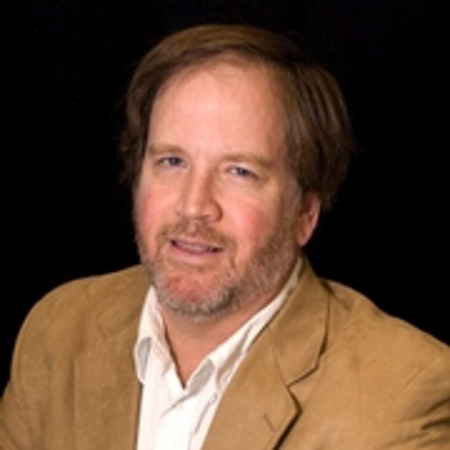 Joey W Huston合作论文数Department of Physics & Astronomy, College of Natural Science, Michigan State University437
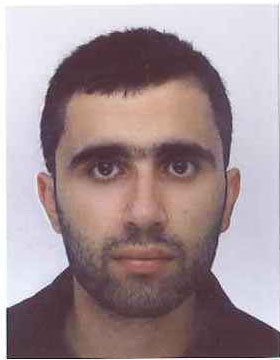 Georges Aad合作论文数Aix-Marseille University437
 Tim Adye合作论文数Particle Physics Department, Rutherford Appleton Laboratory430P. Catastini合作论文数Istituto Nazionale di Fisica Nucleare Pisa 56127 Pisa Italy428D. Benjamin合作论文数424
 Giulio Aielli合作论文数Dipartimento di Fisica, Università degli studi di Tor Vergata;CERN420
 Alison Lister合作论文数Department of Physics & Astronomy, Faculty of Science, The University of British Columbia419
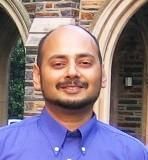 Ashutosh V. Kotwal合作论文数Department of Physics, Trinity College of Arts & Sciences, Duke University419E. Brubaker合作论文数417
 Bárbara Álvarez González合作论文数Departamento de Física, Universidad de Oviedo417
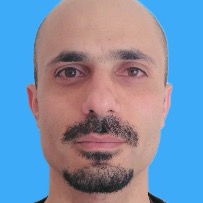 Muhammad Alhroob合作论文数Department of Physics, University of Warwick413
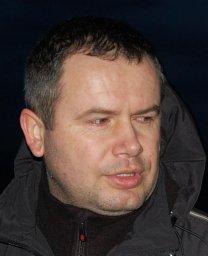 Calin Alexa合作论文数Horia Hulubei National Institute of Physics and Nuclear Engineering412M. Aleksa合作论文数European Laboratory for Particle Physics (CERN), CH-1211 Geneva 23, Switzerland408I. Gorelov合作论文数406
 Julien Donini合作论文数Laboratoire de Physique de Clermont Auvergne, Institut National De Physique Nucléaire Et De Physique Des Particules, CNRS;Université Clermont Auvergne405Shaoqi Hou合作论文数405
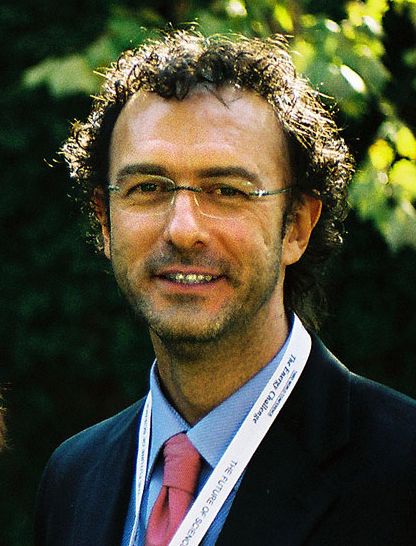 Gianluca Alimonti合作论文数Istituto Nazionale di Fisica Nucleare;University of Milan405
 Roman Lysák合作论文数Department of Experimental Particle Physics, Division of Elementary Particle Physics, Institute of Physics of the Czech Academy of Sciences403Silvia Amerio合作论文数Liceo Statale Galileo Galilei;University of Padua403Leszek Adamczyk合作论文数AGH University of Science and Technology402A. Anastassov合作论文数401Henso Abreu合作论文数Institut National de Physique Nucléaire et de Physique des Particules401
 Theo Alexopoulos合作论文数Department of Physics, School of Applied Mathematical & Physical Sciences, National Technical University of Athens;Hellenic Open University400
 Brad Abbott合作论文数Homer L. Dodge Department of Physics and Astronomy, Dodge Family College of Arts and Sciences, The University of Oklahoma400M. D'Onofrio合作论文数Univ Liverpool395




