The hardness and the microstructure evolution are studied in the Fe20Co18W (mass %) alloy aged at 800 degrees C after a solution treatment at 1380 degrees C. The hardness strongly increases at the onset of the annealing treatment then decreases. The precipitation sequence is characterized using X-ray diffraction and transmission electron microscopy. Several phases are identified during the annealing: nanometric W rich clusters, FeCoW ordered domains, nanometric plate shaped precipitates of Laves phase then micrometric Laves phase precipitates. The specific effect of Co addition on mechanical properties of FeCoW alloys is likely due to the formation of the FeCoW ordered compound at the beginning of aging and to the larger stability domain of the Laves phase in these alloys. (C) 2010 Elsevier Ltd. All rights reserved.
The structural hardening obtained in high-strength aluminium alloys originates from a fine dispersion of precipitates in the matrix. The most efficient hardening shapes are non isotropic (typically needles or plates). Both interfacial energy and stress due to misfit between precipitates and matrix can explain the formation of these anisotropic precipitates. This paper presents a preliminary study which evaluates the influence of an externally applied stress on the precipitation of plate-shaped precipitates of the (Al2Cu) phase in an Al-Cu-Mg-Ag alloy. We have used small-angle X-ray scattering (SAXS) to record in situ the formation of the phase under different level of external stress. SAXS gives access to the size and the relative volume fraction of precipitates. It is shown that different level of stress produce little difference in the observed precipitates. Before the precipitation of the platelets, clusters of atoms, presumably Agand Mgrich, are forming. Oppositely to , the shape of these clusters seems to be affected by the external stress.
The early processes in the de-caging of acetic acid from o-nitrobenzyl acetate (oNBAc) were studied by femtosecond techniques. Solutions of oNBAc in acetonitrile were excited by 260nm laser pulses and the resulting spectroscopic changes probed by transient absorption and stimulated Raman spectroscopy. Absorption and Raman data give evidence of the formation of an aci-nitro species resulting from an intramolecular hydrogen transfer. The species is formed on the 1ps and 1ns time scale in equal amounts. The two processes are attributed to hydrogen transfers via a singlet and a triplet channel. The overall quantum yield of the aci-nitro formation is 0.1 matching the de-caging yield.
The friction-stir welding (FSW) process induces both heat and deformation which lead to inhomogeneous precipitation microstructures in structural hardening alloys. A map of this microstructure can be obtained by 2D scanning SAXS in alloys where(a) a single phase is precipitating and (b) the precipitates are roughly isotropic. In Al-Li-Cu alloys, these conditions are not fullfilled. Very anisotropic precipitates are forming (T-1 and theta') with aspect ratios in the range 10 to 100. The inhomogeneity in the texture of the material (due to the deformation and recrystallisation) is a strong obstacle to the interpretation of the SAXS signal. This paper is an attempt to apply systematic simple interpretation models to characterise the precipitation microstructure across the weld area. It shows that in certain condition, it is possible to apply simple Guinier-type plot to extract the morphologies (length and thickness) of the particles.
Using a combination of experimental techniques, including anomalous small-angle scattering and atom-probe tomography, the evolution of precipitate microstructures during the different steps of retrogression and re-ageing (RRA) heat treatments of an Al–Zn–Mg–Cu alloy has been systematically evaluated. Quantitative information on the morphology, scale and chemistry of the precipitates provide new insight into the mechanisms at work during this process. It is shown that both the final chemistry and precipitate size distribution are different in the final RRA temper compared to classical heat treatments, with the presence of small clusters nucleated during the re-ageing step, and an average precipitate composition richer in Cu, together with a matrix enrichment in Zn, related to the difference in diffusivity between the two solute atoms. The mechanisms of precipitate evolution during the reversion and re-ageing steps are discussed in light of the influence of the process parameters.
Bulk metallic glasses are out of equilibrium materials and consequently they tend to crystallize when heated in the supercooled liquid region. Crystallization has been shown to change drastically the properties of the BMG. However, in order to quantify these changes due to crystallization, it is first necessary to get detailed information about the structure evolution and especially the size and volume fraction of the crystallites. Partial crystallization of the Vitreloy 1 metallic glass is carried out in the supercooled liquid region. The crystallization is quantified by DSC and XRD measurements and the obtained values are compared. An important difference is observed and the maximum volume fraction is compared to the value predicted by appropriate numerical simulations. It is shown that XRD measurements seem to be appropriate to calculate the crystallite volume fraction while care must be taken if using DSC measurements.
Nanocavities created in silicon using high energy He+ implantation are studied using the combination of transmission electron microscopy experiments and small-angle X-ray scattering measurements. The complementarity of the two techniques is presented and using the results from both techniques, a complete characterisation of nanocavities can be drawn in terms of location of the implanted region, morphology, mean size and volume fraction as well as the cavity size distribution.
The composition of precipitates in three alloys of the Al–Zn–Mg–Cu system has been investigated for different heat treatments, including peak-aged and over-aged states as well as near-equilibrium conditions, by combining atom probe tomography and systematic anomalous small-angle X-ray scattering experiments. We show that the concentration of Cu in the precipitates changes during heat treatments and is alloy dependent. At low ageing temperature (120°C) the Cu content in the precipitates is close to the alloy content. The precipitate Cu content is shown to increase with increasing temperature and Cu alloy content. We show that in near-equilibrium conditions the precipitate compositions are 33at.% in Mg, about 15at.% in Al, about 13at.% in Cu and balance Zn. Our results strongly suggest that the gradual incorporation of Cu in the precipitates during the heat treatment is essentially related to the slower diffusivity of this element in aluminium.
In a coherent X-ray small-angle experiment, heterodyning between the scattering amplitudes of two samples is obtained by stacking a static reference and a fluctuating sample. Results of homodyne and heterodyne measurements are compared in the case of 98 nm diameter latex particles in glycerol. The method is also used for the study of the slow relaxation process of carbon-black-filled ethylene–propylene elastomers corresponding to the relaxation of the carbon black skeleton after a 100% elongation. On the scale of the 10 µm coherent beam, heterodyning is used to separate fluctuations from long-term flowing of the sample. We show that this flow can be observed for about 10 h, with velocities of the order of nanometres per second. Random fluctuations are dominant in the speckle changes only for large q values (q > 2 × 10⁻² A−1) and after a long relaxation time.
Laser direct metal Deposition (DMD) has attracted considerable attention in recent years and has been developed for use in the aerospace industry with various high temperature materials. In nickel-base superalloys, due to the processing conditions found in DMD, little precipitation of γ' is seen in the as-deposited condition. In order to recover the mechanical properties local aging is required, which could be undertaken using a defocused laser beam if γ′ precipitation is sufficiently rapid. Detailed characterisation of the γ′ precipitation and coarsening response during aging of DMD Waspaloy has been undertaken. Novel in-situ studies were carried out using small angle synchrotron x-ray scattering (SAXS) for studying precipitation and coarsening of γ′ at various temperatures. For some aging temperatures, two populations of γ′ precipitates coarsening at different rates were found. Detailed ultra high resolution SEM and energy dispersive x-ray spectroscopy (EDS) revealed that the two γ′ populations can be attributed to chemical segregation in the material.
Fully austenitic steels of the Fe-Mn-C system can show extensive deformation twinning (TWIP effect). The deformed microstructure of such steels has been analysed using X-ray diffraction at the European Synchrotron Radiation Facility (ESRF). The experimental diffractograms, recorded using a 2D CCD camera, are analysed in terms of Bragg peak profiles (broadening and asymmetry) and position (shift from the reference [undeformed state] position) leading to an estimation of dislocation and stacking faults densities.
The deformation mechanisms of an Fe-Mn-C TWIP steel have been investigated as a function of deformation and deformation temperature, using synchrotron X-ray diffraction at the European synchrotron radiation facility. Using the Warren theory, it is possible to reach a good qualitative understanding of the deformation mechanisms. We have confirmed that the deformation mechanisms shifted from the formation of martensite at very low temperature, to twinning around room temperature and dislocations at higher temperatures. Although some quantification of the density of crystalline defects can be reached using simple parameters such as peak shift and broadening, the complexity of defects present in this material require the development of more advanced data interpretation models. First results are shown, using shift and broadening of the peak and fit of intensity by a pseudo-voigt function, as well as the study of the asymptotic behavior of the intensity.
This paper presents a physically based precipitation model which aims at describing precipitation kinetics when it occurs exclusively on dislocations. We present specific nucleation, growth and coarsening equations, which are integrated in a set of differential equations. This model is successfully applied to the case of precipitation of NbC in a ferritic steel, whose kinetics has been determined by small-angle neutron scattering.
We report on the dynamics of phason modes in the i-Al-Pd-Mn icosahedral quasicrystal, measured between room temperature and 650 degrees C, using the X-ray intensity fluctuation spectroscopy (XIFS) technique. Up to 500 degrees C, the autocorrelation function, F(q, t), displays almost no time evolution as expected for frozen-in phason fluctuations at low temperature. At higher temperatures, F( q, t) follows a single exponential time decay from which the characteristic time tau(C)(q) is extracted. These results are compared to the expected shape of F(q, t) as derived from the expressions of the eigenvalues and eigenvectors of the C-perpendicular to perpendicular to(q) phason dynamical matrix. In agreement with the hydrodynamic theory of quasicrystals, which predicts phasons with diffusive character, we find that tau(C)(q) varies linearly with q(-2) at 650 degrees C. The corresponding diffusion coefficient is 2.2(+/- 0.5) x 10(-18) m(2) s(-1) and the activation energy is estimated around 2.3(+/- 1) eV.
A straightforward way of measuring X-ray intensity fluctuation spectroscopy in a small-angle X-ray scattering configuration is demonstrated using heterodyne techniques. Two examples are presented: the Brownian motion of latex spheres in glycerol, and a Doppler velocity experiment demonstrating the motion and the relaxation of carbon-black-filled elastomers after uniaxial stretching. In the latter case the effects of mechanical relaxation can be separated from those of aggregate diffusion. The results suggest that the dynamics of these filled elastomers are similar to the universal features observed in disordered jammed systems.
This paper presents two studies illustrating the possibilities of Small-Angle X-ray Scattering for characterising quantitatively the state of precipitation in aluminium alloys. In the first example, maps are presented, of precipitate size and volume fraction in the cross-section of friction stir welds of AA7449 alloy. It is shown that the influence of welding speed on the distribution of mechanical properties can be understood using this microstructural data. In the second example, the precipitation kinetics in an Al-Zr-Sc alloy is evaluated by in-situ small angle X-ray scattering. Evidence is given for the heterogeneous chemical structure of the Al3(Zr,Sc) precipitates, consisting of a Zr-rich shell surrounding a Sc-rich core. It is shown that this particular distribution results in a very good resistance to coarsening of the precipitate microstructure.
The fine-scale precipitation of NbC in ferrite has been quantitatively characterized in the temperature range 873 - 1073 K for two alloy compositions, containing respectively 800 p. p. m. Nb and 400 p. p. m. Nb ( by weight). Transmission electron microscopy (TEM) has revealed that the precipitates are located on dislocations, and have a plate-like morphology with an average aspect ratio between 2 and 3. Small-angle neutron scattering (SANS) has been systematically used to determine the precipitation kinetics. The validity of the quantitative SANS measurements of size and volume fraction has been assessed by TEM image analysis and chemical dissolution experiments. The precipitation kinetics is observed to depend strongly on temperature but to be similar for the two alloy compositions. From the measurements, it is inferred that precipitate nucleation is extremely rapid, in relation to the nature of the nucleation sites. A time - temperature transformation diagram is built from the kinetic data, showing a maximum reaction rate between 973 and 1073 K.
The temperature dependence of the x-ray scattering in the region below the first sharp diffraction peak was measured for silica glasses with low and high OH content (GE-124 and Corning 7980). Data were obtained upon scanning the temperature at 10, 40 and 80 K/min between 400 K and 1820 K. The measurements resolve, for the first time, the hysteresis between heating and cooling through the glass transition for silica glass, and the data have a better signal to noise ratio than previous light scattering and differential thermal analysis data. For the glass with the higher hydroxyl concentration the glass transition is broader and at a lower temperature. Fits of the data to the Adam-Gibbs-Fulcher equation provide updated kinetic parameters for this very strong glass. The temperature derivative of the observed X-ray scattering matches that of light scattering to within 14
 Frederic Livet合作论文数29 B.P. 75–38402 Saint Martin D'Heres - France40
 Erik Geissler合作论文数17
 Alexis Deschamps合作论文数15S. Lefebvre合作论文数13J. P. Simon合作论文数12F. Ehrburger-Dolle合作论文数10M. Fayard合作论文数10M. Bessière合作论文数8Cyrille Rochas合作论文数8Isabelle Morfin合作论文数8R Caudron合作论文数7
 Mark Sutton合作论文数Department of Physics, McGill University7Am Hecht合作论文数6P. Donnadieu合作论文数6
 Antoine Letoublon合作论文数Institut Foton6
 Marc de Boissieu合作论文数Institut d'Ingénierie et de Management, Universite Grenoble Alpes6Fabien Perrard合作论文数6Flora Yakhou合作论文数5P. Cenedese合作论文数4Jacques Mainville合作论文数4Jeanlouis Desplat合作论文数4Yvonne Calvayrac合作论文数4Y. Bréchet合作论文数3G Grübel合作论文数3
 Jean Francois Berar合作论文数3
 Philippe Maugis合作论文数Aix Marseille Univ3
 Patrick Achard合作论文数Institut de Biologie Moleculaire des Plantes, Universite de Strasbourg3
 M. Veron合作论文数INPG, Institut National Polytechnique de Grenoble3Joseph Gastaldi合作论文数3m roth合作论文数3
 Ferenc Horkay合作论文数Eunice Kennedy Shriver National Institute of Child Health and Human Development, National Institutes of Health;Semmelweis University3Jean-Paul Simon合作论文数3
 Jean-Louis Hazemann合作论文数3Marie-Vanessa Coulet合作论文数CNRS3
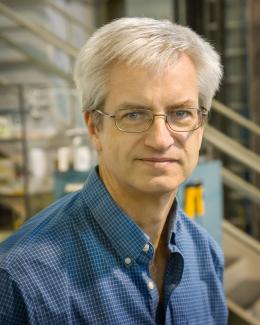 Douglas L Abernathy合作论文数Spectroscopy Section, Neutron Scattering Division, Oak Ridge National Laboratory3T. Marlaud合作论文数3C. Vettier合作论文数2m nicolas合作论文数2D. le Bolloc'h合作论文数2
 Simon G. Mochrie合作论文数Department of Applied Physics, Yale University2
 Laurent David合作论文数Université Claude Bernard Lyon 1, Université de Lyon2
 Sonia Francoual合作论文数2Hiroshi Okuda合作论文数2Colin Scott合作论文数2N. Pinto合作论文数2G. Dolino合作论文数2
 M. Sutton合作论文数Physics Department,McGill University2Pierre Guyot合作论文数2
 Myriam Dumont合作论文数2




