In his teaching, Charcot often used artistic representations from previous centuries to illustrate the historical developments of various conditions, particularly hysteria, mainly with the help of his pupil Paul Richer. Charcot liked to draw portraits and sketches of colleagues during boring faculty meetings and students' examinations, including caricatures of himself and others, church sculptures, landscapes, soldiers, and so on. He also used this skill in his clinical and scientific work. He drew histological or anatomic specimens, as well as patients' features and demeanor. His most daring artistic experiments were drawing under the influence of hashish. Charcot's tastes in art were conservative; he displayed little interest for the avant-gardes of his time, including impressionism, or for contemporary musicians, such as César Franck or Hector Berlioz. The pamphleteer Léon Daudet described Charcot's home as a pseudo-gothic kitsch accumulation of heteroclite pieces of furniture and materials. However, he taught medicine not only as a science but also as an art, a style that has now been almost universally forgotten.
This paper retraces the early history of the European Journal of Neurology (EJN), as it is about to enter its 30th year. It describes how our discipline organized itself during the latter part of the 20th century in Europe. In some ways, the creation and the evolution of the journal parallel the process of unification of Europe in its current form in the late 1980s and early 1990s. It started as a new journal with no impact factor and no indexation. It grew progressively thanks to the support of the European Federation of Neurological Societies (EFNS) and from the European scientific community The progressive merging of EFNS with the European Society of Neurology and the creation of the European Academy of Neurology were essential for reaching the current prominence of EJN within neurological publishing and for making it the widely heard official voice of European neurology.
The foundation by Jean-Martin Charcot (1825-1893) of the Salp & ecirc;tri & egrave;re School in Paris had an influential role in the development of neurology during the late-nineteenth century. The international aura of Charcot attracted neurologists from all parts of the world. We here present the most representative European, American, and Russian young physicians who learned from Charcot during their tutoring or visit in Paris or Charcot's travels outside France. These include neurologists from Great Britain and Ireland, the United States, Germany and Austria, Switzerland, Russia, Italy, Spain, Belgium and the Netherlands, Scandinavia and Finland, Poland, Bohemia, Hungary, and Romania. Particularly emblematic among the renowned foreign scientists who met and/or learned from Charcot were Charles-Edouard Brown-S & eacute;quard, who had interactions with Paris University and contributed to the early development of British and American neurological schools; John Hughlings Jackson, who was admired by Charcot and influenced French neurology similarly as Charcot did on British neurology; Silas Weir Mitchell, the pioneer in American neurology; Sigmund Freud, who was trained by Charcot to study patients with hysteria and then, back in Vienna, founded a new discipline called psychoanalysis; Aleksej Yakovlevich Kozhevnikov and almost all the founders of the Russian institutes of neurology who were instructed in Paris; and Georges Marinesco, who established the Romanian school of neurology and did major contributions thanks to his valuable relation with Charcot and French neurology.
Machado-Joseph disease (MJD), or spinocerebellar ataxia type 3, was originally described in members of the families of Machado, Thomas, and Joseph from São Miguel Island, Azores, Portugal, in 1972. The purpose of this article is to present previous descriptions of hereditary ataxia resembling the heterogeneous phenotypic intra-familiar presentation of MJD. We suggest that the condition would best be called dominant spino-pontine atrophy.
Transnational exchanges have existed for centuries, with both economic and cultural effects. At the end of the 18th century, in the aftermath of the French Revolution, medical education in France underwent radical innovations, prefiguring the training system now almost universally accepted. This paper presents 19th and early 20th century neurology-related exchanges between the United States (US) and Europe, particularly, Paris, which had become a major medical center and where many US neurologists were trained. We discuss some of the intense neurology-related exchanges between the USA and Europe, notably the role of US neurology founders William Alexander Hammond, Silas Weir Mitchell, Edward Seguin as well as Mauritius-born Charles Edouard Brown-Séquard and a few others. We emphasize the mutual benefits that resulted from such exchanges. In later years, the trend reversed with many foreigners, particularly Europeans coming to improve their knowledge in the US. More recently, a shared pattern of travel and enrichment is occurring despite current threats caused by isolationism and undue stress on local identity.
This chapter pays homage to the masters who made neuropsychology an esteemed and legitimate field in the 19th and 20th centuries. Here we offer a brief biography for each of them and an analysis of their discoveries: Théophile Alajouanine (1890-1980), Henry Charlton Bastian (1837-1915), Arthur L. Benton (1909-2006), Julian de Ajuriaguerra (1911-1993), Ennio De Renzi (1924-2016), Norman Geschwind (1926-1984), Kurt Goldstein (1878-1965), Henry Head (1861-1940), Henry Hécaen (1912-1983), Pierre Janet (1859-1947), François Lhermitte (1921-1998), Jean Lhermitte (1877-1959), Hugo Karl Liepmann (1863-1925), Heinrich Lissauer (1861-1891), Alexander Romanovich Luria (1902-1977), Brenda Milner (1918-), Théodule Ribot (1839-1916), Charles Richet (1850-1935), Paul Sollier (1861-1933), and Carl Wernicke (1848-1905).
Thomas Mann (1875-1955) is considered one of the most influential writers of the late nineteenth and early twentieth century. In addition to his novels and essays, he was well known for his criticisms of the Nazi party, and particularly against the racial nationalism promoted by Adolf Hitler after the First World War, as well as for his depiction of diseases. Here, we provide a quick sketch of Mann's life and his relationship with nineteenth to twentieth century German society. We then proceed to describe how Mann became interested in diseases, how he used the diseases as metaphors, and his specific contribution to the field of neurology. We describe some of the neurological cases portrayed in Mann's work, and particularly epilepsy described in The Buddenbrooks, Felix Krull and The Magic Mountain, meningitis, neurosyphilis and migraines depicted in Doctor Faustus, and essential tremor described in The Magic Mountain and Doctor Faustus. We conclude with reflections about Mann's interest in diseases and particularly in neurology.
The topic “Language and language disorders” fits well into a meeting dedicated to the history of the frontal lobes because that is where it all began. The ability to communicate is certainly not restricted to humans but language is. Specifically the ability to learn, articulate and use symbolic language, the use of accompanying facial and body gestures, the ability to teach and correct are all unique to humans. They are related to the development of frontal lobe structures, with mirror neurons the likely neuronal basis of these abilities [1], [2], [3]. The birth of neuropsychology in its current meaning occurred in the second part of the 19th century when studies of language and its disorders were linked to lesions of structures located in the frontal lobes. There were several contributors. Broca of course comes to mind but others played a role, some even preceded him. Jean-Baptiste Boullaud had gone as far as offering 500 francs to “anyone who could produce the brain of one who had during life lost speech, and which did not show any frontal lesion”. On April 4th 1861, his son-in-law Ernest Aubertin made a presentation on “the seat of articulated language”. That date is considered “the most important one in the history of aphasiology” by McDonald Critchley (1970, p. 61) [4]. As for Broca, his contribution first formally presented on May 2nd 1861 was crucial, but it must be remembered that this was only a relatively short parenthesis in a life dedicated to surgery and above all to anthropology. We will conclude with the cri de douleur of Pierre Marie who proclaimed that the third frontal convolution plays no role on language function. This iconoclastic position was later discretely retracted, but we will summarize the fierce debates, particularly those of 1908 when a duel of swords was fortunately cancelled to become a duel of words [5]. We will present the taped voice of two very reduced patients from Henry Hécaen's Unit [6]. In his signature book “Introduction à la Neuropsychologie” (1972), he refers to these two patients as examples of “Aphasie de réalisation phonématique”. To this day the precise definition of Broca's aphasia and aphemia is not entirely agreed upon except mostly for one thing: the lesion is in the frontal lobes [1], [2], [3], [4], [5], [6].
ABSTRACT Thomas Mann (1875–1955), a Nobel Prize recipient rightly considered one of the great novelists of the twentieth century, was one of the most medically perceptive writers of recent times. His novels take place against the background of the different plagues (tuberculosis, cholera) that characterized the eighteenth and nineteenth centuries. One of Mann’s later novels, Doctor Faustus, is set against a background of syphilis. In the 500-page book, which is subtitled The Life of the German Composer Adrian Leverkühn as told by a Friend, we see the theologian turned composer make a pact with the devil. He “voluntarily” contracts syphilis and, as a result of the pact and despite (or because of) the disease, Leverkühn starts a brilliant 24-year career, becoming the greatest German composer of his time. While it is widely thought that Arnold Schoenberg (1874–1951) is the model for Leverkühn, we will show that other composers of the time also inspired the fictitious musician’s life and works. We will also illustrate the parallel between Leverkühn’s disease progression and political events in Germany in the 1930s and 1940s and their similarity with current political events.
Almost 40 years ago, Boller et al. published a set of papers documenting the cognitive and neuropathological changes in some patients with Parkinson's disease (PD), which apparently contradicted the classic notion enunciated by Parkinson himself that “the senses and intellect are uninjured” in these patients. However, Charcot and Vulpian and, more recently, M. Neuman, E.C. Alvord and M. Victor had earlier noted cognitive and/or neuropathological impairment in PD patients. These findings sparked a debate to establish whether cognitive deficits were part of the disorder or whether they could be explained by other mechanisms, such as depression, pharmacological treatments or even the coincidental development of age-related pathologies such as Alzheimer's disease. At this time, the presence of cognitive impairment has been clearly established through formal neuropsychological evaluations of larger sample populations, and there is agreement that a wide range of cognitive dysfunction arises in PD. Such changes can be distinguished from other dementia syndromes, and PD is now considered a subcortical dementia characterized by changes in processing speed, attention and working memory especially in the visuospatial domain, in addition to the involvement of language and episodic memory, and disturbances in mood and behavior. In conclusion, it is now established that, in PD, in addition to the motor symptoms (tremor, bradykinesia, rigidity, postural instability), patients often manifest a heterogeneous range of cognitive impairment and neuropsychiatric symptoms, which impact their daily lives and require a specific therapeutic approach.
Art is defined as expression or application of human creative skill and imagination producing works to be appreciated primarily for their aesthetic value or emotional power. This definition encompasses two very important elements-the creation and reception of art-and by doing so it establishes a link, a dialogue between the artist and spectator. From the evolutionary biological perspective, activities need to have an immediate or remote effect on the population through improving survival, gene selection, and environmental adjustment, and this includes art. It may serve as a universal means of communication bypassing time, cultural, ethnic, and social differences. The neurological mechanisms of both art production and appreciation are researched by neuroscientists and discussed both in terms of healthy brain biology and complex neuronal networking perspectives. In this paper, we describe folk art and the issue of symbolic archetypes in psychoanalytic thought as well as offer neuronal mechanisms for art by emphasizing mirror/neurons and the role they play in it.
 Michael Aminoff合作论文数Department of Neurology, School of Medicine, University of California, San Francisco;Weill Institute for Neurosciences, School of Medicine, University of California, San Francisco34
 Dick F. Swaab合作论文数University of Amsterdam33
 Julien Bogousslavsky合作论文数Swiss Medical Network;Clinique Valmont;University of Franche-Comté10
 Nicoletta Caputi合作论文数Dept Life Hlth & Environm Sci, Univ Aquila8
 Pierre Marcie合作论文数7Youngjai Kim合作论文数7P. Bart Vrtunski合作论文数5Gianfranco Dalla Barba合作论文数5JL MACK合作论文数4Traykov Latchezar合作论文数4
 Anne-Sophie Rigaud合作论文数Hôpital Broca4M. Roudier合作论文数4
 Domenico Passafiume合作论文数4Elena Sinforiani合作论文数3Daniel Birnbaum合作论文数3L Morrow合作论文数3
 Sabina Pappatà合作论文数Consiglio Nazionale delle Ricerche Istituto di Biostrutture e Bioimmagini3Forette Francoise合作论文数3Mazzucchi Anna合作论文数3
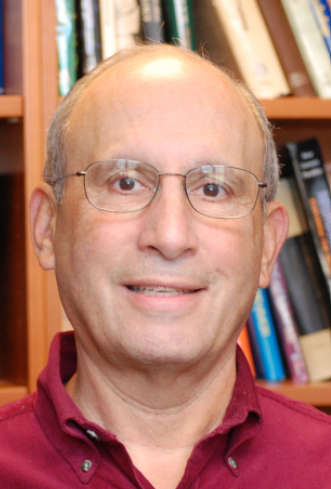 Stanley Finger合作论文数Psychological & Brain Sciences, Arts and Sciences, Washington University in St. Louis3Dahlia W. Zaidel合作论文数Department of Psychology3Anne Stiles合作论文数3Florence Moulin合作论文数3Francoise Forette合作论文数3Alissa Romano合作论文数2W.B.P. Matuja合作论文数2V. Gourlet合作论文数2Y Samson合作论文数2L. Traykov合作论文数2F. Moulin合作论文数2Leona Bassein合作论文数2M B Pérol合作论文数2anne fontainedabernard合作论文数2Marie-Claire Goldblum合作论文数2L Traykov合作论文数2R Couderc合作论文数2L Caputo合作论文数2Olivier Walusinski合作论文数2
 Guido Gainotti合作论文数Università Cattolica del Sacro Cuore2
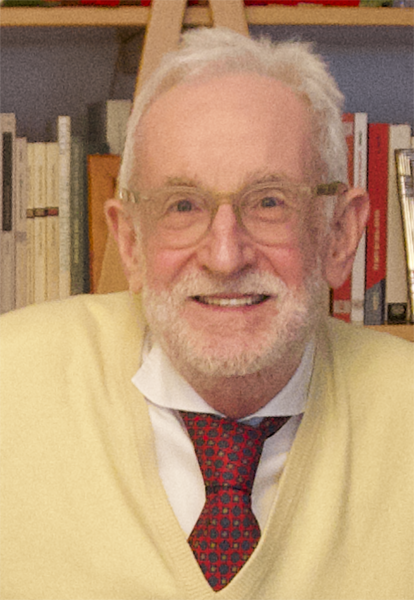 Giuseppe Vallar合作论文数Dipartimento di Psicologia, dell’Universita degli Studi di Milano-Bicocca2
 Francesca Morgante合作论文数Department of Neurology, St George's, University of London2
 Henry J. Kaminski合作论文数Department of Neurology, Case Western Reserve University2Charles Duyckaerts合作论文数2
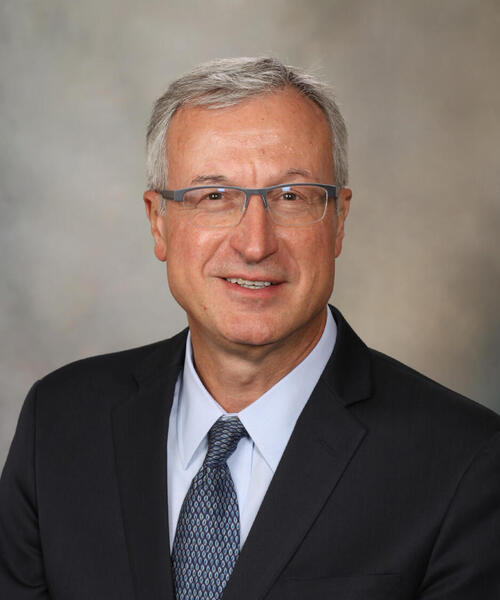 Walter A. Rocca合作论文数Division of Epidemiology, Department of Quantitative Health Sciences, Mayo Clinic;Division of Neurology, Department of Quantitative Health Sciences, Mayo Clinic2
 Giuseppe Plazzi合作论文数Institute of Neurological Sciences of Bologna, University of Bologna2Federica Provini合作论文数2Ludovica Caputo合作论文数2A. Le Divenah合作论文数2
 Monica Zilbovicius合作论文数INSERM-CEA U.1000 Imaging and Psychiatry, Orsay, France2




