We study four dimensional gauge theories in the context of an equivariant extension of the Batalin-Vilkovisky (BV) formalism. We discuss the embedding of BV Yang-Mills (YM) theory into a larger BV theory and their relation. Partial integration in the equivariant BV setting (BV push-forward map) is performed explicitly for the abelian case. As result, we obtain a non-local homological generalization of the Cartan calculus and a non-local extension of the abelian YM BV action which satisfies the equivariant master equation.
We discuss the diagonalization problem of the Nijenhuis tensor in a class of Poisson-Nijenhuis structures defined on compact hermitian symmetric spaces. We study its action on the ring of invariant polynomials of a Thimm chain of subalgebras. The existence of ϕ-minimal representations defines a suitable basis of invariant polynomials that completely solves the diagonalization problem. We prove that such representations exist in the classical cases AIII, BDI, DIII and CI, and do not exist in the exceptional cases EIII and EVII. We discuss a second general construction that in these two cases computes partially the spectrum and hints at a different behavior with respect to the classical cases.
We discuss observables of an equivariant extension of the A-model in the framework of the AKSZ construction. We introduce the A-model observables, a class of observables that are homotopically equivalent to the canonical AKSZ observables but are better behaved in the gauge fixing. We discuss them for two different choices of gauge fixing: The first one is conjectured to compute the correlators of the A-model which target the Marsden–Weinstein reduced space; in the second one we recover the topological Yang–Mills action coupled with A-model so that the A-model observables are closed under supersymmetry.
We study an equivariant extension of the Batalin–Vilkovisky formalism for quantizing gauge theories. Namely, we introduce a general framework to encompass failures of the quantum master equation, and we apply it to the natural equivariant extension of AKSZ solutions of the classical master equation (CME). As examples of the construction, we recover the equivariant extension of supersymmetric Yang–Mills in 2d and of Donaldson–Witten theory.
We study a class of Poisson-Nijenhuis systems defined on compact hermitian symmetric spaces, where the Nijenhuis tensor is defined as the composition of Kirillov-Konstant-Souriau symplectic form with the so called Bruhat-Poisson structure. We determine its spectrum. In the case of Grassmannians the eigenvalues are the Gelfand-Tsetlin variables. We introduce the abelian algebra of collective hamiltonians defined by a chain of nested subalgebras and prove complete integrability. By construction, these models are integrable with respect to both Poisson structures. The eigenvalues of the Nijenhuis tensor are a choice of action variables. Our proof relies on an explicit formula for the contravariant connection defined on vector bundles that are Poisson with respect to the Bruhat-Poisson structure.
Considering the recent result that the Poisson–Nijenhuis geometry corresponds to the quantization of the symplectic groupoid integrating a Poisson manifold, we discuss the Poisson–Nijenhuis structure on the Grassmannian defined by the compatible Kirillov–Kostant–Souriau and Bruhat–Poisson structures. The eigenvalues of the Nijenhuis tensor are Gelfand–Tsetlin variables, which, as was proved, are also in involution with respect to the Bruhat–Poisson structure. Moreover, we show that the Stiefel bundle on the Grassmannian admits a bi-Hamiltonian structure.
We discuss the A-model as a gauge fixing of the Poisson Sigma Model with target a symplectic structure. We complete the discussion in [4], where a gauge fixing defined by a compatible complex structure was introduced, by showing how to recover the A-model hierarchy of observables in terms of the AKSZ observables. Moreover, we discuss the off-shell supersymmetry of the A-model as a residual BV symmetry of the gauge fixed PSM action.
We discuss a framework for quantizing a Poisson manifold via the quantization of its symplectic groupoid, combining the tools of geometric quantization with the results of Renault’s theory of groupoid C*-algebras. This setting allows very singular polarizations. In particular, we consider the case when the modular function is multiplicatively integrable, i.e., when the space of leaves of the polarization inherits a groupoid structure. If suitable regularity conditions are satisfied, then one can define the quantum algebra as the convolution algebra of the subgroupoid of leaves satisfying the Bohr-Sommerfeld conditions.
We give an explicit form of the symplectic groupoid that integrates the semiclassical standard Podles sphere. We show that Sheu's groupoid, whose convolution C*-algebra quantizes the sphere, appears as the groupoid of the Bohr-Sommerfeld leaves of a (singular) real polarization of the symplectic groupoid. By using a complex polarization we recover the convolution algebra on the space of polarized sections. We stress the role of the modular class in the definition of the scalar product in order to get the correct quantum space.
We define even dimensional quantum spheres Σ 2n q that generalize to higher dimension the standard quantum two-sphere of Podle´s and the four-sphere Σ 4 q obtained in the quantization of the Hopf bundle. The construction relies on an iterated Poisson double suspension of the standard Podle´s two-sphere. The Poisson spheres that we get have the same symplectic foliation consisting of a degenerate point and a symplectic plane and, after quantization, have the same C * –algebraic completion. We investigate their K-homology and K-theory by introducing Fredholm modules and projectors.
Mortality in ST elevation myocardial infarction (STEMI) is reduced by primary PCI (pPCI) expecially in high risk patients (pts). Elderly pts show elevated mortality even when treated with pPCI. This study want to evaluate clinical follow-up in 80-year-old patients and older underwent to pPCI in the Cath Lab (CL) of Health District (Azienda Sanitaria Locale - ASL) 11, Tuscany, Italy. We retrospectively analysed clinical charateristics and one-month mortality of >= 80 years old pts treated with pPCI. In the period analised, we performed 623 pPCI with mean age 68 years. Overall one-month mortality was 6.5%. Pts >= 80 years old pts were 106 (17.0%), range (80-97 years, mean age 84 years). Sixty seven (63,2%) was female. In this group there were 51 (48,1%) anterior STEMI, 49 (46,2%) inferior STEMI and 6 (5,6%) lateral STEMI; 19 (17,9%) pts presented with cardiogenic shock. Mortality was 22,6% (24 pts) and was higher in inferior than anterior STEMI (26,5% vs 21,5% n.s.) pts. In inferior STEMI mortality was significantly higher when the culprit vessel was right coronary artery (13 pts 37,1%) vs circumflex artery (0 pts 0%, p<0,0001). Mortality of pts in shock was 68,4% (66,7% if anterior STEMI and 69,2% if inferior STEMI).
Aim of this study was to verify differences in events during follow-up of ST elevation myocardial infarction (STEMI) patients (pts) treated with primary percutaneous coronary intervention (pPCI) and implantation of drug eluting stent (DES) or bare metal stent (BMS). DES in pPCI was not associated with reduction of major adverse cardiac events (MACE) at 1 year.
We study the Poisson sigma model which can be viewed as a topological string theory. Mainly we concentrate our attention on the Poisson sigma model over a group manifold G with a Poisson–Lie structure. In this case the flat connection conditions arise naturally. The boundary conditions (D-branes) are studied in this model. It turns out that the D-branes are labelled by the coisotropic subgroups of G . We give a description of the moduli space of classical solutions over Riemann surfaces both without and with boundaries. Finally we comment briefly on the duality properties of the model.
It is shown that the quantum instanton bundle introduced in [Commun. Math. Phys. 226 (2002) 419] has a bijective canonical map and is, therefore, a coalgebra Galois extension.
Transferring patients for primary PTCA is time consuming and has logistic and safety limitations. We report an experience of primary PTCA in a peripheral. center with a diagnostic catheterization laboratory. An experienced operator, transferred from the referring center by a medical car, performed all the interventions. The results in terms of safety, feasibility and prognosis are encouraging for future experiences.
We define even dimensional quantum spheres Σ 2n q that generalize to higher dimension the standard quantum two-sphere of Podleś and the four-sphere Σ 4 q obtained in the quantization of the Hopf bundle. The construction relies on an iterated Poisson double suspension of the standard Podleś two-sphere. The Poisson spheres that we get have the same kind of symplectic foliation consisting of a degenerate point and a symplectic ℝ 2n and, after quantization, have the same C * –algebraic completion. We investigate their K -homology and K -theory by introducing Fredholm modules and projectors.
We show that in the semi-classical limit the eigenfunctions of quantized ergodic symplectic toral automorphisms can not concentrate in measure on a finite number of closed orbits of the dynamics. More generally, we show that, if the pure point component of the limit measure has support on a finite number of such orbits, then the mass of this component must be smaller than two thirds of the total mass. The proofs use only the algebraic (i.e. not the number theoretic) properties of the toral automorphisms together with the exponential instability of the dynamics and therefore work in all dimensions.
We describe how the constructions of quantum homogeneous spaces using infinitesimal invariance and quantum coisotropic subgroups are related. As an example we recover the quantum 4-sphere of [2] through infinitesimal invariance with respect to Uq(SU(2)).
: We describe an approach to the noncommutative instantons on the 4-sphere based on quantum group theory. We quantize the Hopf bundle ? 7 →? 4 making use of the concept of quantum coisotropic subgroups. The analysis of the semiclassical Poisson–Lie structure of U (4) shows that the diagonal SU (2) must be conjugated to be properly quantized. The quantum coisotropic subgroup we obtain is the standard SU q (2); it determines a new deformation of the 4-sphere ∑ 4 q as the algebra of coinvariants in ? q 7 . We show that the quantum vector bundle associated to the fundamental corepresentation of SU q (2) is finitely generated and projective and we compute the explicit projector. We give the unitary representations of ∑ 4 q , we define two 0-summable Fredholm modules and we compute the Chern–Connes pairing between the projector and their characters. It comes out that even the zero class in cyclic homology is non-trivial.
We study the coisotropic subgroup structure of standard SLq(2,R) and the corresponding embeddable quantum homogeneous spaces. While the subgroups S1 and R+ survive undeformed in the quantization as coalgebras, we show that R is deformed to a family of quantum coisotropic subgroups whose coalgebra cannot be extended to an Hopf algebra. We explicitly describe the quantum homogeneous spaces and their double cosets.
 Marco Tarlini合作论文数Dipartimento di Fisica;Universita di Firenze27
 Emanuele Sorace合作论文数18R. Giachetti合作论文数16GF GENSINI合作论文数14
 Domenico Prisco合作论文数Dipartimento di Medicina Sperimentale e Clinica, University of Florence14
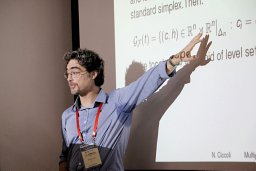 Nicola Ciccoli合作论文数Dipartimento di Matematica;Universita di Perugia;Dipartimento di Matematica, Universita di Perugia11
 Fortini A合作论文数Centro per lo studio dell'Ipertensione Arteriosa, Medicina Interna I9Rosanna Abbate合作论文数8Rita Paniccia合作论文数8A Zipoli合作论文数7M Sansoni合作论文数6Paolo Bartoli合作论文数6Mauro Maioli合作论文数Division of Cardiology, Misericordia e Dolce Hospital6Aldo Ieri合作论文数6R. Lamberti合作论文数5GGN Serneri合作论文数5Jian Qiu合作论文数5FORTUNATO MAZZA合作论文数4
 Fabio Andre Martini合作论文数4Gian Gastone Neri Serneri合作论文数4Maxim Zabzine合作论文数4
 Anna Maria Gori合作论文数Dipartimento di Medicina Sperimentale e Clinica, University of Florence4
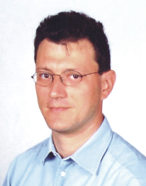 Alberto Cattaneo合作论文数Institut für Mathematik, Universität Zürich4A. Del Rosso合作论文数4Tamara Taddei合作论文数4Massimo Margheri合作论文数4Enrico Celeghini合作论文数4M Attanasio合作论文数4PA MODESTI合作论文数3S. Roveri合作论文数3K Huck合作论文数3Valentin Fuster合作论文数3R Codemo合作论文数3H Bratsch合作论文数3G Fratianni合作论文数3A Ruol合作论文数3K Mall合作论文数3
 Piergiorgio Settembrini合作论文数3G Fradella合作论文数3
 Giorgio Zoppetti合作论文数3Suzette Béguin合作论文数3A Taiti合作论文数3P L Malfanti合作论文数3Brandinelli Geri A合作论文数3GG Neri Semen合作论文数3
 Coen Hemker合作论文数School for Cardiovascular Diseases, Maastricht University3N Olivari合作论文数3Sergio Coccheri合作论文数3G Negri合作论文数3




