We introduce a fully quantum notion of entropy production based on the noncommutative extension of the classical log-ratio between forward and reverse processes. Given a pair of quantum objects associated with the forward and reverse descriptions, we define a Hermitian entropy-production operator whose expectation value is non-negative and equal to the Belavkin–Staszewski relative entropy. The operator satisfies exact integral and detailed fluctuation theorems without requiring commutativity. We then specialize this construction to the case in which the forward process is described by a single quantum channel and the reverse process is defined inferentially, through Bayesian retrodiction relative to a prior state, with the Petz transpose map as the Bayesian inverse. In this setting, the relevant quantities can be evaluated explicitly, leading to a number of natural structural and physical properties. The framework recovers the classical formula in the commutative limit, yields explicit expressions for the average entropy production, and clarifies where the fully quantum case departs from standard thermodynamic expectations.
We study quantum measurement retrodiction via the principle of minimum change. For general quantum measurements that are described by quantum-to-classical channels, we show that a broad family of standard quantum divergences selects the same retrodictive update, yielding a unique and divergence-independent quantum Bayesian inverse for any POVM and prior state. Using this update, we construct a symmetric joint distribution for pairs of POVMs and introduce the mutual retrodictability, which quantifies how well the two POVMs can retrodict each other's outcome distributions under this update. We also derive a general upper bound on this quantity, which depends only on the prior and holds for all measurements. This framework leads to two retrodictive entropic uncertainty relations, expressed directly in terms of the prior and the POVMs, yet valid independently of any retrodictive interpretation and fully compatible with conventional operational formulations. One of these relations links entropic uncertainty, approximate recoverability, and the thermodynamics of measurement through the Groenewold-Ozawa information gain. Finally, numerical benchmarks show that the resulting bounds are consistently tighter than existing entropic uncertainty relations across broad classes of measurements and states.
Virtual quantum maps simulate nonphysical transformations using physical operations and classical postprocessing, but known constructions of virtual broadcasting are operationally inefficient. Motivated by the expectation that relaxing symmetry requirements may improve operational performance, we study virtual quantum broadcasting for qubits under phase covariance. We show that phase covariance, flip covariance, permutation invariance, and classical consistency already fix the structure of the virtual map and imply broadcasting on equatorial states, without assuming broadcasting explicitly. Within this class, we identify a unique map of minimal simulation cost. Remarkably, and in direct analogy with the fully unitarily covariant case, the positive part of this optimal map coincides with the optimal symmetric phase-covariant cloning channel, showing that optimal cloning again emerges as the physically realizable map closest to virtual broadcasting, despite the reduced symmetry. Although phase covariance lowers both the simulation cost and this distance compared with the unitarily covariant case, the resulting virtual map remains sample inefficient.
When can one interpret the outcomes of a quantum measurement as revealing a pre-existing objective property? Using the recently developed formalism of quantum measurement retrodiction, we provide a quantitative treatment of this question: for any POVM and faithful prior state, we construct a positive semidefinite bilinear form that quantifies the non-objectivity of every real-valued outcome feature through the disagreement between its predictive value and its retrodictive counterpart. We show that this form decomposes exactly into the sum of two positive semidefinite bilinear forms: an unsharpness form and an asymmetry form given by Wigner–Yanase skew information. The total form vanishes precisely on those outcome features that can be interpreted, relative to the prior, as revealing pre-existing properties; in particular, it vanishes identically if and only if the POVM is sharp and commutes with the prior. Finally, under maps that preserve the prior and are covariant under its modular group, asymmetry cannot increase, and any loss of asymmetry is offset by at least as much unsharpness, so that total non-objectivity cannot decrease.
Catalysis refers to the possibility of enabling otherwise inaccessible quantum state transitions by supplying an auxiliary system, provided that the auxiliary is returned to its initial state at the end of the protocol. We show that previous studies on catalysis are largely impractical, because even small errors in the system's initial state can irreversibly degrade the catalyst. To overcome this limitation, we introduce "robust catalytic transformations" and explore the fundamental extent of their capabilities. We demonstrate that robust catalysis is closely tied to the property of resource broadcasting. In particular, in completely resource nongenerating theories, robust catalysis is possible if and only if resource broadcasting is possible. We develop a no-go theorem under a set of general axioms, demonstrating that robust catalysis is unattainable for a broad class of quantum resource theories. However, surprisingly, we also identify thermodynamical scenarios where maximal robust catalytic advantage can be achieved. Our approach clarifies the practical prospects of catalytic advantage for a wide range of quantum resources, including entanglement, coherence, thermodynamics, nonstabilizerness, and imaginarity.
To understand the emergence of macroscopic irreversibility from microscopic reversible dynamics, the idea of coarse-graining plays a fundamental role. In this work, we develop a unified inferential framework for macroscopic states, that is, coarse descriptions of microscopic quantum systems that can be inferred from macroscopic measurements. Building on quantum statistical sufficiency and Bayesian retrodiction, we characterize macroscopic states through equivalent abstract (algebraic) and explicit (constructive) formulations. Central to our approach is the notion of observational deficit, which quantifies the degree of irretrodictability of a state relative to a prior and a measurement. This leads to a general definition of macroscopic entropy as an inferentially grounded measure of asymmetry under Bayesian inversion. We formalize this structure in terms of inferential reference frames, defined by the pair consisting of a prior and a measurement, which encapsulate the observer's informational perspective. We then formulate a resource theory of microscopicity, treating macroscopic states as free states and introducing a hierarchy of macroscopicity-non-generating operations. This theory unifies and extends existing resource theories of coherence, athermality, and asymmetry. Finally, we apply the framework to study quantum correlations under observational constraints, introducing the notion of observational discord and deriving necessary and sufficient conditions for their vanishing in terms of information recoverability. This work is dedicated to Professor Ryszard Horodecki on the occasion of his 80th birthday, in deep admiration and gratitude for his pioneering contributions to quantum information theory.
Telecloning is a protocol introduced by Murao et al. to distribute copies of an unknown quantum state to many receivers in a way that beats the trivial “clone-and-teleport” protocol. In the last decade, a new type of teleportation called port-based teleportation, in which the receiver can recover the state without having to actively perform correction operations, but simply by looking at the correct port, has been widely studied. In this paper, we consider the analog of telecloning, where conventional teleportation is replaced by the port-based variant. To achieve this, we generalize the optimal measurement used in port-based teleportation and develop a new one that achieves port-based telecloning. Numerical results show that, in certain cases, the proposed protocol is strictly better than the trivial clone-and-teleport approach.
Virtual maps allow the simulation of quantum operations by combining physical processes with classical post-processing. Recent work on virtual unitary covariant broadcasting has shown, however, that such maps remain impractical for observable estimation tasks due to poor sample efficiency. Here we investigate whether relaxing the symmetry requirements can improve operational performance, focusing on virtual phase-covariant quantum broadcasting for qubits. We show that imposing phase-covariance, flip covariance, permutation invariance, and classical consistency fully determines the structure of the broadcasting map. Within this family, we identify the unique map that minimizes the simulation cost, and we prove that both the simulation cost and the distance to the closest CPTP map are strictly smaller than in the unitary covariant setting. We also demonstrate that the closest physical map is the optimal phase-covariant cloning channel, mirroring the relation between unitary covariant broadcasting and universal cloning. Despite these improvements, the resulting virtual broadcasting map remains sample-inefficient and is therefore still operationally impractical.
Adiabatic measurements, followed by feedback and erasure protocols, have often been considered as a model to embody Maxwell’s Demon paradox and to study the interplay between thermodynamics and information processing. Such studies have led to the conclusion, now widely accepted in the community, that Maxwell’s Demon and the second law of thermodynamics can peacefully coexist because any gain provided by the demon must be offset by the cost of performing the measurement and resetting the demon’s memory to its initial state. Statements of this kind are collectively referred to as second laws of information thermodynamics and have recently been extended to include quantum theoretical scenarios. However, previous studies in this direction have made several assumptions, particularly about the feedback process and the demon’s memory readout, and thus arrived at statements that are not universally applicable and whose range of validity is not clear. In this work, we fill this gap by precisely characterizing the full range of quantum feedback control and erasure protocols that are overall consistent with the second law of thermodynamics. This leads us to conclude that the second law of information thermodynamics is indeed universal: it must hold for any quantum feedback control and erasure protocol, regardless of the measurement process involved, as long as the protocol is overall compatible with thermodynamics. Our comprehensive analysis not only encompasses new scenarios but also retrieves previous ones, doing so with fewer assumptions. This simplification contributes to a clearer understanding of the theory.
The study of information revivals, witnessing the violation of certain data-processing inequalities, has provided an important paradigm in the study of non-Markovian quantum stochastic processes. Although often used interchangeably, we argue here that the notions of “revivals” and “backflows”, i.e., flows of information from the environment back into the system, are distinct: an information revival can occur without any backflow ever taking place. In this paper, we examine in detail the phenomenon of non-causal revivals and relate them to the theory of short Markov chains and squashed non-Markovianity. We also provide an operational condition, in terms of system-only degrees of freedom, to witness the presence of genuine backflow that cannot be explained by non-causal revivals. As a byproduct, we demonstrate that focusing on processes with genuine backflows, while excluding those with only non-causal revivals, resolves the issue of non-convexity of Markovianity, thus enabling the construction of a convex resource theory of genuine quantum non-Markovianity.
We investigate the consequences of requiring that a quantum measurement admit an adiabatic enclosure, so that it can be assigned a genuine thermodynamic description in which energy exchange is meaningfully resolved into work and heat. We identify two inequivalent levels at which such thermodynamic closure can be imposed: at the level of the measurement instrument acting on the system, or at the level of the indirect measurement process realising the instrument, namely the interaction between the system and a measuring apparatus, possibly including arbitrarily large environments. Although every instrument admits a unitary dilation, we show that such a construction does not generally provide an admissible thermodynamic closure. This distinction is especially dramatic for efficient measurements, i.e., measurements that are completely purity-preserving and described by a single Kraus operator, including von Neumann–Lüders and square-root state-update rules. While efficient measurements are compatible with the laws of thermodynamics when thermodynamic closure is imposed at the level of the instrument, they are categorically forbidden when closure is imposed at the level of the measurement process. Our results therefore reveal a fundamental tension between thermodynamics and the universal applicability of the unitary interaction-based indirect measurement model.
Bayes' rule, which is routinely used to update beliefs based on new evidence, can be derived from a principle of minimum change. This principle states that updated beliefs must be consistent with new data, while deviating minimally from the prior belief. Here, we introduce a quantum analog of the minimum change principle and use it to derive a quantum Bayes' rule by minimizing the change between two quantum input-output processes, not just their marginals. This is analogous to the classical case, where Bayes' rule is obtained by minimizing several distances between the joint input-output distributions. When the change maximizes the fidelity, the quantum minimum change principle has a unique solution, and the resulting quantum Bayes' rule recovers the Petz transpose map in many cases.
Observational entropy captures both the intrinsic uncertainty of a thermodynamic state and the lack of knowledge due to coarse-graining. We demonstrate two interpretations of observational entropy, one as the statistical deficiency resulting from a measurement, the other as the difficulty of inferring the input state from the measurement statistics by quantum Bayesian retrodiction. These interpretations show that the observational entropy implicitly includes a uniform reference prior. Since the uniform prior cannot be used when the system is infinite-dimensional or otherwise energy-constrained, we propose generalizations by replacing the uniform prior with arbitrary quantum states that may not even commute with the state of the system. We propose three candidates for this generalization, discuss their properties, and show that one of them gives a unified expression that relates both interpretations.
Observational entropy-a quantity that unifies Boltzmann's entropy, Gibbs' entropy, von Neumann's macroscopic entropy, and the diagonal entropy-was recently argued to play a key role in a modern formulation of statistical mechanics. Here, relying on algebraic techniques taken from Petz's theory of statistical sufficiency and on a L & eacute;vy-type concentration bound, we prove rigorous theorems showing how the observational entropy of a system undergoing a unitary evolution chosen at random tends to increase with overwhelming probability and to reach its maximum very quickly. More precisely, we show that for any observation that is sufficiently coarse with respect to the size of the system, regardless of the initial state of the system (be it pure or mixed), random evolution renders its state practically indistinguishable from the uniform (i.e., maximally mixed) distribution with a probability approaching 1 as the size of the system grows. The same conclusion holds not only for random evolutions sampled according to the unitarily invariant Haar distribution but also for approximate 2-designs, which are thought to provide a more physically and computationally reasonable model of random evolutions.
The quantum no-broadcasting theorem states that it is impossible to produce perfect copies of an arbitrary quantum state, even if the copies are allowed to be correlated. Here we show that, although quantum broadcasting cannot be achieved by any physical process, it can be achieved by a virtual process, described by a Hermitian-preserving trace-preserving map. This virtual process is canonical: it is the only map that broadcasts all quantum states, is covariant under unitary evolution, is invariant under permutations of the copies, and reduces to the classical broadcasting map when subjected to decoherence. We show that the optimal physical approximation to the canonical broadcasting map is the optimal universal quantum cloning, and we also show that virtual broadcasting can be achieved by a virtual measure-and-prepare protocol, where a virtual measurement is performed, and, depending on the outcomes, two copies of a virtual quantum state are generated. Finally, we use canonical virtual broadcasting to prove a uniqueness result for quantum states over time.
Quantum statistical models (i.e., families of normalized density matrices) and quantum measurements (i.e., positive operator-valued measures) can be regarded as linear maps: the former, mapping the space of effects to the space of probability distributions; the latter, mapping the space of states to the space of probability distributions. The images of such linear maps are called the testing regions of the corresponding model or measurement. Testing regions are notoriously impractical to treat analytically in the quantum case. Our first result is to provide an implicit outer approximation of the testing region of any given quantum statistical model or measurement in any finite dimension: namely, a region in probability space that contains the desired image, but is defined implicitly, using a formula that depends only on the given model or measurement. The outer approximation that we construct is minimal among all such outer approximations, and close, in the sense that it becomes the maximal inner approximation up to a constant scaling factor. Finally, we apply our approximation formulas to characterize, in a semi-device independent way, the ability to transform one quantum statistical model or measurement into another.
The signaling dimension of a given physical system quantifies the minimum dimension of a classical system required to reproduce all input/output correlations of the given system. Thus, unlike other dimension measures - such as the dimension of the linear space or the maximum number of (jointly or pairwise) perfectly discriminable states - which examine the correlation space only along a single direction, the signaling dimension does not depend on the arbitrary choice of a specific operational task. In this sense, the signaling dimension summarizes the structure of the entire set of input/output correlations consistent with a given system in a single scalar quantity. For quantum theory, it was recently proved by Frenkel and Weiner in a seminal result that the signaling dimension coincides with the Hilbert space dimension. Here, we derive analytical and algorithmic techniques to compute the signaling dimension for any given system of any given generalized probabilistic theory. We prove that it suffices to consider extremal measurements with ray-extremal effects, and we bound the number of elements of any such measurement in terms of the linear dimension. For systems with a finite number of extremal effects, we recast the problem of characterizing the extremal measurements with ray-extremal effects as the problem of deriving the vertex description of a polytope given its face description, which can be conveniently solved by standard techniques. For each such measurement, we recast the computation of the signaling dimension as a linear program, and we propose a combinatorial branch and bound algorithm to reduce its size. We apply our results to derive the extremal measurements with ray-extremal effects of a composition of two square bits (or squits) and prove that their signaling dimension is five, even though each squit has a signaling dimension equal to two.
We construct a resource theory of sharpness for finite-dimensional positive operatorvalued measures (POVMs), where the sharpness-non-increasing operations are given by quantum preprocessing channels and convex mixtures with POVMs whose elements are all proportional to the identity operator. As required for a sound resource theory of sharpness, we show that our theory has maximal (i.e., sharp) elements, which are all equivalent, and coincide with the set of POVMs that admit a repeatable measurement. Among the maximal elements, conventional non-degenerate observables are characterized as the canonical ones. More generally, we quantify sharpness in terms of a class of monotones, expressed as the EPR-Ozawa correlations between the given POVM and an arbitrary reference POVM. We show that one POVM can be transformed into another by means of a sharpness-non-increasing operation if and only if the former is sharper than the latter with respect to all monotones. Thus, our resource theory of sharpness is complete, in the sense that the comparison of all monotones provides a necessary and sufficient condition for the existence of a sharpness-non-increasing operation between two POVMs, and operational, in the sense that all monotones are in principle experimentally accessible.
We propose a category-theoretic definition of retrodiction and use it to exhibit a time-reversal symmetry for all quantum channels. We do this by introducing retrodiction families and functors, which capture many intuitive properties that retrodiction should satisfy and are general enough to encompass both classical and quantum theories alike. Classical Bayesian inversion and all rotated and averaged Petz recovery maps define retrodiction families in our sense. However, averaged rotated Petz recovery maps, including the universal recovery map of Junge-Renner-Sutter-Wilde-Winter, do not define retrodiction functors, since they fail to satisfy some compositionality properties. Among all the examples we found of retrodiction families, the original Petz recovery map is the only one that defines a retrodiction functor. In addition, retrodiction functors exhibit an inferential time-reversal symmetry consistent with the standard formulation of quantum theory. The existence of such a retrodiction functor seems to be in stark contrast to the many no-go results on time-reversal symmetry for quantum channels. One of the main reasons is because such works defined time-reversal symmetry on the category of quantum channels alone, whereas we define it on the category of quantum channels and quantum states. This fact further illustrates the importance of a prior in time-reversal symmetry.
The quantum guesswork quantifies the minimum number of queries needed to guess the state of a quantum ensemble if one is allowed to query only one state at a time. Previous approaches to the computation of the guesswork were based on standard semi-definite programming techniques and therefore lead to approximated results. In contrast, we show that computing the quantum guesswork of qubit ensembles with uniform probability distribution corresponds to solving a quadratic assignment problem and we provide an algorithm that, upon the input of any qubit ensemble over a discrete ring, after finitely many steps outputs the exact closed-form expression of its guesswork. While in general the complexity of our guesswork-computing algorithm is factorial in the number of states, our main result consists of showing a more-than-quadratic speedup for symmetric ensembles, a scenario corresponding to the three-dimensional analog of the maximization version of the turbine-balancing problem. To find such symmetries, we provide an algorithm that, upon the input of any point set over a discrete ring, after finitely many steps outputs its exact symmetries. The complexity of our symmetriesfinding algorithm is polynomial in the number of points. As examples, we compute the guesswork of regular and quasi-regular sets of qubit states.
 Michele Dall'Arno合作论文数24
 Giacomo Mauro D'Ariano合作论文数QUIT Group;Dipartimento di Fisica;QUIT Group|Dipartimento di Fisica15Sarah Brandsen合作论文数9
 Valerio Scarani合作论文数Department of Physics, Faculty of Science, National University of Singapore;Centre for Quantum Technologies, National University of Singapore9
 Nilanjana Datta合作论文数Department of Applied Mathematics and Theoretical Physics, University of Cambridge9
 Paolo Perinotti合作论文数QUIT Group;Dipartimento di Fisica;QUIT Group|Dipartimento di Fisica9
 Vlatko Vedral合作论文数Department of Physics, University of Oxford7
 Chiara Macchiavello合作论文数University of Pavia7
 Masanao Ozawa (小澤正直)合作论文数Department of Mathematical Informatics, Graduate School of Information Science, Nagoya University;Center of Mathematics for Artificial Intelligence and Date Science, Academy of Emerging Science, Chubu University;中部大学 AI 数理データサイエンスセンター・創発学術院6Alessandro Tosini合作论文数Universita' di Pavia6
 Massimiliano Federico Sacchi合作论文数Institute for Photonics and Nanotechnologies, Consiglio Nazionale delle Ricerche;Quantum Information Theory Group, Dipartimento di Fisica, Universita di Pavia5Kohtaro Kato合作论文数Ctr Quantum Informat & Quantum Biol, Osaka Univ4
 Shintaro Minagawa合作论文数Grad Sch Informat, Nagoya Univ4
 Giulio Chiribella合作论文数Department of Computer Science, The University of Hong Kong;Perimeter Institute;Department of Computer Science, University of Oxford;St Hilda's College, University of oxford4
 Rosset Denis合作论文数Group of Applied Physics, University of Geneva4
 Mark M. Wilde合作论文数School of Electrical and Computer Engineering, Cornell University4
 Michael J. W. Hall合作论文数Department of Theoretical Physics, The Australian National University4
 David Schmid合作论文数Department of Physics, Perimeter Institute3
 Dominik Safranek合作论文数Inst Basic Sci IBS, Ctr Theoret Phys Complex Syst3
 Joseph Schindler合作论文数SCIPP, Univ Calif Santa Cruz3
 Georg Sulyok合作论文数Atominst, Tech Univ Wien3
 Gilad Gour合作论文数Faculty of Mathematics, Technion - Israel Institute of Technology;The Helen Diller Quantum Center, Technion-Israel Institute of Technology3
 Yuji Hasegawa (長谷川祐司)合作论文数Hokkaido University3
 Takeshi Koshiba合作论文数Secure Computing Laboratory, Fujitsu Laboratories Ltd.3
 Michał Horodecki合作论文数Zakład Korelacji Kwantowych, Instytut Fizyki Teoretycznej i Astrofizyki, Wydział Matematyki, Fizyki i Informatyki, University of Gdańsk;International Centre for Theory of Quantum Technologies, University of Gdańsk3
 Stephan Sponar合作论文数Atominstitut, Technische Universität Wien3Bülent Demirel合作论文数2Sayantan Chakraborty合作论文数School of Technology and Computer Science, Tata Institute of Fundamental Research2Siddhartha Das合作论文数2Kodai KOBAYASHI合作论文数2
 Zhou Wenbin合作论文数Grad Sch Informat, Nagoya Univ2Aditya Nema合作论文数Department of Mathematical Informatics, Nagoya University2Arthur J. Parzygnat合作论文数2Ge Bai (柏舸)合作论文数2Eyuri Wakakuwa合作论文数university of electro communications2
 M. Hamed Mohammady合作论文数RCQI, Slovak Acad Sci2
 Eric Chitambar合作论文数Department of Electrical and Computer Engineering, The Grainger College of Engineering, University of Illinois at Urbana-Champaign2Ozawa Masanao合作论文数2
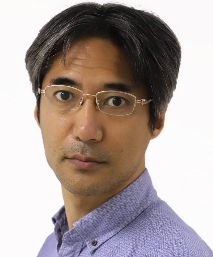 Masahito Hayashi (林正人)合作论文数School of Data Science, The Chinese University of Hong Kong, Shenzhen;Shenzhen Institute for Quantum Science and Engineering;Centre for Quantum Technologies, National University of Singapore;Graduate School of Mathematics, Nagoya University2Min-Hsiu Hsieh合作论文数1Daichi Fujiwara合作论文数1Yuta Okubo合作论文数1Asaph Ho合作论文数1
 David Jennings合作论文数1
 Rafael B Chaves合作论文数1Ray Ganardi合作论文数1Peter Sidajaya合作论文数1Clive Cenxin Aw合作论文数1Andrés F. Ducuara合作论文数1




