The ultimate motivation for our greed for knowledge on how the world is made, is also the unacknowledged desire for a solution to the most compelling and inexplicable mystery that grips us: death! What will become of my "self" after death? Religion provides an answer, which, however, is not shared. Instead, we would like science to provide an objective answer. So why not take the bull by the horns and face directly, on scientific grounds, what it means to "feel alive". What is "awareness"? Is it possible to scientifically deal with the problem of "consciousness"? We do not require to solve the problem, but, at least, to know if we can say something about it on the basis of shareable assumptions, based on our knowledge of the physical world, and hopefully, with some experimental confirmation.
A composite quantum system has properties that are incompatible with every property of its parts. The existence of such global properties incompatible with all local properties constitutes what I call "mereological holism"--the distinctive holism of Quantum Theory. Mereological holism has the dramatic conceptual consequence of making untenable the usual understanding of the "quantum system" as being a "physical object", since composed objects have properties compatible with those of its parts. The notion of "property" can be extended in a unique way to the whole class of operational probabilistic theories (shortly OPTs), of which the most relevant cases are Quantum Theory and Classical Theory. Whereas Classical Theory is not mereologically holistic, we can now search for other OPTs that are so. Within the OPT framework the role of the "system" is that of an input-output connection between two objective events. In non holistic theories, such as Classical Theory, the system can still be regarded as an "object". On the contrary, in holistic theories interpreting "system" as "object" constitutes an hypostatization of a theoretical notion.
We explore definite theoretical assertions about consciousness, starting from a non-reductive psycho-informational solution of David Chalmers's 'hard problem', based on the hypothesis that a fundamental property of 'information' is its experience by the supporting 'system'. The kind of information involved in consciousness needs to be quantum for multiple reasons, including its intrinsic privacy and its power of building up thoughts by entangling qualia states. As a result we reach a quantum-information-based panpsychism, with classical physics supervening on quantum physics, quantum physics supervening on quantum information, and quantum information supervening on consciousness. We then argue that the internally experienced quantum state, since it corresponds to a definite experience-not to a random choice-must be pure, and we call it ontic, in contrast with the state predictable from the outside (i.e. the state describing the knowledge of the experience from the point of view of an external observer) which we call epistemic and is generally mixed. Purity of the ontic state requires an evolution that is purity preserving, namely a so-called 'atomic' quantum operation. The latter is generally probabilistic, and its particular outcome is interpreted as the free will, which is unpredictable even in principle since quantum probability cannot be interpreted as lack of knowledge. The same purity of state and evolution allows solving the 'combination problem' of panpsychism. Quantum state evolution accounts for a short-term buffer of experience and contains itself quantum-to-classical and classical-to-quantum information transfers. Long term memory, on the other hand, is classical, and needs memorization and recall processes that are quantum-to-classical and classical-to-quantum, respectively...
The operational axiomatization of quantum theory in previous works can be regarded as a set of six epistemological rules for falsifying propositions of the theory. In particular, the Purification postulate-the only one that is not shared with classical theory-allows falsification of random-sequences generators, a task classically unfeasible.
Every theory of information, including classical and quantum, can be studied in the framework of operational probabilistic theories-where the notion of test generalizes that of quantum instrument, namely a collection of quantum operations summing to a channel, and simple rules are given for the composition of tests in parallel and in sequence. Here we study the notion of compatibility for tests of a causal operational probabilistic theory. Following the quantum literature, we first introduce the notion of strong compatibility, and then we illustrate its ultimate relaxation, that we deem weak compatibility. It is shown that the two notions coincide in the case of observation tests-which are the counterpart of quantum POVMs-while there exist weakly compatible channels that are not strongly compatible. We prove necessary and sufficient conditions for a theory to exhibit incompatible tests. We show that a theory admits of incompatible tests if and only if some information cannot be extracted without disturbance.
The problem ofestim ating the phase shiftexperienced by a radiation beam has been the object ofhundreds ofstudies in the last forty years [1].The problem arisesbecause fora single m odeoftheelectrom agnetic eld thereis no selfadjointoperatorforthe phase.Thisisdue to the sem iboundednessof the num beroperator[2,3]which iscanonically conjugated to the phase asa Fourier-transform pair[4].The m ostgeneraland,atthesam e tim e,concrete approach to the problem ofthe phase m easurem ent is quantum estim ation theory [5],a fram ework thathasbecom epopularonly in thelastten yearsin the eld ofquantum inform ation.Them ostpowerfulm ethod forderiving the optim alphasem easurem entwasgiven by Holevo [6]in thecovariantcase.In thisway the optim alpositive operator-valued m easure (POM )forphase estim ation hasbeen derived fora single-m ode eld.Regarding the m ulti-m ode case,only littletheoreticale orthasbeen spent[3],m ostly devotingattention to the Lie algebraic structure fortwo m odes[3,7,8].Fortwo m odesone can adoptthe di erence between theirphoton num bersasthe phase shiftoperator,which thusisnolongerbounded from below.Thisopenstheroutetoward an exactphase m easurem entbased on a selfadjointoperator[9],with a concrete experim entalsetup using unconventionalheterodyne detection [10,11].
Any measurement is intended to provide information on a system, namely knowledge about its state. However, we learn from quantum theory that it is generally impossible to extract information without disturbing the state of the system or its correlations with other systems. In this paper we address the issue of the interplay between information and disturbance for a general operational probabilistic theory. The traditional notion of disturbance considers the fate of the system state after the measurement. However, the fact that the system state is left untouched ensures that also correlations are preserved only in the presence of local discriminability. Here we provide the definition of disturbance that is appropriate for a general theory. Moreover, since in a theory without causality information can be gathered also on the effect, we generalise the notion of no-information test. We then prove an equivalent condition for no-information without disturbance---atomicity of the identity---namely the impossibility of achieving the trivial evolution---the identity---as the coarse-graining of a set of non trivial ones. We prove a general theorem showing that information that can be retrieved without disturbance corresponds to perfectly repeatable and discriminating tests. Based on this, we prove a structure theorem for operational probabilistic theories, showing that the set of states of any system decomposes as a direct sum of perfectly discriminable sets, and such decomposition is preserved under system composition. As a consequence, a theory is such that any information can be extracted without disturbance only if all its systems are classical. Finally, we show via concrete examples that no-information without disturbance is independent of both local discriminability and purification.
We investigate operational probabilistic theories where the pure states of every system are the vertices of a simplex. A special case of such theories is that of classical theories, i.e., simplicial theories whose pure states are jointly perfectly discriminable. The usual classical theory satisfies also local discriminability. However, simplicial theories-including the classical ones-can violate local discriminability, thus admitting entangled states. First, we prove sufficient conditions for the presence of entangled states in arbitrary probabilistic theories. Then we prove that simplicial theories are necessarily causal, and this represents a no-go theorem for conceiving noncausal classical theories. We then provide necessary and sufficient conditions for simplicial theories to exhibit entanglement and classify their system-composition rules. We conclude by proving that, in simplicial theories, an operational formulation of the superposition principle cannot be satisfied, and that-under the hypothesis of n-local discriminability-no mixed state admits a purification. Our results hold also in the general case where the sets of states fail to be convex.
A quantum walk describes the discrete unitary evolution of a quantum particle on a discrete graph. Some quantum walks, referred to as the Weyl and Dirac quantum walks, provide a description of the free evolution of relativistic quantum fields in a regime where the wave-vectors involved in the particle state are small. The clash between the intrinsic discreteness of quantum walks and the symmetries of special relativity can be resolved by rethinking the notion of a change of inertial reference frame. We give here a definition of the latter that avoids a pre-defined space-time geometry, in terms of a change of values of the constants of motion that leaves the walk operator unchanged. Starting from the family of 1+1 dimensional Dirac quantum walks with all possible values of the mass parameter, we introduce a unique walk encompassing the latter as an extra degree of freedom, and we derive its group of changes of inertial frames. This symmetry group contains a non linear realization of $SO^+(2,1) \ltimes \mathbb{R}^3$; since one of the two space-like dimensions does not correspond to an actual spatial degree of freedom but rather the mass, we interpret it as a 2+1 dimensional de-Sitter group. This group group contains also a non-linear realisation of the proper orthochronous Poincar\'e group $SO^+(1,1) \ltimes \mathbb{R}^2$ in 1+1 dimension, as the ones considered within the framework of doubly special relativity, which recovers the usual relativistic symmetry of the Dirac Equation in the limit of small wave-vectors and masses. Surprisingly, if one considers the Dirac walk with a fixed value of the mass parameter, the group of allowed changes of reference frame does not have a consistent interpretation in the relativistic limit of small wave-vectors.
An operational probabilistic theory where all systems are classical, and all pure states of composite systems are entangled, is constructed. The theory is endowed with a rule for composing an arbitrary number of systems, and with a nontrivial set of transformations. Hence, we demonstrate that the presence of entanglement is independent of the existence of incompatible measurements. We then study a variety of phenomena occurring in the theory, some of them contradicting both classical and quantum theories, including cloning, entanglement swapping, dense coding, additivity of classical capacities, nonmonogamous entanglement, hypersignaling. We also prove the existence, in the theory, of a universal processor. The theory is causal and satisfies the no-restriction hypothesis. At the same time, it violates a number of information-theoretic principles enjoyed by quantum theory, most notably, local discriminability, purity of parallel composition of states, and purification. Moreover, we introduce an exhaustive procedure to construct generic operational probabilistic theories, and a sufficient set of conditions to verify their consistency. In addition, we prove a characterization theorem for the parallel composition rules of arbitrary theories, and specialize it to the case of bilocal-tomographic theories. We conclude pointing out some open problems. In particular, on the basis of the fact that every separable state of the theory is a statistical mixture of entangled states, we formulate a no-go conjecture for the existence of a local-realistic ontological model.
The new era of quantum foundations, fed by the quantum information theory experience and opened in the early 2000s by a series of memorable papers [...]
Quantum walks (QWs) describe the evolution of quantum systems on graphs. An intrinsic degree of freedom---called the coin and represented by a finite-dimensional Hilbert space---is associated to each node. Scalar quantum walks are QWs with a one-dimensional coin. We propose a general strategy allowing one to construct scalar QWs on a broad variety of graphs, which admit embedding in Eulidean spaces, thus having a direct geometric interpretation. After reviewing the technique that allows one to regroup cells of nodes into new nodes, transforming finite spatial blocks into internal degrees of freedom, we prove that no QW with a two-dimensional coin can be derived from an isotropic scalar QW in this way. Finally we show that the Weyl and Dirac QWs can be derived from scalar QWs in spaces of dimension up to three, via our construction.
I will discuss realism of classical and quantum theories, assessing the untenability of the object ontology, and proposing its substitution with the notion of system used in operational theories, notion that represents a theoretical connection between two events. Within operational theories the distinction between theory and objective reality is well defined: the theory provides the mathematical description of systems and events, and predicts the joint probability of the events; objective reality is identified with the collection of events that actually occurred. I then analyse some cases of realification of the theory – namely the fallacy of identifying theory with reality. In particular, the cases of the notion of causality and causal connection between events are analysed, emphasising their purely theoretical nature, contrarily to the widespread connotation of objectivity. I re-establish the role of causality in physics as a theorem of quantum theory, and hence also of classical theory (which is a restriction of quantum theory), showing how it represents a probabilistic generalisation of the same concept used in special relativity, and discussing why such notion may trivialise in the classical case. I end with a critique of David Albert’s Past Hypothesis about the nature of time, and of the resulting Block Universe vision of space-time, to reaffirm Reality of Time.
We derive quantum theory from purely informational principles. Five elementary axioms-causality, perfect distinguishability, ideal compression, local distinguishability, and pure conditioning-define a broad class of theories of information processing that can be regarded as standard. One postulate-purification-singles out quantum theory within this class.
Quantum walks (QWs) describe the evolution of quantum systems on graphs. An intrinsic degree of freedom---called the coin and represented by a finite-dimensional Hilbert space---is associated to each node. Scalar quantum walks are QWs with a one-dimensional coin. We propose a general strategy allowing one to construct scalar QWs on a broad variety of graphs, which admit embedding in Eulidean spaces, thus having a direct geometric interpretation. After reviewing the technique that allows one to regroup cells of nodes into new nodes, transforming finite spatial blocks into internal degrees of freedom, we prove that no QW with a two-dimensional coin can be derived from an isotropic scalar QW in this way. Finally we show that the Weyl and Dirac QWs can be derived from scalar QWs in spaces of dimension up to three, via our construction.
I argue for a full mathematization of the physical theory, including its axioms, which must contain no physical primitives. In provocative words: 'physics from no physics'. Although this may seem an oxymoron, it is the royal road to keep complete logical coherence, hence falsifiability of the theory. For such a purely mathematical theory the physical connotation must pertain only the interpretation of the mathematics, ranging from the axioms to the final theorems. On the contrary, the postulates of the two current major physical theories either do not have physical interpretation (as for von Neumann's axioms for quantum theory), or contain physical primitives as 'clock', 'rigid rod', 'force', 'inertial mass' (as for special relativity and mechanics). A purely mathematical theory as proposed here, though with limited (but relentlessly growing) domain of applicability, will have the eternal validity of mathematical truth. It will be a theory on which natural sciences can firmly rely. Such kind of theory is what I consider to be the solution of the sixth Hilbert problem. I argue that a prototype example of such a mathematical theory is provided by the novel algorithmic paradigm for physics, as in the recent information-theoretical derivation of quantum theory and free quantum field theory.This article is part of the theme issue 'Hilbert's sixth problem'.
We study the solutions of an interacting Fermionic cellular automaton which is the analogue of the Thirring model with both space and time discrete. We present a derivation of the two-particle solutions of the automaton recently in the literature, which exploits the symmetries of the evolution operator. In the two-particle sector, the evolution operator is given by the sequence of two steps, the first one corresponding to a unitary interaction activated by two-particle excitation at the same site, and the second one to two independent one-dimensional Dirac quantum walks. The interaction step can be regarded as the discrete-time version of the interacting term of some Hamiltonian integrable system, such as the Hubbard or the Thirring model. The present automaton exhibits scattering solutions with nontrivial momentum transfer, jumping between different regions of the Brillouin zone that can be interpreted as Fermion-doubled particles, in stark contrast with the customary momentum-exchange of the one-dimensional Hamiltonian systems. A further difference compared to the Hamiltonian model is that there exist bound states for every value of the total momentum and of the coupling constant. Even in the special case of vanishing coupling, the walk manifests bound states, for finitely many isolated values of the total momentum. As a complement to the analytical derivations we show numerical simulations of the interacting evolution.
We analytically diagonalize a discrete-time on-site interacting fermionic cellular automaton in the two-particle sector. Important features of the solutions sensibly differ from those of analogous Hamiltonian models. In particular, we found a wider variety of scattering processes, we have bound states for every value of the total momentum, and there exist bound states also in the free case, where the coupling constant is null.
We study quantum learning algorithms for quantum measurements. The optimal learning algorithm is derived for arbitrary von Neumann measurements in the case of training with one or two examples. The analysis of the case of three examples reveals that, differently from the learning of unitary gates, the optimal algorithm for learning of quantum measurements cannot be parallelized, and requires quantum memories for the storage of information.
 Paolo Perinotti合作论文数QUIT Group;Dipartimento di Fisica;QUIT Group|Dipartimento di Fisica122
 Massimiliano Federico Sacchi合作论文数Institute for Photonics and Nanotechnologies, Consiglio Nazionale delle Ricerche;Quantum Information Theory Group, Dipartimento di Fisica, Universita di Pavia74
 Giulio Chiribella合作论文数Department of Computer Science, The University of Hong Kong;Perimeter Institute;Department of Computer Science, University of Oxford;St Hilda's College, University of oxford49
 Chiara Macchiavello合作论文数University of Pavia39
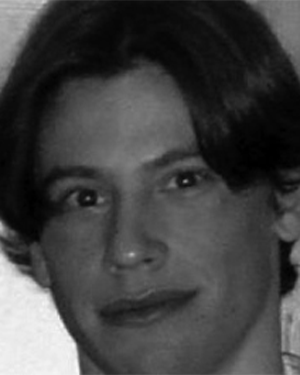 Alessandro Bisio合作论文数QUIT Grp, Dipartimento Fis A Volta32
 Mga Paris合作论文数24Alessandro Tosini合作论文数Universita' di Pavia23
 Lorenzo Maccone合作论文数Dipartimento di Fisica, Universita degli Studi di Pavia20
 Matteo Paris合作论文数Applied Quantum Mechanics Group, Quantum Technology Lab, Department of Physics, University of Milano17Francesco Buscemi合作论文数15
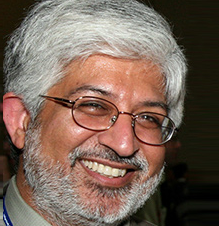 Prem Kumar合作论文数Department of Electrical and Computer Engineering, Robert R. McCormick School of Engineering and Applied Science, Northwestern University;Center for Photonic Communication and Computing, Robert R. McCormick School of Engineering and Applied Science, Northwestern University13P. Lo Presti合作论文数11Michele Dall'Arno合作论文数10
 Michal Sedlak合作论文数Research Center for Quantum Information;Slovak Academy of Sciences;Research Center for Quantum Information, Slovak Academy of Sciences8
 Marco Erba合作论文数Dipartimento Fis, Univ Pavia;INFN Grp Iv, Sez Pavia;INFN Grp Iv, Univ Pavia7
 Mario Rasetti合作论文数7
 Francesco De Martini合作论文数Dipartimento di Fisica, Sapienza Universita di Roma6Paoloplacido Lo Presti合作论文数6franco manessi合作论文数5
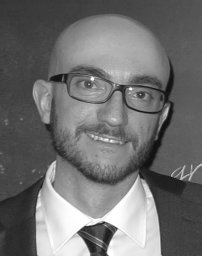 Nicola Mosco合作论文数Dip. Fisica and INFN Sez. Pavia, University of Paviavia5
 Martin Roetteler合作论文数IonQ4
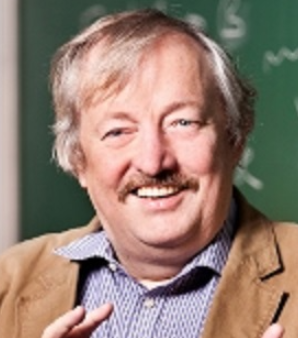 Reinhard Werner合作论文数Institute of Theoretical Physics, Faculty of Mathematics and Physics, Leibniz University Hannover4
 Stefano Facchini合作论文数4Dirk Schlingemann合作论文数4
 Michael Vasilyev合作论文数Department of Electrical Engineering, University of Texas at Arlington4N. Sterpi合作论文数3M. De Laurentis合作论文数3
 Rafał Demkowicz-Dobrzański合作论文数Faculty of Physics, University of Warsaw;Institute of Theoretical Physics, University of Warsaw3D Bruss合作论文数3federico faggin合作论文数2timothy m rambo合作论文数2M Fortunato合作论文数2a mazzei合作论文数2
 Michele Mosca合作论文数Institute for Quantum Computing, University of Waterloo2Martina Miková合作论文数2
 Horace Yuen合作论文数Department of Electrical Engineering and Computer Science, McCormick School of Engineering, Northwestern University2
 Marco Ricci合作论文数2
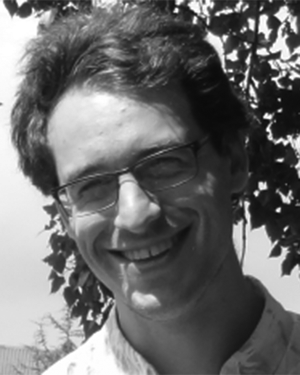 Jonas Kahn合作论文数2
 Paolo Tombesi合作论文数Dipartimento di Fisica, Università di Camerino2
 Paolo Mataloni合作论文数Dipartimento di Fisica;Istituto Nazionale per la Fisica della Materia;Università di Roma " La Sapienza;Istituto Nazionale per la Fisica della Materia, Università di Roma " La Sapienza2
 Alessandra Andreoni合作论文数2
 Augusto Garuccio合作论文数Istituto di Fisica dell', Università Bari2
 Wim Van Dam合作论文数Department of Computer Science
University of California;Santa Barbara2Michael Keyl合作论文数2
Wim Van Dam合作论文数Department of Computer Science
University of California;Santa Barbara2Michael Keyl合作论文数2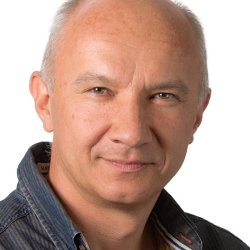 Artur Ekert (阿图尔·埃克特)合作论文数Mathematical Institute, University of Oxford2Joseph B. Altepeter合作论文数2
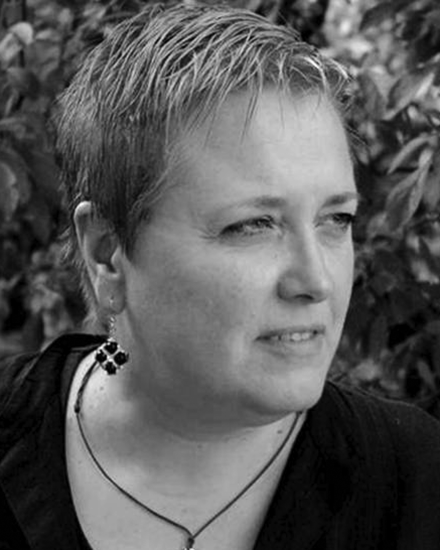 Maria Bondani合作论文数2
 Alberto Porzio合作论文数Dip . Scienze Fisiche;INFM Unita di Napoli;Sezione di Napoli;INFM Unita di Napoli, Sezione di Napoli2




