While the science supporting fisheries management has generally been dominated by the natural sciences, there has been a growing recognition that managing fisheries essentially means managing economic systems. Indeed, over the past seven decades, economic ideas and insights have increasingly come to play a role in fisheries management and policy. As an illustration of this, the International Council for the Exploration of the Sea (ICES) has been actively seeking to expand the scope of its scientific expertise beyond natural sciences [another inter-governmental marine science organization which has done this over the same period is the North Pacific Marine Science organization (PICES)]. In particular, the recently created ICES Working Group on Economics set out to review current work and key future needs relating to economic research and management advice on marine capture fisheries. This article presents the results of this review and addresses how economic research can be incorporated into the science of ICES to provide integrated perspectives on fisheries systems that can contribute to the provision of advice in support of policy development and management decision-making for sustainable uses of living marine resources.
Indicators of the economic performance of fishing vessels are frequently computed in various countries. In this paper, we use different types of information to assess capital value and the economic performance of fishing vessels. On the one hand, field surveys provide technical and financial information on the main components of fishing capital. On the other hand, book values are given in bookkeeping databases. We use both sources of information on fishing capital are used for the same set of vessels, namely the commercial fishing fleet of the French region of Brittany. Based on these two sources, measures of economic performance can be produced for the short term using gross surplus; and for the long term including the cost of capital. The measures of performance obtained are presented and the differences between them are then discussed.
 oostenbrugge van h合作论文数1A. Murillas合作论文数1
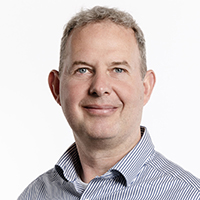 Rasmus Nielsen合作论文数Department of Food and Resource Economics, Faculty of Science, University of Copenhagen1
 Berthe M. J. Vastenhoud合作论文数1
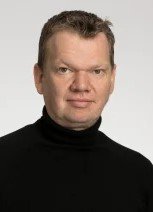 Hans Ellefsen合作论文数Univ Faroe Isl1
 Angela Muench合作论文数School of Environmental Sciences, University of East Anglia1
 Geret Sean DePiper合作论文数NOAA, NMFS Northeast Fisheries Sci Ctr1
 Sophie Gourguet合作论文数IUEM, University of Brest1
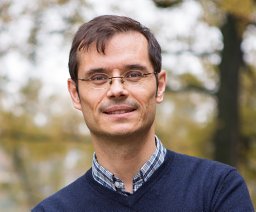 Jorge Holzer合作论文数Corresponding author.1
 Richard Curtin合作论文数1J. Virtanen合作论文数1James Innes合作论文数CEMARE, University of Portsmouth1
 Sebastian Villasante合作论文数The Beijer Institute of Ecological Economics and Stockholm Resilience Centre, The Royal Swedish Academy of Sciences1
 Julie B. Kellner合作论文数Department of Environmental Science and Policy, University of California1
 David Castilla Espino合作论文数1
 Sveinn Agnarsson合作论文数1
 Sakari Kuikka合作论文数Department of Environmental Sciences, University of Helsinki;Faculty of Biological and Environmental Sciences, University of Helsinki;Helsinki Institute of Sustainability Science, University of Helsinki1
 Raul Prellezo合作论文数Department of Fisheries Resources, Technological Institute for Fisheries and Food1Arina Motova合作论文数1
 Juan Jose Garcia Del Hoyo合作论文数1
 Bertrand Le Gallic合作论文数1
 Claire Macher合作论文数Centre de Brest;Département d'Economie Maritime;Département d'Economie Maritime, Centre de Brest1J. Bihel合作论文数1Eric Thunberg合作论文数Northeast Fisheries Science Center, National Marine Fisheries Service1
 Katell G. Hamon合作论文数Université de Brest, Université Européenne de Bretagne1
 Olivier Thébaud合作论文数IFREMER, UMR AMURE1
 Pascal Le floc'h合作论文数1
 Francois Bastardie合作论文数Department of Marine Fisheries;Danish Institute for Fisheries Research;Technical University of Denmark;Danish Institute for Fisheries Research, Technical University of Denmark1
 A. C. Haynie合作论文数International Council for the Exploration of the Sea1Staffan Waldo合作论文数1Leyre Goti合作论文数1




