Acute severe ulcerative colitis (ASUC) usually requires hospitalisation, immediate management and is considered a medical emergency. Historically, the management of ASUC has been with intravenous steroids followed by colectomy in unresponsive patients. Management of ASUC has since evolved with the introduction of rescue therapy as second-line treatment such as cyclosporine and infliximab. Surgical therapy is usually considered if there is no response to medical therapy. The aim of this study was to evaluate the impact of second-line medical therapies and assess whether these had improved patient outcomes. We assessed patients admitted to a single-centre with acute ulcerative colitis between November 2011 and October 2016. All patients received intravenous steroids as the first-line medical therapy. Patients with previous colectomy or other variants of UC were excluded. Data were collected retrospectively from electronic patient records. Data included demographics, medical and surgical management prior to, during and after admission. Treatment response was defined as discharge from hospital with no further acute medical or surgical treatment. Clinical findings for the first 10 days on admission, such as radiological, haematological and biochemical test results, were collected. Statistical analysis of data included comparisons with χ2 and Fisher exact test. In total, 362 patients were analysed, the youngest being 3 years old and the oldest 88. A total of 151 of these patients were newly diagnosed with UC. One patient died during admission before receiving second-line treatment. Over the 5-year period, 106 patients received second-line treatment of which 86 received cyclosporine and 20 received biologics. Amongst this group, 65 responded to treatment. Use of biologics did not change over the 5 years, averaging at 4 patients per year. In the first year, 5.1% of patients required colectomy after second-line treatment. This became 4.1%, 1.2%, 1.5% and 4.9% in subsequent years, observing a trend towards improvement. It was observed that some patients were not suitable for second-line treatment and proceeded directly to surgery (3.0%). There seems to be a downward trend of colectomy rates in patients who have received second-line treatment. There was no increase in use of biologics but this may be seen in data from more recent years. Further evaluation on a longer time scale and a larger sample size may provide more information on the evolution of management strategies.
Intravenous (IV) steroids remain the standard first-line treatment for patients admitted with acute ulcerative colitis (UC). However, 30% of patients fail to respond and require second-line therapies and/or surgery. The purpose of this study was to determine whether Day 1 parameters could identify a group at high risk of failing first-line therapies. All admissions for acute UC (ICD-10 K51) to hospitals in NHS Lothian (4 sites) and St Mark’s Hospital, Harrow from 1/11/11 to 31/10/16 were obtained from the regional coding departments. Case record review was performed. Response to IV steroids was defined as discharge from hospital with no further acute medical or surgical treatment. Non-response was defined as need to escalate to ciclosporin, infliximab, other acute therapy, or to have surgery. The following parameters were recorded for the first 10 days post admission: haemoglobin (Hb), platelet count, CRP, albumin, stool frequency and faecal calprotectin. Each patient was later attributed a score based on CRP (≤50 mg/dl = 0; >50 mg/dl = 1), albumin (≥30 g/l = 0; < 30 g/l = 1) and platelets (≤400 × 109/l = 0; >400 × 109/l = 1). In total, 592 admissions with acute UC were identified; 391/592 (66%) responded to steroids, 201/592 (34%) patients were non-responders. 44 (22%) non-responders received infliximab as second-line therapy, 108 (54%) cyclosporine, and 4 (2%) other. Eighty-three (41%) non-responders required surgery; 7 (8%) had infliximab prior to surgery; 35 (42%) cyclosporine; 12 (14%) went straight to surgery. Insufficient data were available regarding 33 patients. On univariate analysis, albumin (p = <0.001), platelet count (p = 0.004) and CRP (p = <0.001) were significantly different between responders and non-responders. On multi-variate analysis platelets were not significant. No difference was seen for Hb or stool frequency. 64.3% of patients with concurrent hypoalbuminaemia, high CRP and high platelets (score = 3) were non-responders. Table 1. Day one results. Table 2. Patient scoring. A third of patients failed to respond to IV steroids. Day of admission albumin, CRP and platelets significantly predicted failure of first-line therapy. 64.3% of patients with a score of 3 failed first-line medical therapy. The combination of these readily available parameters identifies a high-risk population who may benefit from earlier second-line medical or surgical intervention.
Intravenous steroids remains the standard first-line treatment for patients with acute ulcerative colitis (UC). However, 30% of patients fail to respond and require second line therapies and/or surgery. The purpose of this study was to determine whether day 1 parameters could identify a group at high risk of failing first-line therapies. All admissions for acute UC (ICD-10 K51) to hospitals within NHS Lothian (4 sites) from 1st November 2015 to 31st October 2016 were obtained from the regional coding department. Inclusion was limited to patients with UC as the primary reason for admission. Case record review confirmed diagnosis and clinical data were collected. Response to steroids was defined as discharge from hospital with no further acute medical or surgical treatment. The following parameters were recorded up to the first 10 days post admission: haemoglobin, platelet count, CRP, albumin, stool frequency, faecal calprotectin and abdominal x-ray results. Each patient was later attributed a score based on CRP (< 50 mg/dl = 0; >50 mg/dl = 1), albumin (>30 g/l = 0; <30 g/l = 1) and platelets (< 450 × 109/l = 0; >450 × 109/l = 1). From 1st November 2015 to 31st October 2016 sixty-one admissions with acute UC were identified; 37 (60%) of which responded to steroids, 24 patients (40%) were non-responders. 3 (12.5%) non-responders received infliximab as second line therapy, 1 (4.2%) adalimumab and 20 (83.3%) ciclosporin; 11 (45.8%) non-responders required surgery, 100% of whom had been previously treated with ciclosporin. On univariate analysis, the albumin, platelet count and CRP differed significantly between responders and non-responders (p = <0.05), whereas on multivariate analysis only CRP and albumin were significant. No difference was seen for haemoglobin and stool frequency. 88.9% of patients with concurrent hypoalbuminaemia, high CRP and high platelets (score = 3) were non-responders. Day one results Patient scoring, based on CRP, albumin and platelet results Score based on CRP, albumin and platelet results. Total = [CRP >50 mg/dL (0 or 1)] + [albumin < 30g/l (0 or 1)] + [platelets >450 x 109/l (0 or 1)]. Minimum score = 0; maximum score = 3 82.4% of patients with a score of 2 or more will fail first-line medical therapy. The combination of these readily available parameters identifies a high-risk population who may benefit from earlier second line medical or surgical intervention.
First-line treatment for ASUC with IV steroids is routinely given in UK hospitals. We sought to establish if initial treatment in a tertiary referral centre affected outcome. To this end we examined all admissions with ASUC within Lothian and compared outcomes between those initially treated at the tertiary referral centre: Western General Hospital (WGH) and those treated at the other two acute hospitals in the health trust: Royal Infirmary of Edinburgh (RIE) and St. John’s Hospital (SJH). We assessed both response to steroids and second-line medical therapy but also the likelihood of requiring surgery during the index admission. Admissions to NHS Lothian were identified using the ICD-10 code K51 between November 2013 and November 2016. If a patient was admitted more than once during this time only the first admission was used. 159 patients were included. 105 (105/159; 66.0%) were admitted to WGH. 14 (14/159; 8.8%) were admitted to RIE and 40 (40/159; 25.2%) were admitted to SJH. Female:male split was 60 (37.7%):99 (62.3%). Average age at admission was 41.7 years (range 16.3–86.75). 71.4% (75/105) were successfully treated with IV steroids at WGH compared with 63.0% (34/54) who were successfully treated at RIE and SJH (p = 0.364; OR = 1.471). 37.0% (20/54) of patients treated for ASUC at the other hospitals in NHS Lothian required transfer to WGH for further management. There was wide variation in the proportion of ASUC patients referred from the two referring hospitals: 45% (SJH, 18/40) and 14.2% (RIE, 2/14). There was no significant difference in the proportion of patients requiring medical rescue therapy (Infliximab or Ciclosporin) when comparing those admitted to WGH 23.8% (25/105) and those admitted to RIE and SJH 33.3% (18/54) (p = 0.1412; OR = 0.625). Of those requiring second line medical therapy 48.0% (12/25) responded in the tertiary centre compared with 50.0% (9/18) in those admitted to other hospitals, and therefore did not require surgery (p = 0.6609; OR = 0.923). At WGH 16.7% (5/30) required surgery after failing IV steroids without being given second line medical therapy. Compared with 10% (2/20) of those transferred from surrounding hospitals (p = 0.8029; OR = 1.8). In Lothian, although there is no statistical difference in response to IV steroids whether treatment was started in a tertiary referral centre or not, there was a trend towards a greater success at WGH. There was no statistical difference in response to second line medical therapy between the two groups. Although numbers are small there is a trend to patients in the tertiary referral centre being more likely to proceed directly to surgery upon steroid failure. This could be due to the input of the surgical team at an earlier stage at WGH.
Background: Genital lymphoedema is caused by inflammation and granuloma formation in the lymphatic system and is recognised as a presentation of cutaneous metastatic Crohn's disease (CD). It can precede luminal presentation by months to years, particularly in younger patients; many children with cutaneous CD have genital involvement. Despite several case reports, there is a scarcity of epidemiological studies demonstrating the incidence of genital lymphoedema in a paediatric population with Crohn's disease. We aimed to identify the incidence of genital lymphoedema as the initial presentation of paediatric CD within a population-based cohort. Methods: Using a prospective regional database demographics and phenotypic data of all incident and prevalent paediatric inflammatory bowel disease (PIBD) patients in South-East Scotland between 01.08.97 and 31.12.11 were reviewed. Case notes of all CD patients were reviewed and those with genital involvement identified. Using all CD as the denominator, the incidence of genital lymphoedema as the initial presentation of CD in all patients (incident and prevalent) in this cohort was calculated. Results: A total of 204 incident and prevalent cases of CD diagnosed less than 17 years of age were recorded in SES during the study period. 5 patients (2.5%) were identified as having genital involvement prior to, or at the time of, CD diagnosis. These patients were aged 4–15 years at presentation (median 9 years); 3 were male. One patient was diagnosed with CD despite normal endoscopic examination after developing perianal abscesses and fissures one year after histologically proven granulomatous genital oedema. Of the other 4 patients, only one presented with concomitant gastrointestinal and genital disease. The other patients were diagnosed with CD on endoscopy 8 months, 1 year and 3 years after initial presentation with genital oedema. 4 patients with genital oedema had concurrent perianal disease and one had oral disease. Conclusions: To our knowledge, this is the first paediatric population-based study of genital lymphoedema as an initial presentation of CD. In this cohort, 2.5% of paediatric CD within a regional PIBD cohort at diagnosis had prior or concurrent genital lymphoedema due to CD. This significant proportion highlights the importance of considering CD as one of the many differential diagnoses of genital oedema, particularly in the presence of perianal disease or other gastrointestinal symptoms.
Background The worldwide incidence of paediatric-onset inflammatory bowel disease (PIBD) is rising, with Scotland having the highest rate in the UK. Scottish PIBD data over the last 40 years has shown a consistent increase, including a 76% rise over 13 years around the millennium (Henderson P et al . IBD 2012;18:999–1005). Aims The aim of this study was to calculate current PIBD incidence rates in Scotland and to determine if the temporal trend of significant increase has been maintained. Methods Historical data from 2003–2008 (cohort 1) was compared to prospective, nationwide data of all incident cases diagnosed in paediatric services (under 16 years of age) from 2009–2013 (cohort 2). Age-sex adjusted incidence rates were calculated using population data from the General Registrar’s Office for Scotland. Cases were classified as Crohn’s disease (CD), ulcerative colitis (UC) or inflammatory bowel disease unclassified (IBDU) and diagnosed according to the Porto criteria. Statistical analysis was performed using Poisson regression. Results A total of 436 patients were diagnosed with PIBD over six years in cohort 1 (265 CD, 115 UC, 56 IBDU) compared to 478 children over five years in cohort 2 (286 CD, 126 UC, 66 IBDU). Median age at diagnosis in cohort 2 (60% males) was 12.3 years, similar to cohort 1 (58% males) at 11.9 years. The adjusted incidence rate increased from 7.8/100,000/year (95% CI 7.1–8.6) in cohort 1 (2003–2008) to 10.4/100,000/year (95% CI 9.6–11.5) in cohort 2 (2009–2013) (p < 0.001). This significant increase was also seen individually for CD (4.7/100,000/year [95% CI 4.2–5.4] compared to 6.3/100,000/year [95% CI 5.6–7.0] [p < 0.0001]) and UC (2.1/100,000/year [95% CI 1.7–2.5] compared to 2.7/100,000/year [95% CI 2.3–3.3] [p = 0.009]). There was a non-significant increase in IBDU from 1.0/100,000/year (95% CI 0.7, 1.3) in cohort 1 to 1.4/100,000/year (95% CI 1.1, 1.8) in cohort 2 (p = 0.07). Conclusion There continues to be an ongoing rise in incident PIBD (and both CD and UC) in 2009–13 in this national, population-based study compared to recent historical data, with a further significant rise of 33%. The reasons behind this continued increase remain unclear and further research is needed to elucidate potential factors in aetiopathogenesis.
Introduction Although worldwide and Scottish1data has clearly shown a persistent rise in paediatric inflammatory bowel disease (PIBD), population-based trends in early-onset incident PIBD (i.e. diagnosed before their 10thbirthday; Paris A1a) are lacking. We aimed to evaluate the incidence of PIBD A1a between 1981–2013 using a complete national cohort study. Method National data from previously published incident cohorts of PIBD in Scotland during 1981–1995 and 2003–2008 were first examined; prospectively collected incident cases from 2009–2013 were also included. Patients were only included following thorough case-note review. As IBD-unclassified (IBDU) was not a recognised IBD type in the earlier cohorts, the classification of non-Crohn’s colitis (NCC; i.e. ulcerative colitis and IBDU combined) was introduced to allow comparisons. Incidence rates were calculated using publicly available population data and trends across cohorts calculated using Poisson regression. Results 402 A1a PIBD patients were identified with a slight (53%) male preponderance; approximately 60% were Crohn’s disease (CD) with the remainder NCC. There was a steady increase in incident cases with 39 patients diagnosed between 1981–1985 and 134 between 2008–2013. The adjusted incidence of A1a PIBD rose from 1.2/100,000/yr (95% CI 0.8–1.6) (1981–1985) to 4.1/100,000/yr (95% CI 3.5–4.7) (2008–2013) (p < 0.001); the incidence rate remainded stable in the most recent epoch (2008–2013). The incidence of the 0–5 yr group rose from 0.7/100,000/yr (1981–1985) to 2.0/100,000/yr (2008–2013) (p = 0.017) compared to an incidence rise of 2.0/100,000/yr (1981–1985) to 7.2/100,000/yr (2008–2013) (p < 0.001) in the 6–9 yr group. The incident rate ratio between the first and last epochs were 2.9 (95% CI 1.5–6.4) and 3.6 (95% CI 2.3–5.8) in the 0–5 yr and the 6–9 yr age groups respectively. There were no significant sex differences across any group and both the CD and NCC groups showed similar trends. Conclusion Using population-based Scottish data from the previous four decades we have shown that early-onset PIBD (A1a) has shown a significant rise in incidence, with three-fold increases seen in both the very-early-onset (0–5 yr) and 6–9 yr age groups. However, incidence rates seem to have stabilised in the last decade, despite a sustained rise in overall PIBD.1Further examination of these young patients may provide clues to IBD aetiopathogenesis. Disclosure of interest None Declared. References Henderson P, et al.J Crohns Colitis. 2015;9(S1):S2 Benchimol, et al. Gastroenterology 2014;147(4):803–813
Introduction The worldwide incidence of paediatric-onset inflammatory bowel disease (PIBD) is rising, with Scotland having the highest rate in the UK. Scottish PIBD data over the last 40 years has shown a consistent increase, including a 76% rise over 13 years around the millennium.1The aim of this study was to calculate current PIBD incidence rates in Scotland and to determine if the temporal trend of significant increase has been maintained. Method Historical data from 2003–2008 (cohort 1) was compared to prospective, nationwide data of all incident cases diagnosed in paediatric services (under 16 years of age) from 2009–2013 (cohort 2). Age-sex adjusted incidence rates were calculated using population data from the General Registrar’s Office for Scotland. Cases were classified as Crohn’s disease (CD), ulcerative colitis (UC) or inflammatory bowel disease unclassified (IBDU) and diagnosed according to the Porto criteria. Statistical analysis was performed using Poisson regression. Results A total of 436 patients were diagnosed with PIBD over six years in cohort 1 (265 CD, 115 UC, 56 IBDU) compared to 478 children over five years in cohort 2 (286 CD, 126 UC, 66 IBDU). Median age at diagnosis in cohort 2 (60% males) was 12.3 years, similar to cohort 1 (58% males) at 11.9 years. The adjusted incidence rate increased from 7.8/100,000/year (95% CI 7.1–8.6) in cohort 1 (2003–2008) to 10.4/100,000/year (95% CI 9.6–11.5) in cohort 2 (2009–2013) (p < 0.001). This significant increase was also seen individually for CD (4.7/100,000/year [95% CI 4.2–5.4] compared to 6.3/100,000/year [95% CI 5.6–7.0][p < 0.0001]) and UC (2.1/100,000/year [95% CI 1.7–2.5] compared to 2.7/100,000/year [95% CI 2.3–3.3][p = 0.009]). There was a non-significant increase in IBDU from 1.0/100,000/year (95% CI 0.7, 1.3) in cohort 1 to 1.4/100,000/year (95% CI 1.1, 1.8) in cohort 2 (p = 0.07). Conclusion There continues to be an ongoing rise in incident PIBD (and both CD and UC) in 2009–13 in this national, population-based study compared to recent historical data, with a further significant rise of 33%. The reasons behind this continued increase remain unclear and further research is needed to elucidate potential factors in aetiopathogenesis. Disclosure of interest None Declared. References Henderson P, et al . Rising incidence of pediatric inflammatory bowel disease in Scotland. Inflamm Bowel Dis. 2012;18:999–1005
 Jack Satsangi合作论文数Nuffield Department of Medicine, University of Oxford5
 Lees Charlie W合作论文数Western Gen Hosp, Edinburgh IBD Unit, Edinburgh EH4 2XU, Midlothian, Scotland4
 David Wilson合作论文数Earthy Matters Environmental Consultants4
 Ruairi Lynch合作论文数4
 Robert Grant合作论文数Department of Clinical Neurosciences4I. D. R. Arnott合作论文数4R Hansen合作论文数3
 Gwo-Tzer Ho合作论文数MRC Centre for Inflammation Research, Edinburgh Medical School,The University of Edinburgh3Cameron Fiona L合作论文数3Sabarinathan Loganathan合作论文数3Richard K. Russell合作论文数3
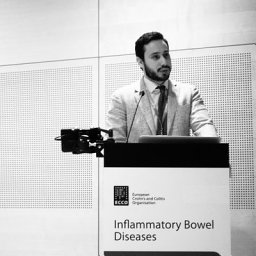 Nikolas Plevris合作论文数Western Gen Hosp, Edinburgh IBD Unit2M Shivakumar合作论文数2Paraic Mcgrogan合作论文数2S Bouri合作论文数1Thomas Manship合作论文数1HE Drummond合作论文数1TA Manship合作论文数1Alfonso Elosua González合作论文数1
 Philip Tozer合作论文数Department of Surgery & Cancer, Faculty of Medicine, Imperial College London;St Mark's Hospital1Rogers Pam合作论文数1
 Paul Henderson合作论文数School of Computing Science, University of Glasgow1
 Ailsa Hart合作论文数Department of Metabolism, Digestion and Reproduction, Faculty of Medicine, Imperial College London1
 Emma Louise Reynish合作论文数1




