Elevated left atrial (LA) filling pressures leading to pulmonary congestion is the common final pathway in decompensated heart failure (HF). The V-wave unidirectional shunt is a novel percutaneously-implanted device intended to regulate LA pressures by creating a low volume, left-to-right atrial
BACKGROUND The CoStar stent is a novel cobalt chromium stent designed specifically for drug delivery. The COSTAR I trial represents the first-in-man study of the CoStar Paclitaxel-Eluting Coronary Stent System evaluating three dose release formulations of paclitaxel in a bioresorbable polymer matrix in the treatment of de novo coronary lesions. METHODS The COSTAR I Trial was a prospective, multi-center registry enrolling 87 patients in four Indian centers for treatment of up to two de novo lesions = 25 mm in length in a reference vessel 2.5-3.5 mm in diameter. Three dose release formulations were studied: 30 microg eluted over 10 days bidirectionally (Group 1, n =10), 10 microg eluted over 30 days abluminally (Group 2, n=40) and 3 microg eluted over 30 days abluminally (Group 3, n = 37). RESULTS Demographics and lesion characteristics were similar between the groups and treatment in all three groups included small caliber vessels (RVD 2.45 +/- 0.30 - 2.57 +/- 0.36 mm). The primary endpoint of in-stent late loss at four months was lowest in Group 2 (0.43 +/- 0.43 mm) compared to Group 1 and Group 3 (0.51 +/- 7 mn; 0.74 mm and 1.07 +/- 0.65 mm respectively). In-segment late loss followed similar trends, being lowest in Group 2 (0.24 +/- 0.39 mm) compared to Groups 1 and 3 (0.52 +/- 0.66 mm and 0.76 +/- 0.57 mm respectively). Group 2 demonstrated better angiographic out-comes at 12 months with in-stent late loss of 0.55 +/- 0.38 mm when compared to Groups 1 and 3 (0.90 +/- 0.76 mm and 0.74 +/- 0.55 mm respectively). Cumulative binary restenosis rates at twelve months were 1.9%, 35.7% and 39.1% in Groups 2, 1 and 3 respectively. Clinical outcomes trended similarly with cumulative MACE rates at twelve months being lowest at 7.5% in Group 2 as compared to 20% in Group 1 and 21.6% in Group 3 respectively. CONCLUSIONS In this first-in-man feasibility trial, angiographic and clinical results seen with the extended release formulation at a higher dose (10 microg/30 days) demonstrate the feasibility of the CoStar stent platform in the treatment of native coronary lesions. It also demonstrates the importance of drug dose and release kinetics.
The purpose of this study was to determine the effectiveness and vascular response of a pimecrolimus drug eluting stent and a combination (pimecrolimus + paclitaxel) stent as compared with bare metal controls in the porcine coronary model.
OBJECTIVES The aim of this study was to evaluate the effiect of variable dose and release kinetics of paclitaxel on neointimal hyperplasia.BACKGROUND Conventional paclitaxel-eluting stents use a durable polymer coating as a vehicle for drug delivery. The Conor stent (Conor Medsystems, Menlo Park, California) with intra-strut wells and erodable polymer is specifically designed for drug delivery with programmable pharmacokinetics.METHODS Two hundred and forty-four patients with single vessel disease received either a bare metal Conor stent (n = 53) or one of six different release formulations that varied in dose (10 or 30 mu g) and elution release kinetics (first order, zero order), direction (abluminal, luminal), and duration (5, 10, and 30 days). End points at six months (bare stent group) and at four months (eluting stent groups) were angiographic late loss and neointimal tissue volume by intravascular ultrasound and the rate of major adverse cardiac events (MACE).RESULTS The lowest in-stent late loss (0.38 mm, p < 0.01, and 0.30 mm, p < 0.01) and volume obstruction (8%, p < 0.01, and 5%, p < 0.01) were observed with the 10-mu g and 30-mu g doses in the 30-day release groups respectively, whereas the highest in-stent late loss (0.88 mm), volume obstruction (26%), and restenosis rate (11.6%) were observed in the bare stent group. The overall MACE rate of the eluting stent group was 8.6% death 0.5%, myocardial infarction 2.7%, and target lesion revascularization (TLR) 5.3%. Sub-acute thrombosis was 0.5%. The TLR rates in the two 30-day release groups were 0% and 3.4%.CONCLUSIONS This novel eluting stent platform, using an erodable polymer with complete elution of low doses of paclitaxel, is safe. The inhibition of the in-stent neointimal hyperplasia was best in the long release groups. (c) 2005 by the American College of Cardiology Foundation.
AIMS:The one year clinical benefit of various doses and release durations of paclitaxel eluted from an erodable polymer has not been evaluated so far.METHODS AND RESULTS:Conor paclitaxel-eluting stents have intra-stent wells in which drug and polymer are deposited. Stents with six different release formulations (dose: 10 microg or 30 microg, duration: 5, 10 or 30 days, direction: mural or bidirectional) were implanted in 6 patient cohorts. Clinical follow-up was conducted at 4 and 12 months. Quantitative angiography and IVUS were performed at 4 months, and additional angiographic and IVUS follow-up were performed for groups D5 (10microg/30days/mural) and D6 (30microg/30days/mural), as they had shown the most favorable results at 4 months. At one year, the lowest major adverse cardiac event rates were observed in the slow release (30 day) group (5.1% in D5 and 6.9% in D6). One-year in-stent late loss was 0.52+/-0.34 mm in D5 and 0.36+/-0.50mm in D6 (p=0.20) while neointimal area was 0.99+/-0.54 mm2 in D5 and 0.77+/-0.92 mm2 in D6 (p=0.42). Corresponding in-stent binary restenosis at one year was 0% and 5.6% respectively (p=0.36).CONCLUSIONS:Patients who received the slow release formulation stent had better clinical outcome at one year than those who received the fast release formulation. However, the effect on neointimal suppression requires investigation in a larger population to determine whether the high dose formulation confers an additional clinical benefit.
 Neal Eigler合作论文数V-Wave103
 Warren S. Grundfest合作论文数Department of Bioengineering, Samueli School of Engineering, University of California, Los Angeles83
 James S. Forrester合作论文数Department of Cardiology, Cedars-Sinai Medical Center70
 Tsvi Goldenberg合作论文数39
 Rajendra Makkar合作论文数Smidt Heart Institute, Cedars-Sinai Medical Center38J FORRESTER合作论文数30
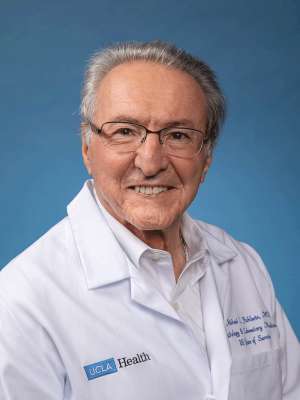 Michael C. Fishbein合作论文数Department of Pathology and Laboratory Medicine, University of California, Los Angeles;Jonsson Comprehensive Cancer Center, University of California, Los Angeles27James B. Laudenslager合作论文数23
 Saibal Kar合作论文数Faculty of Economics, Centre for Studies in Social Sciences;Institute of Labor Economics23john f shanley合作论文数19theodore l parker合作论文数18Nl Eigler合作论文数18James S. Whiting合作论文数16A Hickey合作论文数14Thomas J. Pacala合作论文数14Hidehiko Honda合作论文数14
 Spencer B. King合作论文数Emory St. Joseph's Hospital;Southern Regional Medical Center13Vishva Dev合作论文数13Thanassis Papaioannou合作论文数Lab., Cedars-Sinai Medical Center13J Segalowitz合作论文数13J Aragon合作论文数12
 Aurelio Chaux合作论文数Departments of Surgery, Cedars-Sinai Medical Center Los Angeles12Aaron Frimerman合作论文数11stephen hunter diaz合作论文数10J Matloff合作论文数10J Margolis合作论文数10
 Eldad Rechavia合作论文数9Donald A. Rothbaum合作论文数9D McClean合作论文数8
 Sanjay Kaul合作论文数Cedars-Sinai Heart Institute, Cedars-Sinai Medical Center8John F. Bresnahan合作论文数8M Lee合作论文数7R Kass合作论文数7A Li合作论文数7McClean Dougal合作论文数7
 Martin Leon合作论文数Center for Interventional Vascular Therapy, Columbia University Medical Center7Leon Morgenstern合作论文数7
 Theodore G. Papazoglou合作论文数Institute of Electronic Structure and Laser, Foundation for Research and, Technology—Hellas7J KUPFER合作论文数6
 H.J.C. (Jeremy) Swan合作论文数Division of Cardiology, Cedars-Sinai Medical Center6L Doyle合作论文数6Frank Cummins合作论文数6Tracy Sherman合作论文数6Arie Shefer合作论文数6W UNTEREKER合作论文数6Kaname Takizawa合作论文数6
 Martin Sebastian合作论文数6R Foran合作论文数5




