Words, more specifically "syntactic words", are at the centre of a dependency-based approach like Universal Dependencies. Nonetheless, its guidelines do not make explicit how such a word should be defined and identified, and so it happens that different treebanks use different standards to this end. To counter this vagueness, the community has been recently discussing a definition put forward in (Haspelmath, 2023) which is not fully uncontroversial. This contribution is a preliminary case study that tries its hand at concretely applying this definition (except for compounds) to Latin in order to gain more insights about its operability and groundedness. This is helped by the spread of Latin over many treebanks, the presence of good linguistic resources to analyse it, and a linguistic type which is probably not fully considered in (Haspelmath, 2023). On the side, this work shows once more the difficulties of turning theoretical definitions into working directives in the realm of linguistic annotation.
This paper describes the linking of a subset of five texts from the Latin Text Archive corpus of the Computational Historical Semantics project to the LiLa Knowledge Base of Interop-erable Linguistic Resources for Latin for a total of about one million tokens, adding approximately 13 million and 750 thousand new triples to the Knowledge Base. To show the potentialities of linking those texts to other resources for Latin, the paper describes the results of a sample query conducted on the texts linked to the Knowledge Base.
This paper describes the organization and the results of the second edition of EvaLatin, the campaign for the evaluation of Natural Language Processing tools for Latin. The three shared tasks proposed in EvaLatin 2022, i.,e.,Lemmatization, Part-of-Speech Tagging and Features Identification, are aimed to foster research in the field of language technologies for Classical languages. The shared dataset consists of texts mainly taken from the LASLA corpus. More specifically, the training set includes only prose texts of the Classical period, whereas the test set is organized in three sub-tasks: a Classical sub-task on a prose text of an author not included in the training data, a Cross-genre sub-task on poetic and scientific texts, and a Cross-time sub-task on a text of the 15th century. The results obtained by the participants for each task and sub-task are presented and discussed.
The Liber Abbaci (13th century) is a milestone in the history of mathematics and accounting. Due to the late stage of Latin, its features and its very specialized content, it also represents a unique resource for scholars working on Latin corpora. In this paper we present the annotation and linking work carried out in the frame of the project Fibonacci 1202-2021. A gold-standard lemmatization and part-of-speech tagging allow us to elaborate some first observations on the linguistic and historical features of the text, and to link the text to the Lila Knowledge Base, that has as its goal to make distributed linguistic resources for Latin interoperable by following the principles of the Linked Data paradigm. Starting from this specific case, we discuss the importance of annotating and linking scientific and technical texts, in order to (a) compare and search them together with other (non-technical) Latin texts (b) train, apply and evaluate nlp resources on a non-standard variety of Latin. The paper also describes the fruitful interaction and coordination between nlp experts and traditional Latin scholars on a project requiring a large range of expertise.
Nonfinite verb forms are a crosslinguistically widespread phenomenon that poses a challenge to universal annotation formalisms like Universal Dependencies (UD), often clashing with traditionally established, language-specific conventions and terminologies. This paper, using Latin as a concrete case study, aims to give a survey on the VerbForm feature distribution among UD treebanks and to suggest a restructuring thereof in a universal perspective.
The present work introduces a new Latin treebank that follows the Universal Dependencies (UD) annotation standard. The treebank is obtained from the automated conversion of the Late Latin Charter Treebank 2 (LLCT2), originally in the Prague Dependency Treebank (PDT) style. As this treebank consists of Early Medieval legal documents, its language variety differs considerably from both the Classical and Medieval learned varieties prevalent in the other currently available UD Latin treebanks. Consequently, besides significant phenomena from the perspective of diachronic linguistics, this treebank also poses several challenging technical issues for the current and future syntactic annotation of Latin in the UD framework. Some of the most relevant cases are discussed in depth, with comparisons between the original PDT and the resulting UD annotations. Additionally, an overview of the UD-style structure of the treebank is given, and some diachronic aspects of the transition from Latin to Romance languages are highlighted.
Il progetto LiLa: Linking Latin intende creare una Knowledge Base di risorse linguistiche (corpora, lessici digitali e strumenti di trattamento automatico del linguaggio) per lo studio del latino secondo il modello dei Linked Open Data. Questo articolo descrive gli obiettivi e le motivazioni del progetto, soffermandosi in particolare sulla centralita del lemma come forma che consente di creare la rete di informazioni linguistiche. L’architettura di LiLa s’incentra dunque sul nodo cardine rappresentato dal lemma e sulle sue proprieta morfologiche. L’articolo discute le strategie impiegate per creare una banca dati di lemmi latini che possa supportare tale modello, e i primi esperimenti volti a connettere risorse testuali (treebank del latino) alla raccolta dei lemmi.
English. This paper1 presents the early stages of the development of a new treebank containing all of Dante Alighieri’s Latin works. In particular, it describes the conversion of the original TEI-XML files to CoNLL-U, the creation of a gold standard, the process of training four annotators and the evaluation of the syntactic annotation in terms of inter-annotator agreement and LA, UAS and LAS. The aim is to release a new resource, in view of the celebrations for the 700th anniversary of Dante’s death, which can support the development of the Vocabolario Dantesco.
This paper presents the structure of the LiLa Knowledge Base, i.e. a collection of multifarious linguistic resources for Latin described with the same vocabulary of knowledge description and interlinked according to the principles of the so-called Linked Data paradigm. Following its highly lexically based nature, the core of the LiLa Knowledge Base consists of a large collection of Latin lemmas, serving as the backbone to achieve interoperability between the resources, by linking all those entries in lexical resources and tokens in corpora that point to the same lemma. After detailing the architecture supporting LiLa, the paper particularly focusses on how we approach the challenges raised by harmonizing different strategies of lemmatization that can be found in linguistic resources for Latin. As an example of the process to connect a linguistic resource to LiLa, the inclusion in the Knowledge Base of a dependency treebank is described and evaluated.
The LiLa: Linking Latin project was recently awarded funding from the European Research Council to build a Knowledge Base of linguistic resources for Latin. LiLa responds to the growing need in the fields of Computational Linguistics, Humanities Computing and Classics to create an interoperable ecosystem of resources and Natural Language Processing tools for Latin. To this end, LiLa makes use of Linked Open Data practices and standards to connect words to distributed textual and lexical resources via unique identifiers. In so doing, it builds rich knowledge graphs, which can be used for research and teaching purposes alike. This paper details the architecture of the LiLa Knowledge Base and presents the solutions found to address the challenges raised by populating it with a first set of linguistic resources. 2012 ACM Subject Classification Information systems → Ontologies; Information systems → Graph-based database models; Information systems → Semantic web description languages; Applied computing → Digital libraries and archives; Applied computing → Annotation
This paper describes the changes applied to the original process used to convert the Index Thomisticus Treebank, a corpus including texts in Medieval Latin by Thomas Aquinas, into the annotation style of Universal Dependencies. The changes are made both to harmonise the Universal Dependencies version of the Index Thomisticus Treebank with the two other available Latin treebanks and to fix errors and inconsistencies resulting from the original process. The paper details the treatment of different issues in PoS tagging, lemmatisation and assignment of dependency relations. Finally, it assesses the quality of the new conversion process by providing an evaluation against a gold standard.
We present the process of expanding the lexical basis of the Latin morphological analyser lemlat with the entries from the Medieval Latin glossary Du Cange. This process is performed semi-automatically by exploiting the morphological properties of lemmas, a previously available word list enhanced with inflectional information, and the contents of the lexical entries of Du Cange.
This article presents a comparison of different Word Sense Induction (wsi) clustering algorithms on two novel pseudoword data sets of semantic-similarity and co-occurrence-based word graphs, with a special focus on the detection of homonymic polysemy. We follow the original definition of a pseudoword as the combination of two monosemous terms and their contexts to simulate a polysemous word. The evaluation is performed comparing the algorithm's output on a pseudoword's ego word graph (i.e., a graph that represents the pseudoword's context in the corpus) with the known subdivision given by the components corresponding to the monosemous source words forming the pseudoword. The main contribution of this article is to present a self-sufficient pseudoword-based evaluation framework for wsi graph-based clustering algorithms, thereby defining a new evaluation measure (top2) and a secondary clustering process (hyperclustering). To our knowledge, we are the first to conduct and discuss a large-scale systematic pseudoword evaluation targeting the induction of coarse-grained homonymous word senses across a large number of graph clustering algorithms.
English. This paper describes the framework proposed by the UNIMIB Team for the task of Named Entity Recognition and Linking of Italian tweets (NEEL-IT). The proposed pipeline, which represents an entry level system, is composed of three main steps: (1) Named Entity Recognition using Conditional Random Fields, (2) Named Entity Linking by considering both Supervised and Neural-Network Language models, and (3) NIL clustering by using a graph-based approach.
 Marco Passarotti合作论文数Catholic University14
 Rachele Sprugnoli合作论文数CELCT7
 Giovanni Moretti合作论文数Massey University6
 Paolo Ruffolo合作论文数5
 Eleonora Litta合作论文数Fac Sci Linguist & Letterature Straniere, Univ Cattolica Sacro Cuore5
 Elisabetta Fersini合作论文数University of Milano-Bicocca5
 Francesco Mambrini合作论文数4
 Greta Franzini合作论文数3Margherita Fantoli合作论文数2
 Matteo Pellegrini合作论文数CIRCSE Res Ctr, Univ Cattolica Sacro Cuore2
 Enza Messina合作论文数University of Milano-Bicocca2Giovanni Piantanida合作论文数1Martina Fieromonte合作论文数1
 Debora Nozza合作论文数Bocconi University1Paola Marongiu合作论文数1
 Costanza Marini合作论文数1
 Cezar Sas合作论文数Bernoulli Institute, University of Groningen1Timo Korkiakangas合作论文数1
 Francesco Grotto合作论文数Scuola Normale Super Pisa1
 Pikakshi Manchanda合作论文数1
 Chris Biemann合作论文数Department of Informatics, University of Hamburg1Maria Simi合作论文数Università di Pisa via Buonarroti1
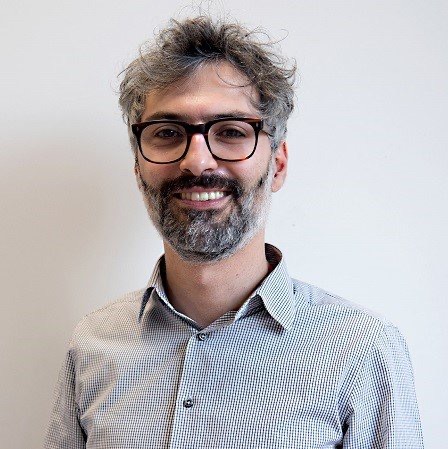 Matteo Luigi Palmonari合作论文数Dipartimento di Informatica, Sistemistica e Comunicazione, Università degli Studi di Milano Bicocca1
 Daniel Zeman合作论文数Center for Computational Linguistics, Institute of Formal and Applied Linguistics, Faculty of Mathematics and Physics, Charles University1
 Martin Riedl合作论文数Technische Universität Darmstadt1




