In this paper we present the Medium Resolution Spectrograph ESOPO, an instrument designed and built for the 2.1m Telescope at the Observatorio Astronómico Nacional at San Pedro Mártir. We discuss the Scientific Goals and the High Level Requirements necessary to translate these goals to optical, mechanical and control specifications. We make an introduction to its conceptual dual-arm design. The optical design is based on a non-classical configuration. The gratings are illuminated in a conical mode working in a quasi Littrow configuration which has the advantage of optimizing the efficiency and the pupil area on the grating. We show here the results of an experimental evaluation of the concept. The optical design, mechanical structure, slit-mask and acquisition system, control systems, and a study of thermal compensators, are discussed briefly, references to more extended contributions in these proceedings are made. The management schematics of the project are briefly discussed.
This work presents the specifications, requirements, design, finite element analysis and results of the assembled subsystems: slit-mask, and the acquisition and guiding zone mechanisms of the ESOPO spectrograph. This spectrograph is a project of the Institute of Astronomy, National University of Mexico.
ESOPO will be a spectrograph of medium resolution for the 2.1 m telescope of the National Observatory at San Pedro Martir, Baja California, Mexico. It has been developed by the Instituto de Astronomia of the Universidad Nacional Autonoma de Mexico (IA-UNAM). The main goal of this instrument is to modernize the capabilities of making science with that particular telescope. It is planned to achieve a spectral resolution between 500 and 5000. ESOPO is split into two arms; each one specialized in a specific wavelength range covering together all the visible light. A very important issue in spectrographs is to avoid inside thermal gradients. Different temperatures in the optical elements produce mechanical movements and image quality degradation during an exposition. The error budget analysis developed for ESOPO allows establishing the required limits for temperature gradients. In this paper is described the thermal analysis of the spectrograph, including specifications, finite element models, thermal equations and expected thermal gradients.
The structure of the spectrograph ESOPO is the stiff mount that will maintain fixed all optics elements, electronics and mechanical subsystems. The ESOPO spectrograph is a project of the "Instituto de Astronomia de la Universidad Nacional Autonoma de Mexico" (IAUNAM) to upgrade its 2.1 m telescope as a competitive facility for the next decade. The scientific purpose is to obtain a modern high efficient intermediate-low dispersion spectrograph optimized for the 3500-9000 angstrom spectral interval with a spectral resolution of 500 <= R <= 5000. It is to be used at the cassegrain f/7.5 focus of the 2.1 m telescope for general astronomical purposes. This work presents the mechanical design process and the form in which the structure was verified to comply with the ESOPO's top level image quality and stability requirements. The latter was not a lineal process. The way we resolved it is to run FEAs on the complete system and with the instrument in different operation positions during a normal cycle of observations. These results are validated through the error budget of the ESOPO. The structure is Currently under construction.
 E. Colorado合作论文数5G. Guisa合作论文数5F. Garfias合作论文数5
 J. Echevarria合作论文数5gerardo sierra合作论文数5
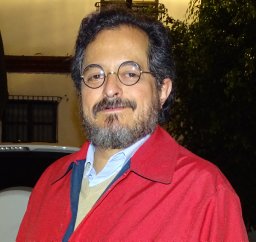 J. Gonzalez合作论文数Astrophys Sci Div, Goddard Space Flight Ctr5
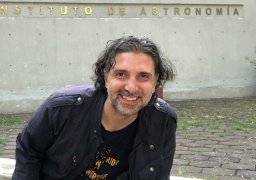 Alejandro Farah合作论文数IA-UNAM5Rafael Costero合作论文数5F. Cobos合作论文数5S. Quechol合作论文数4O. Chapa合作论文数4F. Granados合作论文数4M. Arroyo合作论文数4
 Raul Michel合作论文数National Astronomical Observatories Chinese Academy of Sciences, Chinese Academy of Sciences,National Astronomical Observatories4Carlos Tejada合作论文数4E Luna合作论文数3alvaro fernandez de cordova合作论文数3beatriz martinez合作论文数3Mh Pedrayes合作论文数3
 A. G. Mariazzi合作论文数IFLP, Univ Nacl La Plata3
 F. J. Quiroz合作论文数2J. Murillo合作论文数2F. Quiros合作论文数2maria h pedrayes合作论文数1
 Maria H. Pedrayes合作论文数1
 Fernando Quiros合作论文数1Esther Martínez Luna合作论文数Inst Invest Filol, Univ Nacl Autonoma Mexico1
 Oscar Chapa合作论文数1
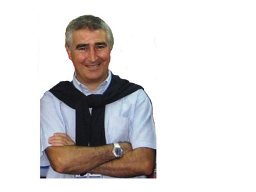 B. Martínez合作论文数CSIC, Institut de Ciència de Materials de Barcelona1Beatriz A. García合作论文数1




