Some computational problems in electromagnetism have high computational cost, which makes it is necessary to solve them efficiently in today's computational systems. This chapter studies the efficient solution of electromagnetism problems based on integral equation formulations in clusters of CPU + GPU nodes.
Multipactor effect is a resonant avalanche of secondary electrons induced by an RF electromagnetic field, which endangers high-power payloads on satellites and particle accelerator structures. The main goal of this letter is to present a multimodal network characterization of a multipactor discharge occurring in a bounded waveguide region. This will allow to perform a rigorous analysis of a complete passive component considering the presence of a discharge. In order to verify the present formulation, we have measured the power spectrum generated by a multipactor event excited in a simple microwave circuit based on rectangular waveguides, which has been compared with the theoretical results, obtaining good agreement.
A new integral equation formulation is presented for the analysis of capacitive waveguide components, including metallic and dielectric objects. The technique exploits the symmetry of the structure by formulating a 2D scattering problem with oblique angle of incidence. As a consequence, the analysis of complex waveguide capacitive devices results to be very efficient, as compared to other 3D numerical techniques. As practical application, the paper proposes a low-pass filter loaded with dielectric and magnetic materials. Results are validated with commercial full-wave simulators showing the validity and accuracy of the novel integral equation technique.
There is a large number of applications in the design of telecommunication devices where it is necessary to apply optimisation techniques to find the best values for a set of parameters [2, 5]. Normally, it is not possible to solve those optimisation problems with analytical techniques, and the alternative is to use metaheuristic methods [6]. In this work we tackle the problem of designing coupled resonator filters [1], which are used in the RF-frontends of communication devices. There are different phases in the design of these filters. In a first approximation, the desired topology of the filter and the basic characteristics of the technology to use are established, and then it is necessary to obtain the theoretical coupling matrix which implements the desired transfer function. We analyse the application of metaheuristics to obtain that matrix. Furthermore, the numerical software Matlab is frequently used to work on the design of those devices, and a good option would be to also develop in Matlab the optimisation tools. Thus, this work analyses the application of Matlab optimisation toolboxes to tackle this optimisation problem with different metaheuristics. A detailed experimental analysis is carried out to obtain the tools in Matlab which best fit the problem, and some tools are personalised to improve the quality of the design.
Multipactoring is a non-linear phenomenon that appears in high-power microwave equipment operating under vacuum conditions and causes several undesirable effects. In this paper, a theoretical and experimental study of the RF spectrum radiated by a multipactor discharge, occurring within a realistic microwave component based on rectangular waveguides, is reported. The electromagnetic coupling of a multipactor current to the fundamental propagative mode of a uniform waveguide has been analysed in the context of the microwave network theory. The discharge produced under a single-carrier RF voltage regime has been approached as a shunt current source exciting such a mode in a transmission-line gap region. By means of a simple equivalent circuit, this model allows prediction of the harmonics generated by the discharge occurring in a realistic passive waveguide component. Power spectrum radiated by a third-order multipactor discharge has been measured in an E-plane silver-plated waveguide transformer, thus validating qualitatively the presented theory to simulate the noise generated by a single-carrier multipactor discharge.
In this paper, we present the outcomes of a specific software designed for the ESTEC project No. AO-5086: New investigations of RF breakdown in microwave transmission Lines. The objective of the project is to develop a software tool capable to predict the multipactor and corona breakdown onsets in shielded microstrip devices, paying special attention to elements like connectors, bridges or ribbons. In the first step, the electromagnetic fields of the devices are computed using an efficient implementation of a volume/surface integral equation technique. Secondly, the high power breakdown onsets are determined, employing accurate and realistic models for the electron trajectories and the secondary electron emissions. Also, the corona discharge breakdown level is computed by means of the numerical solution of the free electron density continuity equation.
 e somarriba合作论文数12b gimeno合作论文数8
 Vicente E. Boria Esbert合作论文数Institute of Telecommunications and Multimedia Applications, Universidad Politecnica de Valencia8
 Vicente, C.合作论文数7
 Eduardo Somarriba Chavez (Eduardo Somarriba)合作论文数Centro Agronomico Tropical de Investigacion y Ensenanza7angel luis alvarez合作论文数6
 s anza合作论文数Dassault Systems/Simulia, Valencia, Spain6
 David Raboso合作论文数6Muhammad Faishal Ibrahim合作论文数Department of Real Estate, National University of Singapore6c ameyaw oduro合作论文数5j p tetteh合作论文数5m kanninen合作论文数4Lucas G Pedroni合作论文数4
 Jean-Michel Harmand合作论文数Centre de Coopération Internationale en Recherche Agronomique pour le Développement, French Agricultural Research Centre for International Development;Centro Agronomico Tropical de Investigacion y Ensenanza Catie4m k cotta合作论文数3m sauceda olivera合作论文数3a de castro virgens filho合作论文数3l a goncalves jacovine合作论文数3m mussack合作论文数3k hergoualch合作论文数3
 Isabel Gutierrez- Montes合作论文数3m jimenez合作论文数3s orozco estrada合作论文数3f andujar合作论文数3m villalobos rodriguez合作论文数3philippe descamps合作论文数3k oseibonsu合作论文数3a alarcon合作论文数3
 G. J. M. M. Nabuurs合作论文数Wageningen University & Research3
 Bryan Finegan合作论文数Department of Ecology and Evolutionary Biology, University of Connecticut;Division for Inclusive Green Development, Centro Agronomico Tropical de Investigacion y Ensenanza;College of Natural Resources, University of Idaho3Michael Mattes合作论文数3
 Christoph Leuschner合作论文数Faculty of Biology, University of Gottingen3
 Bas Bouman合作论文数International Rice Research Institute3
 Deheuvels Olivier合作论文数3A Nieuwenhuyse合作论文数3
 Jordi Gil合作论文数3Jean-Claude Beer合作论文数3
 Dietrich Hertel合作论文数Plant Ecology;Albrecht-von-Haller-Institute for Plant Sciences;University of Göttingen;Albrecht-von-Haller-Institute for Plant Sciences, University of Göttingen3A. Pussinen合作论文数3
 Bruno Rapidel合作论文数UMR SYSTEM, CIRAD3
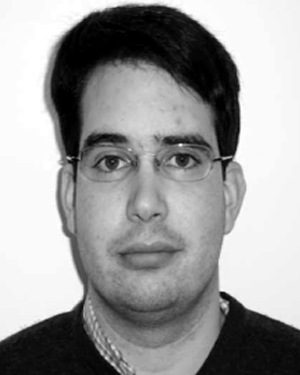 Francisco Javier Perez Soler合作论文数3
 Bernardus H J de Jong合作论文数CIES/CONSORTIUM San Cristóbal de las Casas Apartado Postal3
 Jari Olavi Liski (Jari Liski)合作论文数Finnish Meteorological Institute3
 Dirk Hölscher合作论文数Institut für Pflanzenbiochemie, Weinberg 3, D-06120 Halle, Germany3
 Celia A. Harvey合作论文数Departamento de Agricultura y Agroforestería3
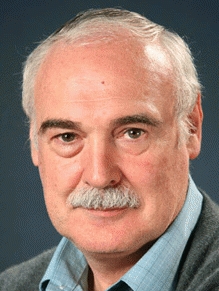 Juan Ramon Mosig合作论文数Ecole polytechnique federale de Lausanne3
 Damayanti Buchori合作论文数Department of Plant Pests and Diseases, Institut Pertanian Bogor3
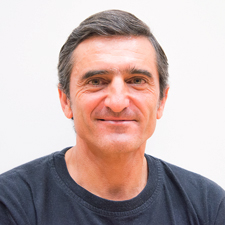 Omar Raúl Masera Cerutti合作论文数Centro de Investigaciones en Ecosistemas, Universidad Nacional Autónoma de México3Frits Mohren合作论文数Forest Ecology and Forest Management Group, Wageningen University3




